Can Betta Fish Live in the Ocean
No, betta fish cannot live in the ocean. They are tropical freshwater fish native to shallow, slow-moving waters in Southeast Asia. Their bodies are not built to handle the salt, pressure, predators, and vastness of the marine environment. Attempting to release a pet betta into the ocean is cruel and fatal. Providing a proper, filtered, heated freshwater tank is the only way to ensure their health and longevity.
Key Takeaways
- Natural Habitat: Bettas are from shallow, warm, freshwater environments like rice paddies and slow streams in Thailand and Cambodia, not the ocean.
- Saltwater Intolerance: Betta fish lack the physiological mechanisms (like specialized kidneys and chloride cells) to excrete excess salt, making saltwater lethal through osmosis.
- Osmoregulation Failure: In saltwater, a betta’s body would lose critical freshwater to the surrounding environment, leading to severe dehydration and organ failure.
- Ocean Dangers: Beyond salinity, oceans present immense predation, powerful currents, lack of appropriate food, and temperature extremes that a betta is utterly unequipped for.
- Survival Chance: A pet betta released into the ocean would die within minutes to hours from salt stress and shock, not to mention being eaten.
- Ethical Responsibility: Betta owners must provide a stable, heated, filtered freshwater aquarium. Never release pet fish into natural waterways.
- Misconception Source: The idea that bettas can live in oceans likely stems from confusing their native “wild” habitats with the sea, or from their common name “Siamese fighting fish” implying toughness.
📑 Table of Contents
The Great Misconception: Bettas and the Big Blue
It’s a question that pops up often, especially for new betta owners staring at their vibrant, finned friend: “Can betta fish live in the ocean?” The image is a romantic one—a hardy fish, free to swim in the vast, blue expanse. But the reality is a stark, biological “no.” The ocean is not just a bigger pond; it is an entirely different, hostile universe for a domesticated betta fish. Understanding why requires a dive into the betta’s true origins, its delicate biology, and the brutal realities of marine life. This isn’t just about preference; it’s about fundamental survival. Let’s unravel the science and the myth, once and for all.
Where Bettas Really Come From
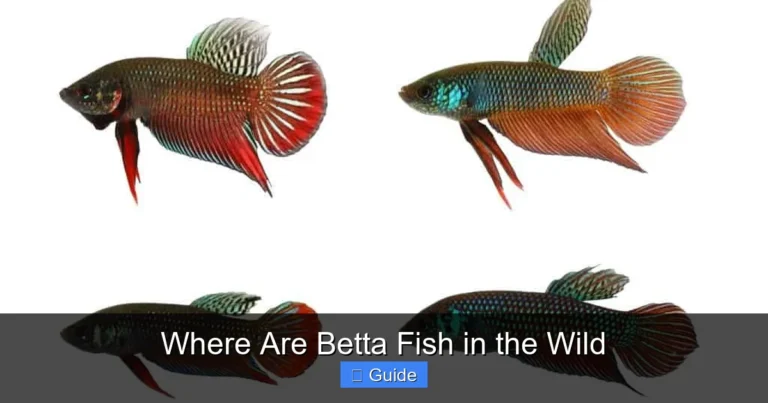
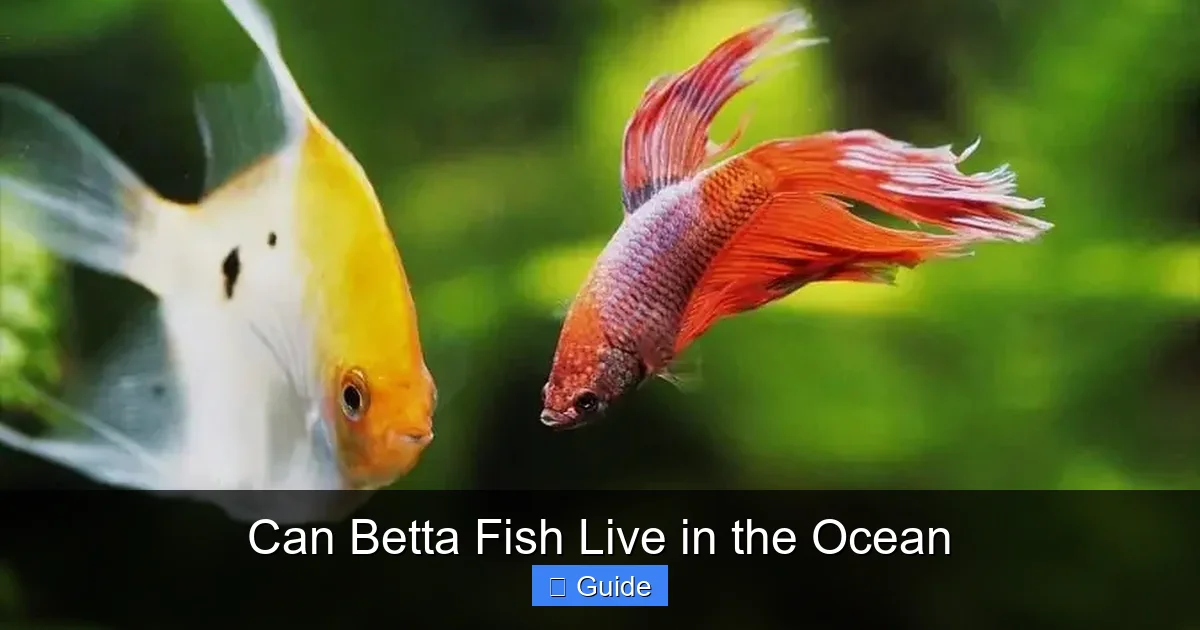
To understand why the ocean is a death sentence, we must first travel to Southeast Asia. The betta fish, or Betta splendens, hails from the tropical regions of Thailand, Cambodia, Vietnam, and parts of Malaysia. Their native habitat is not the open sea. It is the shallow, warm, and often murky waters of rice paddies, floodplain ditches, slow-moving streams, and muddy ponds. These environments are freshwater or at most, very slightly brackish (a mix of fresh and salt). The water is warm, frequently above 75°F (24°C), and can have low oxygen levels. It is in these stagnant or sluggish waters that the betta evolved its famous labyrinth organ—a special breathing structure that allows it to gulp air from the surface. This adaptation is for freshwater oxygen-poor conditions, not for the salt-saturated, pressure-filled world of the ocean.
The Biology of Betta Fish: Built for Freshwater, Not Salt
The betta’s body is a masterpiece of adaptation for its specific niche. Every system, from its gills to its kidneys, is fine-tuned for a freshwater existence. Introducing it to saltwater is like trying to run a diesel engine on jet fuel—the core mechanics are incompatible and catastrophic.
Visual guide about Can Betta Fish Live in the Ocean
Image source: bettafishnest.com
Osmoregulation: The Balancing Act
All fish engage in a constant, life-sustaining process called osmoregulation. This is how they balance the salt and water inside their bodies with the water surrounding them. Freshwater fish, like bettas, live in an environment where the water outside is less salty than the fluids inside their cells. This creates a natural tendency for water to flow into their bodies through their skin and gills, and for salt to leach out. To cope, freshwater fish have:
- Kidneys that produce large volumes of very dilute urine to expel the excess incoming water.
- Specialized cells in their gills (chloride cells) that actively pump salt from the water back into their bloodstream to replace what is lost.
This system is perfectly efficient for freshwater. Now, imagine plunging that same fish into saltwater. The external environment is now saltier than its internal fluids. The biological rules flip. Water now wants to flow out of the betta’s body (dehydration), and salt wants to flow in (poisoning). The betta’s freshwater-adapted kidneys cannot concentrate urine to save water; they would just keep flushing out precious fluids. Its gill chloride cells are designed to pull salt in, not pump it out. The result is rapid, severe dehydration and a lethal buildup of sodium chloride in the bloodstream. This is osmotic shock, and it is a primary killer.
The Labyrinth Organ: An Air-Breather, Not a Salt-Tolerant Wonder
Many people point to the betta’s labyrinth organ as proof of its hardiness. “It can breathe air, so it must be tough!” This is a misunderstanding. The labyrinth organ is an evolutionary adaptation for surviving in oxygen-depleted freshwater. It allows the betta to survive in stagnant, warm water where dissolved oxygen is nearly zero by taking a gulp of atmospheric air from the surface. This organ has zero function in dealing with salinity. It does not filter salt. It does not change the fundamental osmoregulatory failure. A betta in the ocean would still try to gulp air, but the immediate, overwhelming stress of the salt would incapacitate it long before oxygen became an issue.
The Ocean’s Hostile Realities: A Betta’s Worst Nightmare
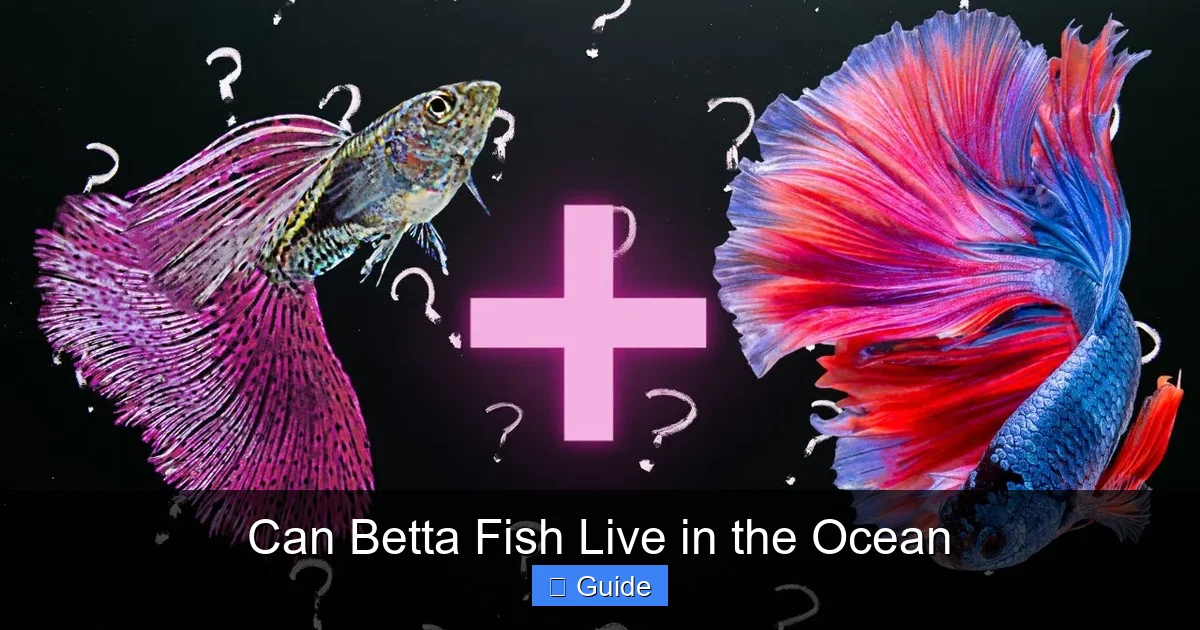
Even if we could magically solve the salinity problem (we can’t), the ocean presents a gauntlet of other insurmountable challenges for a pet betta.
Visual guide about Can Betta Fish Live in the Ocean
Image source: i.ytimg.com
Pressure and Depth
Betta fish are shallow-water specialists. They are adapted to the atmospheric pressure at the surface. Ocean pressure increases dramatically with depth. Just a few meters down, the pressure is several times that at the surface. A betta’s swim bladder (which helps it control buoyancy) and other gas-filled tissues would be crushed or severely compressed. They have no biological adaptation to handle this.
Temperature and Currents
While bettas prefer warm water (76-82°F or 24-28°C), ocean temperatures vary wildly. Coastal waters might be warm, but currents can bring in cold, deep water. A sudden temperature drop into water below 70°F (21°C) can send a tropical betta into shock and weaken its immune system. Furthermore, bettas are adapted to still or very slow-moving water. Ocean currents, tides, and waves would be physically overwhelming. A betta is a weak, deliberate swimmer with large, flowing fins. It would be tumbled, battered, and exhausted against rocks and sand in no time.
The Buffet is Closed: Food Sources
In the wild, bettas are carnivorous micro-predators. They eat tiny insects, larvae, zooplankton, and small crustaceans that live in their freshwater habitats. The ocean has plankton, but it’s a different composition. A betta’s tiny mouth and hunting instincts are not suited for capturing most marine plankton or tiny saltwater shrimp. It would simply not recognize most available food sources and would starve.
Predation: From Hunter to Prey
In its native pond, a betta is an apex micro-predator. The ocean is a food web where even small fish are prey. A betta, with its bright colors and slow, clumsy movements, would be an easy target. It would be instantly visible to countless larger fish, crabs, seabirds, and marine mammals. Its reputation as a “fighter” is against other bettas in confined spaces; it is no match for a predatory fish in the open ocean.
What About Wild Bettas? A Slight Nuance
This is a crucial distinction. Can any betta-related fish be found in brackish or marine environments? The answer is a very qualified maybe, but it does not apply to the common pet betta (Betta splendens). There are a few closely related species in the Betta genus that have been found in slightly brackish (low-salinity) mangrove swamps or estuaries. For example, Betta pugnax and Betta pallida have been recorded in waters with very low salinity (around 1-5 parts per thousand, compared to the ocean’s 35 ppt). However, these are still not the open ocean. They are transitional zones where freshwater meets saltwater, and the salinity is minimal. These wild species have had millennia to adapt to these specific, low-salinity conditions. The domesticated Betta splendens, selectively bred for color and finnage for over a century, has lost any such potential tolerance. Its genetics are fixed for freshwater. The tiny, fleeting tolerance of a wild cousin does not mean your pet betta from the local store could survive a trip to the beach.
Visual guide about Can Betta Fish Live in the Ocean
Image source: fishkeepingadvice.com
The Only Right Answer: Proper Betta Care
The question “Can betta fish live in the ocean?” is ultimately a lesson in responsible pet ownership. The answer “no” leads to the only correct follow-up question: “How should I care for my betta?” Recreating a slice of its natural freshwater habitat is the key to a happy, healthy life that can last 3-5 years or more.
The Essential Tank Setup
Forget the tiny, decorative vase. A proper betta home is a minimum of 5 gallons (19 liters), but larger is always better. This provides stable water parameters and room to explore. The tank must have:
- A Heater: Bettas are tropical fish. A reliable aquarium heater to maintain 76-82°F (24-28°C) is non-negotiable. Cold water slows their metabolism and makes them susceptible to disease.
- A Gentle Filter: Water movement should be minimal to mimic their calm native waters. A sponge filter or a hang-on-back filter with a baffle is ideal. Filtration is essential to process toxic ammonia and nitrites from the fish’s waste.
- A Secure Lid: Bettas are notorious jumpers. A tight-fitting lid with air holes is a must to prevent a tragic escape.
- Plants and Hiding Spots: Live plants (like java fern, anubias) or silk decorations provide security, reduce stress, and mimic their natural cover. Avoid rough plastic plants that can tear delicate fins.
Water Quality is Everything
In a small, uncycled container, toxic waste builds up in hours, burning a betta’s gills and fins. A cycled tank with a filter hosts beneficial bacteria that convert this waste. You must also perform regular water changes—about 25% weekly in a filtered tank—to maintain pristine water quality. Use a water conditioner to remove chlorine and chloramines from tap water. Test water parameters regularly with an aquarium test kit.
Diet: Protein-Packed and Varied
Feed high-quality betta pellets or flakes as a staple, but supplement with frozen or live foods like daphnia, brine shrimp, or bloodworms 2-3 times a week. This provides essential nutrients and enrichment. Feed only what they can consume in 2-3 minutes, once or twice a day. Overfeeding pollutes the water.
Conclusion: Respect the Biology
The ocean is a magnificent, powerful ecosystem. It is not a bathtub for a pet betta fish. The betta’s inability to live in saltwater is not a sign of weakness, but a testament to the incredible specificity of evolution. It is a specialist perfectly adapted to a very particular freshwater niche. Our role as caregivers is not to test the limits of that adaptation in a cruel experiment, but to honor it by providing the stable, warm, clean freshwater environment it biologically requires. Keeping a betta is a commitment to understanding and replicating its natural world, not imagining it into a different one. By doing so, we get to enjoy the full splendor of their behaviors, colors, and personalities for years. The next time you watch your betta flare at its reflection or lazily drift near a plant leaf, remember: you are seeing a creature of the rice paddy, not the reef. Let’s keep it that way.
Frequently Asked Questions
Can I put my betta fish in a saltwater tank if I acclimate it slowly?
No. Acclimation only helps with changes in water chemistry like pH or temperature between similar water types. It does not rewrite a betta’s fundamental freshwater physiology. The osmoregulatory damage from saltwater begins immediately and is irreversible. There is no safe acclimation process for a true freshwater fish into saltwater.
What about brackish water? Is that okay for a betta?
For a common pet Betta splendens, no. While a few wild Betta species tolerate very low salinity (1-5 ppt), domesticated bettas are not adapted for it. Their long-term health will suffer in brackish conditions. Stick to pure, dechlorinated freshwater.
If bettas can breathe air, could they survive at the ocean’s surface?
No. Breathing air solves an oxygen problem, not a salinity problem. At the ocean’s surface, the water is still saltwater. The betta would still suffer immediate osmotic shock, dehydrating and poisoning its systems with salt, even as it gulps air. The two issues are separate and equally fatal.
Are there any fish that can live in both freshwater and saltwater?
Yes, some fish are euryhaline, meaning they can tolerate a wide range of salinities. Examples include many species of salmon (which migrate between rivers and oceans), mollies, and some species of gobies and killifish. Bettas are not among them; they are stenohaline, meaning they have a very narrow salinity tolerance, strictly freshwater.
I saw a video of a betta in a clear ocean-looking tank. Was that saltwater?
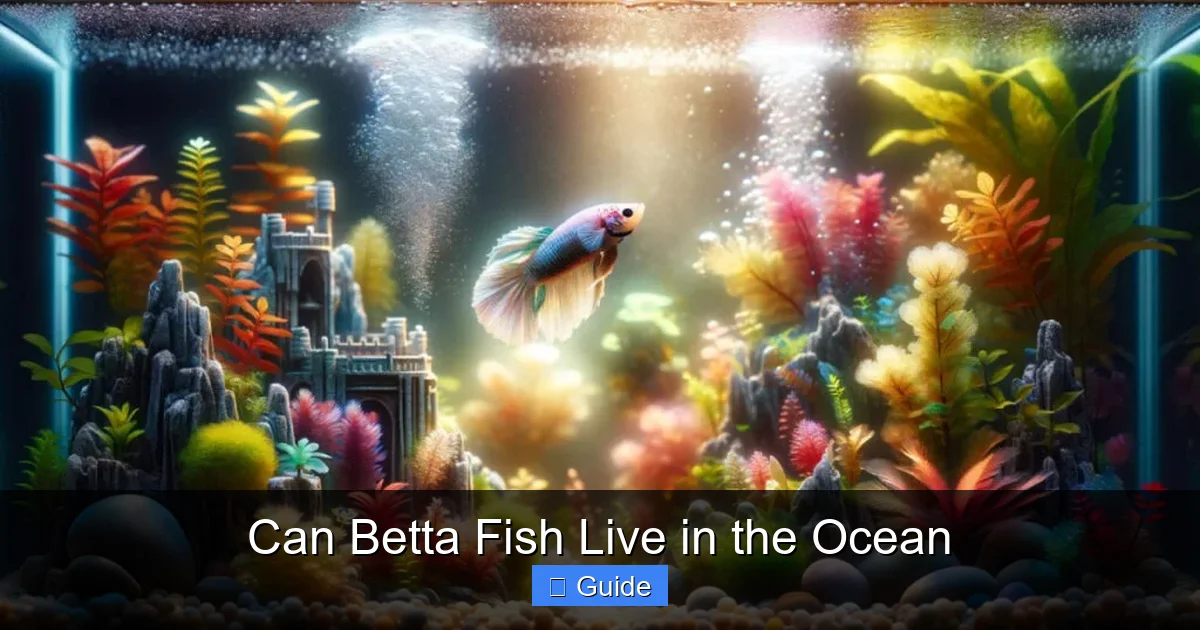
It was almost certainly freshwater. Many aquarists use crystal-clear filtration, white sand, and rockwork to create an “ocean aesthetic” in a freshwater tank. The clarity and decor are visual tricks. If you see a betta in a tank with corals (which are marine animals), it is a freshwater setup with fake decor, as real corals cannot survive in freshwater.
What is the absolute worst thing I could do for my betta?
Beyond outright cruelty, the worst thing is to keep it in a small, unfiltered bowl or vase without a heater, often touted as “low maintenance.” This environment rapidly poisons the fish with its own waste, causes chronic stress from cold temperatures, and leads to a slow, painful death from fin rot, dropsy, or other diseases. The ocean would be a faster death, but the tiny bowl is a prolonged torture.