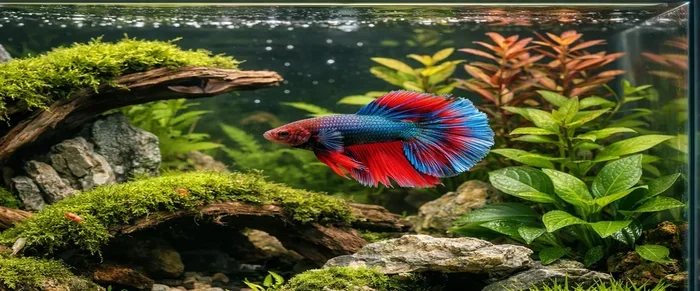
Can Betta and Molly Fish Live Together

Betta and molly fish can share a tank, but only under the right conditions. Proper tank size, plenty of hiding spots, and careful monitoring are key to keeping both species happy and healthy.
Key Takeaways
- Temperament matters: Bettas are territorial, while mollies are active swimmers; compatibility depends on individual personalities.
- Tank size is crucial: A minimum of 20 gallons provides enough space to reduce aggression.
- Water parameters must match: Both species thrive in slightly alkaline, warm water (76‑82 °F).
- Provide plenty of plants and décor: Hiding places and visual barriers help mollies feel safe and keep bettas from feeling threatened.
- Monitor behavior daily: Early signs of stress or bullying indicate that a re‑arrangement or separation is needed.
- Consider gender and number: A single male betta with a small group of female mollies usually works best.
- Start with a quarantine: Quarantining new fish reduces disease risk for both betta and mollies.
📑 Table of Contents
- Introduction: Why the Question Comes Up
- Understanding Betta Behavior
- Molly Fish: The Active Companion
- Matching Water Parameters
- Tank Size and Layout: Giving Them Space to Coexist
- Introducing the Fish: Step‑by‑Step Guide
- Common Problems and How to Fix Them
- Alternative Community Options
- Conclusion: Making an Informed Decision
Introduction: Why the Question Comes Up
Anyone who has ever kept a betta (also called a Siamese fighting fish) knows how striking those fins can be. Their vivid colors and flowing tails make them a favorite for beginners. Mollies, on the other hand, are lively live‑bearers that love to dart around the middle of the tank. Because both fish are popular, many hobbyists wonder: can betta and molly fish live together without drama?
In this article we’ll break down everything you need to know—temperament, water needs, tank size, and practical tips—so you can decide whether a mixed community is right for you. Think of it as a friendly chat over coffee, with plenty of real‑world examples and easy‑to‑follow advice.
Understanding Betta Behavior
Territorial instincts
Bettas are naturally defensive. In the wild they guard small territories along shallow streams. In an aquarium, a single male will often flare his fins and bite at anything that enters his perceived space. This aggression is strongest toward other fish with bright colors or long, flowing fins that resemble a rival betta.

Visual guide about Can Betta and Molly Fish Live Together
Image source: mir-s3-cdn-cf.behance.net
Gender differences
Male bettas are the most aggressive, while females are a bit more tolerant but can still become feisty if crowded. A lone male betta is usually the safest bet when adding other species.
What triggers a fight?
- Limited space – the fish feel cramped.
- Similar coloration – bright reds, blues, or oranges can be mistaken for a rival.
- Fin nipping – fast‑moving fish that dart near the betta’s fins may be seen as a threat.
Understanding these triggers helps you set up a tank where betta and molly fish can live together peacefully.
Molly Fish: The Active Companion
Personality and swimming habits
Mollies are social, schooling fish that love to swim in the mid‑ to upper‑water column. They are curious and will investigate new décor, making them an entertaining addition to any community tank.

Visual guide about Can Betta and Molly Fish Live Together
Image source: i.pinimg.com
Water preferences
Most mollies thrive in slightly alkaline water (pH 7.5‑8.2) and enjoy temperatures between 76‑82 °F. This overlaps nicely with the betta’s preferred range, which simplifies water management.
Potential conflicts
Because mollies are fast swimmers, they can accidentally nip at a betta’s fins. While they usually don’t intend harm, a startled betta may respond aggressively. Choosing calm, medium‑sized mollies can reduce this risk.
Matching Water Parameters
Temperature
Both species are comfortable at 78 °F, so a heater set to 78 °F works for everyone. Consistency is key; rapid fluctuations can stress both fish and lead to disease.

Visual guide about Can Betta and Molly Fish Live Together
Image source: puui.qpic.cn
pH and hardness
Mollies prefer slightly harder water, while bettas are more forgiving. Aim for a pH of 7.5 and a general hardness (GH) of 10‑15 dGH. Adding a pinch of aquarium salt (1 gram per 10 gallons) can help mollies with their osmoregulation without harming the betta.
Filtration
A gentle sponge filter provides enough flow without creating strong currents that could stress a betta. Mollies enjoy a modest water movement, so a low‑flow filter is ideal.
Tank Size and Layout: Giving Them Space to Coexist
Why size matters
Cramped tanks amplify aggression. A minimum of 20 gallons gives a male betta a personal zone and provides ample room for a small school of mollies (3‑5 individuals). Larger tanks (30 gallons or more) further reduce territorial disputes.
Plants and décor
Live plants such as java fern, Anubias, and floating duckweed create natural barriers. They also absorb nitrates and improve water quality. Add tall stem plants on one side and dense foliage on the other to break the line of sight.
Hiding spots
Decor like driftwood caves, ceramic pots, and PVC tubes give mollies places to retreat if the betta becomes too bold. Ensure the openings are large enough for mollies to swim through but small enough to keep the betta from entering.
Introducing the Fish: Step‑by‑Step Guide
1. Quarantine new arrivals
Before mixing, quarantine the mollies for at least two weeks. This prevents the spread of parasites or disease to your betta.
2. Prepare the tank
Set up the aquarium with plants, décor, and a stable temperature. Cycle the tank for at least four weeks to establish beneficial bacteria.
3. Acclimate slowly
Use the drip method to acclimate mollies to the tank’s water parameters. Only add them after the betta has been observed for a few days of calm behavior.
4. Observe the first 48 hours
Watch for signs of stress: faded colors, rapid gill movement, or frantic hiding. If the betta flares constantly, consider rearranging décor or adding more visual barriers.
5. Ongoing monitoring
Check daily for nipping or fin damage. A quick weekly water test helps catch parameter swings before they become a problem.
Common Problems and How to Fix Them
Fin nipping
If the betta begins to nip at mollies, increase plant cover and consider moving the betta to a more secluded corner. In severe cases, a separate tank may be the safest solution.
Stress signs
Stressed mollies will hover near the surface, show clamped fins, or become lethargic. Raise the water temperature by 1‑2 °F and add a few more floating plants to reduce stress.
Water quality issues
Both species produce moderate waste. Perform 25‑30 % water changes weekly and clean the substrate with a gravel vacuum to keep ammonia and nitrite low.
Alternative Community Options
If you find that bettas and mollies just don’t click, there are other peaceful tank mates that share similar water needs. What other fish can live with betta fish includes neon tetras, rasboras, and corydoras catfish—species that are generally too small to trigger a betta’s aggression.
Remember, each aquarium is unique. What works in one tank may not work in another, so always base decisions on observation and water testing.
Conclusion: Making an Informed Decision
So, can betta and molly fish live together? The short answer is yes—provided you give them enough space, maintain stable water conditions, and supply plenty of plants and hiding spots. A single male betta paired with a small group of female mollies in a 20‑gallon or larger tank often results in a vibrant, active community.
However, every fish has its own personality. Watch for early warning signs and be ready to rehome if aggression escalates. With careful planning and attentive care, you can enjoy the dazzling colors of a betta alongside the playful charm of mollies, creating a lively and harmonious aquarium.
Frequently Asked Questions
Will a male betta attack a molly?
Often, yes. Male bettas are territorial and may see a fast‑moving molly as a rival. Providing ample space and visual barriers can reduce aggression.
Can female bettas coexist with mollies?
Female bettas are generally less aggressive than males, making them a slightly better match for mollies. Still, a spacious tank and plenty of plants are essential.
Do bettas and mollies need the same water temperature?
Both thrive in 76‑82 °F, so maintaining a stable temperature around 78 °F works well for a mixed tank.
How many mollies can I keep with one betta?
A small school of 3‑5 mollies is ideal. Too many may stress the betta, while too few may leave the mollies feeling isolated.
What signs show that the fish are not getting along?
Look for fin nipping, constant flaring, faded colors, or a mollie staying hidden all day. These indicate stress and possible incompatibility.
Is it safe to add other fish after the betta and mollies are settled?
Yes, as long as the new species are peaceful, non‑aggressive, and share similar water parameters. Always introduce one species at a time and monitor behavior.