How to Use a Betta Fish Punnett Square
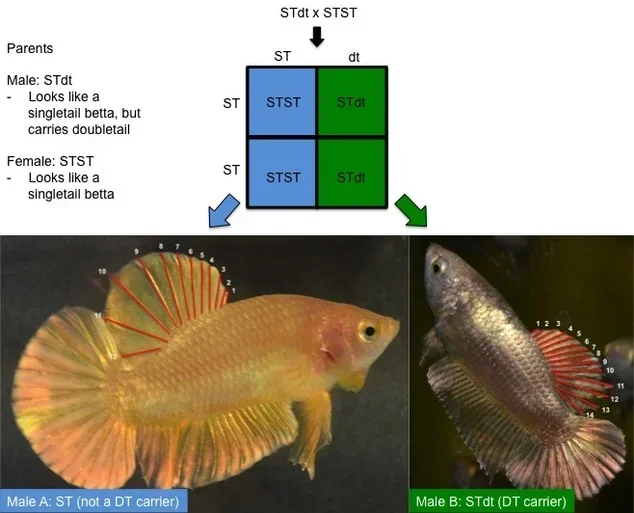
A betta fish punnett square is a simple grid chart that helps breeders predict which colors, patterns, and traits baby bettas will inherit from their parents. By learning how to set up and read a punnett square, you can make smarter breeding decisions and plan for specific outcomes. This guide covers everything from basic genetics to real-world breeding scenarios, giving you the tools you need to succeed.
Key Takeaways
- What a Punnett Square Does: A simple grid tool that predicts inherited traits in betta fish offspring based on parent genetics.
- Dominant vs. Recessive Genes: Dominant traits like super red show up with just one copy, while recessive traits need two copies to appear.
- Setting Up the Grid: You only need the parent genotypes to fill in a basic four-square punnett square and predict outcomes.
- Predicting Colors and Patterns: A punnett square helps you forecast which colors, patterns, and fin types will appear in your betta fry.
- Real-World Application: Breeders use punnett squares daily to plan mating pairs and strengthen desirable traits in their lines.
- Avoid Common Mistakes: Do not ignore environmental factors or assume all traits follow simple inheritance patterns.
📑 Table of Contents
- What Is a Betta Fish Punnett Square?
- Understanding Betta Fish Genetics Basics
- How to Set Up Your Betta Fish Punnett Square
- Predicting Betta Fish Colors and Patterns
- Common Breeding Scenarios Using a Punnett Square
- Tips for Successful Betta Fish Breeding
- Common Mistakes to Avoid When Using a Punnett Square
- Conclusion
What Is a Betta Fish Punnett Square?
A betta fish punnett square is a simple grid chart that helps breeders predict what traits baby bettas will inherit from their parents. If you have ever wondered why some bettas are bright red while others are blue, or why certain fin shapes appear in a batch of fry, a punnett square can help you understand the answer.
The tool was invented by a scientist named Reginald Punnett, and it has been used in genetics for over a hundred years. Today, betta fish enthusiasts use the same basic method to plan their betta fish breeding projects. Whether you are a beginner or have been raising bettas for years, learning how to read and fill in a punnett square is a valuable skill.
Think of it like a recipe chart. You put the genetic information from each parent on the top and side of the grid, and the squares inside show you the possible outcomes. It is a straightforward way to visualize betta fish genetics without needing a science degree.
Using a punnett square chart gives you a better idea of what to expect before you even start pairing your fish. This can save you time, money, and heartbreak. You will know which betta fish colors and patterns are likely to show up in the next generation.
Understanding Betta Fish Genetics Basics
Before you can use a punnett square, you need to understand a few basic genetics terms. Do not worry, this is simpler than it sounds. Let us break it down into easy pieces so anyone can follow along.
Dominant and Recessive Genes
Every betta fish carries two copies of each gene, one from each parent. Some genes are dominant, meaning they show up even if only one copy is present. Other genes are recessive, meaning both copies need to be the same for the trait to appear.
For example, the super red color in bettas is often a dominant trait. If one parent carries the super red gene, there is a good chance some of the betta fish offspring will display that vivid red color. On the other hand, the marble gene can behave differently, sometimes showing up unpredictably across generations.
Here is a simple way to remember the difference:
- Dominant gene: Only one copy needed for the trait to show.
- Recessive gene: Two copies needed for the trait to appear.
Genotype and Phenotype
Genotype is the genetic code a fish carries inside its cells. Phenotype is what you actually see on the outside, like the color or fin shape. A punnett square helps you predict the phenotype based on the genotype of the betta fish parents.
For instance, two bettas might both look blue, but one could carry a hidden gene for red. Their betta fish fry might surprise you with some red offspring. This is why understanding the difference between what you see and what the fish carries genetically is so important.
Knowing your fish’s genotype gives you a huge advantage when planning breedings. It is like having a secret map that shows you what traits are hiding beneath the surface.
Common Betta Fish Traits
Betta fish have many traits that can be tracked through genetics. Here are some of the most common ones breeders look at:
- Color traits: red, blue, green, turquoise, copper, and marble patterns
- Fin types: veil tail, crown tail, double tail, and halfmoon
- Pattern types: solid, cambodian, butterfly, and koi
- Scale types: metallic, solid, and marble
Each of these traits follows different inheritance rules. Some are dominant, some are recessive, and a few behave in more complex ways. The good news is that a punnett square chart can help you work through all of these possibilities step by step.
How to Set Up Your Betta Fish Punnett Square
Setting up a punnett square is easier than you might think. You do not need any special tools, just a pencil, paper, and the genetic information of your breeding pair. Let us walk through the process step by step.
Step 1: Identify the Parent Genotypes
First, you need to know what genes each parent carries. This is called the genotype. If you are working with a breeding pair of super red males and cambodian females, you need to know exactly what each one carries in its genetic code.
Write down the genotype for each parent. For simple traits, you might use letters like “R” for a dominant red gene and “r” for a recessive non-red gene. A parent that is RR is homozygous dominant, while “Rr” is heterozygous. Knowing this distinction is the foundation of every punnett square you will ever build.
Step 2: Draw the Grid
Draw a square and divide it into four smaller squares. Place one parent’s alleles along the top and the other parent’s alleles along the side. Each allele goes into its own box on the grid.
For example, if one parent is Rr and the other is Rr, you would place R and r across the top, and R and r down the side. Then you fill in each of the four squares by combining the alleles from the top and side. This creates your betta fish punnett square in just a few minutes.
Step 3: Fill in the Squares
Now comes the fun part. Fill in each small square by combining the alleles from the row and column it sits in. The result shows you all the possible genetic combinations for the betta fish offspring.
In our example, you would get RR, Rr, Rr, and rr. This tells you that 75 percent of the offspring would show the dominant red trait, and 25 percent would show the recessive trait. That is the power of a simple punnett square chart.
Step 4: Interpret the Results
Look at your completed grid and calculate the percentages. You can see exactly how likely each trait is to appear. This helps you decide whether a particular breeding pair is worth the effort and resources.
Keep in mind that real-world betta fish genetics can be more complex than simple one-gene traits. Some traits involve multiple genes, and environmental factors also play a role. But the basic punnett square gives you a strong starting point for every breeding project.
Predicting Betta Fish Colors and Patterns
One of the most exciting uses of a betta fish punnett square is predicting the colors and patterns of future fry. Breeders spend years selecting for specific traits, and the punnett square helps them plan their selective breeding strategy with confidence.
Color Inheritance in Bettas
Color inheritance in bettas can be fascinating. Some colors are passed down in predictable ways, while others are more chaotic. The marble gene, for instance, causes unpredictable color changes that can appear at any point in a betta’s life.
When you use a punnett square to predict color passing, you are working with the known genotypes of the parents. If both parents carry a recessive blue gene, you have a higher chance of producing blue offspring. If one parent carries a dominant red gene, red will likely show up in the batch.
Here are some common color inheritance patterns you might encounter:
- Super Red x Super Red: Mostly red offspring, some may carry hidden recessive genes
- Super Red x Cambodian: Mix of red and pale-bodied fry with colored fins
- Blue x Blue: Mostly blue, but recessive colors can reappear unexpectedly
Pattern Predictions
Patterns like cambodian, butterfly, and koi also follow genetic rules. A cambodian betta has a pale body with colored fins. When you breed two cambodian fish, a punnett square can help you estimate how many fry will show the full pattern versus a solid body.
The butterfly pattern involves color on the body that fades toward the tail. Predicting this trait is more complex because it often involves multiple genes. Still, a basic punnett square gives you a framework to start working with these betta fish patterns and improve your predictions over time.
Fin Type Inheritance
Fin types are another important trait that breeders track. The fin type inheritance from parents to fry can be predicted using the same punnett square method. A crown tail parent paired with a veil tail parent will produce different ratios of offspring depending on the genetics involved.
For example, if crown tail is dominant over veil tail, you would expect most fry to have crown tail fins. But some might still carry the recessive veil tail gene and pass it to the next generation. A punnett square helps you see these possibilities clearly and plan accordingly.
Common Breeding Scenarios Using a Punnett Square
Let us look at some real-world examples of how breeders use a betta fish punnett square in their daily work. These scenarios will help you see how the tool applies to actual breeding decisions and outcomes.
Scenario 1: Two Heterozygous Parents
Imagine you have two bettas that both carry one dominant red gene and one recessive non-red gene. Both look red, but they each carry hidden potential. When you set up the punnett square, you get a 3-to-1 ratio of red to non-red offspring.
This is one of the most common scenarios in betta fish breeding. It shows you that even when both parents look the same, the hidden genes can produce surprising results in the fry. About 75 percent will show the dominant trait, and 25 percent will show the recessive trait.
Scenario 2: One Dominant and One Recessive Parent
Now imagine one parent is RR (homozygous dominant for red) and the other is rr (homozygous recessive). Every single offspring will carry the Rr genotype, meaning they will all look red. However, they all carry the hidden recessive gene.
This scenario is useful when you want to strengthen a line while keeping a specific color. It is a key strategy in selective breeding programs for show-quality bettas. All offspring will look the same but carry hidden genetic diversity.
Scenario 3: Tracking Multiple Traits
Advanced breeders sometimes track more than one trait at a time. For example, they might want to predict both color and fin type in the same batch of fry. This requires a larger punnett square or running separate squares for each trait.
While this is more complex, the basic principle remains the same. You are still using the same genetic information to predict betta fish offspring outcomes. Start with one trait at a time and build your skills gradually before moving on to multi-trait predictions.
Breeding Scenario Comparison Table
| Parent Genotypes | Expected Ratio | Likely Outcome |
|---|---|---|
| RR x RR | 100% RR | All offspring show dominant trait |
| RR x rr | 100% Rr | All offspring show dominant trait (carriers) |
| Rr x Rr | 3:1 (dominant:recessive) | 75% dominant, 25% recessive |
| Rr x rr | 1:1 (dominant:recessive) | 50% dominant, 50% recessive |
| rr x rr | 100% rr | All offspring show recessive trait |
This table gives you a quick reference for the most common breeding outcomes. Keep it handy when you are planning your next betta fish breeding project.
Tips for Successful Betta Fish Breeding
Using a punnett square is just one part of successful betta fish breeding. You also need to take care of your fish properly and create the right environment for them to thrive. Here are some practical tips to help you succeed.
Quick Tips for Using a Punnett Square
- Start simple: Practice with one trait at a time before tackling multiple traits.
- Keep records: Write down every pairing and the actual outcomes. Compare them to your predictions.
- Use clear labels: Always label your alleles clearly so you do not mix up dominant and recessive genes.
- Check your math: Make sure your percentages add up to 100 percent after filling in the grid.
- Be patient: Genetics takes time to master. Do not get discouraged if your first predictions are not perfect.
Prepare the Right Water Conditions
Before you start any breeding project, make sure your water is clean and properly conditioned. Use a quality water conditioner to remove chlorine and heavy metals from your tap water. Betta fry are very sensitive to water quality, so this step is critical.
Keep the water temperature stable between 78 and 80 degrees Fahrenheit. Use a gentle sponge filter to maintain cleanliness without creating too much current. Clean water leads to healthy betta fish fry and better survival rates.
Set Up a Proper Breeding Tank
A dedicated breeding tank gives your betta fish parents the best chance of success. Set up a small tank, around 5 to 10 gallons, with gentle filtration and a heater. Add floating plants or a breeding mop where the male can build a bubble nest.
For more detailed guidance on tank setup, check out our setting up a fish tank for betta fish guide. The right environment makes a huge difference in breeding outcomes and fry survival.
Monitor Your Fry Closely
Once your fry hatch, they will need very small food like infusoria or baby brine shrimp. Watch them closely for any signs of illness or stress. Remove any dead fry promptly to keep the water clean.
As the fry grow, you can start to see which traits are showing up. This is where your punnett square predictions come to life. Compare what you actually see with what you predicted, and learn from any differences. Over time, your predictions will become more accurate.
Expert Insights on Betta Fish Genetics
Experienced breeders often share valuable advice about working with genetics. Here are some expert tips to keep in mind:
- Track your lineages: The more you know about a fish’s ancestry, the better you can predict its genotype. Keep detailed pedigree records for every fish in your breeding program.
- Do not rely solely on punnett squares: They are prediction tools, not guarantees. Real-world outcomes can vary due to environmental factors and complex gene interactions.
- Work with reputable sources: When buying breeding stock, choose suppliers who provide detailed genetic information about their fish.
- Join breeding communities: Other breeders can share their experiences and help you refine your understanding of betta fish genetics. Online forums and local clubs are great resources.
For a broader understanding of daily care that supports your breeding efforts, check out our betta fish care 101 guide. Strong knowledge of everyday care makes you a better breeder overall.
Common Mistakes to Avoid When Using a Punnett Square
Even experienced breeders sometimes make mistakes with their punnett squares. Here are a few common pitfalls to watch out for.
- Assuming all traits are simple dominant or recessive: Some betta traits involve incomplete dominance or multiple genes working together. Do not assume every trait follows a simple 3-to-1 ratio.
- Ignoring environmental factors: Water quality, temperature, and diet can all affect how genes express themselves. A punnett square predicts genetics, not environmental outcomes.
- Not updating your records: Keep detailed notes on every breeding pair and their actual outcomes. This data makes your future punnett square predictions much more accurate over time.
- Overcomplicating the grid: Start with simple one-trait punnett squares before trying to track multiple traits. Build your skills gradually and increase complexity as you grow more confident.
- Forgetting about hidden carriers: A fish can carry a recessive gene without showing it. Always consider the possibility that your breeding pair carries hidden traits that could appear in future generations.
Conclusion
Using a betta fish punnett square is one of the most rewarding skills you can develop as a betta breeder. It gives you a clear, visual way to predict what traits your fry will inherit from their parents. From color and pattern to fin type, the punnett square puts the power of prediction right at your fingertips.
Start with simple crosses and work your way up to more complex breeding projects. The more you practice, the more confident you will become. Remember that genetics is just one piece of the puzzle. Combine your punnett square knowledge with excellent care, proper water conditions, and attention to detail, and you will be well on your way to successful betta fish breeding.
Grab a pencil and paper, set up your first punnett square, and start exploring the fascinating world of betta fish genetics today. You will be amazed at what you can predict and achieve when you understand the science behind the colors and traits you love.
Frequently Asked Questions
What is a punnett square used for in betta fish breeding?
A betta fish punnett square is used to predict which colors, patterns, and traits baby bettas will inherit from their parents. It is a simple grid chart that shows all the possible genetic combinations based on the parents’ genotypes. Breeders use it to plan their pairings and anticipate what outcomes they will get.
Do I need to be a scientist to use a punnett square?
Not at all. A punnett square is designed to be simple and easy to use. You just need to know the basic genotypes of your breeding pair and understand whether traits are dominant or recessive. Anyone can learn to use one with a little practice and patience.
Can a punnett square guarantee the traits of my betta fry?
A punnett square gives you probabilities, not guarantees. It predicts the most likely outcomes based on genetics, but environmental factors and complex gene interactions can also play a role. Think of it as a helpful planning tool rather than a crystal ball.
What is the difference between genotype and phenotype in bettas?
Genotype is the genetic code a fish carries inside its cells, while phenotype is what you can actually see, like the color or fin shape. A punnett square helps you predict the phenotype based on the genotypes of the parent fish.
How long does it take to learn how to use a punnett square?
Most breeders can learn the basics in just one or two practice sessions. Start with simple one-trait crosses and gradually work up to more complex predictions. The more you use it, the more natural it will become.
Where can I learn more about betta fish genetics and breeding?
You can explore our full library of betta fish articles for more in-depth guides. Check out our breeding betta fish in a bowl guide for practical breeding tips, and our betta fish care 101 article for foundational knowledge that supports successful breeding.