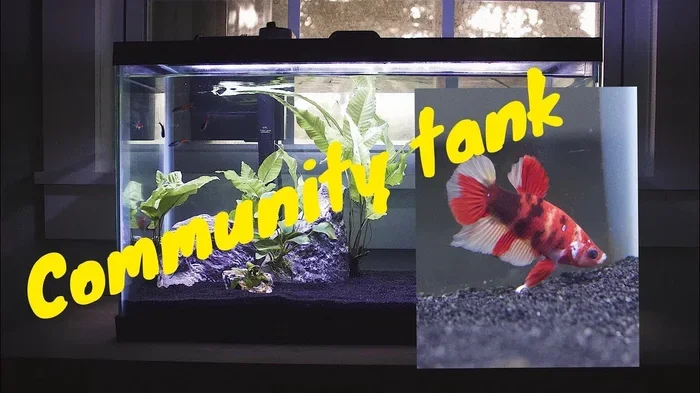
Can Molly Fish and Betta Fish Live Together
In most cases, molly fish and betta fish should not be kept together due to fundamental conflicts in temperament, water parameter needs, and activity levels. While a few carefully managed, heavily planted, oversized tanks might succeed, the risks of aggression, stress, and fin nipping are extremely high. Prioritizing the specific needs of each species separately is the safest and most humane approach for these beautiful but incompatible fish.
Key Takeaways
- Understanding can molly fish and betta fish live together: Provides essential knowledge
📑 Table of Contents
The Allure and The Reality of a Community Tank
So, you’ve got a beautiful, flamboyant betta fish—a living jewel with fins like silk and a personality full of sass. Or maybe you’re drawn to the active, cheerful schooling nature of mollies, those livebearers that seem to be constantly on the move. The idea of combining these two popular aquarium inhabitants into one stunning community tank is tempting. It’s a vision of color and movement: the betta’s regal stillness contrasted with the molly’s lively dance. But before you pour that second bag of gravel into your cart, let’s have a candid, friend-to-friend chat about why this specific pairing is one of the most debated and generally discouraged combinations in the freshwater hobby. This isn’t about being a buzzkill; it’s about being a responsible fish keeper. The goal is a thriving, stress-free aquarium, not a constant battlefield. We’ll dive deep into the science of their needs, the psychology of their behaviors, and the practical realities of tank setup to answer once and for all: can molly fish and betta fish live together?
The Temperamental Tug-of-War: Betta vs. Molly
Understanding this potential pairing starts with understanding the core personalities of each fish. It’s a classic case of an introvert and an extrovert being forced to share a tiny studio apartment.
Visual guide about Can Molly Fish and Betta Fish Live Together
Image source: ouraquariumlife.com
The Betta: A Solitary Aristocrat
The Siamese fighting fish, or betta (Betta splendens), has been selectively bred for centuries for its aggression and stunning finnage. In the wild, they are solitary labyrinth fish that defend small territories from other males. Their entire biology is geared towards this solitary existence. They are slow, deliberate swimmers who prefer to claim a specific plant leaf, cave, or corner as their own. They are also curious and intelligent, but this curiosity often manifests as territorial patrols and flaring (gilling out their gills) at any perceived intruder—which includes fast-moving, active fish that invade their space. A betta’s ideal tankmate is something that is non-territorial, calm, and occupies a different swimming layer (like bottom-dwelling corydoras or khuli loaches).
The Molly: The Energetic Schooler
Mollies (genus Poecilia, most commonly Poecilia sphenops or Poecilia latipinna) are the antithesis of the betta. They are high-energy, social, and constantly in motion. In the wild, they live in large, active schools in brackish estuaries and streams. They are mid to top-level swimmers who need ample open space to dart, chase, and display their social hierarchies. Their constant activity is not malicious; it’s simply their nature. However, to a betta, this non-stop motion is seen as aggressive posturing and a direct challenge to its territory. Mollies are also known to be mild fin-nippers, especially if underfed or bored, and the long, flowing fins of a betta are a tantalizing target.
Why Personality Clash is a Recipe for Disaster
Putting these two together is like putting a person who needs absolute quiet to concentrate in a room with someone who thrives on constant, loud conversation. The betta will feel perpetually stressed and provoked by the molly’s activity, leading to chronic stress (which suppresses its immune system), constant flaring (which exhausts it), and ultimately, violent attacks. The molly, in turn, may become fascinated with the betta’s fins, leading to nipping. This isn’t a matter of “if” but “when.” Even a supposedly “mellow” betta and a “peaceful” molly have these instincts hardwired. The stress alone can cause color fading in both fish, loss of appetite, and susceptibility to disease like ich or fin rot. The dynamic is fundamentally unstable.
The Unbridgeable Water Parameter Divide
Even if we could somehow magically align their personalities, their ideal water conditions are on opposite ends of the spectrum. Fish are not flexible about their water chemistry; it’s a matter of survival. Forcing them to compromise is a slow form of poisoning.
Visual guide about Can Molly Fish and Betta Fish Live Together
Image source: pickedbyfish.com
Betta Paradise: Warm, Soft, and Slightly Acidic
Bettas are tropical fish from the warm, shallow, slow-moving waters of Southeast Asia. Their ideal water parameters are:
- Temperature: 78-80°F (25.5-26.5°C). This is the high end for most tropical fish.
- pH: 6.5-7.5. They prefer slightly soft, acidic water similar to their native peat-filtered habitats.
- Hardness (GH): 3-4 dGH (very soft to soft).
These parameters are crucial for their metabolic function, breeding, and overall vitality. Water that is too hard or alkaline can cause chronic stress and health issues.
Molly Requirements: Hard, Alkaline, and Slightly Cooler
Mollies are native to the coastal regions of the Americas and are uniquely adapted to brackish (slightly salty) conditions. They are much hardier regarding water chemistry but have clear preferences:
- Temperature: 75-80°F (24-26.5°C). They are comfortable at the lower end of the betta’s range.
- pH: 7.5-8.5. They thrive in harder, more alkaline water.
- Hardness (GH): 10-20 dGH (moderately hard to very hard). They often benefit from added mineral salts (like aragonite substrate or commercial mineral blocks).
Mollies in soft, acidic water can suffer from “shimmies” (a neurological twitch) and poor health over time, as their bodies are not built for those conditions.
The Impossible Middle Ground
Let’s try to find a compromise. You might aim for:
- Temperature: 78°F. This is acceptable to both, though the molly is at its upper limit.
- pH: 7.5. This is the absolute maximum for a healthy betta and the absolute minimum for a thriving molly. It’s a dangerous compromise for the betta, which will be stressed by alkaline water.
- Hardness: 8 dGH. This is too hard for the betta’s preference and too soft for the molly’s optimal health.
You are guaranteeing that at least one fish is living in suboptimal, stressful conditions 24/7. This chronic stress weakens its immune system, making it a sitting duck for disease. There is no healthy “middle ground” that satisfies both species’ biological needs. You must choose which fish’s health you are willing to compromise, and that is not a choice a responsible keeper should have to make.
Tank Size, Setup, and the Illusion of Space
“But I have a big tank!” is a common refrain. Tank size is the single most important factor in *any* community tank attempt, but with this pairing, it’s a matter of damage mitigation, not a solution.

Visual guide about Can Molly Fish and Betta Fish Live Together
Image source: petshun.com
The Absolute Minimum (And Why It’s Still Not Enough)
If you are determined to try (though we strongly advise against it), the absolute minimum tank size is a 20-gallon long tank. A standard 20-gallon high is too narrow and doesn’t provide enough horizontal swimming space for the molly to feel secure and for the betta to establish a territory away from the molly’s path. A 29-gallon or larger is significantly better. The logic is that more space allows the betta to claim one end and the active mollies to use the other, with enough visual barriers to break line-of-sight. However, remember that a molly school needs space—they are not a single fish. You should keep mollies in a group of at least 4-6 to prevent them from harassing the betta out of boredom or redirecting aggression among themselves. Six active mollies plus a betta in a 20-gallon is dangerously crowded.
The Perfect Setup That Still Might Fail
Even in a 30+ gallon tank, your setup must be meticulously planned:
- Dense Planting: Use live plants like Java fern, Anubias, and Vallisneria to create a jungle of visual barriers. The betta needs plants to claim as its territory; the mollies need them to break up their school’s line of sight and reduce the feeling of being in an open arena where they feel compelled to chase.
- Defined Zones: Create distinct areas. Use driftwood, large rocks, and clusters of plants to give the betta a secluded “bedroom” corner. Leave a large, open area in the center for the mollies to school and swim.
- Strong Filtration: Mollies are heavy waste producers. You need a filter rated for a much larger tank to handle the bioload and keep water parameters stable—a challenge when also trying to meet the betta’s preference for calmer water flow.
- Multiple Hiding Spots: Provide caves, PVC pipes, and dense thickets for the betta to retreat to if feeling overwhelmed.
This creates an environment where *theoretically* the fish could avoid each other. But it’s a high-stakes gamble. One bored molly, one particularly feisty betta, one day when the water parameters shift slightly—and the harmony shatters.
Fin Nipping, Stress, and the Inevitable Consequences
Let’s talk about the most visible and heartbreaking outcome of this incompatible pairing: fin nipping.
The Temptation of the Betta’s Fins
To a fast-moving, curious molly, the betta’s magnificent fins are like a waving red flag. They are irresistible. Mollies may initially “test” the betta’s fins with gentle nips. If the betta is too stressed to retaliate effectively or retreat, this behavior escalates. The result is a betta with shredded, torn, and ragged fins. This is not just an aesthetic issue; it’s a severe health hazard. Torn fins are a direct pathway for fungal and bacterial infections like fin rot, which can be fatal if not caught and treated immediately.
The Silent Suffering of Chronic Stress
Even without physical bites, the constant presence of the mollies is a profound stressor for the betta. Signs of chronic stress in a betta include:
- Fading or dulling of its vibrant colors.
- Hiding constantly, not coming out even for food.
- Lethargy, resting on the bottom or plant leaves.
- Loss of appetite.
- Excessive flaring at everything, a sign of constant anxiety.
For the mollies, the betta’s flaring and sudden lunges from its hiding spot are also stressful. A stressed molly may become more skittish, lose color, or become more prone to nipping as its own stress levels rise. You are creating a cycle of mutual anxiety.
The “It Worked For Me” Fallacy
You will find anecdotal stories online of people who claim their betta and molly live in harmony. These cases are the rare exceptions that prove the rule. They often involve:
- An unusually docile, half-moon or plakat betta with minimal finnage.
- A very large, heavily planted tank (50+ gallons).
- A single, very passive molly (not a school).
- Years of careful, gradual introduction and constant supervision.
These are not replicable conditions for the average hobbyist. They are high-risk experiments, not a recommended practice. The “it worked for me” story does not account for the months or years of suppressed stress the fish endured, or the fact that it could all fall apart with the introduction of a new fish, a change in water temperature, or simply the betta reaching maturity and becoming more territorial.
Practical Alternatives: How to Keep Both Species Successfully
So you love both bettas and mollies. Fantastic! They are both fantastic fish. The solution is not to force them together, but to give them the ideal homes they deserve. This is the path of a true fish enthusiast.
The Gold Standard: Separate, Species-Appropriate Tanks
This is the simplest, safest, and most rewarding approach.
- For Your Betta: A 5-gallon planted tank (a “betta condo”) is the absolute minimum, with 10 gallons being ideal. Heated to 78-80°F, filtered with a gentle flow, and adorned with live plants, silk plants, and hiding spots. This allows his true personality—curious, interactive, and display-oriented—to shine without stress.
- For Your Mollies: A 20-gallon long tank minimum, preferably 29 gallons or more for a school of 4-6. They need open swimming space and robust filtration. The water can be kept at 76-78°F with a higher pH and hardness, which they will love. You can even add a tiny amount of aquarium salt (not marine salt) to mimic their brackish origins, which they will thrive in.
This setup allows you to observe and appreciate the unique behaviors of each species fully. Your betta will build bubble nests and flare at his reflection. Your mollies will form lively social hierarchies and, if you have females, you might even get some cute little molly fry! You eliminate all risk of aggression, fin nipping, and incompatible water chemistry.
The Compromise: A Divided Tank (With Major Caveats)
If space or budget truly limits you to one tank, a solid, water-tight divider is the *only* way to attempt keeping them in the same *system*. A 30+ gallon tank is mandatory. The divider must be:
- physically solid (no gaps, mesh is not enough—they will see and stress each other through it).
- water-tight to prevent water flow between compartments, allowing you to maintain slightly different parameters (e.g., a little salt on the molly side).
- secure and sealed at the top and bottom to prevent jumping.
Even with a divider, you are running two separate tanks in one cabinet. You must have separate filtration, heating, and maintenance routines for each side. This is more complex and expensive than two small tanks. The benefit is a single display. The risk is that the visual stress of seeing each other constantly through the glass can still cause chronic stress and flaring. It is a significant compromise, not an ideal solution.
Choosing Better Tank Mates
If you want a true community tank, choose compatible mates for each fish individually.
- For a Betta: Peaceful, cool-water species that occupy the bottom and middle levels: Harlequin rasboras (a small school), Ember tetras (a small school), Khuli loaches, Bristlenose plecos (a single one), or a single Apple or Nerite snail. Always introduce the betta last.
- For Mollies: Other livebearers with similar water needs: Platies, Swordtails, or Endlers livebearers. They can also do well with some robust tetras (like Black Skirt tetras) or barbs (like Tiger barbs—but be cautious as barbs can be feisty). Avoid long-finned, slow fish.
Do your research for each potential mate’s specific water needs and temperament. The goal is a community where no one is a natural predator or prey, and all have overlapping environmental requirements.
Frequently Asked Questions
Can a female betta live with mollies?
Female bettas are generally less aggressive than males, but they still possess territorial instincts. The same fundamental conflicts in water parameters, activity levels, and the mollies’ tendency to fin-nip remain. While a female betta *might* be slightly more tolerant, the pairing is still highly risky and not recommended for the same reasons as a male betta.
What is the absolute largest tank I would need to even consider this?
If you are a very experienced hobbyist intent on trying, you would need a minimum of a 40-gallon breeder tank (36” x 18”) to have any hope of creating distinct territories. Even then, success is not guaranteed. For the vast majority of keepers, this is an unnecessary risk when separate, smaller tanks are a far superior and more humane solution.
Are there any fish that can live with both a betta and a molly separately?
Finding a fish compatible with *both* a betta’s and a molly’s needs is extremely difficult due to their opposing water parameter preferences. However, some very hardy, temperature-tolerant species like certain types of corydoras catfish (which prefer cooler, soft water but can adapt) or Bristlenose plecos (which are algae eaters that tolerate a range of conditions) *might* work as a shared tankmate in a carefully managed, large, and heavily planted tank where the water is kept at a stable 78°F and a neutral pH. But this is an advanced, high-risk community setup.
What should I do if my betta’s fins are getting nipped by mollies?
Immediately separate the betta into a hospital tank. Do not wait to see if it gets better. Clean water with a mild salt dip (using aquarium salt, not table salt) can help prevent infection. The molly must be removed from the main tank as well, as its presence is the trigger. The safest course is to permanently rehome one of the species. Never return a known fin-nipper to a tank with a long-finned fish.
Will live plants help reduce aggression between them?
Live plants are an excellent tool for *any* community tank as they provide hiding spots, break up sight lines, and improve water quality. In a betta-molly tank, they are absolutely essential as a damage-control measure. However, they are a mitigation strategy, not a cure. They reduce stress by providing cover but do not eliminate the core incompatibilities of temperament and water chemistry. A well-planted 20-gallon tank is still a very bad idea for this pairing.
My molly is pregnant. Does that change anything?
No, it makes the situation more dangerous. A pregnant molly is more stressed and may be more prone to nipping. Furthermore, if she gives birth in a tank with a betta, the tiny, slow-moving fry (babies) are perfect, easy targets. A betta will eat them without hesitation. The risk to the vulnerable fry is extremely high.