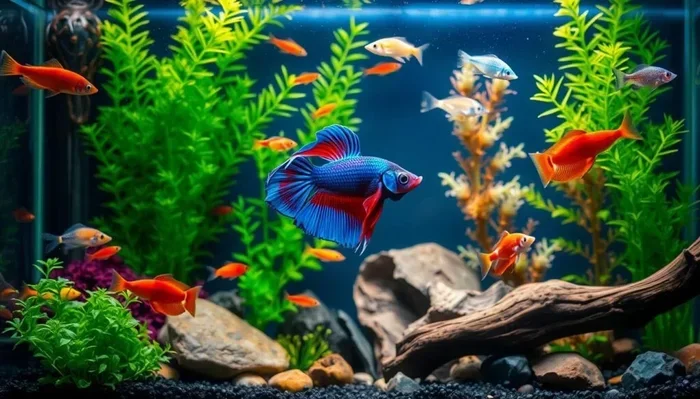
Can Angelfish Live with Betta Fish

So, can angelfish live with betta fish? The short answer is it depends. Angelfish and bettas can share a tank under the right conditions, but their temperaments and size differences create real challenges. This guide covers everything you need to know about angelfish and betta compatibility, from tank setup to feeding strategies.
So you have a beautiful betta fish swimming happily in your aquarium, and now you are thinking about adding an angelfish. Maybe you have seen stunning angelfish at the pet store and wondered if they could live together. The question can angelfish live with betta fish is one of the most common ones in the aquarium hobby. And honestly, the answer is not a simple yes or no.
Angelfish and bettas are both popular freshwater fish, but they come with different needs and behaviors. Bettas are known for their long fins and territorial nature. Angelfish are larger, more active swimmers that can also be aggressive. Putting them together requires careful planning, the right tank setup, and a good understanding of both species. In this guide, we will walk you through everything you need to know to make an informed decision.
Whether you are a beginner or a seasoned aquarist, this article will help you understand the realities of keeping these two species together. We will cover tank requirements, compatibility factors, feeding tips, and common mistakes to avoid. By the end, you will know exactly what to expect and how to set up your aquarium for success.
Key Takeaways
- Compatibility Varies: Angelfish and bettas can coexist, but success depends on tank size, temperament, and setup.
- Tank Size Matters: A minimum of 55 gallons is recommended to reduce aggression and territorial behavior.
- Monitor Aggression: Watch for fin nipping, chasing, and flaring, and be ready to separate fish if needed.
- Right Angelfish Species Help: Smaller angelfish species and peaceful varieties improve the chances of harmony.
- Proper Setup Is Key: Plenty of hiding spots, plants, and open swimming space reduce conflict significantly.
- Feeding Strategy Matters: Separate feeding zones prevent food competition and reduce stress between species.
📑 Table of Contents
Understanding Angelfish and Betta Fish
Before you decide to house these two species together, it helps to understand what makes each of them tick. Both fish have unique traits that affect how they interact with tank mates.
What Makes Angelfish Unique
Angelfish are part of the cichlid family. They are native to the warm rivers of South America. In the wild, they can grow up to 6 inches tall and 8 inches long. They are tall, elegant fish with flowing fins and striking patterns. Angelfish are generally semi-aggressive. They can become territorial, especially during breeding. They also tend to nip at the fins of slower, long-finned fish. This is a key concern when thinking about housing them with bettas.
Angelfish are schooling fish by nature. They do best when kept in small groups. A pair or a small school of 4 to 6 angelfish can thrive in a well-planned community tank. However, a pair of angelfish can become dominant and aggressive toward other fish. This is something to keep in mind when choosing tank mates.
What Makes Betta Fish Unique
Betta fish, also known as Siamese fighting fish, are beloved for their vibrant colors and flowing fins. Male bettas, in particular, are known for their aggressive temperament. They flare their gills, spread their fins, and can become highly territorial. In the wild, bettas live in shallow rice paddies and slow-moving streams in Southeast Asia. They have evolved to defend their territory fiercely.
Male bettas should never be housed with other male bettas. They will fight, often to the death. Female bettas can sometimes live together in groups called sororities, but even then, there can be tension. When it comes to other species, bettas can be unpredictable. Some bettas are peaceful and ignore other fish. Others will chase and nip at anything that moves near their fins.
Many fish keepers ask can male betta fish live with angelfish specifically. The answer is that it is risky. Male bettas are more aggressive than females, and angelfish can trigger their territorial instincts. If you are considering this combination, it is important to understand the risks involved.
Can Angelfish Live with Betta Fish: The Compatibility Factor
The big question remains: can you put a betta fish with angelfish and expect them to get along? The truth is that compatibility depends on several factors. No two fish are the same, and individual temperament plays a huge role.
Factors That Affect Compatibility
Several things influence whether angelfish and bettas can coexist peacefully:
- Tank Size: A small tank increases aggression. Fish need space to establish territories and retreat from confrontations.
- Angelfish Size: Larger angelfish may intimidate or even bully bettas. Smaller angelfish tend to be less threatening.
- Betta Temperament: Some bettas are naturally calm. Others are highly aggressive. Knowing your betta’s personality is essential.
- Tank Setup: Plenty of plants, caves, and hiding spots reduce stress and territorial disputes.
- Stocking Order: Introducing the betta first and the angelfish second (or vice versa) can affect how they interact.
- Number of Fish: A single angelfish with a single betta is riskier than a group of angelfish with a betta, as the group dynamic can diffuse aggression.
When It Works
Many fish keepers have successfully kept angelfish and bettas together. It usually works when the tank is large enough, the setup provides plenty of hiding spots, and both fish are relatively calm. Some keepers report that female bettas are more compatible with angelfish than males. The female betta tends to be less aggressive and more willing to share space. If you want to explore this further, check out our guide on can female betta live with other fish for more insights.
When It Does Not Work
There are also many cases where angelfish and bettas simply cannot live together. If your betta is a known fin-nipper or extremely territorial, adding an angelfish is a bad idea. Similarly, if your angelfish are large and dominant, they may chase and stress out a betta. In these situations, it is best to keep them in separate tanks. The health and safety of your fish should always come first.
Tank Setup for Housing Angelfish and Bettas Together
If you have decided to try keeping angelfish and bettas together, the tank setup is critical. A poorly designed tank will lead to stress, disease, and even death. Here is what you need to know.
Minimum Tank Size
The minimum tank size for housing angelfish and bettas together is 55 gallons. Angelfish need vertical space because of their tall bodies. A tank that is at least 24 inches tall is ideal. Bettas need horizontal swimming space as well. The more room you provide, the less likely the fish are to encounter each other and start fights.
If you have a smaller tank, it is best to keep these species separate. A 20-gallon tank is fine for a single betta, but adding an angelfish to that space would be too crowded. Overcrowding is one of the top causes of aggression in community tanks.
Plants and Decorations
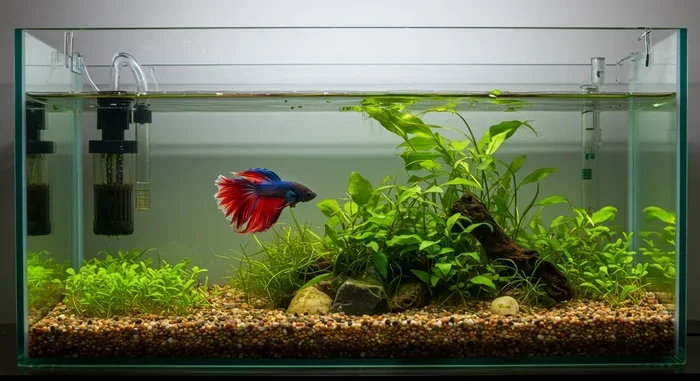
Live plants are a must in a tank housing angelfish and bettas. Plants create natural barriers that break up lines of sight and reduce territorial behavior. They also provide hiding spots where shy fish can retreat. Good plant choices include:
- Amazon sword plants
- Java fern
- Anubias
- Water wisteria
- Floating plants like duckweed or frogbit
Decorations like caves, driftwood, and rock formations also help. They give each fish its own territory to claim, which reduces conflict. Make sure there are no sharp edges that could damage the delicate fins of either species.
Water Parameters
Both angelfish and bettas thrive in similar water conditions, which is one reason they can sometimes coexist. Here are the ideal parameters:
- Temperature: 76 to 82 degrees Fahrenheit
- pH Level: 6.5 to 7.5
- Water Hardness: 3 to 8 dKH
- Filtration: Gentle flow to avoid stressing the betta
Regular water changes are essential. Aim for 25 to 30 percent water changes weekly to keep the water clean and healthy. Poor water quality increases stress, which leads to aggression and disease.
Feeding Angelfish and Bettas Together
Feeding two different species in the same tank can be tricky. Angelfish and bettas have different feeding habits and speeds. Here is how to manage mealtime successfully.
What to Feed Each Species
Angelfish are omnivores. They eat flakes, pellets, frozen foods, and live foods. A high-quality angelfish pellet or flake should be their staple diet. Supplement with brine shrimp, bloodworms, and blanched vegetables for variety.
Betta fish are also omnivores but prefer a protein-rich diet. Betta pellets, freeze-dried bloodworms, and live brine shrimp are excellent choices. Avoid overfeeding, as both species are prone to bloating and digestive issues.
Feeding Strategies to Reduce Conflict
When feeding two species together, spread the food across the tank. Drop some food near the surface for the betta and some in the middle or lower levels for the angelfish. This prevents one species from dominating the food source and reduces competition. If one fish is a faster eater, feed it separately first to ensure it gets enough nutrition before the other fish gets to the food.
Watch their behavior during feeding time. If the betta hides and refuses to eat because the angelfish is chasing it, you may need to feed them in separate areas of the tank or at different times.
Common Mistakes to Avoid
Many fish keepers make avoidable mistakes when trying to house angelfish and bettas together. Here are the most common ones and how to prevent them.
Underestimating Tank Size
The biggest mistake is using a tank that is too small. A cramped tank amplifies aggression and stress. Always go bigger than you think you need. A 55-gallon tank or larger gives both species room to establish territories without constant confrontation.
Ignoring Early Warning Signs
Pay close attention to how the fish interact during the first few weeks. Signs of trouble include:
- Constant chasing
- Fin nipping or torn fins
- Flaring and displaying
- Refusing to eat
- Hiding for extended periods
- Clamped fins
If you notice any of these signs, be prepared to separate the fish. Do not wait until one fish becomes seriously injured or stressed.
Adding Too Many Fish at Once
Introduce fish slowly. Add one species first and let it settle in for a week or two before adding the other. This gives each fish time to establish its territory and reduces the shock of a new arrival. Rushing the process often leads to conflict.
Choosing the Wrong Angelfish
Not all angelfish are the same. Some are naturally more aggressive than others. If you are planning to keep angelfish with a betta, choose younger, smaller angelfish that are less likely to dominate the tank. Avoid breeding pairs, as they become highly territorial during spawning.
Expert Tips for Success
Here are some expert-backed tips that can improve your chances of success when keeping angelfish and bettas together.
- Start with a female betta. Female bettas are generally less aggressive and more tolerant of other fish. A male betta may view the angelfish as a rival and attack relentlessly.
- Use a divider if needed. If you are unsure about compatibility, a tank divider allows both fish to share the same aquarium without direct contact. You can remove the divider later if things go well.
- Observe behavior daily. Spend a few minutes each day watching how the fish interact. Early intervention can prevent serious problems.
- Keep the tank well-planted. Dense planting is one of the best ways to reduce aggression in community tanks. Plants break lines of sight and create safe zones for each fish.
- Have a backup plan. Always be ready with a separate tank in case the fish cannot coexist. It is better to have a plan B than to lose a fish to aggression.
Many aquarists also explore other tank mates beyond angelfish. If you are curious about what other fish can live with bettas, check out our article on can your betta fish live with other fish for a broader perspective on compatible species.
Conclusion
So, can angelfish live with betta fish? Yes, but it is not guaranteed. Success depends on tank size, fish temperament, setup, and a willingness to monitor and adjust as needed. There is no one-size-fits-all answer, and every aquarium is different. Some keepers have beautiful, peaceful tanks with both species. Others find that the combination simply does not work, and separation is necessary.
The key is to go in with realistic expectations. Do not assume that every angelfish and betta will get along. Be prepared to make changes if things do not work out. Your priority should always be the health and well-being of your fish. With the right planning, a large enough tank, and careful observation, you can create a community aquarium that showcases both of these stunning species.
Take your time, do your research, and enjoy the process. Aquarium keeping is a journey, and every tank teaches you something new. Whether you keep angelfish and bettas together or separately, the most important thing is that your fish are happy, healthy, and thriving.
Frequently Asked Questions
Can a male betta live with angelfish safely?
It is possible but risky. Male bettas are highly territorial and may see the angelfish as a threat. Success is more likely in a large tank with plenty of hiding spots. Always monitor their behavior closely and be ready to separate them if aggression occurs.
What size tank do I need for angelfish and bettas together?
A minimum of 55 gallons is recommended. Angelfish need vertical space, and bettas need room to swim. A larger tank reduces stress and gives both fish space to establish their own territories without constant conflict.
Are female bettas better tank mates for angelfish than males?
Yes, female bettas tend to be less aggressive than males. They are generally more tolerant of other fish, which makes them a better choice for a community tank with angelfish. However, even female bettas can show aggression, so monitoring is still important.
What should I do if my betta and angelfish are fighting?
Separate the fish immediately. Use a tank divider or move one fish to a different tank. Fighting can cause injuries, stress, and even death. Observe both fish for a few days before attempting to reintroduce them.
Can angelfish and bettas eat the same food?
Yes, they can share similar foods. High-quality pellets, flakes, and frozen foods work for both species. However, it is best to spread food across the tank to prevent one fish from hogging all the food and to ensure both get proper nutrition.
How long does it take to know if angelfish and bettas are compatible?
It can take anywhere from a few days to a few weeks to see how the fish interact. Watch for signs of stress, aggression, or peaceful coexistence during the first two to three weeks. If no serious aggression occurs, they may be compatible long-term.