Can a Betta Fish Live with a Goldfish

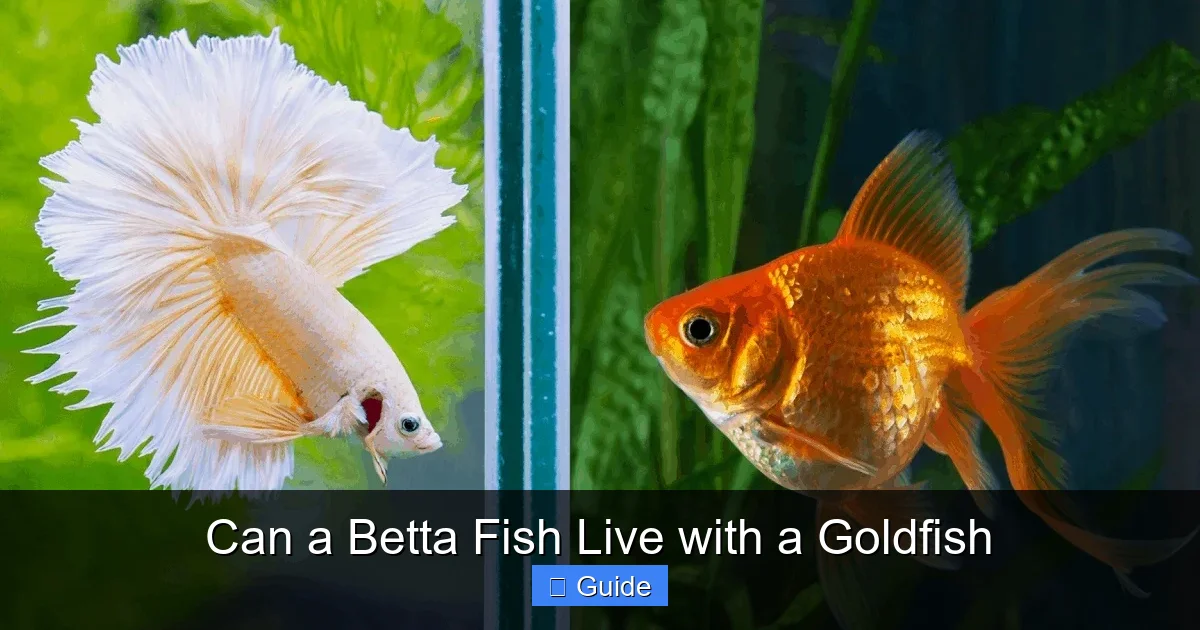
While the idea of a betta fish living with a goldfish might seem charming, it’s a combination that almost always ends in disaster. Bettas are aggressive, tropical fish with specific water needs, while goldfish are coldwater, messy swimmers that produce excessive waste. Their incompatible temperaments, water parameter requirements, and temperature preferences make cohabitation unsafe for both species. Instead, focus on providing each with a properly sized, species-appropriate tank and consider compatible tank mates that share similar needs.
Key Takeaways
- Temperamental Clash: Bettas are famously aggressive and territorial, often nipping at the flowing fins of slow-moving goldfish, which can lead to severe stress or injury for the goldfish.
- Water Parameter War: Bettas require warm, pristine water, while goldfish are incredibly messy, producing massive amounts of ammonia-rich waste that rapidly degrades water quality, poisoning the sensitive betta.
- Temperature Troubles: Bettas are tropical fish needing water around 78-80°F (25-27°C), whereas goldfish are coldwater fish thriving in 65-75°F (18-24°C). There is no safe, overlapping temperature that suits both.
- Size and Speed Disparity: Common goldfish grow to 12+ inches and swim fast, quickly outcompeting a slower betta for food and dominating the tank space, causing the betta to starve or be constantly stressed.
- Dietary Differences: Bettas are strict carnivores needing high-protein foods, while goldfish are omnivores that graze constantly. Feeding a suitable diet for one will malnutrition the other, and food competition will occur.
- Massive Tank Size Requirements: Even a single fancy goldfish needs a minimum 20-30 gallon tank, while a betta can live in 5+ gallons. Housing both would require an enormous, heavily filtered tank that still wouldn’t solve the core incompatibilities.
- Safe Alternatives Exist: The best practice is to keep these species in separate, properly cycled tanks. For community tanks, choose peaceful, similarly-sized fish with matching water and temperature needs for each species.
📑 Table of Contents
- The Allure and the Reality of a Mixed-Species Tank
- Betta Fish Temperament: A Fiery Personality
- Goldfish: Gentle Giants with Big Needs
- The Unavoidable Water Parameter War
- Temperature: The Deal-Breaker
- Feeding and Space Challenges
- Safe and Suitable Tank Mates for Each Species
- Conclusion: Separate Tanks for Separate Needs
The Allure and the Reality of a Mixed-Species Tank
There’s a certain magic to the idea of a peaceful, community aquarium. You picture a vibrant betta fish, with its flaring fins and bold colors, swimming gracefully alongside a serene, bubble-eyed goldfish. It’s a scene that looks beautiful in our minds and sometimes in cartoon shows or movies. But in the real world of fishkeeping, this pairing is one of the most commonly asked-about and most problematic combinations. The short, direct answer is no, a betta fish cannot safely live with a goldfish. It’s not just a bad idea; it’s a recipe for suffering, stress, and likely the death of one or both fish. Their fundamental biological needs, behaviors, and very natures are in direct opposition. Let’s break down exactly why this seemingly cute pairing is one of the worst decisions you can make for your aquatic pets.
Understanding this incompatibility is crucial for any responsible fish owner. It’s not about being mean or restrictive; it’s about respecting the animal’s natural design. A betta fish, also known as a Siamese fighting fish, is a product of millennia of evolution in the shallow, warm, and often oxygen-poor waters of Southeast Asia. The goldfish, Carassius auratus, is a domesticated carp from the cool, spacious, and plant-rich ponds of East Asia. They come from entirely different worlds. Putting them together forces one or both to live in a constant state of stress, which compromises their immune systems, stunts their growth, and shortens their lifespans. Your goal as a caretaker is to replicate a slice of their natural habitat where they can thrive, not a forced cohabitation where they merely survive.
Betta Fish Temperament: A Fiery Personality
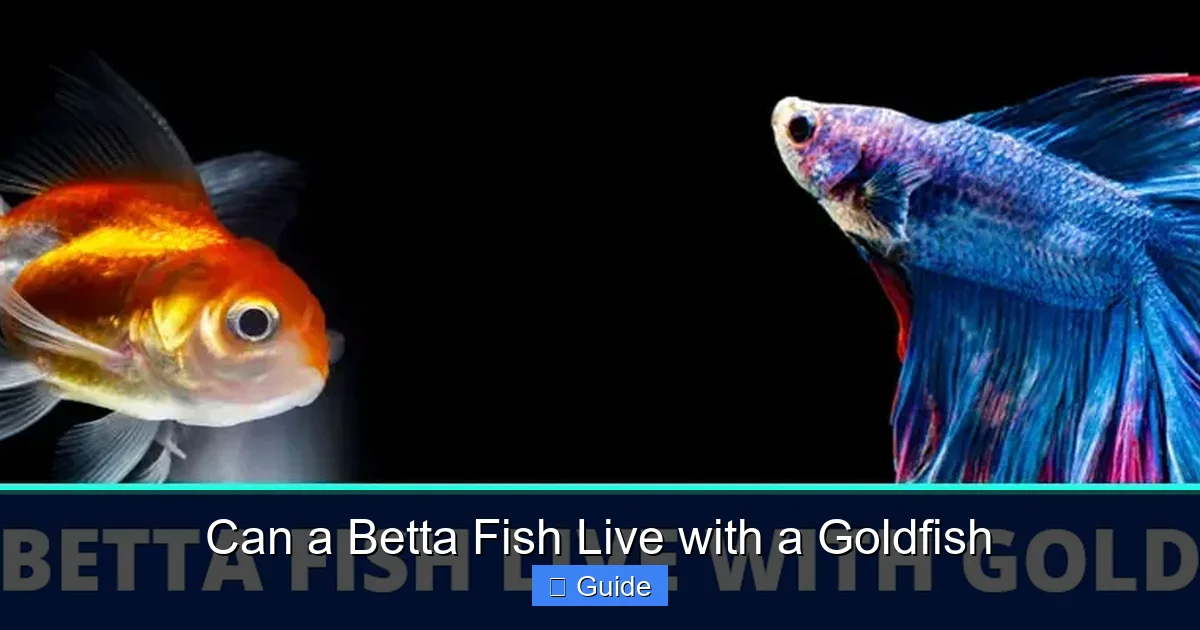
To understand why a betta and a goldfish are a terrible match, you must first understand the betta. This is not a peaceful, community-oriented fish. The betta’s reputation as a fighter is well-earned. Male bettas, in particular, are fiercely territorial and will attack any fish they perceive as a rival, especially other males with long, flowing fins. This aggression is hardwired. In the wild, they defend small territories around plants or debris. In a tank, that entire space is theirs.
Visual guide about Can a Betta Fish Live with a Goldfish
Image source: vivofish.com
The Betta’s Aggressive Instincts
A betta’s aggression isn’t just about fighting for mates. It’s a response to perceived threats. Long, flowing fins, bright colors, and active swimming near the surface can all trigger a betta’s defensive behavior. They will flare their gills, chase, and nip at the intruder. This behavior is incredibly stressful for the target fish and exhausting for the betta. A constantly flaring betta is a betta in a state of high alert, which suppresses its immune system and makes it susceptible to diseases like fin rot or ich. You might think a calm, “docile” betta would be an exception, but this is often a sign of chronic stress or illness, not a compatible temperament.
Why a Betta Might Attack a Goldfish
Now, picture a goldfish. Many varieties, like the fantail or oranda, have long, wispy, flowing fins that drape elegantly behind them. To a betta, this is a giant red flag. It looks exactly like another male betta or a tempting target. The goldfish’s slow, deliberate, bottom-skimming movements can also seem like an intrusion into the betta’s mid-level territory. The betta will likely see this slow-moving, finned creature as a rival to be driven off. The resulting chasing and nipping will terrorize the goldfish. Goldfish aren’t built for speed or evasion; they are built for grazing. They will become stressed, hide constantly, and may suffer physical damage to their delicate fins, leading to infections. The aggression is a one-way street; a goldfish is not equipped to fight back or even effectively escape a determined betta.
Goldfish: Gentle Giants with Big Needs
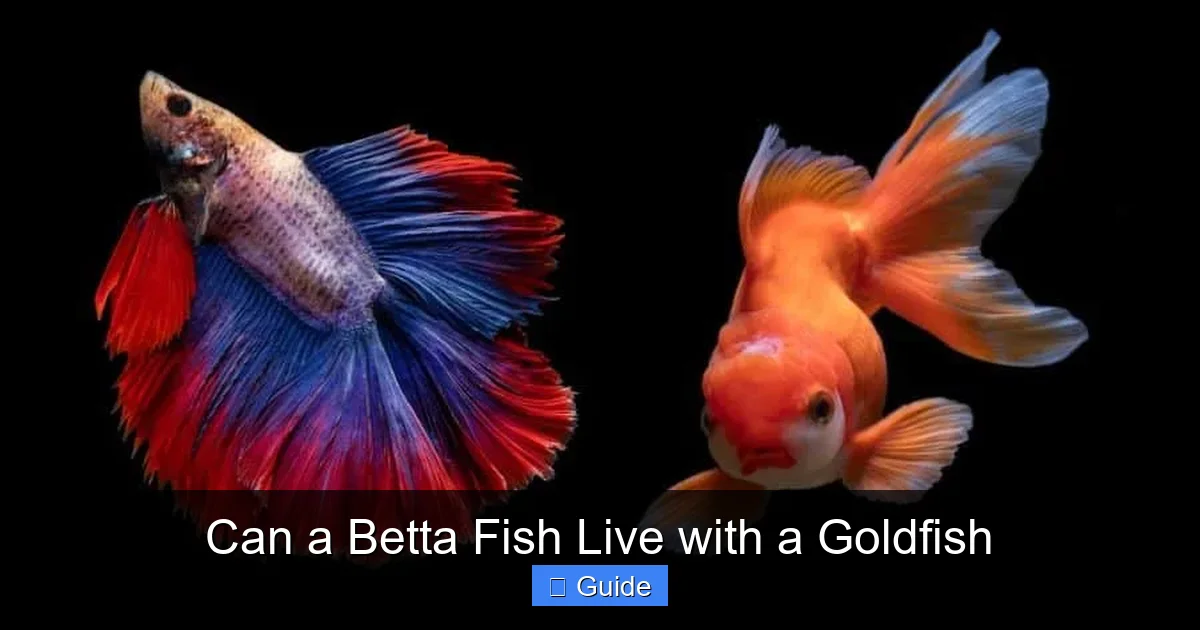
Goldfish are often misunderstood as simple, hardy, beginner fish that can live in a small bowl. This is one of the biggest myths in the hobby. Modern goldfish, especially the fancy varieties, are complex creatures with enormous biological needs. They are not gentle in the sense of being passive; they are simply not aggressive predators. Their behavior is that of a constant, messy grazer.
Visual guide about Can a Betta Fish Live with a Goldfish
Image source: ouraquariumlife.com
Goldfish Social Behavior
Goldfish are social and do best in groups of their own kind. They are peaceful towards each other and other species that won’t bother them. However, their peace comes from a place of being large, slow, and focused on food. They are not submissive; they are oblivious. A goldfish will not intentionally provoke a betta, but its very existence—its size, its fins, its swimming pattern—is a provocation to the betta. The goldfish’s lack of a reaction can sometimes even frustrate a betta more, leading to prolonged harassment. From the goldfish’s perspective, the betta is just a tiny, annoying pest that won’t leave it alone, causing chronic stress that weakens its health.
The Goldfish’s Size and Speed Advantage
This is a critical, often overlooked point. A common misconception is that a small “feeder” goldfish might be a safe tank mate. This is dangerously false. Goldfish grow. And they grow fast. A single common goldfish or comet can easily reach 12-18 inches and requires a tank of 75 gallons or more, with an additional 30-50 gallons for each additional fish. Fancy goldfish like ranchus or telescope eyes are shorter but still require 20-30 gallons each as adults. A fully grown goldfish is a massive, powerful animal. It will eat any food that hits the bottom before a betta, which is a surface and mid-level feeder, can even get to it. The goldfish’s massive waste output (more on this next) will also cloud the water and create toxic spikes that a betta, with its labyrinth organ for breathing air, is still highly sensitive to. The size difference alone makes any hope of equality in the tank impossible.
The Unavoidable Water Parameter War
Even if we could magically solve the temperament and size issues, the water chemistry alone makes this combination impossible. Bettas and goldfish have diametrically opposed needs when it comes to water quality and parameters.
Visual guide about Can a Betta Fish Live with a Goldfish
Image source: fishlab.com
Betta’s Ideal Water Conditions
Bettas come from slow-moving, often stagnant waters that are warm (78-82°F or 25-28°C) and soft to slightly acidic (pH 6.5-7.5). Crucially, while they can tolerate lower oxygen levels thanks to their labyrinth organ, they are still very sensitive to poor water quality, particularly high levels of ammonia and nitrite. In a clean, well-maintained, heated tank, a betta will display its best colors and most active behavior. Any significant ammonia spike (above 0.25 ppm) can burn their gills and be lethal. They need stable, clean water.
Goldfish’s Messy Reality
Goldfish are famously, notoriously messy. They are not just messy eaters; they are biological waste factories. A goldfish has a long, convoluted digestive system that is inefficient. Much of what they eat passes through undigested, creating massive amounts of solid waste (feces) that sinks and decays. More importantly, they produce incredible amounts of ammonia directly through their gills. A single adult goldfish in a 20-gallon tank can produce enough ammonia to require a massively oversized filtration system just to keep levels at zero. They also stir up the substrate constantly while foraging, releasing trapped debris back into the water column. The result is a tank that is naturally cloudy, full of particulate matter, and requires extremely powerful filtration and frequent, large water changes (25-50% weekly) to manage.
The Ammonia Problem: A Non-Starter
Here is the core, inescapable conflict: the goldfish will constantly produce ammonia. The betta will die from it. Even with the best filter in the world, a goldfish’s bioload is so high that maintaining ammonia at a safe, undetectable level (0 ppm) for a betta is a Herculean task in a shared tank. The moment the filter cycles or a water change is missed, ammonia will spike. The betta, with its delicate gills and labyrinth organ, will be the first to suffer from ammonia poisoning—gasping at the surface, showing red inflamed gills, and lethargy. You would be forcing the goldfish to live in water that is too warm and too clean for its liking, while simultaneously forcing the betta to live in water that is chronically fouled by the goldfish’s waste. It’s a no-win scenario for both.
Temperature: The Deal-Breaker
If the water quality war wasn’t enough, the temperature requirement is a complete deal-breaker. There is no compromise here. The ideal temperature ranges for these two species simply do not overlap in a way that is healthy for either.
Betta’s Tropical Needs
Bettas are tropical fish. Their native waters are consistently warm year-round, typically between 75-82°F (24-28°C). They are most active, display their best colors, and have healthy immune systems at temperatures around 78-80°F (25-27°C). A heater is a non-negotiable piece of equipment for a betta tank in most climates. Without a consistent, warm temperature, a betta becomes lethargic, loses its color, and becomes highly susceptible to diseases like dropsy.
Goldfish’s Coldwater Preference
Goldfish are coldwater fish. They thrive in much cooler water. The ideal range for most common and fancy goldfish is 65-75°F (18-24°C). They can tolerate temperatures down into the 50s°F (10-15°C) and even up to about 80°F (27°C) for short periods, but this is stressful. In warm water above 75°F, a goldfish’s metabolism races. They eat more, produce more waste (exacerbating the ammonia problem), and their immune system becomes compromised. Warm water holds less dissolved oxygen, which is a problem for a fish that already produces a lot of waste and needs oxygen to process it. Prolonged exposure to tropical temperatures (78-80°F) is actively harmful to a goldfish, leading to chronic stress, increased disease susceptibility (like swim bladder issues), and a shortened lifespan.
The Impossible Middle Ground
What about 75°F? It’s at the very top end for a goldfish and the very bottom for a betta. For the goldfish, it’s a stressful, metabolically加速 environment. For the betta, it’s barely warm enough to be truly active and healthy, leaving its immune system vulnerable. You cannot set a single tank temperature that is optimal for both. You would be choosing to make one fish chronically uncomfortable and unhealthy to marginally accommodate the other. This is not ethical fishkeeping. The only correct solution is to provide each species with its own heater or chiller to maintain its specific, ideal temperature range.
Feeding and Space Challenges
Beyond the big issues of temperament, water, and temperature, the day-to-day realities of feeding and space make this combination impractical and cruel.
Dietary Differences
Bettas are obligate carnivores. In the wild, they eat insects, larvae, and tiny crustaceans. Their digestive systems are short and designed for protein. A proper betta diet consists of high-quality pellets or frozen foods like brine shrimp, daphnia, or bloodworms. Overfeeding carbs or plant-based foods can cause constipation and swim bladder disease. Goldfish, on the other hand, are omnivores with a very long digestive tract. In the wild, they eat small insects, crustaceans, and a significant amount of plant matter and algae. Their staple food should be high-quality goldfish pellets or flakes formulated for their needs, supplemented with blanched vegetables (peas, spinach) and occasional protein treats. Feeding a betta’s high-protein food to a goldfish regularly will cause digestive issues and excessive waste. Feeding goldfish food (often full of carbs and plant matter) to a betta will lead to malnutrition, constipation, and poor health. In a shared tank, you cannot target-feed effectively. The fast, greedy goldfish will Hoover up all the food before the slower betta even realizes it’s there, leading to a starving betta.
Tank Size and Setup Realities
The space requirements are astronomical when compared. A single, healthy betta can live a full, vibrant life in a well-cycled, heated, and filtered 5-gallon tank (10 gallons is even better). They are not open-water swimmers; they prefer plants and decor to explore near the surface. A single fancy goldfish, however, needs a minimum of 20-30 gallons to start, with an additional 10-20 gallons for each tankmate. A common or comet goldfish needs 75+ gallons for a single specimen. They are powerful swimmers that need length to dart around. Their massive size and waste output demand a powerful filtration system far beyond what a betta tank requires. To even attempt housing both, you would need a tank of at least 75 gallons, heavily over-filtered, and meticulously maintained. Even then, the temperature and water parameter conflicts remain unsolvable. The cost and space for such a tank would be prohibitive, and the fish would still be miserable.
Safe and Suitable Tank Mates for Each Species
So, if not with each other, what are good companions for a betta or a goldfish? The key is to match fish with similar needs for water temperature, parameters, temperament, and size.
Compatible Tank Mates for Bettas
When choosing tank mates for a betta, you must prioritize peaceful, non-flashy fish that won’t nip fins or invade the betta’s space. Always introduce tank mates to a well-cycled, decorated betta tank that is at least 10 gallons, as more space reduces territorial disputes. Excellent choices include:
- Small, schooling fish: Neon tetras, ember tetras, harlequin rasboras, or chili rasboras. Keep them in groups of 6+ so they focus on each other, not the betta.
- Bottom dwellers: Corydoras catfish (in groups of 5+), kuhli loaches, or bristlenose plecos (only one, as they can be territorial). These fish occupy a different tank layer and are armored, so the betta usually ignores them.
- Invertebrates (with caution): Ghost shrimp or amano shrimp can work, but a betta might see them as snacks. Nerite snails or mystery snails are often safe due to their hard shells.
Always monitor closely for the first few days. Have a backup plan (a separate tank) to remove any fish if the betta becomes overly aggressive.
Compatible Tank Mates for Goldfish
Goldfish are best kept in species-only tanks or with other coldwater fish that can handle their messy environment and need for cool water. The most important rule: only house goldfish with other goldfish. Do not mix fancy and common/comet varieties, as the faster, more agile commons will outcompete the fancies for food. If you want other species, they must be extremely hardy, coldwater-tolerant, and large enough not to be eaten. Very few fish fit this bill. Possible, but risky, additions for a very large, heavily filtered tank might include:
- Other coldwater cyprinids: White Cloud Mountain minnows (they prefer slightly cooler water but can tolerate the high 60s/low 70s).
- Weather loaches (dojo loaches): These are fun, eel-like fish that love cool water and sift the substrate.
- Large, hardy snails: Like apple snails or mystery snails, which can help with some algae but will also produce waste.
The safest and most rewarding path is to create a goldfish-only tank. Research the specific variety (fancy vs. common) and provide the massive tank size and filtration they require. They are social, so a small group of similar-sized fancy goldfish is ideal.
Conclusion: Separate Tanks for Separate Needs
The dream of a betta fish and a goldfish living together is just that—a dream that crashes against the hard rocks of biological reality. Their incompatibility is total and multifaceted. The betta’s fiery, territorial nature clashes with the goldfish’s oblivious, grazing presence. The betta’s need for warm, pristine, stable water is the exact opposite of the cold, messy, ammonia-rich environment a goldfish creates. Their temperature requirements are separated by a chasm of 5-10 degrees with no safe middle ground. The goldfish’s eventual massive size and voracious appetite would dwarf the betta in every way. Attempting this mix is not a test of creativity; it’s a guaranteed path to a stressed, sick, or dead betta and a chronically uncomfortable goldfish.
The most loving and responsible thing you can do for both of these fascinating species is to give them their own kingdoms. Set up a beautiful, heated, planted nano tank for your betta—a miniature piece of a Southeast Asian stream. Set up a spacious, cool, heavily filtered pond-style tank for your goldfish—a reflection of their East Asian pond origins. In doing so, you honor their natural designs. You will witness their true, vibrant behaviors: the betta’s curious explorations and stunning displays, and the goldfish’s gentle, constant grazing and social interactions. You will have healthier, happier, and longer-lived pets. And that, ultimately, is the only goal that matters in this wonderful hobby of fishkeeping. Please, for the sake of the fish, keep the betta and the goldfish apart.
Frequently Asked Questions
Can a betta fish kill a goldfish?
While a betta is unlikely to kill a large, adult goldfish outright through attack, it can cause severe stress and physical damage by relentlessly nipping at its fins. This chronic stress weakens the goldfish’s immune system, making it susceptible to secondary infections. For a small goldfish or fry, a persistent betta attack could be fatal.
What if I keep the water temperature at 75°F (24°C)? Isn’t that a compromise?
75°F is at the absolute limit for both, but it is harmful to both. For a goldfish, this is a stressful, warm temperature that speeds up metabolism and waste production. For a betta, it’s on the cool side, slowing its metabolism and immune function. It’s not a healthy compromise; it’s a situation where both fish are living in suboptimal, stressful conditions.
Do bettas and goldfish have the same diet?
No. Bettas are strict carnivores needing high-protein foods. Goldfish are omnivores that require a diet with more plant matter and less protein. Feeding the wrong food leads to health problems like constipation in bettas and excessive waste/water pollution from goldfish. In a shared tank, the goldfish will eat all the food before the betta gets any.
Can baby bettas (fry) and goldfish fry live together?
Absolutely not. This is an even worse idea. Baby bettas are even more delicate and sensitive to water quality. Goldfish fry grow at an astonishing rate and will quickly outgrow and outcompete the betta fry for food. The water parameters needed for goldfish fry (often cooler) are also unsuitable for betta fry.
What tank size would be big enough for a betta and a goldfish to coexist peacefully?
There is no tank size that solves the core incompatibilities. Even in a 200-gallon tank, you cannot have a single temperature that is safe for both, and the goldfish’s waste production will still poison the water for the betta. The only “big enough” tank is two separate tanks, each sized appropriately for the species it houses.
Are there any exceptions? Has anyone ever successfully kept them together?
There are anecdotal stories, but they are the rare exception, not the rule. Success usually involves a huge, heavily over-filtered tank, a very specific (and still not ideal) temperature, and a particularly mellow betta paired with a very slow, fancy goldfish like a ranchu. This is a gamble with the betta’s life and the goldfish’s long-term health. It is not a recommended or responsible practice. The risks overwhelmingly outweigh any perceived benefit.