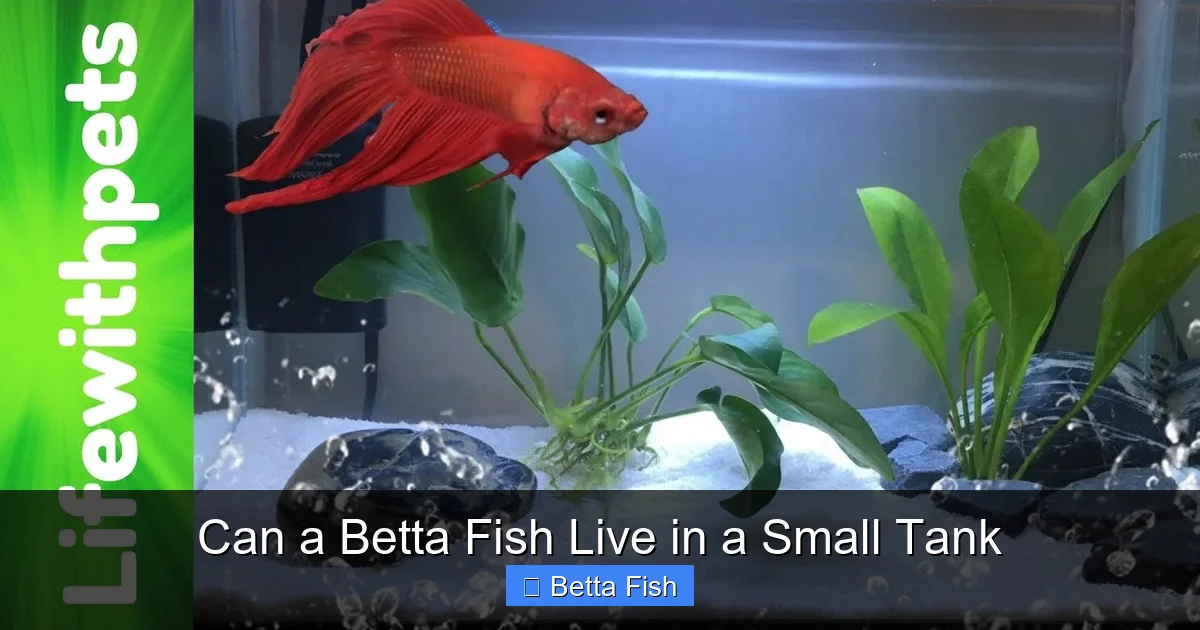
Can a Betta Fish Live in a Small Tank
Betta fish can survive in small tanks, but “survive” isn’t the same as thriving. Providing at least a 5‑gallon, filtered, heated environment gives your finned friend space to explore, stable water conditions, and a healthier life. Follow our step‑by‑step guide to turn a modest tank into a betta‑friendly paradise.
Key Takeaways
- Minimum size matters: A 5‑gallon tank is the practical floor for a happy betta.
- Filtration and heating are non‑negotiable: They keep water quality stable and temperature constant.
- Decor matters more than space: Live plants, caves, and silk plants create enrichment.
- Regular maintenance prevents disease: Weekly water changes of 25‑30% are essential.
- Small bowls are a myth: Bowls lack filtration, heating, and surface area for oxygen.
- Tank mates are possible but tricky: Choose peaceful, non‑fin‑nipping species.
- Observe your betta: Healthy bettas are active, display vibrant fins, and eat readily.
📑 Table of Contents
Introduction: The Little Tank Debate
Every new betta owner starts with a question that sounds simple but sparks endless discussion: Can a betta fish live in a small tank? The answer is both yes and no, depending on what “live” really means. A betta can survive in a tiny bowl for weeks, but it will struggle with stress, disease, and a short lifespan. In contrast, a modestly sized tank—think 5‑gallon—provides room to swim, stable water conditions, and a chance for a vibrant, active life.
In this article we’ll break down the science behind tank size, explore the essential equipment, and give you a practical roadmap to set up a small but proper home for your betta. We’ll also touch on common myths, tank‑mate possibilities, and everyday care tips. By the end, you’ll know exactly what “small” means in the betta world and how to make the most of the space you have.
Why Tank Size Really Matters
Surface area and oxygen exchange
Betta fish breathe air from the surface using a specialized organ called the labyrinth. The larger the water’s surface, the more oxygen can dissolve into the water, making it easier for your betta to gulp air when it needs to. A 2‑gallon bowl offers just a few square inches of surface, while a 5‑gallon tank gives you roughly double that area, dramatically improving oxygen availability.
Water stability and temperature control
Smaller volumes of water change temperature and chemistry far quicker than larger ones. A 1‑gallon bowl can swing from 78°F to 85°F in minutes if placed near a window. Larger tanks buffer these swings, especially when paired with a reliable heater. Consistent temperature (around 78°F–80°F) is crucial because bettas are tropical fish and cannot tolerate sudden drops.
Space for natural behavior
In the wild, Siamese fighting fish (Betta splendens) inhabit shallow rice paddies and slow‑moving streams, swimming vertically and exploring vegetation. A cramped bowl restricts this behavior, leading to boredom and stress. A 5‑gallon tank lets your betta swim up and down, chase reflections, and interact with plants or decorations.
Setting Up the Ideal Small Tank
Choosing the right tank
While many hobbyists start with a 2‑gallon bowl, the recommendation for a healthy betta is a minimum of 5 gallons. A long, shallow tank works well because it maximizes surface area while still giving your fish room to glide. Acrylic or glass both work; just ensure the tank has a secure lid to prevent jumps.
Filtration: The lifesaver you can’t skip
Betta fish produce waste like any other fish, and without filtration, toxic ammonia spikes quickly. A low‑flow sponge filter is perfect—it provides gentle water movement that won’t stress the betta’s delicate fins while delivering biological filtration. If you prefer a hang‑on back (HOB) filter, set it to the lowest setting and use a spray bar to diffuse flow.
Heating: Keep it cozy
Betta fish are tropical and need a stable temperature of 78°F–80°F. A submersible heater rated for 50‑100 watts works well for a 5‑gallon tank. Use a reliable thermostat or a heater with an automatic shut‑off to avoid overheating. For more details on heating, see our guide on Do Betta Fish Need A Heater In Their Tank.
Substrate and décor
Fine gravel or sand mimics the natural riverbed and offers a place for beneficial bacteria to colonize. Add live plants like Java fern, Anubias, or Marimo moss balls. Plants not only create hiding spots but also help absorb nitrates, improving water quality. If live plants aren’t an option, use silk plants—avoid plastic ones that can tear fins.
Provide a few caves or PVC pipes for the betta to explore. These structures reduce stress and give the fish a sense of territory. Remember to keep décor smooth; any sharp edges can cause fin damage.
Lighting
Betta fish don’t need intense lighting, but a 10‑hour day/night cycle helps regulate their behavior. A simple LED fixture set on a timer works well. If you have live plants, choose a light spectrum that supports plant growth (around 6,000–7,000 K).
Maintenance Made Easy
Weekly water changes
Even with a filter, a 25‑30% water change each week is essential. Use a siphon to vacuum the substrate, removing uneaten food and waste. Replace the removed water with dechlorinated water that matches tank temperature.
Testing water parameters
Invest in a basic test kit for ammonia, nitrite, nitrate, and pH. In a well‑cycled 5‑gallon tank, ammonia and nitrite should read 0 ppm, while nitrate stays below 20 ppm. Maintain a pH between 6.5 and 7.5.
Cleaning the tank
When it’s time for a deeper clean (about once a month), gently scrub algae from the glass with an algae pad. Avoid soap—never clean a tank with detergent as residues are toxic. For a step‑by‑step guide, check out How To Clean A Small Betta Fish Tank.
Can a Betta Thrive in a Bowl? Debunking the Myth
The bowl illusion
Many newcomers think a small bowl is “authentic” because bettas are called “Siamese fighting fish” and were historically kept in tiny containers. In reality, bowls lack filtration, heating, and sufficient surface area. Without a filter, waste builds up fast, leading to ammonia poisoning. Without a heater, temperature swings stress the fish.
Why some owners still use bowls
Some hobbyists keep bettas in bowls for short‑term quarantine or display. If you must use a bowl temporarily, add a small battery‑operated heater and change the water daily. However, for long‑term health, transition to a proper tank as soon as possible.
Read more about the pitfalls of bowl keeping at Can You Keep Betta Fish In A Small Bowl.
Tank Mates: Can You Share a Small Tank?
Choosing compatible companions
Betta fish are territorial, especially males. If you want to add tank mates, choose peaceful, non‑fin‑nipping species that occupy different levels of the tank. Options include:
- Neon tetras (small, schooling, stay mid‑water)
- Harlequin rasboras (peaceful, mid‑water swimmers)
- Snails such as Nerite or Mystery (help clean algae)
Never house another male betta in the same tank unless you have a large, heavily planted divider system.
Introducing new fish
Acclimate any new fish slowly using the drip method to match water parameters. Observe the betta for signs of aggression—flaring, chasing, or nipping. If tension arises, be ready to separate them immediately.
Useful resource
For a deeper dive into compatible species, see our article Which Fish Can Live With Betta Fish In A Tank.
Common Mistakes and How to Avoid Them
Overfeeding
Betta fish have small stomachs; feeding more than two pellets twice a day leads to excess waste and cloudy water. Offer a varied diet: high‑quality betta pellets, frozen or live brine shrimp, and occasional daphnia.
Skipping the heater
Even in warm rooms, temperature can dip below the betta’s comfort zone at night. A heater ensures a stable environment and reduces stress.
Using the wrong filter flow
High‑flow filters can damage delicate fins and cause the betta to hide constantly. Choose a low‑flow sponge or adjust the flow to a gentle stream.
Neglecting water changes
Without regular water changes, nitrate levels climb, leading to “new tank syndrome” symptoms like lethargy and loss of color.
Conclusion: Small Tank, Big Happiness
Yes, a betta fish can live in a small tank, but “small” must be defined as a minimum of 5 gallons with proper filtration, heating, and décor. This setup provides enough surface area for oxygen, stable water chemistry, and space for natural behaviors. Avoid the outdated bowl myth, keep up with weekly maintenance, and consider compatible tank mates only after establishing a stable environment.
By treating your betta’s home with the same care you’d give a larger aquarium, you’ll enjoy a healthy, vibrant fish that flaunts its gorgeous fins for years to come. Remember, the goal isn’t just survival—it’s thriving.
Frequently Asked Questions
What is the absolute minimum tank size for a betta?
Most experts agree that 5 gallons is the smallest size that provides adequate surface area, stable temperature, and room for enrichment.
Can I use a sponge filter for a betta tank?
Yes, a low‑flow sponge filter is ideal because it offers biological filtration without creating strong currents that can stress a betta.
Do bettas need a heater if the room is warm?
Even in warm rooms, temperature can drop at night. A reliable heater set to 78°F–80°F ensures a consistent environment.
How often should I change the water in a small betta tank?
Change 25‑30% of the water weekly. For a 5‑gallon tank, that’s about 1‑1.5 gallons each week.
Can I keep a betta with snails?
Yes, snails such as Nerite or Mystery are good tank mates; they help clean algae and generally won’t bother a betta.
Is it okay to keep a male and female betta together?
Only if you have a heavily planted, divided tank. In a single small tank, a male will likely attack a female, leading to injury.