What’s the Ideal Temp for Betta Fish
The ideal temperature for betta fish is a stable 78-80°F (25.5-26.5°C). This tropical species thrives in consistently warm water that mimics its native Southeast Asian habitats. Fluctuations outside this range can cause stress, a weakened immune system, and severe health issues. A reliable aquarium heater and accurate thermometer are non-negotiable equipment for any betta keeper, regardless of room temperature.
Key Takeaways
- Ideal Range: The optimal and safest temperature zone for a betta fish is a constant 78-80°F (25.5-26.5°C).
- Stability is Key: Sudden temperature drops or spikes of even a few degrees are more dangerous than a consistent, slightly off temperature.
- A Heater is Essential: Unless you live in a consistently tropical climate, an adjustable, submersible aquarium heater is required for your betta’s tank.
- Always Use a Thermometer: Never trust a heater’s built-in gauge alone. Use a separate, high-quality stick-on or digital thermometer for accurate readings.
- Seasonal Adjustments: You must check and adjust your heater settings with the changing seasons to compensate for ambient room temperature shifts.
- Temperature Shock is Deadly: Acclimate your betta slowly to any new water temperature during water changes or when first bringing it home.
- Signs of Improper Temp: Lethargy, loss of appetite, faded colors, and clamped fins can all indicate water that is too cold. Gasping at the surface can signal too-warm, oxygen-poor water.
📑 Table of Contents
- Understanding Your Betta’s Tropical Origins
- The Science Behind Temperature and Fish Health
- Defining the Optimal Range: 78-80°F (25.5-26.5°C)
- Essential Equipment: Heaters and Thermometers
- Practical Application: Maintenance and Seasonal Care
- Debunking Common Temperature Myths
- Conclusion: Temperature as the Foundation of Health
Understanding Your Betta’s Tropical Origins
To grasp why the ideal temp for betta fish is so specific, we must first take a virtual trip to their homeland. Betta splendens, the modern aquarium favorite, hails from the shallow, slow-moving rice paddies, marshes, and floodplains of Thailand, Cambodia, Vietnam, and parts of Malaysia. These are not deep, cool rivers. They are warm, sun-drenched, shallow basins where the water can heat up rapidly under the tropical sun and cool down just as quickly at night. This environment has shaped the betta into a remarkably adaptable, yet fundamentally tropical, creature.
Their physiology is built for warmth. As a labyrinth fish, they possess a specialized organ that allows them to gulp air from the surface, but this is a survival adaptation for low-oxygen water, not a preference for cold. Their metabolism, immune function, digestion, and overall vitality are all tuned to operate most efficiently within a narrow thermal band. Keeping them outside this band is like trying to run a high-performance engine with the wrong grade of fuel—it might work for a while, but it will eventually cause damage. This is the foundational reason why nailing down the correct ideal temp for betta fish is the single most important factor in their husbandry.
The Myth of the “Hardy” Betta
You’ve likely heard that bettas are “hardy” and can live in a tiny bowl without a heater. This is one of the most persistent and harmful myths in the aquarium hobby. Their ability to survive in poor conditions is not a sign of preference but a testament to their brutal survival instincts in the wild. In a small, unheated container, a betta is essentially in a state of chronic stress and subpar health, merely enduring rather than thriving. Its colors will be dull, its fins may become clamped, its appetite will diminish, and its lifespan will be drastically shortened. The ideal temp for betta fish is not a luxury; it is a fundamental requirement for a healthy, active, and long-lived pet.
The Science Behind Temperature and Fish Health
Water temperature is not just a comfort setting for your betta; it is a master regulator of nearly every internal process. Let’s break down the critical ways temperature impacts your fish’s biology.
Visual guide about What’s the Ideal Temp for Betta Fish
Image source: aquariumwhisperer.com
Metabolism and Digestion
Fish are ectothermic (cold-blooded). Their body temperature matches their environment. This means the ideal temp for betta fish directly controls the speed of their metabolic engine. At the correct 78-80°F, their metabolism is in the “goldilocks zone”—not too fast, not too slow. Digestion is efficient, energy is used properly for growth and activity, and waste production is normalized. If the water is too cold (below 76°F), digestion slows dramatically. Food can sit in their gut undigested, leading to constipation and a higher risk of swim bladder disease. Their energy levels plummet, and they become listless. Conversely, water that is too warm (above 82°F) speeds up metabolism to a frantic pace. They burn energy too quickly, require more food (which can foul the water), and their organs age prematurely.
Immune System Function
This is perhaps the most crucial reason to maintain the ideal temp for betta fish. A betta’s immune system is supremely temperature-sensitive. At the optimal range, their immune cells function at peak efficiency, patrolling the body and fending off opportunistic pathogens like bacteria, fungi, and parasites that are always present in the aquarium water in low numbers. Drop the temperature even a few degrees, and this immune response slows to a crawl. The door is swung wide open for diseases like fin rot, columnaris, and velvet to take hold. A stressed betta in suboptimal temperatures is a sick betta waiting to happen. Consistent warmth is one of the best preventative medicines you can provide.
Oxygen Levels and the Labyrinth Organ
Here’s a counterintuitive fact: warmer water holds less dissolved oxygen than cooler water. At the ideal temp for betta fish (78-80°F), the oxygen level is still sufficient for their needs, especially since they can gulp air. However, if temperatures climb into the dangerous 85°F+ range, oxygen levels can drop precipitously. A betta will then be seen frantic at the surface, gulping air not because it needs the labyrinth organ, but because the water itself is suffocating. This is a critical emergency sign. Maintaining the proper temperature ensures a healthy balance between metabolic demand (which increases with heat) and available oxygen.
Defining the Optimal Range: 78-80°F (25.5-26.5°C)
So, we arrive at the magic number. The widely accepted and scientifically supported ideal temp for betta fish is a stable 78-80°F (25.5-26.5°C). This range is not arbitrary. It represents the sweet spot where all the physiological processes discussed above operate in harmony. It’s warm enough to support robust immune function and active digestion, but not so warm as to cause undue stress, accelerate aging, or dangerously deplete oxygen.

Visual guide about What’s the Ideal Temp for Betta Fish
Image source: tankofish.com
Why Not a Single Number? The Importance of a Range.
You might wonder why we don’t say “exactly 79°F.” The answer is stability and safety margin. A range provides a buffer. Your heater will cycle on and off to maintain the set point, causing minor, natural fluctuations of 0.5-1 degree. Having a target range accounts for this. It also gives you a small margin for error during water changes or if your heater is slightly miscalibrated. Aim to set your heater so the tank consistently reads within the middle of this 78-80°F window.
The Dangers of Cold: Below 76°F
Water below 76°F is entering the danger zone for a betta. At 74°F, their metabolism is sluggish. They will become lethargic, often resting on the bottom or a plant for long periods. Their appetite vanishes. Their famed flowing fins may become clamped tight against their body—a classic sign of stress and cold. The biggest risk, however, is immunosuppression. In this chilled state, they are a sitting duck for bacterial and fungal infections. What might be a minor, quickly overcome wound in a warm tank can become a life-threatening case of fin rot in a cold one. Long-term exposure to sub-76°F temperatures will shorten your betta’s lifespan significantly.
The Perils of Heat: Above 82°F
While less common than cold, overheating is a serious and rapidly fatal threat. Temperatures above 82°F begin to stress the fish. Above 85°F, the risk of oxygen deprivation becomes critical. Their metabolism goes into overdrive, burning through energy reserves. They may become hyperactive for a short time before crashing into exhaustion. Most alarmingly, high temperatures accelerate the life cycle of many common parasites, particularly the velvet parasite (Oodinium), making outbreaks more likely and severe. A sudden spike to 90°F+ can cause immediate organ failure and death. This often happens due to a malfunctioning heater, direct sunlight on the tank, or placing the tank near a heat source.
Essential Equipment: Heaters and Thermometers
Armed with the knowledge of the ideal temp for betta fish, let’s talk about the non-negotiable tools to achieve it. You cannot maintain a stable tropical temperature without the right gear.
Visual guide about What’s the Ideal Temp for Betta Fish
Image source: japanesefightingfish.org
Choosing the Right Aquarium Heater
For a standard 5-gallon betta tank (the absolute minimum recommended size), you need a 25-watt adjustable submersible heater. For a 10-gallon tank, a 50-watt heater is appropriate. Always choose a heater with an adjustable thermostat—those preset “stick” heaters are notoriously inaccurate and can overheat or underheat. Look for reputable brands like Eheim, Fluval, or Aqueon. Important safety features include: an automatic shut-off if removed from the water, a shatterproof glass or plastic housing, and a visible “on” indicator light. Never buy a used heater; their internal calibration can be compromised.
The Non-Negotiable Thermometer
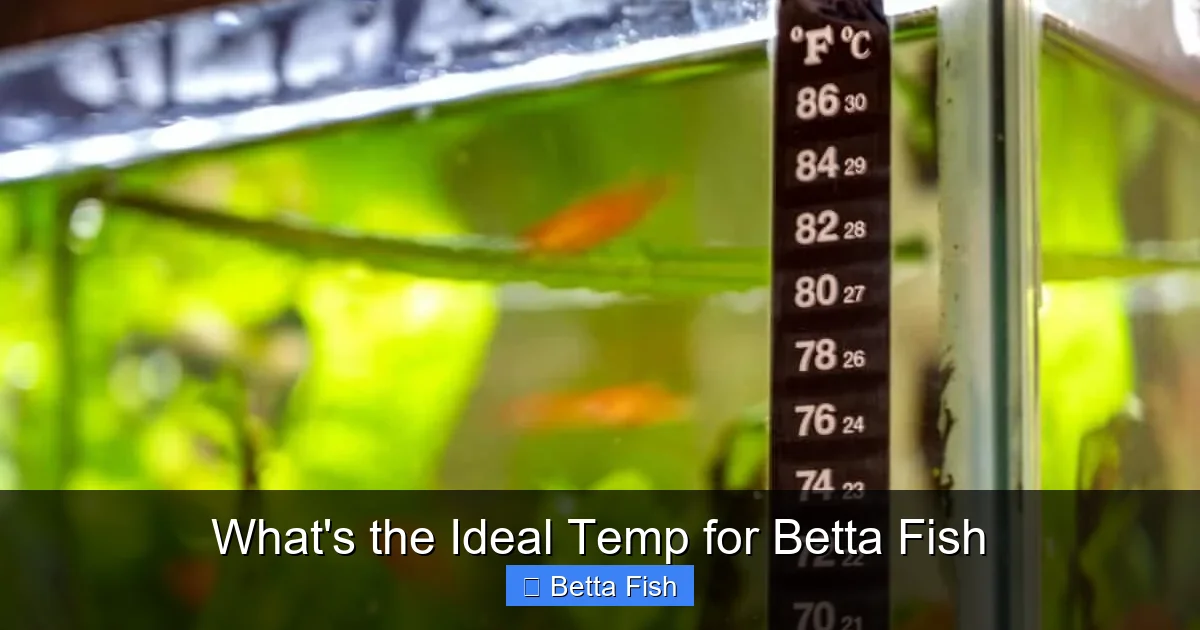
This is the most critical piece of diagnostic equipment you will own. Do not rely on the thermometer strip that sometimes comes with a tank or the built-in gauge on your heater. They are often wildly inaccurate. Invest in a standalone thermometer. Options include:
- Stick-on liquid crystal thermometers: Inexpensive, adhere to the outside glass. Good for a general reading, but can be less precise.
- Floating/glass aquarium thermometers: The classic, reliable choice. Place it away from the heater’s direct output for the most accurate tank-wide reading.
- Digital aquarium thermometers: Often come with a remote probe. They offer the highest accuracy and are easy to read. Many models have memory functions to track high/low temps.
Place your thermometer on the opposite side of the tank from the heater to get a true average temperature, not just the temperature of the heater’s immediate output.
Proper Heater Placement and Installation
Place the heater in a location with good water flow, typically near a filter output, to distribute heat evenly. Ensure it is fully submersible and is positioned so it will not touch any decorations or the tank walls directly (most have a protective cage, but it’s best practice). Use the suction cups provided to attach it securely. Always install and remove heaters only when they are unplugged and, ideally, when the tank water is cool to prevent thermal shock to the glass or, more importantly, to you.
Practical Application: Maintenance and Seasonal Care
Knowing the ideal temp for betta fish is one thing. Maintaining it day-in, day-out, through all seasons, is the real task.
Setting and Monitoring Your Heater
Start by setting your heater to the middle of the ideal range, 79°F. Let it run for 4-6 hours with the thermometer in place. Check the reading. If it’s reading 78-80°F, you’re perfect. If it’s off by a degree or two, adjust the heater’s dial slightly and wait another 2-3 hours to see the effect. Small adjustments are key. Once set, make a habit of checking the thermometer at the same time each day to ensure consistency. A good practice is to note the reading in a small notebook next to the tank.
The Critical Acclimation Process
Never, ever just dump your new betta (or any fish) into your tank. The temperature difference between the bag and your tank, even if only a few degrees, can cause fatal shock. The proper acclimation process is:
- Float the sealed bag in your tank for 15-20 minutes to equalize temperature.
- Open the bag and roll down the top a few inches.
- Using a clean cup or airline tubing, slowly drip tank water into the bag over the next 30-45 minutes. This slowly adjusts the fish to your tank’s water chemistry and temperature.
- Finally, use a net to transfer the betta to the tank, discarding the bag water.
This slow process is vital for respecting the ideal temp for betta fish during a stressful transition.
Performing Safe Water Changes
During a water change, the new water must match the tank temperature exactly. Fill your clean bucket with treated water 24 hours in advance, placing it in the same room as the tank so it acclimates to room temperature. Use your thermometer to ensure the new water is within 1 degree of your tank’s temperature. If it’s too cold, add a little warm (not hot!) tap water. If it’s too warm, let it sit longer. Adding water that is even 3-4 degrees off can cause shock and stress.
Seasonal Adjustments: Your Heater is Not “Set and Forget”
This is where many hobbyists fail. Your heater’s job is to *add* heat. It does not cool. As the seasons change, so does your room temperature. In winter, your room might be 65°F. Your heater will work overtime to bring the tank to 79°F. In summer, your room might be 80°F. Your heater may not need to turn on at all, or the tank could actually overheat from ambient room heat. You must check your tank thermometer weekly, especially at the turn of seasons. If your tank is consistently reading 81-82°F in summer, you may need to lower the heater’s setting or even use a small fan to blow across the water surface (evaporative cooling) to bring it back into the ideal temp for betta fish range.
Debunking Common Temperature Myths
The world of betta care is rife with misinformation. Let’s clear up some persistent temperature-related myths.
“My Room is Warm Enough, I Don’t Need a Heater.”
This is the most dangerous myth. Room temperature is not tank temperature. Room temperature fluctuates wildly—cooler at night, warmer during the day, and dramatically different between seasons. A tank’s temperature is an average of the room temp plus/minus the heat from equipment and lights. A room that feels “warm” to you (72°F) is still far below the ideal temp for betta fish. Only a thermostat-controlled heater can provide the consistent, reliable warmth a betta requires.
“Betta Fish Can Live in Cold Water; They’re from Rice Paddies That Dry Up.”
This confuses survival with thriving. Yes, a betta *can* survive in cooler water for a time due to its labyrinth organ. But it will be miserable, stressed, and unhealthy. The “drying up” part refers to their ability to survive in moist mud during the dry season, not their preference for cold water. They seek out the deepest, warmest pools available. This myth leads to chronically cold, sick fish.
“You Should Match the Temperature to Your Local Tap Water.”
No. Your tap water temperature is irrelevant. The goal is to replicate the *natural tropical climate* of the betta, not your geographical climate. Whether your tap is 50°F or 80°F, you must use a heater to achieve and maintain the 78-80°F target.
“A Small Heater is Fine for a Small Tank.”
Size the heater to the tank, not the fish. A 5-gallon tank needs a 25-watt heater. Using a tiny, low-wattage “desktop tank” heater for a 5-gallon bowl is a recipe for failure. These heaters are underpowered, often lack proper thermostats, and cannot maintain a stable temperature, leading to constant fluctuations that stress the fish.
Conclusion: Temperature as the Foundation of Health
After all this detail, the core message remains beautifully simple: the ideal temp for betta fish is a stable 78-80°F (25.5-26.5°C). This is not a suggestion; it is the cornerstone of responsible betta ownership. Think of it this way: you are creating a tiny, controlled piece of the Thai tropics in your living room. A quality heater and a reliable thermometer are your most important tools. Without them, you are gambling with your fish’s health and lifespan. With them, you provide the stable, warm environment that allows your betta’s true colors to blaze, its fins to flow elegantly, and its personality to shine. You enable it not just to live, but to thrive. Take the time to get this one thing right, and you will have solved 80% of potential betta health problems before they even begin.
Frequently Asked Questions
Can a betta fish survive in cold water without a heater?
It can survive for a time in water below 76°F, but it will be severely stressed, lethargic, and highly susceptible to disease. Its immune system will be compromised, leading to a poor quality of life and a drastically shortened lifespan. Survival is not the same as thriving.
Do betta fish absolutely need a heater?
Yes, for the vast majority of hobbyists. Unless your home is consistently maintained at 78-80°F 24/7 year-round without any fluctuations, a submersible, adjustable aquarium heater is essential equipment for a betta tank. Room temperature is never a reliable substitute.
How can I quickly and safely raise my betta’s water temperature?
Never use hot tap water, as it can shock the fish and contains dissolved gases. The safest method is to use your aquarium heater. Set it to the desired temperature (79°F) and allow it to slowly heat the water over several hours. For a small emergency raise, you can float a sealed bag of warm (tank-temperature) water in the tank, but this is a temporary fix, not a solution.
What are the first signs that my betta’s water is too cold?
>The most obvious sign is lethargy and clamped fins (fins held tightly against the body). Your betta will rest on the bottom or on plants for unusually long periods and show little to no interest in food. Faded colors are another common indicator of chronic cold stress.
Why is 78-80°F considered the ideal range instead of just one temperature?
The range accounts for natural, minor fluctuations as the heater cycles on and off. It provides a small safety buffer. The goal is to keep the tank temperature *stable* within this zone, not to hit an exact single number. A consistent 78°F is far better than a tank that swings between 77°F and 81°F.
My tank temperature is fine, but it fluctuates a few degrees daily. Is this okay?
Small, natural fluctuations of 0.5-1 degree as the heater cycles are normal and harmless. However, if you notice a daily swing of 2 or more degrees (e.g., from 77°F at night to 80°F during the day), this indicates your heater is too small for the tank, the room temperature is changing drastically, or there is a draft/heat source affecting the tank. This level of fluctuation is stressful and should be corrected.