Are You Supposed to Feed a Betta Fish Every Day
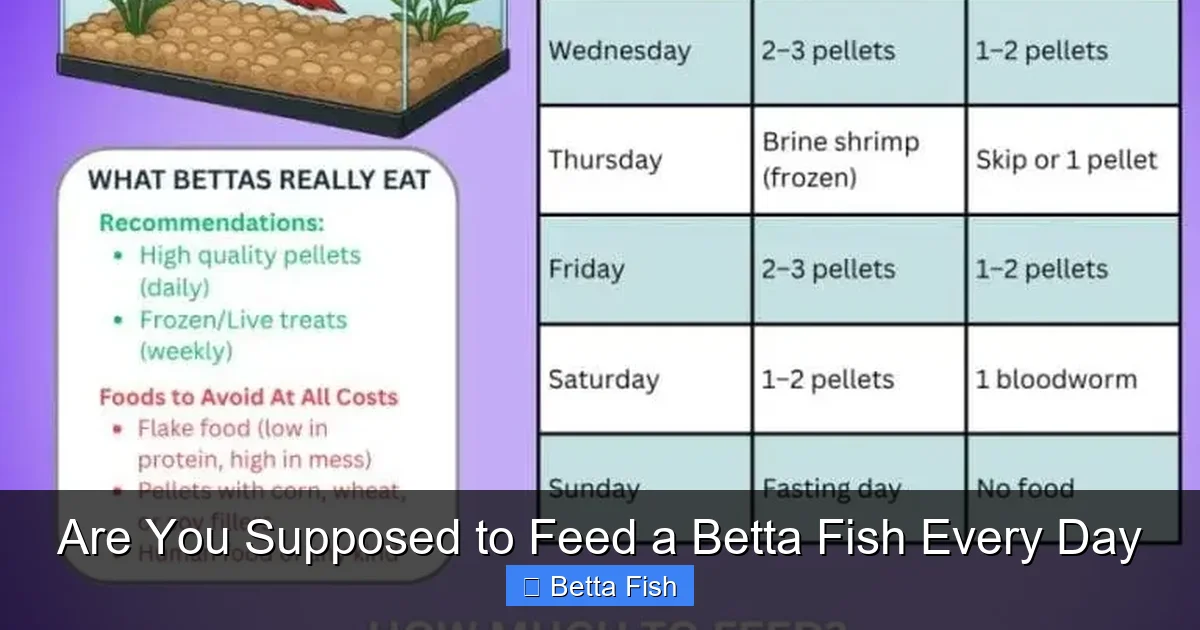
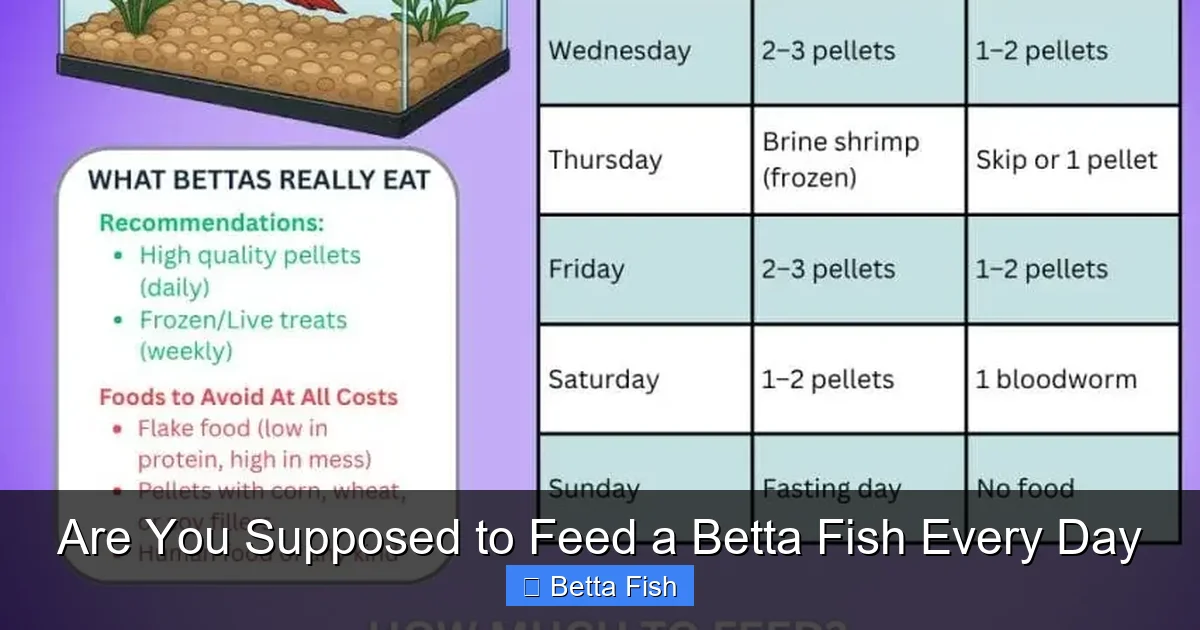
Betta fish do not need daily feedings; two small meals a day are usually enough. Over‑feeding can cause water problems and health issues, while under‑feeding leads to stunted growth. Follow a simple routine, watch your fish’s appetite, and adjust as needed for optimal care.
Key Takeaways
- Feed twice daily: Most healthy bettas thrive on two small portions, once in the morning and once in the evening.
- Portion control matters: Offer only what your betta can eat in 2‑3 minutes to avoid leftovers.
- Quality over quantity: Use high‑quality betta pellets or frozen foods rather than bulk flakes.
- Adjust for life stage: Fry need more frequent, smaller meals; adults need less.
- Watch water quality: Uneaten food spikes ammonia; remove leftovers promptly.
- Seasonal changes affect appetite: Cooler water slows metabolism, so you may need to feed less.
- Observe behavior: A healthy betta will be active, show bright colors, and eat eagerly.
📑 Table of Contents
- Introduction: Why Feeding Questions Matter
- Understanding Betta Metabolism
- How Much Should You Feed?
- Creating a Daily Feeding Routine
- What Happens If You Feed Every Day?
- Adjusting Feeding for Seasonal Changes
- Common Feeding Mistakes and How to Avoid Them
- Practical Tips for New Betta Owners
- Conclusion: Find the Balance That Works for You
Introduction: Why Feeding Questions Matter
If you’ve just welcomed a gorgeous Siamese fighting fish into your home, you’ve probably asked yourself, “are you supposed to feed a betta fish every day?” It’s a common question, and the answer isn’t as simple as “yes” or “no.” Feeding habits affect everything from water clarity to your fish’s lifespan.
In this guide we’ll break down the science of betta metabolism, show you how to spot hunger cues, and give you a step‑by‑step feeding schedule you can trust. Think of it as a friendly chat over a cup of tea—no jargon, just practical tips you can start using tonight.
Understanding Betta Metabolism
Natural hunting instincts
Betta fish are surface‑feeders in the wild, snapping up insects and larvae that fall onto the water’s surface. Their bodies are built for short bursts of activity, not constant grazing. This means they store energy efficiently and don’t need a constant food supply.
Visual guide about Are You Supposed to Feed a Betta Fish Every Day
Image source: wikihow.com
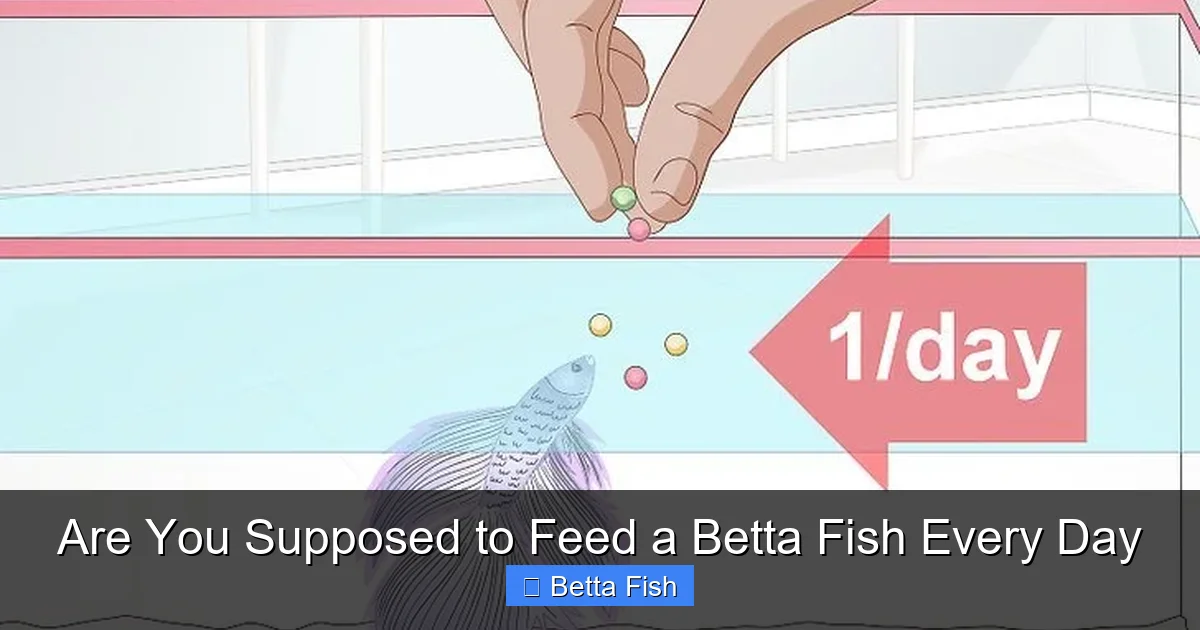
How often do bettas need food?
Research and hobbyist experience show that most adult bettas do well with two small meals per day. This aligns with the article How Often Are You Supposed To Feed Betta Fish, which explains that feeding more than twice can lead to over‑feeding and waste.
Life stage matters
- Fry (0‑3 weeks): Need 3‑4 tiny feedings a day because they burn energy fast.
- Juveniles (3‑12 weeks): Can be fed 2‑3 times daily as they grow.
- Adults (12+ weeks): Two meals a day is sufficient.
How Much Should You Feed?
Portion size basics
A typical betta pellet is about the size of a pea. The rule of thumb is the amount your fish can eat in 2‑3 minutes. If food is still floating after that time, you’ve given too much.
Visual guide about Are You Supposed to Feed a Betta Fish Every Day
Image source: ekk4j69ebaa.exactdn.com
Choosing the right food
High‑quality betta pellets are formulated with the right protein‑to‑fat ratio. You can also supplement with frozen or live foods like brine shrimp or daphnia for variety. Avoid generic tropical flakes; they’re too large and can cause digestive issues.
Internal link for more detail
For a deeper dive into portion control, see How Much Should You Feed A Betta Fish. It breaks down exact measurements for different food types.
Creating a Daily Feeding Routine
Morning feed
Feed your betta once in the morning, ideally after the tank’s lights come on. This mimics the natural sunrise feeding pattern of wild bettas.

Visual guide about Are You Supposed to Feed a Betta Fish Every Day
Image source: wikihow.com
Evening feed
Offer the second meal in the early evening, before lights go off. This helps maintain steady energy levels and prevents nighttime over‑eating.
Sample schedule
- 7:00 am – 1‑2 pellets or a pinch of frozen brine shrimp.
- 6:30 pm – Same amount, watching for leftovers.
Stick to the same times each day; bettas thrive on consistency.
What Happens If You Feed Every Day?
Over‑feeding risks
Feeding daily isn’t the problem—feeding *too much* each day is. Excess food decays, raising ammonia and nitrite levels, which can stress or kill your betta.
Signs of over‑feeding
- Cloudy water or foul smell.
- Bloated abdomen.
- Lethargy or loss of color.
When to skip a feeding
If your betta refuses food for two consecutive days, it may be ill. In that case, consult How To Feed A Sick Betta Fish for safe options.
Adjusting Feeding for Seasonal Changes
Temperature impact
Betta metabolism slows in cooler water (below 75 °F). During winter months, you can reduce the portion size by about 25 %.
Summer appetite spikes
Warmer water (above 80 °F) can increase activity. Keep an eye on your fish; if it seems hungrier, you can add a tiny extra bite, but never exceed the 2‑minute rule.
Common Feeding Mistakes and How to Avoid Them
Using the wrong food type
Flakes designed for goldfish are too large and low in protein. Read Can You Feed Goldfish Flakes To Betta Fish for a full explanation of why they’re unsuitable.
Feeding on a schedule that doesn’t match your routine
If you travel often, consider an automatic feeder set to release the correct amount twice a day. Test it before you leave to ensure it works.
Ignoring water quality
Even a small excess of food can cloud water quickly. Perform a partial water change (20‑30 %) weekly and vacuum any debris.
Practical Tips for New Betta Owners
Start with a feeding log
Write down the date, time, and amount you feed. After a week you’ll see patterns and can adjust accordingly.
Use a feeding cup
A small cup or syringe lets you control portions precisely, especially with frozen foods.
Observe behavior
Active fins, bright colors, and quick response to food are signs of a healthy betta. If you notice dull colors or sluggishness, reassess your feeding routine.
Conclusion: Find the Balance That Works for You
So, are you supposed to feed a betta fish every day? The answer is yes, but only in the sense of offering two modest meals each day—not a constant buffet. By controlling portion size, choosing the right food, and watching water quality, you’ll keep your betta vibrant and thriving for years.
Remember, every betta is an individual. Use the guidelines here as a starting point, then fine‑tune based on your fish’s appetite and health. Happy feeding!
Frequently Asked Questions
How many times a day should I feed my adult betta?
Two small meals per day—once in the morning and once in the evening—are ideal for most adult bettas.
Can I feed my betta fish once a day?
Yes, but a single large feeding can lead to leftovers and water quality problems. Splitting the portion into two feeds is safer.
What is the best type of food for a betta?
High‑quality betta pellets or frozen foods like brine shrimp provide the right nutrition. Avoid generic tropical flakes or goldfish food.
How do I know if I’m over‑feeding my betta?
Look for uneaten food after a few minutes, cloudy water, a bloated belly, or reduced activity. Reduce the portion if any of these appear.
Should I adjust feeding in colder water?
Yes. Lower the amount by about 25 % when the tank temperature drops below 75 °F, as the betta’s metabolism slows.
What should I do if my betta refuses to eat?
First, check water parameters and ensure the food is fresh. If the fish still refuses, consult a vet or read How To Feed A Sick Betta Fish for safe feeding methods.