Are Betta Fish Man Made

Are betta fish man made? The short answer is no, but humans have dramatically shaped them through selective breeding. Wild betta fish exist in nature, but the colorful, long-finned varieties found in homes today are the result of centuries of careful breeding programs by humans.
You have probably seen a betta fish in a pet store or maybe even at a friend’s house. Those bright colors, flowing fins, and feisty personalities make them stand out. But have you ever stopped and wondered where they really come from? Are these beautiful creatures something humans created from scratch, or did they exist long before we ever laid eyes on them?
The answer might surprise you. Betta fish are not man made, but humans have played a huge role in shaping the bettas we see today. Wild betta fish have lived in the rice paddies and slow-moving waters of Southeast Asia for thousands of years. However, the vivid colors and extravagant fins that make them so popular are the result of careful selective breeding by humans over many generations.
In this guide, we will explore the full story of betta fish. We will look at where they come from, how humans changed them, and what that means for you as a betta owner. Whether you are a beginner or a seasoned fish keeper, understanding the history of betta fish helps you appreciate these amazing creatures even more.
Key Takeaways
- Betta fish are not man made: They exist naturally in the wild, primarily in Southeast Asia.
- Selective breeding changed everything: Humans bred bettas for aggression, color, and fin shape over hundreds of years.
- Wild betta fish look very different: They are dull colored with short fins compared to domestic varieties.
- Modern betta fish varieties are human creations: Colors like blue, red, and crown tail were developed through breeding.
- Understanding their origin helps with care: Knowing how breeding shaped bettas helps you provide better tank conditions.
- Wild betta fish are still out there: They face threats in their natural habitats, including habitat loss.
- Breeding is a deliberate process: Breeders choose specific traits to pass down to the next generation.
📑 Table of Contents
What Does “Man Made” Mean for Betta Fish?
The Role of Humans in Betta Fish Development
When people say something is man made, they usually mean it was created entirely by humans. A plastic toy is man made. A synthetic fabric is man made. But a betta fish? Not quite.
Betta fish are a natural species. Their scientific name is betta splendens. They evolved over millions of years just like any other animal. They have wild populations that still live in their natural habitats today. So in the purest sense, they are not man made at all.
However, the betta fish you buy at a pet store looks very different from its wild ancestors. Humans have selectively bred bettas for specific traits. This means breeders chose fish with certain features and paired them together. Over time, this created the stunning varieties we see today. So while the species itself is natural, the specific forms we keep as pets are heavily influenced by human decisions.
This is an important distinction. The fish is not artificial or fake. It is a living creature with natural origins. But its appearance has been shaped by generations of deliberate fish breeding choices made by humans.
The Wild Origins of Betta Fish
Where Wild Betta Fish Come From
Wild betta fish are native to the warm, shallow waters of Southeast Asia. You can find them in countries like Thailand, Cambodia, Vietnam, and Malaysia. They live in rice paddies, slow-moving streams, and even small puddles during the rainy season.
These wild fish look nothing like the bright pets you see in stores. A wild betta fish is usually dull green or brown. Its fins are short and plain. It is built for survival, not beauty. In the wild, bettas use their colors to blend in with leaves and muddy water.
Wild betta fish earned their famous name “fighting fish” because of their aggressive nature. Males will fight each other fiercely over territory. This natural aggression is actually what first drew humans to the species. People in Thailand began catching wild bettas and pitting them against each other in matches as early as the 1800s.
Wild betta fish are still out there today, but they face growing challenges. Habitat loss and pollution threaten their natural homes. If you want to learn more about the conservation status of these fascinating creatures, you can check out our article on are wild betta fish endangered.
How Betta Fish Were First Discovered
The story of how bettas came to the attention of the Western world is fascinating. In the mid-1800s, a Thai physician named Dr. Theodore Cantor became one of the first Westerners to document betta fish. He noticed people in Siam (now Thailand) keeping these fish for fighting competitions.
By the late 1800s, bettas made their way to Europe. The first bettas arrived in France and Germany around the 1890s. From there, they spread to the rest of the world. People were immediately drawn to their vibrant colors and bold personalities.
The journey from wild fighting fish to beloved pet happened quickly. But it was the work of selective breeding that transformed the dull wild betta into the colorful showpiece we know today. Breeders in Thailand and later around the world worked to enhance specific traits over many generations.
How Selective Breeding Changed Everything
The Science Behind Betta Fish Breeding
Selective breeding is the process of choosing specific animals to reproduce based on desired traits. This is not genetic modification in a lab. It is a natural process guided by human choice. Breeders simply pick the fish they want to mate and let nature do the rest.
For betta fish, breeders focused on three main traits:
- Color intensity: Wild bettas are dull. Breeders selected fish with brighter reds, blues, greens, and purples.
- Fin length and shape: Long, flowing fins were bred over generations to create the dramatic looks we see today.
- Aggression levels: Early breeders wanted fighting fish that would put on a good show. This shaped the bold personality of domestic bettas.
Each generation, breeders would choose the best-looking or most aggressive fish to breed. Over time, these traits became more pronounced. This is how humans created the incredible variety of colors and fin types we see in modern betta fish.
Why Breeders Chose Certain Traits
You might wonder why breeders focused on these specific traits. The answer comes down to what people wanted to see. In the early days, fighting ability was the top priority. People wanted bettas that would win matches.
As time went on, the focus shifted. People started to appreciate the beauty of bettas. Color became more important than fighting ability. Breeders responded by developing fish with more vivid and diverse colors. Today, the pet trade drives most breeding decisions.
It is also worth noting that male and female betta fish look very different because of breeding choices. Males have the long, flowing fins and bright colors. Females are usually smaller and less colorful. This difference was amplified over time through selective breeding. If you want to understand the differences, check out our guide on are there male and female betta fish.
Popular Betta Fish Varieties Created by Humans
Color Varieties That Did Not Exist in the Wild
One of the most obvious ways humans changed betta fish is through color. Wild bettas are mostly dull green and brown. But today, you can find bettas in almost every color of the rainbow. Let us look at some of the most popular color varieties.
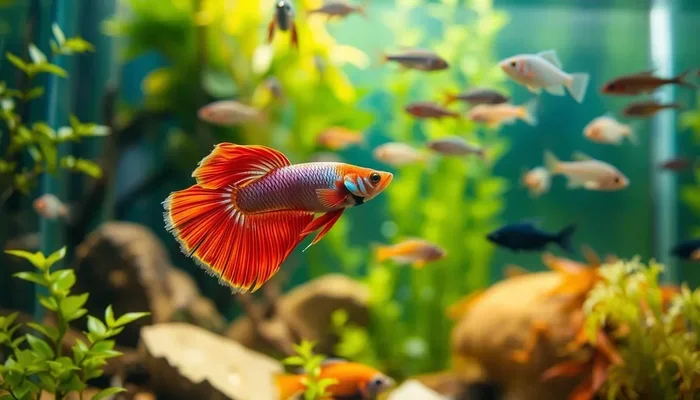
Red betta fish are among the most common and beloved. The deep, rich red color was developed through generations of careful breeding. While wild bettas may have had hints of red, the vibrant pure red we see today is entirely a product of human breeding efforts. Interestingly, you might wonder about the rarity of certain colors. For example, are red betta fish rare? The answer is no, they are widely bred and available.
Blue betta fish come in several shades, from steel blue to royal blue to turquoise. These colors do not exist in wild populations. Breeders worked hard to develop and stabilize these blue tones over many years.
Other popular colors include green, purple, white, black, and even multi-colored patterns. Each of these required dedicated breeding programs. Some colors are the result of combining traits from multiple lines of fish over many generations.
Fin Types and Shapes Bred by Humans
Beyond color, the fin types of modern bettas are almost entirely human creations. Wild bettas have short, functional fins. Domestic bettas can have fins that trail several inches behind them.
Here are some of the most popular fin types:
- Crowntail: The webbing between the fin rays extends outward, creating a spiky crown-like appearance.
- Halfmoon: The tail fin spreads out to form a perfect half-circle when fully fanned.
- Double Tail: The fish has two separate tail fins instead of one, giving it a unique look.
- Plakat: A shorter-finned variety that looks closer to the wild type but still carries vivid colors.
- Veil Tail: The most common fin type, with long, flowing fins that droop downward.
Each of these fin types was developed through years of selective breeding. Breeders chose fish with slightly longer fins or different fin shapes and bred them together. Over time, these small changes added up to create dramatically different appearances.
If you are curious about the full range of betta varieties available, our article on are there different kinds of betta fish covers the topic in great detail.
Are Modern Betta Fish Still Man Made?
The Difference Between Wild and Domestic Betta Fish
To understand whether modern bettas are still being shaped by humans, we need to look at the difference between wild and domestic fish. Wild bettas live in their natural habitats with no human intervention. Domestic bettas are born in breeding facilities or home tanks where humans control every aspect of their breeding.
The truth is that domestic betta fish are still being shaped by human choices today. Breeders continue to develop new colors, fin types, and patterns. The breeding process never really stops. Every generation of pet store bettas has been influenced by human decisions about which fish to breed.
However, there is a growing movement among breeders to focus on fish health over extreme appearance. Some breeders are working to bring back traits that improve the fish’s ability to swim and thrive. This is a positive trend that benefits the fish and helps address some health issues caused by extreme breeding for looks.
Is Selective Breeding the Same as Genetic Modification?
This is a common question, and the answer is no. Selective breeding is completely natural. It does not involve any lab work or genetic engineering. Breeders simply allow fish with desired traits to reproduce while choosing not to breed fish with unwanted traits.
Genetic modification would involve directly altering the DNA of the fish in a laboratory. This is not what happens with betta fish breeding. The changes happen naturally through the pairing of parent fish. Humans guide the process, but the biology remains the same.
This is an important distinction. Your betta fish is a natural animal. Its DNA has not been artificially altered. The traits it carries are the result of natural genetic variation that humans have amplified over centuries through careful selection.
What This Means for Your Betta Fish Care
Caring for a Fish Shaped by Human Breeding
Understanding the history of betta fish helps you take better care of them. Domestic bettas have been bred for specific traits that sometimes come with trade-offs. For example, the long fins of a halfmoon betta can make swimming more difficult. The bright colors bred into modern fish can sometimes be linked to weaker immune systems.
Here are some tips for caring for your betta fish based on this understanding:
- Provide a warm tank: Wild bettas live in warm water. Keep your tank between 76 and 82 degrees Fahrenheit.
- Do not skimp on tank size: A small bowl is not enough. A tank of at least 5 gallons gives your fish room to thrive.
- Use a gentle filter: Strong filters can stress bettas, especially those with long fins. Choose a filter with a gentle flow.
- Feed high-quality food: Domestic bettas may have weaker constitutions due to generations of selective breeding. Good nutrition helps support their health.
- Add gentle plants: Plants like pothos or peace lilies can help create a natural environment that makes your betta feel at home.
Knowing that your betta is a domesticated version of a wild animal helps you recreate conditions that support its natural instincts. Even though your fish has been shaped by humans, it still carries the instincts and needs of its wild ancestors.
The Future of Betta Fish Breeding
The future of betta fish breeding is an interesting topic. As more people learn about the potential downsides of extreme selective breeding, there is a shift toward healthier breeding practices. More breeders are focusing on maintaining genetic diversity and avoiding health problems associated with extreme traits.
This is good news for betta fish. Healthier breeding practices mean happier, longer-lived fish. As a pet owner, you can support this movement by choosing fish from reputable breeders who prioritize health over extreme appearance.
The story of the betta fish is a story of human connection with nature. We took a small, dull-colored fish from the rice paddies of Southeast Asia and transformed it into one of the most popular aquarium fish in the world. But the fish itself remains a natural creature. It is not man made. It is a product of nature, shaped gently by human hands over centuries.
Understanding this history gives you a deeper appreciation for the fish swimming in your tank. Every betta carries within it the legacy of its wild ancestors and the careful work of generations of breeders. That is a pretty amazing story for such a small fish.
Frequently Asked Questions
Are betta fish man made or naturally occurring?
Betta fish are naturally occurring. They are a real species that evolved in the wild. However, the specific colors and fin shapes of pet store bettas were developed through human selective breeding over many generations. The fish itself is natural, but its appearance has been heavily influenced by humans.
Can you find wild betta fish in nature today?
Yes, wild betta fish still exist in their natural habitats across Southeast Asia. They live in shallow, warm waters like rice paddies, streams, and ponds. Wild bettas look very different from domestic ones, with dull colors and short fins.
Is selective breeding the same as genetic modification for betta fish?
No, they are completely different. Selective breeding involves choosing which fish to mate based on desired traits. Genetic modification would involve directly altering the fish’s DNA in a lab. Betta fish breeding is entirely natural and does not involve any laboratory techniques.
Why do pet store betta fish look so different from wild bettas?
Pet store bettas look different because humans have bred them for bright colors, long fins, and specific patterns over many generations. Wild bettas are dull green or brown with short fins, which helps them blend in and survive in their natural habitats.
Are all the colors of betta fish created by humans?
Most of the vivid colors found in pet bettas are the result of selective breeding. Wild bettas have limited coloration, mostly dull greens and browns. Colors like bright blue, deep red, and vibrant purple were developed by breeders over many years through careful pairing of fish with desired traits.
Should I feel guilty about owning a selectively bred betta fish?
There is no need to feel guilty. Betta fish are healthy, happy, and living creatures that make wonderful pets. The key is to provide good care, a proper tank setup, and a healthy diet. Understanding their breeding history helps you be a better owner, not a worse one.
=== CONCLUSION ===
The answer to the question are betta fish man made is a clear no. Betta fish are a natural species that has existed in the wild for thousands of years. They come from the warm, shallow waters of Southeast Asia and have their own wild populations to this day.
But that does not mean humans have not had a huge impact on them. Through centuries of selective breeding, humans have transformed the humble wild betta into the dazzling array of colors and fin types we see in homes around the world. The fish is real, but its stunning appearance is a testament to human influence.
As a betta fish owner, understanding this history gives you valuable insight into how to care for your fish. Every trait you admire in your pet betta, from its vivid blue color to its flowing double tail, tells a story of human dedication and careful breeding choices.
So the next time you look at your betta fish, remember its wild roots. It may have been shaped by human hands, but its spirit is entirely natural. And that is what makes keeping a betta so rewarding. You are caring for a living creature with a rich history and a bright future.