Can Axolotls Live with Betta Fish
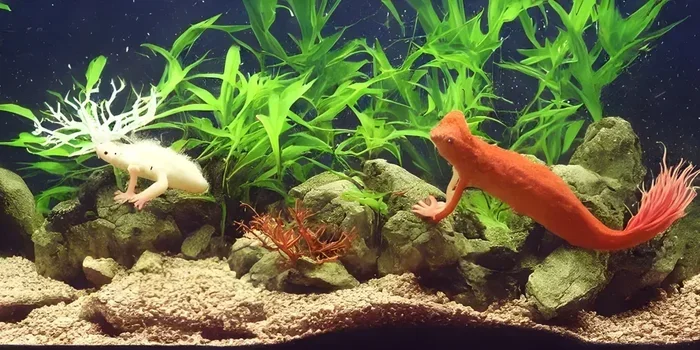
Can axolotls live with betta fish? The short answer is no — these two species have very different needs and temperaments that make cohabitation risky. Axolotls need cold water, while bettas thrive in warmer temperatures, and their behaviors clash in a shared tank. This guide breaks down exactly why they don’t mix well and what you can do instead.
So you love axolotls. You love betta fish too. And you’re wondering if you can keep them in the same tank. It’s a fair question — and one a lot of aquarium hobbyists ask. The idea of a unique underwater community is exciting. But the reality of mixing these two species is much more complicated than it looks.
The truth is, can axolotls live with betta fish is a question with a pretty clear answer. These two animals come from completely different environments, need different water conditions, and behave in very different ways. Putting them together can lead to serious problems — for both your axolotl and your betta.
In this guide, we’ll walk through exactly why these two species don’t make good tank mates. We’ll cover water temperature, behavior, tank setup, and what you should do instead. By the end, you’ll know exactly how to keep both animals happy and healthy — just not in the same tank.
Key Takeaways
- Different water temperatures: Axolotls need cold water (60-64°F), while bettas need warm water (76-82°F).
- Behavioral conflicts: Bettas can be aggressive, and axolotls may eat small or slow-moving tank mates.
- Separate tanks are safest: Keeping them apart ensures both species stay healthy and stress-free.
- If you must try, monitor closely: Watch for signs of stress, fin nipping, and temperature issues.
- Better alternatives exist: There are many compatible tank mates for both axolotls and bettas separately.
- Tank size matters: A large tank alone won’t solve the fundamental incompatibility between these two species.
- Research first: Always check species-specific needs before adding any new animal to your aquarium.
📑 Table of Contents
Why Axolotls and Betta Fish Don’t Mix
The biggest reason these two species can’t live together comes down to basics. They need different things to survive and thrive. Let’s break it down.
Water Temperature Clash
This is the number one dealbreaker. Axolotls are cold-water animals. They come from the lakes and canals of Mexico, where the water stays cool year-round. The ideal temperature for an axolotl is between 60°F and 64°F (15-18°C).
Bettas, on the other hand, are tropical fish. They need warm water, typically between 76°F and 82°F (24-28°C). That’s a huge gap — over 15 degrees Fahrenheit. You simply can’t set a tank temperature that works for both species. If the water is warm enough for a betta, it will stress out your axolotl. If it’s cool enough for an axolotl, your betta will get sick and sluggish.
Temperature stress weakens the immune system in both animals. Stressed fish get sick more easily. They eat less. They stop breeding. And in worst-case scenarios, they die. This alone is enough reason to keep them apart.
Different Behavioral Needs
Axolotls are gentle, slow-moving creatures. They spend most of their time at the bottom of the tank, gliding along the substrate and sniffing around for food. They’re not aggressive, but they are opportunistic eaters. If something small and slow moves by, an axolotl might try to eat it.
Bettas are a different story entirely. Male bettas, especially, can be territorial and aggressive. They flare at other fish, chase tank mates, and sometimes nip fins. Even female bettas can show aggression in tight spaces. Can your betta fish live with other fish that move slowly and have long, flowing fins? Sometimes — but axolotls don’t fit the profile of safe tank mates.
The betta might chase the axolotl, causing constant stress. Or the axolotl might try to eat the betta’s fins. Neither outcome is good.
Different Habitat Requirements
Axolotls need specific tank setups. They prefer soft, sandy substrate because their bodies are delicate and rough gravel can hurt them. They also need dim lighting and plenty of hiding spots. Axolotls are sensitive to water quality and produce a lot of waste, which means you need strong filtration.
Bettas like planted tanks with places to explore and rest. They enjoy gentle water flow and moderate lighting. Some bettas like to build bubble nests near the surface, which means you need open space at the top of the tank.
Trying to design a tank that meets both sets of needs is nearly impossible. You’d be compromising on substrate, lighting, filtration, and water flow — and both animals would suffer for it.
What Happens If You Try to Keep Them Together
Some aquarium owners try to push the boundaries and house these species together anyway. Here’s what typically happens.
Stress and Illness
When fish and amphibians are kept in unsuitable conditions, stress follows. Stressed axolotls stop eating. They develop fungal infections. Their gills deteriorate. Stressed bettas lose color, stop eating, and become prone to diseases like ich and fin rot.
Even if both animals survive the first few weeks, long-term stress shortens their lifespan significantly. An axolotl can live 10-15 years in good conditions. A betta can live 3-5 years. Why risk either one?
Physical Harm
Betta fish have long, flowing fins. Axolotls have feathery external gills and soft, delicate skin. A curious or aggressive betta might nip at an axolotl’s gills. An axolotl might mistake a betta’s tail for food and try to eat it. In either case, injuries can become infected, especially in poor water conditions.
Water Quality Problems
Axolotls are messy eaters and produce a lot of ammonia. Bettas are also sensitive to water quality. When you combine two animals with different waste output levels in one tank, maintaining stable water parameters becomes extremely difficult. Ammonia spikes can happen fast and be deadly for both species.
Can You Make It Work With a Big Tank?
Some hobbyists think a bigger tank solves everything. A 55-gallon or 75-gallon aquarium gives both animals more space to spread out. But size alone doesn’t fix the core problems.
Even in a large tank, the water temperature problem remains. You can’t have two temperature zones in one aquarium without special equipment — and even then, it’s risky. The temperature gradient would be hard to maintain and could fluctuate dangerously.
Can axolotls live with betta fish in a divided tank? A divided tank might seem like a compromise, but axolotls are strong and can push dividers. And even if they can’t reach each other, the shared water means both animals are affected by the same temperature and water quality issues.
The bottom line: a bigger tank doesn’t make these two species compatible. It just gives them more room to be uncomfortable.
Better Tank Mates for Axolotls
If you love axolotls, you’re probably wondering what can live with them. The good news is there are some options — but you need to choose carefully.
Best Tank Mates for Axolotls
- Other axolotls: Axolotls can live together in groups, provided the tank is large enough and all animals are similar in size.
- White cloud mountain minnows: These small, cold-water fish can sometimes coexist with axolotls, though there’s always a risk of the axolotl trying to eat them.
- Aquatic snails: Mystery snails and other hard-shell snails are generally safe because the axolotl can’t eat them. Can mystery snails live with betta fish too? Yes, but that’s a different setup than an axolotl tank.
What to Avoid With Axolotls
- Tropical fish that need warm water
- Fish with long fins (axolotls may try to eat them)
- Fast-moving fish that stress out the axolotl
- Any animal that requires different water parameters
Better Tank Mates for Betta Fish
If your betta is the star of your aquarium, there are plenty of species that can share its warm-water home safely.
Good Betta Tank Mates
- Neon tetras: Small, peaceful, and they stay in the upper and middle parts of the tank.
- Harlequin rasboras: These schooling fish are calm and won’t bother your betta.
- Corydoras catfish: Bottom-dwelling fish that stay out of your betta’s way.
- Ghost shrimp: Inexpensive and generally safe with bettas, though your betta might try to catch them.
- Kuhli loaches: Eel-like fish that stay at the bottom and are peaceful.
What to Avoid With Bettas
- Fish with bright colors or long fins (betta may see them as rivals)
- Fin-nipping species like tiger barbs
- Fish that need very different water conditions
- Other male bettas (they will fight)
How to Set Up Separate Tanks the Right Way
The best approach is to keep your axolotl and your betta in separate tanks. This way, each animal gets exactly what it needs without compromise.
Axolotl Tank Setup
- Use a tank of at least 20 gallons for one axolotl.
- Add a soft sand substrate — never rough gravel.
- Keep the water temperature between 60-64°F.
- Install a gentle filter to maintain water quality.
- Provide hiding spots like caves or PVC pipes.
- Use dim lighting or add floating plants to soften the light.
Betta Tank Setup
- Use a tank of at least 5 gallons for one betta.
- Keep the water temperature between 76-82°F.
- Add live or silk plants for hiding and resting.
- Use a gentle filter with a sponge pre-filter to reduce water flow.
- Leave open space at the surface for bubble nest building.
- Keep the lighting moderate — bettas don’t like bright lights.
Setting up two separate tanks might sound like more work, but it’s the only way to give both species a healthy, happy life. Each tank is easier to maintain than one overloaded setup, and you can tailor the conditions perfectly for each animal.
Expert Insights on Mixing Species
Experienced aquarists and veterinarians agree on one thing: don’t mix species with incompatible needs. The goal of keeping aquarium pets is to give them a good life — not to create a novelty display that puts animals at risk.
If you’re new to fishkeeping, start with one species at a time. Learn its needs. Master the water parameters. Build your confidence. Then, if you want to expand, research each new addition carefully before adding it to your setup.
Some people also ask, can female betta fish live with other fish or can my betta live with other fish in a community setup? The answer depends on the species. Female bettas are generally less aggressive than males and can sometimes coexist with peaceful community fish. But axolotls are a completely different category — they’re amphibians, not fish, and their needs are fundamentally different from any tropical species.
For more information on betta compatibility, check out our guide on whether your betta fish can live with other fish and our article on keeping axolotls with betta fish.
Conclusion
So, can axolotls live with betta fish? The honest answer is no — not safely. These two species need different water temperatures, different tank setups, and have incompatible behaviors. Trying to house them together puts both animals at risk of stress, illness, and injury.
The best thing you can do for your axolotl and your betta is to give each one its own dedicated tank. Set up the right conditions for each species, and you’ll enjoy watching both of them thrive for years to come. Good aquarium keeping is all about putting the animals’ needs first. And when it comes to mixing species, that means knowing when not to mix them.
Take the time to research, plan your tanks, and enjoy the rewarding hobby of aquarium keeping the right way. Your pets will thank you for it.
Frequently Asked Questions
Can axolotls and betta fish ever live in the same tank safely?
In most cases, no. The temperature difference alone makes it unsafe. Axolotls need cold water and bettas need warm water, so keeping them in one tank will stress both animals. Even with special equipment, the risks outweigh any benefits.
What is the ideal water temperature for an axolotl?
Axolotls thrive in water between 60°F and 64°F (15-18°C). Keeping the temperature above 70°F can cause serious health problems, including heat stress and a weakened immune system. Always use a reliable aquarium thermometer to monitor the temperature.
Can a female betta live with an axolotl?
No. While female bettas are generally less aggressive than males, they still need warm tropical water. The temperature and habitat requirements are too different for either sex of betta to live safely with an axolotl.
What should I do if I already have both species?
If you currently house an axolotl and a betta together, separate them immediately. Check both animals for signs of stress or illness, such as loss of appetite, faded color, or unusual behavior. Set up appropriate tanks for each species as soon as possible.
Are there any species that can live with both axolotls and bettas?
No single species can comfortably live with both axolotls and bettas because of the temperature difference. Axolotls need cold water, and bettas need warm water. There is no overlap in their ideal living conditions that would allow a shared tank mate.
How big should my axolotl tank be?
A single axolotl needs at least a 20-gallon tank. If you want to keep two axolotls together, go for a 40-gallon or larger tank. Axolotls grow up to 12 inches and produce a lot of waste, so bigger is always better for water quality and their overall health.