Can a Betta Fish Die from Overfeeding
Yes, a betta fish can die from overfeeding. Overfeeding is one of the leading causes of death in betta fish. It triggers serious health problems like swim bladder disease, constipation, and dirty tank water that poisons your fish. This guide covers the real risks, clear warning signs, and simple steps to prevent overfeeding and keep your betta alive and thriving.
Can a betta fish die from overfeeding? The short answer is yes. Many new fish owners do not realize that giving their betta too much food can be deadly. Overfeeding is one of the top reasons betta fish die in home aquariums. It causes a chain reaction of health problems that can weaken your fish and shorten its life significantly.
In this guide, we will walk you through everything you need to know. You will learn what happens inside your betta’s body when it eats too much. We will also cover the warning signs to watch for, how much food is actually enough, and simple tips to keep your fish safe. By the end, you will have a clear picture of why portion control matters so much for your betta’s health.
If you have ever wondered whether you are feeding your betta too much, this article is for you. Let us dive in and break it down in plain, easy-to-understand language.
Key Takeaways
- Overfeeding can kill betta fish: Excess food decays in the tank, releasing toxins that poison your fish and damage their organs.
- Watch for warning signs: A swollen belly, lethargy, and uneaten food sinking to the bottom are clear red flags.
- Feed small amounts twice a day: A few pellets or flakes per meal is all a betta needs to stay healthy.
- Constipation and swim bladder disease are common: Both conditions are directly linked to eating too much and can be fatal if untreated.
- Clean water is essential: Overfeeding ruins water quality fast, so regular tank maintenance is a must.
- Prevention is easy: A consistent feeding schedule and proper portion control go a long way in protecting your betta.
📑 Table of Contents
- What Happens When You Overfeed a Betta Fish
- Signs Your Betta Fish Is Getting Too Much Food
- How Overfeeding Can Lead to Serious Health Issues
- How Much Should You Feed a Betta Fish
- How to Prevent Overfeeding Your Betta Fish
- What to Do If You Have Already Overfed Your Betta
- Common Mistakes Betta Fish Owners Make With Feeding
- Final Thoughts on Overfeeding and Betta Fish Health
What Happens When You Overfeed a Betta Fish
When a betta fish eats more than it can digest, the extra food sits in its stomach and intestines. This puts pressure on internal organs and disrupts normal digestion. Over time, the uneaten food sinks to the bottom of the tank and starts to rot. Rotting food releases ammonia and nitrites into the water. These toxins are extremely harmful to your betta, even in small amounts.
The digestive system of a betta fish is small and sensitive. It was designed to handle small meals throughout the day, not large ones all at once. When you overload its system, the food begins to ferment inside the gut. This leads to bloating, gas, and a condition called swim bladder disease. Swim bladder disease makes it hard for your betta to swim properly. In severe cases, it can be fatal.
The Toxin Cycle in Your Tank
Here is how overfeeding creates a dangerous cycle in your aquarium. First, your betta eats more than it needs. Second, the leftover food falls to the bottom and starts to decay. Third, the decaying food releases ammonia into the water. Fourth, ammonia builds up and stresses your fish. Fifth, a stressed fish has a weaker immune system. Sixth, a weak immune system makes your betta vulnerable to diseases like tail rot, fungal infections, and bacterial outbreaks.
This cycle can happen fast, sometimes within just 24 to 48 hours. Many new fish owners do not realize what is happening until their betta shows serious symptoms. That is why understanding the connection between overfeeding and water quality is so important.
Signs Your Betta Fish Is Getting Too Much Food
Catching overfeeding early can save your betta’s life. The sooner you spot the warning signs, the sooner you can make changes. Here are the most common symptoms to watch for:
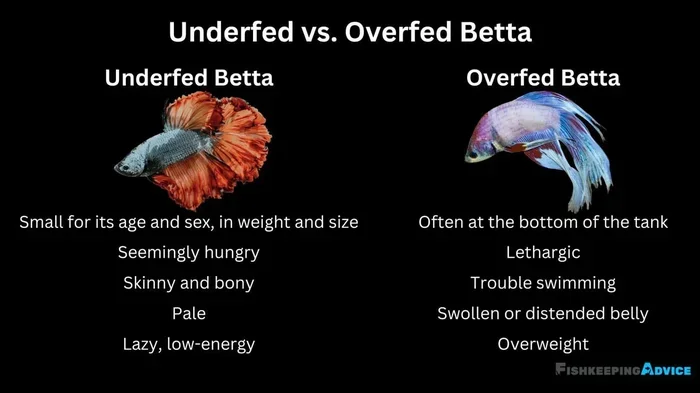
- Swollen or bloated belly: A betta that looks like it is carrying marbles inside its body has likely been overeating.
- Uneaten food on the tank floor: If food is sinking and sitting at the bottom after feeding time, you are giving too much.
- Lethargy and low energy: A healthy betta is active and curious. If yours is hiding or staying still, it could be a sign of digestive distress.
- Loss of appetite: This might sound confusing, but a betta that refuses food may already be full from previous meals.
- Floating or sinking problems: Difficulty maintaining buoyancy is a classic sign of swim bladder issues caused by overeating.
- Cloudy or smelly water: If your tank water turns cloudy quickly after feeding, excess food is likely the cause.
If you notice any of these signs, it is time to adjust your feeding habits right away. Ignoring these symptoms can lead to serious health complications, and in the worst cases, a betta fish death.
How Overfeeding Can Lead to Serious Health Issues
Overfeeding does not just cause a bloated stomach. It opens the door to a range of serious health problems that can threaten your betta’s life. Let us look at the most common conditions linked to eating too much.
Constipation in Betta Fish
Constipation is one of the most common results of overfeeding. When a betta eats too much, its digestive tract becomes backed up. The fish is unable to pass waste properly. This causes discomfort, bloating, and a loss of appetite. In severe cases, constipation can lead to a condition called dropsy, which is often fatal.
You can read more about how constipation can affect your betta in our article on can betta fish die from constipation. It covers the causes, symptoms, and treatment options in detail.
Swim Bladder Disease
The swim bladder is a small organ that helps your betta control its balance and buoyancy. When the digestive system is overloaded from overeating, the swollen gut presses against the swim bladder. This makes it hard for the fish to swim normally. Your betta might float sideways, tilt to one side, or struggle to stay upright.
Swim bladder disease is treatable in the early stages, but it becomes very dangerous if left unchecked. You can learn more about whether this condition can be fatal in our piece on can a betta fish die from swim bladder disease.
Dirty Tank Water and Ammonia Poisoning
Excess food that is not eaten decays rapidly in warm water. Betta tanks are usually kept at temperatures between 76 and 82 degrees Fahrenheit, which speeds up the decay process. As food breaks down, it releases ammonia into the water. Ammonia burns the gills and skin of your betta. Even low levels of ammonia can cause long-term damage.
High ammonia levels also promote the growth of harmful bacteria. This creates an unhealthy environment that weakens your fish’s natural defenses. Over time, your betta becomes more susceptible to infections and diseases. Keeping your tank clean is essential, and feeding the right amount is a big part of that.
Bacterial and Fungal Infections
A betta that is overfed has a harder time fighting off infections. The excess food disrupts the natural balance of bacteria in the tank. Harmful bacteria can thrive in this environment. Your betta may develop fin rot, body fungus, or other bacterial infections that are difficult to treat. These infections can spread quickly and become life-threatening if not addressed.
How Much Should You Feed a Betta Fish
Getting the portion size right is the single most important step you can take to protect your betta. So how much is enough? The general rule is simple: feed your betta an amount equal to the size of its eyeball, twice a day. That is it. A few small pellets or a pinch of flakes per meal is all your fish needs.
Here is a quick guide to help you get the portions right:
- Adult bettas: 2 to 3 small pellets per meal, twice a day. You can also offer a tiny piece of frozen or live food once a week as a treat.
- Young bettas: Slightly smaller portions, 2 to 3 times a day, since they are growing and have faster metabolisms.
- Senior bettas: Reduce portions slightly. Older fish have slower digestion and do not need as much food.
Always remove any uneaten food within five minutes of feeding. This keeps the tank clean and prevents the buildup of harmful toxins. If you are unsure whether you are feeding the right amount, it is better to underfeed slightly than to overfeed. Betta fish can survive short periods without food, and a missed feeding will not harm them. But overfeeding can be deadly.
For more details on how long your betta can go without food, check out our article on can your betta fish go a weekend without food. It offers helpful tips on fasting and feeding schedules.
How to Prevent Overfeeding Your Betta Fish
Prevention is always better than cure. The good news is that keeping your betta at a healthy weight and avoiding overfeeding is straightforward. Here are some practical tips to make it part of your routine:
- Stick to a feeding schedule: Feed your betta at the same times every day. Morning and evening work well. Consistency helps your fish develop a healthy digestive rhythm.
- Use a measuring tool: Instead of guessing, use a small scoop or tweezers to control the amount of food you add. This removes the guesswork and prevents accidental overfeeding.
- Choose high-quality food: Premium betta pellets are more nutrient-dense, so your fish needs less of them. Cheap flake food often contains fillers that expand in the stomach and cause bloating.
- Watch your fish during feeding: Pay attention to how much your betta eats in two to three minutes. Anything left after that time should be removed.
- Include fasting days: Skipping one feeding per week can help your betta’s digestive system reset. Many experienced fish keepers fast their bettas for 24 hours once a week.
- Maintain clean water: Regular water changes and tank cleaning help remove leftover food and waste before they turn toxic. A clean tank supports a healthy immune system.
Following these simple steps will dramatically reduce the risk of overfeeding. Your betta will be healthier, more active, and live a longer, happier life.
What to Do If You Have Already Overfed Your Betta
If you think you have been overfeeding your betta, do not panic. There are steps you can take right now to help your fish recover. The first thing to do is stop feeding immediately. Give your betta a break from food for 24 to 48 hours. This allows the digestive system to clear out any remaining food and gives the gut a chance to rest.
Next, check your water parameters. Use a liquid test kit to measure ammonia, nitrite, and nitrate levels. If any of these are elevated, perform a 25 to 50 percent water change right away. Fresh, dechlorinated water will help dilute the toxins and improve the conditions in your tank.
Keep a close eye on your betta during the recovery period. Look for signs of improvement, such as a return to normal activity levels and a reduction in belly swelling. If your betta does not improve within a few days, or if you notice more serious symptoms like pale color, clamped fins, or difficulty breathing, it is time to consult a veterinarian who specializes in fish health.
For more guidance on what to do when your betta is in trouble, read our article on can you save a betta fish from dying. It covers emergency care steps and when to seek professional help.
Common Mistakes Betta Fish Owners Make With Feeding
Even well-meaning fish owners make feeding mistakes that can put their betta at risk. Here are the most common ones to avoid:
- Feeding too much out of guilt: Some owners feel bad when their betta begs for food and give in. Remember, bettas are opportunistic eaters. They will always act hungry, even when they are full.
- Using the wrong type of food: Not all fish food is created equal. Flakes designed for tropical community fish often expand in water and can cause digestive blockages in bettas.
- Ignoring the feeding schedule: Random feeding times and inconsistent portions throw off your betta’s digestive rhythm and make it harder to monitor how much it is actually eating.
- Skipping water changes: Even with the right portion sizes, a dirty tank will quickly become toxic. Regular maintenance is just as important as proper feeding.
Avoiding these mistakes will put you on the right path to being a confident and knowledgeable betta fish owner. Your fish will thank you with vibrant colors, active behavior, and a long, healthy life.
Final Thoughts on Overfeeding and Betta Fish Health
Can a betta fish die from overfeeding? The answer is a clear and serious yes. Overfeeding is one of the most preventable causes of betta fish death, yet it happens every day in households around the world. The good news is that with a little knowledge and a consistent routine, you can easily avoid the dangers of overfeeding and give your betta the best chance at a long and healthy life.
Remember to feed small portions twice a day, remove uneaten food promptly, and keep your tank water clean. Watch for the warning signs of overfeeding, and act quickly if you notice any problems. Your betta depends on you for its well-being, and every small step you take makes a big difference.
Start today. Review your current feeding habits, adjust your portions if needed, and enjoy the rewarding experience of watching your betta fish thrive. A well-fed betta is a happy betta, and a happy betta brings joy to your home every single day.
Frequently Asked Questions
How much should I feed my betta fish each day?
Feed your betta an amount equal to the size of its eyeball, twice a day. That is usually two to three small pellets per meal. It is better to feed slightly less than too much. If you are ever in doubt, skip a feeding rather than risk overfeeding your fish.
Can overfeeding cause a betta fish to die within 24 hours?
In extreme cases, yes. Severe overfeeding can cause ammonia spikes in the tank very quickly, leading to poisoning and death within a day or two. More commonly, overfeeding causes gradual health decline over weeks or months. Either way, it is a serious risk that every betta owner should take seriously.
What is the best food to prevent overfeeding?
High-quality betta pellets are the best choice because they are nutrient-dense and do not expand as much in the stomach. Avoid cheap flake foods with fillers. You can also offer small amounts of frozen or live food like brine shrimp as an occasional treat, but keep portions very small.
Should I fast my betta fish?
Yes, fasting once a week can benefit your betta’s digestive system. Skipping one feeding per week gives the gut a chance to rest and process any remaining food. Many experienced fish keepers recommend a 24-hour fast every seven to ten days. This simple habit can help prevent constipation and bloating.
How can I tell if my betta is full?
A full betta will stop eating and may even spit out food. Its belly should look rounded but not swollen or distended. If your betta is still eating eagerly after two to three minutes, you may be giving too little, not too much. Watch for these natural cues during every feeding session.
Can overfeeding make my betta fish’s water dirty?
Absolutely. Uneaten food decays rapidly and releases ammonia and other toxins into the water. This makes the water cloudy, smelly, and dangerous for your betta. Regular water changes and removing uneaten food within five minutes of feeding are essential steps to maintain clean, safe tank conditions.