How Far Can Betta Fish See

Betta fish have a surprisingly limited but functional vision range. They can see clearly up to about 12 to 14 inches in front of them. Their eyes work best in moderate light, and they rely on other senses like smell and touch to detect things beyond their visual range.
Have you ever wondered how far can betta fish see? It is a question many fish owners ask, especially when they notice their betta staring at things across the tank or reacting to movements outside the glass.
The answer might surprise you. Bettas have a unique visual system that works well for their natural habitat but has clear limitations. Their eyesight is tuned for short distances, and they depend on other senses to fill in the gaps. Understanding how your betta sees the world helps you create a better, happier home for your fish.
In this guide, we will explore everything about betta fish vision range, what affects their eyesight, and how you can use this knowledge to improve their daily life. Whether you are a new betta owner or a seasoned hobbyist, this information will help you see your fish in a whole new light.
Key Takeaways
- Limited Distance Vision: Betta fish can see clearly within a range of about 12 to 14 inches, making them near-sighted by nature.
- Color Perception Is Strong: Bettas can see a wide range of colors, including UV light, which helps them spot food and recognize their surroundings.
- Lighting Matters: Bright, dim, or colored lighting directly affects how well a betta can see inside a tank.
- Other Senses Compensate: Beyond sight, bettas use their lateral line system and smell to navigate and detect movement at greater distances.
- Reflection Awareness: Bettas can recognize their own reflection and may react aggressively or curiously to it.
- Tank Setup Affects Vision: Tank size, decorations, and water clarity all play a role in how comfortably a betta can see its environment.
📑 Table of Contents
Understanding Betta Fish Vision
Betta fish eyes are built differently from human eyes. They have excellent color vision but limited depth perception. Their eyes sit on the sides of their head, which gives them a wide field of view. However, this comes at the cost of sharp long-distance vision.
How Betta Eyes Work
A betta fish eye works much like a camera lens. Light enters through the cornea and hits the retina at the back of the eye. The retina contains special cells called cones and rods. Cones help bettas detect color, while rods help them sense light and movement.
Bettas have more cone cells than rod cells. This means they are great at seeing colors but not as good at seeing in very low light. Their eyes can adjust to different lighting conditions, but they work best in moderate, natural light.
One interesting fact is that bettas can see ultraviolet light. This is something humans cannot do. UV vision helps bettas spot tiny organisms and detect movement in their environment. It is one of the reasons their vision feels so sharp up close, even if it falls off at a distance.
The Concept of Visual Acuity in Fish
Visual acuity refers to how clearly an eye can see details. Humans have very high visual acuity. We can spot a small object from hundreds of feet away. Bettas, on the other hand, have much lower visual acuity. They can resolve fine details, but only within a short range.
Think of it this way. A betta fish sees the world like a painter working on a close-up canvas. Every detail up close is vivid and clear. But step back a few feet, and things start to blur. This is why your betta might not notice you walking across the room until you are very close to the tank.
How Far Can Betta Fish See in Clear Water
The typical betta fish vision range is about 12 to 14 inches. Beyond that distance, objects start to look blurry and indistinct. This range is perfect for their natural environment, where they live in shallow, warm waters with plenty of nearby cover.
Near-Sighted by Nature
Bettas are naturally near-sighted. This means they focus best on objects that are close to them. In the wild, this adaptation helps them spot food, predators, and mates without needing to see far into the distance.
Inside a home aquarium, this means your betta will be most interested in things within its immediate area. A food pellet dropped near the surface will catch its attention quickly. But a fish net held across the room might go unnoticed until it is within a foot or so of the tank.
What Affects Clear Vision Range
Several factors can change how well a betta sees at any given distance:
- Water Clarity: Dirty or cloudy water reduces visibility significantly. Even within the 12-inch range, murky water can make it hard for a betta to spot food or recognize other fish.
- Tank Background: Dark or busy backgrounds can make it harder for bettas to distinguish objects at the edge of their range.
- Tank Size: In a very large tank, objects at the far end may fall outside a betta’s effective vision range entirely.
- Lighting Conditions: Too much or too little light affects how well a betta can make out details at any distance.
The Role of Color in Betta Fish Vision
One of the most impressive parts of betta fish vision is their ability to see color. Bettas can perceive a wide spectrum of colors, including some that humans cannot see. This makes them highly visual creatures that rely heavily on sight for daily activities.
Can Betta Fish See Color?
Yes, bettas can see color very well. They have trichromatic vision, which means they can see red, green, and blue wavelengths. This is similar to human color vision. On top of that, they can also detect ultraviolet light, giving them an extra color dimension that we simply do not have.
This rich color perception helps bettas in several ways. They can spot colorful food items. They can recognize other fish by their hues. And they can even pick up on subtle changes in their environment that might signal danger or opportunity.
If you are choosing decorations or substrate for your betta tank, keep in mind that your fish can see a broad range of colors. Bright, contrasting colors may attract more attention from your betta. Muted, natural tones can help reduce stress and create a calm environment.
Color Vision at Different Distances
While bettas can see many colors, their color vision is strongest up close. Within the 12-inch range, they can distinguish between very similar shades. Beyond that, colors start to blend together, and details become harder to tell apart.
This is why a betta might react strongly to a colorful food pellet floating right in front of them but ignore a brightly colored decoration at the far end of the tank. The distance matters just as much as the color itself.
How Lighting Conditions Impact Betta Vision
Lighting plays a huge role in how well a betta can see. Too much light can cause glare and stress. Too little light can make it nearly impossible for them to spot food or navigate their space. Finding the right balance is key to supporting healthy betta fish vision.
Best Lighting for Betta Fish
Natural, moderate light is ideal for bettas. A standard aquarium LED light that mimics daylight works well. Avoid placing the tank in direct sunlight, as this can cause temperature swings and excessive algae growth. Both of these problems can indirectly affect your betta’s ability to see clearly.
Here are some quick tips for managing tank lighting:
- Keep the lights on for 8 to 10 hours a day.
- Use a gentle, adjustable LED light designed for aquariums.
- Avoid harsh fluorescent bulbs that create glare on the glass.
- Turn off the lights at night to give your betta a proper rest cycle.
What Happens in Low Light?
In low light, a betta’s vision suffers. Their eyes rely on cone cells for color and detail, and these cells need a fair amount of light to work properly. In dim conditions, your betta will rely more on its other senses, especially the lateral line system and its sense of smell.
This is why can betta fish see in the dark is such a common question. The short answer is that bettas have limited night vision. They are not built for hunting or navigating in complete darkness. A dimly lit tank is manageable, but total darkness can disorient them.
What About Colored Lights?
Many hobbyists wonder about using colored lights, such as red or blue, in their betta tanks. Bettas can see red light and blue light, but these wavelengths can alter how they perceive their surroundings. Red light may make the tank look different than it does under white light. Blue light can create a calming effect but may reduce overall visibility.
If you want to use colored lighting for aesthetic reasons, keep it dim and limit the duration. Your betta will still need periods of normal light to maintain healthy vision and circadian rhythms.
What Betta Fish Can and Cannot See
Understanding the limits of betta vision helps you set realistic expectations for your fish’s behavior. Bettas can see quite a bit up close, but they miss a lot at a distance.
What Bettas Can See
Within their effective range, bettas can see:
- Food items floating on the water surface or near the bottom
- Other fish and tank mates within the same tank
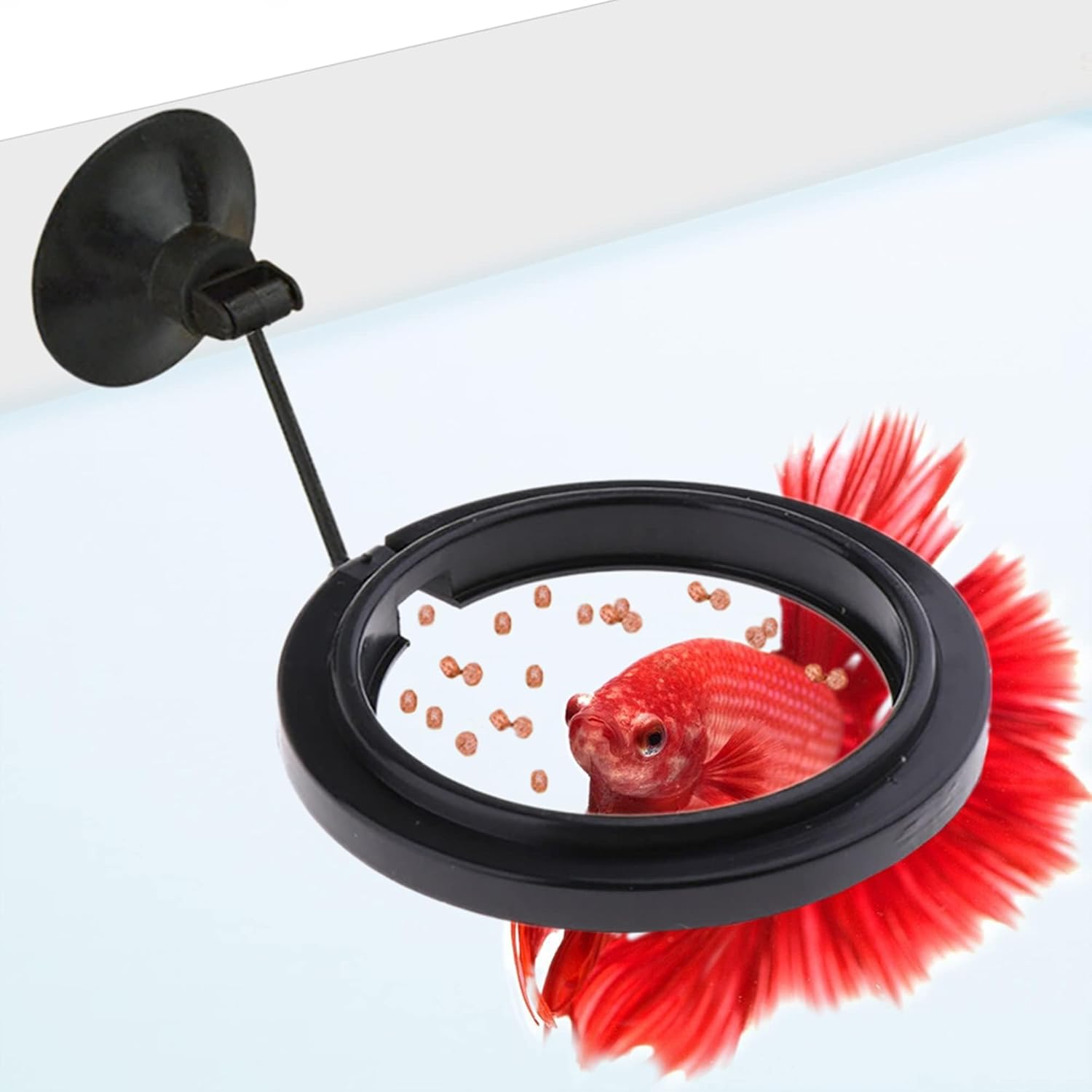
- Their own reflection in the glass
- Movement and changes in their immediate surroundings
- A range of colors, including ultraviolet wavelengths
- The shape and size of objects up close
What Bettas Cannot See
Beyond their near-sighted range, bettas struggle with:
- Sharp details at distances greater than 14 inches
- Objects in very dim or dark conditions
- Fine text or small patterns far away
- Things outside the tank when the glass is dirty or the lighting is poor
- Fast-moving objects that are beyond their focus range
Can Betta Fish See Their Reflection?
Yes, bettas can see their own reflection, especially when the glass is clean and the lighting is good. This is why you might notice your betta flaring at the glass. They recognize the image as themselves, even if they do not fully understand what a reflection is. Their aggressive response comes from a natural territorial instinct.
If you want to reduce reflection stress, try adjusting the angle of the light or adding plants to break up the glass view. This can help your betta feel more secure in its space.
How Betta Vision Compares to Other Senses
While vision is important to bettas, it is not their only way of understanding the world. In fact, their other senses are just as crucial, especially for detecting things beyond their visual range.
The Lateral Line System
Bettas have a special sensory system called the lateral line. This system runs along both sides of their body. It detects changes in water pressure and movement. Through the lateral line, a betta can sense when something is nearby, even if it is too far away to see clearly.
This is why your betta might react to your hand approaching the tank before it actually sees it. The lateral line picks up on the subtle vibrations in the water, giving your fish an early warning system.
Sense of Smell and Taste
Bettas also have a strong sense of smell. They use their nostrils, called nares, to detect chemical signals in the water. This helps them locate food, sense danger, and even find other fish for breeding purposes.
Their sense of taste is also surprisingly good. Bettas have taste buds on their fins and around their mouth. This means they can “taste” food before they even eat it, which is a handy adaptation for a fish that relies on close-range vision to find meals.
Hearing and Vibration Detection
Bettas can detect sound vibrations through the water, even though they do not have external ears. Loud noises or sudden vibrations can startle them. This is another reason to keep your tank in a quiet area of your home. Constant loud sounds can stress your betta and affect its overall well-being.
So when you ask how far can betta fish see, remember that vision is only one piece of the puzzle. Their combined senses work together to create a full picture of their world, even when their eyesight alone cannot.
Practical Tips to Support Your Betta’s Vision
Now that you understand how your betta sees the world, here are some practical steps you can take to support their vision and overall quality of life.
Keep the Tank Clean
Clean water equals clear vision. Regular water changes and proper filtration keep the water clear, which helps your betta see its surroundings more easily. Aim for partial water changes of 25% every week. This removes waste and debris that can cloud the water and reduce visibility.
Choose the Right Tank Size
A tank that is too large can actually make it harder for your betta to feel comfortable and navigate its space. Since bettas see best within a 12 to 14-inch range, a tank that is 5 to 10 gallons is often a good fit. It keeps everything within their effective vision range and makes them feel secure.
If you are curious about tank sizes and how they affect your fish, you might want to read about how big a betta fish can grow to understand the ideal living space better.
Use Natural Decorations
Live plants, smooth rocks, and natural driftwood create a visually enriching environment for your betta. These decorations give your fish things to explore and rest near, all within their comfortable vision range. Avoid sharp or brightly reflective decorations that might startle or stress your fish.
Observe Your Betta’s Behavior
Watch how your betta interacts with its environment. If it seems hesitant to eat or hides frequently, check the lighting and water clarity. A betta that cannot see its food clearly may stop eating or become stressed. Small adjustments to the tank setup can make a big difference in how confidently your fish moves around.
Avoid Placing the Tank in High-Traffic Areas
Since bettas have limited distance vision, a tank placed in a busy hallway or near a loud TV can be stressful. Your betta may see sudden shadows or movements as threats, causing constant stress. Place the tank in a calm area where the environment is stable and predictable.
If you want to know more about how your betta perceives you and its surroundings, check out can betta fish see people for additional insights into their visual world.
Conclusion
The answer to how far can betta fish see comes down to about 12 to 14 inches of clear, well-lit space. Their vision is built for close-up detail and rich color perception, not for long-distance viewing. This makes sense when you consider their natural habitat in shallow, warm waters where everything happens nearby.
By understanding your betta’s visual capabilities, you can create a tank environment that truly supports their needs. Keep the water clean, use appropriate lighting, and arrange decorations within their sight range. Combine this with their powerful senses of smell, touch, and hearing, and your betta will thrive in a home that feels safe and stimulating.
Take what you have learned here and apply it today. A little knowledge about betta fish vision goes a long way toward building a happier, healthier life for your colorful companion.
Frequently Asked Questions
How far can betta fish see in a tank?
Betta fish can see clearly within about 12 to 14 inches in a tank. Beyond that distance, objects become blurry and hard to distinguish. This range works well for standard home aquariums where everything stays within a comfortable viewing distance.
Can betta fish see in the dark?
Betta fish have limited ability to see in the dark. Their eyes rely on light to function properly, and they have more cone cells than rod cells. In very low light, they depend on their lateral line system and sense of smell to navigate. A dim light is manageable, but total darkness can disorient them.
Can betta fish see color?
Yes, bettas have excellent color vision. They can see red, green, and blue wavelengths, and they can also detect ultraviolet light. This rich color perception helps them spot food, recognize other fish, and respond to their environment in meaningful ways.
Why does my betta fish stare at me?
Bettas can see people and often associate their owners with feeding time. Your betta may stare at you because it has learned your movements and expects food. They can recognize shapes and movement patterns, especially when you are within their 12 to 14-inch vision range.
Can betta fish see their reflection?
Yes, bettas can see their own reflection in the glass of their tank. They may react aggressively by flaring their fins, as they perceive the reflection as a rival. This behavior is natural and rooted in their territorial instincts. Using plants or adjusting lighting can reduce reflection-related stress.
What affects a betta fish’s vision range?
Several factors affect how well a betta can see. Water clarity, lighting conditions, tank size, and background color all play a role. Dirty water, harsh lighting, and overly large tanks can reduce a betta’s effective vision range and make it harder for them to navigate comfortably.