Can You Have Multiple Betta Fish in the Same Tank

Can you have multiple betta fish in the same tank? The short answer is: it depends. Male bettas are highly territorial and usually cannot share a tank. However, female bettas can sometimes live together in a sorority tank setup. This guide covers everything you need to know about keeping multiple bettas together, including tank size, compatibility, and proven strategies.
So, you love betta fish and want to keep more than one. Maybe you have a big tank and wonder if multiple betta fish can live together. Or maybe you already have one and are thinking about adding another. Either way, this is one of the most common questions among betta owners.
The truth is, keeping multiple betta fish in the same tank is not as simple as dropping two fish in a bowl. Bettas are also called “fighting fish” for a reason. They have strong territorial instincts that can lead to serious problems. But with the right knowledge, setup, and a bit of patience, some betta combinations can work. Let’s break it all down.
Key Takeaways
- Male bettas cannot live together: Two male bettas will fight, often to the death, due to territorial aggression.
- Female bettas can form groups: A sorority tank with 4-6 female bettas can work with the right setup.
- Tank size matters enormously: You need at least 20 gallons for a sorority, and larger is always better.
- Tank dividers are an option: If you want two males, a divider lets them share one tank safely.
- Watch for signs of stress: Hiding, color fading, and flaring are warning signs that your bettas are not getting along.
- Not all bettas are the same: Individual temperament varies, so always monitor behavior closely.
📑 Table of Contents
- Why Bettas Are So Territorial
- Can You Put Two Male Betta Fish Together?
- Can Female Betta Fish Live Together?
- How Many Betta Fish Can You Keep Together?
- Can Betta Fish Live with Other Species?
- Common Mistakes When Keeping Multiple Bettas
- Tips for a Successful Multi-Betta Setup
- Expert Insight: What Aquarists Say About Multiple Bettas
- Conclusion
Why Bettas Are So Territorial
Betta fish, or Betta splendens, come from the warm, shallow waters of Southeast Asia. In the wild, they claim small territories and defend them fiercely. Males especially guard their space against other males. This instinct is deeply wired into their behavior.
When you put two territorial fish in a small space, things go wrong fast. Here is what happens when two male bettas are placed together:
- Flaring and chasing: Both fish will display their fins and chase each other constantly.
- Fin nipping: Aggression escalates to biting fins and tearing fins.
- Extreme stress: The weaker fish stops eating and hides constantly.
- Injury or death: In worst cases, fights lead to fatal injuries.
This is why most experts say you should not keep two male bettas in one tank. The stress alone can shorten a betta’s lifespan significantly. A healthy betta can live 3 to 5 years, but chronic stress cuts that time short.
Can You Put Two Male Betta Fish Together?
The honest answer is no. Two male bettas should never share an unfiltered, unpartitioned tank. Even with a tank divider, they can still see each other and flare constantly, which causes stress for both fish.
That said, some hobbyists use tank dividers to house two males in one aquarium. The divider physically blocks the fish from reaching each other. This setup works only if both sides have proper filtration, heating, and hiding spots.
If you are considering this route, check out our guide on can you have two male betta fish in one tank for a deeper dive into divider setups and what to watch out for.
The Tank Divider Option
A tank divider is a plastic or mesh barrier that splits one aquarium into two sections. Here are the pros and cons:
- Pros: Saves space, lets both fish enjoy the same water parameters, and looks cleaner than two separate tanks.
- Cons: Males can still see and flare at each other, which causes ongoing stress. Dividers can also reduce water flow and make cleaning harder.
Overall, a divider is better than no barrier at all. But it is not a perfect solution. If you go this route, choose a sturdy divider and make sure each side has at least 5 gallons of water.
Can Female Betta Fish Live Together?
Female bettas are less aggressive than males, but they are not peaceful by any means. A group of female bettas can live together in what hobbyists call a sorority tank. This setup requires careful planning and a large enough tank.
Here are the key rules for a successful female betta sorority:
- Start with at least 4 to 6 females. A small group can lead to one fish being targeted. More fish spread out the aggression.
- Use a tank of 20 gallons or larger. More space means more territories and fewer direct confrontations.
- Add plenty of plants and hiding spots. Dense vegetation breaks up sight lines and gives shy fish a safe place to retreat.
- Introduce all fish at the same time. Adding new females later can trigger territorial disputes.
- Monitor behavior daily. Remove any fish that becomes overly aggressive or is being bullied.
Even with the perfect setup, not every group of females will get along. Some individual bettas are simply more aggressive than others. Always be prepared to rehome a fish if the group dynamics fall apart.
For more details on this topic, read our article on can female betta fish live in the same tank for practical tips on building a successful sorority.
How Many Betta Fish Can You Keep Together?
The number of bettas you can house together depends on tank size and gender. Here is a simple breakdown:
| Setup | Number of Bettas | Minimum Tank Size |
|---|---|---|
| One Male Betta Alone | 1 | 5 gallons |
| Two Males with Divider | 2 | 10 gallons (5 per side) |
| Female Sorority | 4 to 6 | 20 gallons or larger |
| One Male with Female Tank Mates | 1 male + 6+ females | 20+ gallons |
These numbers are general guidelines. Every fish is different. A larger tank always gives you more room to work with and reduces the chances of conflict.
Why Tank Size Is So Important
A bigger tank does more than just fit more fish. It dilutes aggression. When bettas have more space, they can establish separate territories without constant confrontation. In a small tank, there is nowhere to hide, and every encounter becomes a confrontation.
Aim for at least 20 gallons for any group setup. A 30-gallon or 40-gallon tank is even better. Larger tanks are also more stable in terms of water parameters, which reduces stress for all the fish.
Can Betta Fish Live with Other Species?
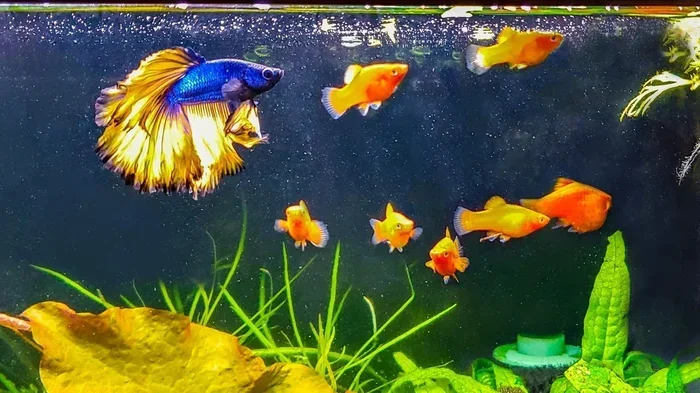
If you want a community tank with a betta, you have options. Many peaceful fish and invertebrates can coexist with a single male betta. The key is choosing tank mates that will not nip at betta fins or compete too aggressively for food.
Good tank mates for a betta include:
- Corydoras catfish: Peaceful bottom dwellers that stay out of the betta’s way.
- Neon tetras: Small, fast fish that tend to keep to themselves.
- Kuhli loaches: Eel-like creatures that are gentle and interesting to watch.
- Mystery snails: They clean algae off glass and never bother the betta.
- Amano shrimp: Great algae eaters and too fast for a betta to catch.
Avoid keeping bettas with fish that have bright, flowing fins or are known fin nippers. Fish like guppies or angelfish can trigger aggression in bettas because they look like rival males.
For a full list of suitable companions, check out our guide on can you have other fish in a betta tank.
Common Mistakes When Keeping Multiple Bettas
Even experienced fish keepers make mistakes. Here are the most common ones to avoid:
1. Underestimating Aggression
Some bettas look calm at the pet store but become aggressive once they are in their own tank. Never assume a fish is peaceful just because it has not shown aggression yet. Always have a backup plan, like a spare tank or a divider.
2. Overcrowding the Tank
Too many fish in a small tank leads to poor water quality and increased aggression. Follow the gallon-per-fish rule and do not overcrowd your aquarium. Overcrowding also spikes ammonia and nitrite levels, which are toxic to bettas.
3. Skipping the Quarantine Period
Always quarantine new fish for at least two weeks before adding them to a main tank. This prevents the spread of diseases and gives you time to observe the new fish’s behavior and health.
4. Ignoring Early Warning Signs
If one fish is chasing another constantly, or if a fish is losing color and hiding all the time, take action immediately. These are clear signs that the setup is not working. Waiting too long can result in injury or death.
Tips for a Successful Multi-Betta Setup
Want to give it the best shot? Follow these practical tips:
- Start with a large tank: 20 gallons minimum for any group setup.
- Add dense plants: Live plants like java moss, anubias, and amazon sword create natural barriers and hiding spots.
- Use a sponge filter: Sponge filters provide gentle filtration without creating strong currents that bettas dislike.
- Keep the water warm: Bettas thrive in water between 78 and 80 degrees Fahrenheit.
- Feed separately: Use feeding rings or target feed to make sure every fish gets enough food.
- Observe daily: Spend a few minutes each day watching how your fish interact. Early detection of problems saves lives.
For more detailed guidance on setting up the right environment, see our article on can betta fish live together in the same tank for expert-backed setup advice.
Expert Insight: What Aquarists Say About Multiple Bettas
Experienced betta keepers agree on one thing: there is no one-size-fits-all answer. Some males are more docile than others, and some females are more dominant. The key is to know your individual fish and be ready to adapt.
Many aquarists start with a single male betta in a well-planted 5-gallon tank. Once they gain experience, they move on to a sorority setup or a community tank. Rushing into a multi-betta setup without preparation is the number one mistake beginners make.
Take your time. Learn your fish. And remember that the well-being of your pets always comes first. If a setup is not working, it is okay to separate the fish. No tank is worth a fish’s life.
Conclusion
So, can you have multiple betta fish in the same tank? The answer is nuanced. Two males should never share an open tank, but a female sorority can thrive with the right setup. A single male can live happily with peaceful tank mates in a spacious community tank. The most important factors are tank size, individual temperament, and careful monitoring.
Start small, do your research, and always prioritize the health and safety of your fish. With patience and the right approach, you can create a beautiful aquarium that showcases the stunning colors and personalities of betta fish. Just remember that every fish is an individual, and what works for one setup may not work for another.
Happy fishkeeping, and may your bettas thrive together!
Frequently Asked Questions
Can two male betta fish ever live in the same tank?
Two male bettas should never share an open tank without a barrier. They will fight aggressively, and the outcome can be fatal. A tank divider is the only safe way to house two males in one aquarium, but even then, they can see and flare at each other, which causes stress.
How many female bettas can you keep in one tank?
A group of 4 to 6 female bettas works best in a sorority setup. You need at least 20 gallons for a group this size. More fish means more space for territories, which reduces the chances of one fish being targeted by the rest.
What is the best tank size for multiple bettas?
A 20-gallon tank is the minimum for any multi-betta setup. A 30-gallon or 40-gallon tank gives you even more room to create territories and add plants and decorations that break up sight lines.
Can a male betta live with female bettas?
Yes, a single male betta can live with several female bettas in a harem setup. This works best in a tank of 20 gallons or more with plenty of hiding spots and plants. However, the male may still chase females during breeding, so constant monitoring is essential.
How do you know if your bettas are not getting along?
Watch for signs like constant flaring, chasing, fin nipping, loss of color, hiding, or not eating. Any of these behaviors mean the fish are stressed and the setup needs to be changed immediately.
Are betta sororities hard to maintain?
They require more effort than a single-betta tank, but they are manageable with the right preparation. You need a large tank, dense plants, stable water parameters, and the willingness to remove aggressive fish if needed. Start with a small group and gain experience before expanding.