Why Does a Betta Fish Blow Bubbles
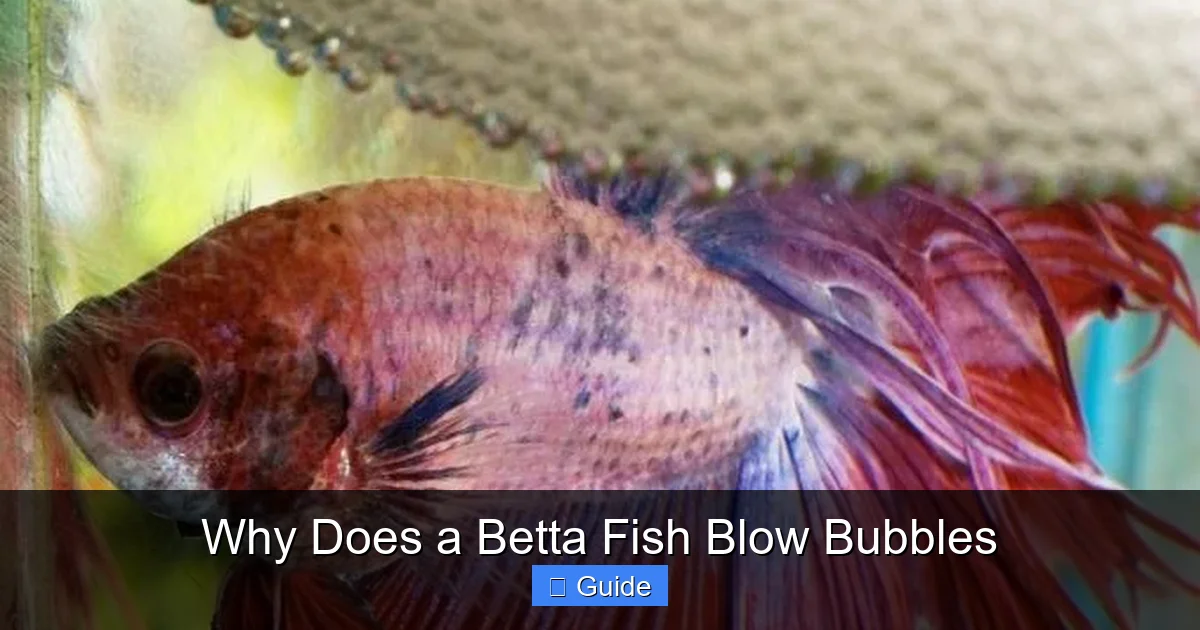
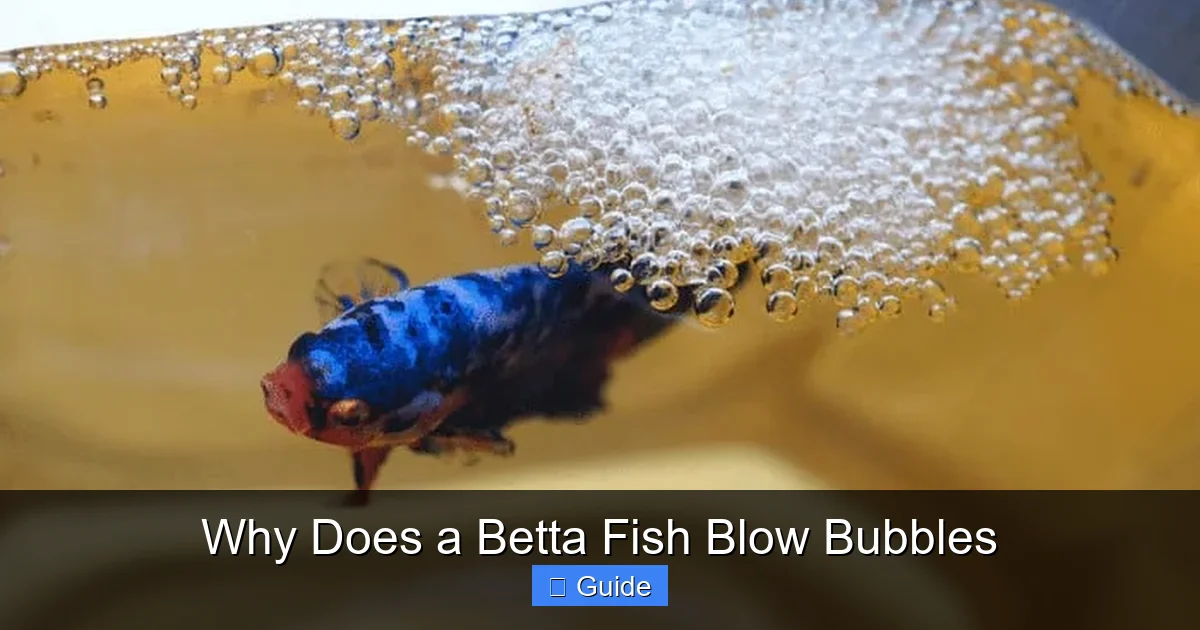
When your betta fish blows bubbles, it’s typically building a bubble nest, a completely normal and instinctual behavior. This fascinating activity, where the fish gulps air and spits out mucus-coated bubbles at the water’s surface, is primarily driven by breeding readiness, especially in males. The size and diligence of the nest can be influenced by water temperature, tank setup, and overall health. As an owner, you should see this as a positive sign of well-being and provide optimal conditions, not destroy the nest. Understanding this behavior helps you better care for your betta and appreciate its natural instincts.
You’re sitting by your beautifully decorated betta tank, watching your vibrant fish glide gracefully through the water. Suddenly, you notice a curious sight: your betta is swimming to the surface, taking a gulp of air, and then spitting out a stream of tiny, glistening bubbles that cluster together at the waterline. What on earth is your fish doing? Is it a sign of distress? A quirky habit? Or something more profound? If you’ve ever wondered, why does a betta fish blow bubbles, you’re about to uncover one of the most fascinating and misunderstood aspects of betta fish behavior. This isn’t a random act of mischief; it’s a deep-seated, evolutionary instinct that speaks volumes about your fish’s health, personality, and natural world.
For many new betta owners, the first bubble nest can be a startling surprise. You might worry that something is wrong with the water or that your fish is bored. In reality, the opposite is almost always true. Bubble-blowing, specifically in the form of nest-building, is a hallmark of a betta that feels secure, content, and biologically primed. It’s a delicate, purposeful construction project undertaken entirely by a single fish, using nothing but its own body as a tool. To understand why a betta fish blows bubbles, we must journey back to the shallow, oxygen-poor rice paddies and slow-moving streams of Southeast Asia, where this remarkable behavior was forged by survival and reproduction. This guide will serve as your complete reference, demystifying every aspect of bubble nests—from the biological mechanics to what your specific betta’s nest says about it, and exactly how you should (and shouldn’t) respond as a responsible caregiver.
Key Takeaways
- Bubble nests are a natural, instinctive behavior: Betta fish, particularly males, blow bubbles to construct a floating nest for egg incubation. This is a deeply ingrained breeding behavior from their wild ancestors.
- The act is a sign of health and security: A betta will only build a bubble nest if it feels safe, has good water quality, and is well-fed. Stressed or sick fish rarely exhibit this behavior.
- Nest size varies based on environment and personality: Factors like water temperature, tank size, presence of plants, and the individual betta’s personality dramatically affect the nest’s size and structure.
- Owners should support, not destroy, the nest: Unless you are intentionally breeding, the best practice is to leave the nest alone. Destroying it can cause stress. Maintain water levels and gentle surface movement to preserve it.
- Females can and do build bubble nests: While less common and usually smaller, female bettas possess the instinct and may build nests, especially if they are dominant or in the absence of a male.
- Bubble blowing is not always for breeding: Sometimes, a betta may blow a few bubbles playfully or to mark territory, even outside of a full nest-building context.
- The behavior connects to their labyrinth organ: Betta fish are labyrinth fish, meaning they breathe atmospheric air. This ability is directly linked to their bubble-nesting technique, as they use gulped air to form the bubbles.
📑 Table of Contents
- The Biology Behind the Bubbles: How and Why Betta Fish Build Nests
- Reading the Nest: What the Size, Shape, and Location Tell You
- The Owner’s Role: How to Support (Not Sabotage) This Natural Behavior
- Bubble Blowing vs. Bubble Nesting: Are They the Same Thing?
- Health and Stress: The Direct Link to Bubble-Blowing
- Debunking Myths: Separating Fact from Fiction About Betta Bubbles
- Caring for the Nest-Builder: Optimizing Your Tank for This Behavior
The Biology Behind the Bubbles: How and Why Betta Fish Build Nests
To truly grasp the “why,” we first need to understand the “how.” The process of bubble-nesting is a marvel of simple biology and instinct. Betta fish, scientifically known as Betta splendens, belong to a special group called labyrinth fish. This name comes from a unique respiratory organ called the labyrinth, a folded structure above the gills that allows them to breathe atmospheric air directly. This adaptation is crucial for surviving in their native warm, stagnant waters where dissolved oxygen levels can plummet.
The Labyrinth Organ: The Engine of the Nest
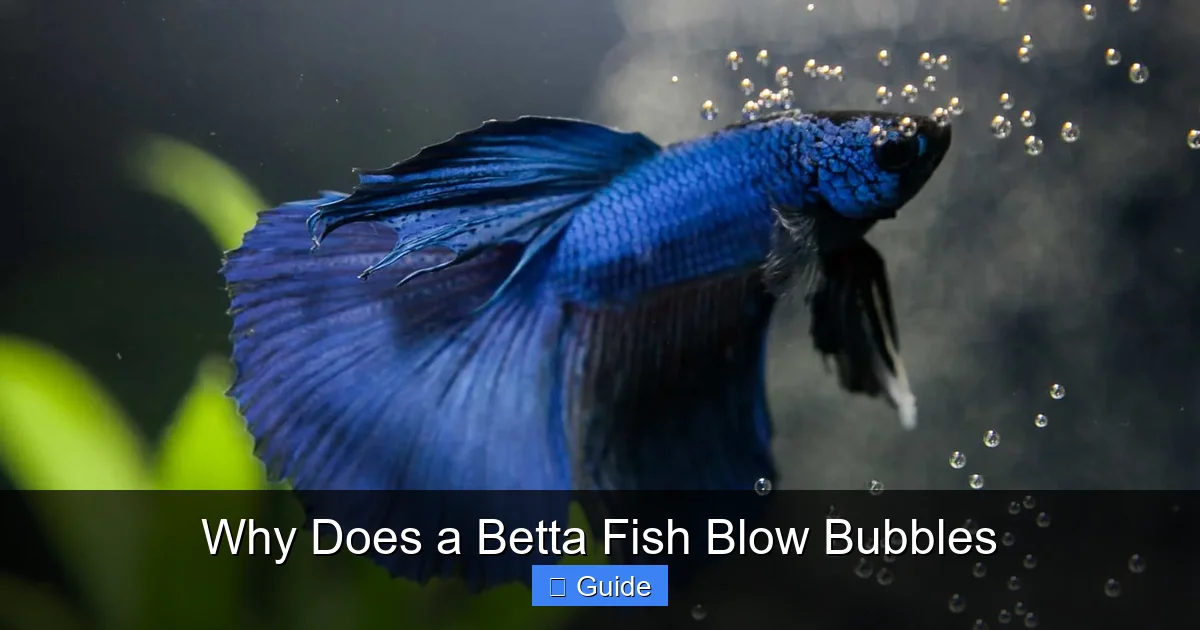
Every time your betta darts to the surface for a gulp of air, it’s using this labyrinth organ. For nest-building, the process is more nuanced. The fish doesn’t just exhale air; it first gulps air into its mouth. Then, specialized glands in its mouth secrete a sticky, mucus-like substance. It mixes this mucus with the air and blows the resulting bubble out through its mouth. This mucus is the magical ingredient—it makes the bubbles tougher and more cohesive, preventing them from popping instantly. This allows the betta to carefully place and stack these bubbles at the water’s surface, creating a floating raft. It’s a slow, methodical process of gathering, producing, and placing, often done over several hours or even days.
An Evolutionary Masterpiece for Protecting Eggs
So, why go to all this trouble? The answer lies in the betta’s reproductive strategy. In the wild, male bettas are fiercely territorial and solitary. When a female is ready to spawn, she is attracted to the male’s territory, which includes his carefully constructed bubble nest. After a complex courtship dance, the pair spawns, and the male fertilizes the eggs as the female releases them. Immediately, the male, and sometimes the female, will scoop up the fertilized eggs and gently place them into the bubbles of the nest. The bubbles keep the eggs at the oxygen-rich surface, safe from debris and predators on the bottom. The male then tends the nest vigilantly, retrieving any eggs that fall and blowing new bubbles to repair the structure until the fry (babies) hatch and are free-swimming. Thus, the bubble nest is not just a nest; it’s a critical, life-support system for the next generation, born from an imperative to ensure offspring survival in a challenging environment.
Reading the Nest: What the Size, Shape, and Location Tell You
Not all bubble nests are created equal. The characteristics of your betta’s creation are a direct window into its current state of mind, health, and environment. Observing these details is like learning a secret language.
The Spectrum of Nest Construction
A bubble nest can range from a pathetic smattering of a few lonely bubbles in one corner to an impressive, sprawling blanket covering a significant portion of the tank’s surface. A small, sparse nest might indicate a young betta, an older fish with less energy, or a betta that is slightly stressed or in suboptimal water conditions. Perhaps the water is too cool (ideal is 78-80°F or 25-27°C), the surface agitation from a filter is too strong, or the fish feels insecure without plants or decorations to hover near.
Conversely, a large, thick, and well-organized nest, often with a defined circular or oval shape, is the hallmark of a happy, dominant, and sexually mature male in prime condition. He feels so secure and has so much energy to invest in reproduction that he builds a substantial, inviting structure. Some bettas become notorious for their monumental nests, requiring owners to lower the water level to prevent overflow! The location also matters; a nest built in a quiet corner under a plant leaf or near a tank wall suggests the betta seeks security, while one built in the open center might indicate supreme confidence.
Gender, Personality, and the Nest-Building Instinct
While the iconic image is of a male betta building a nest, it’s crucial to dispel the myth that only males do this. Female bettas can and do build bubble nests, though it is less frequent and the nests are typically smaller and less elaborate. A dominant, territorial female in a sorority tank or a solitary female with strong instincts might construct a nest. This behavior is a reminder that the drive to build is a fundamental betta trait, not strictly a male one. Furthermore, some bettas are simply “nest-building enthusiasts” by personality. You might have a male who builds a massive nest every week regardless of whether a female is present, simply because he enjoys the activity or it’s his default state of being. Another betta might only build a nest once a year under perfect conditions. There is a wide spectrum of normal.
The Owner’s Role: How to Support (Not Sabotage) This Natural Behavior
Discovering a bubble nest in your tank should be a moment of quiet pride for a betta keeper. It means you’re likely doing many things right. Your role now shifts from passive observer to supportive custodian of this delicate structure.
Visual guide about Why Does a Betta Fish Blow Bubbles
Image source: aquariadise.com
Do’s: Preserve and Encourage
The single most important rule is: do not destroy the nest. Your initial instinct might be to clean it up, as it looks like “dirt” on the water’s surface. Resist this! For the betta, this is a monumental investment of time and energy. Destroying it is a profound stressor, signaling that its safe, reproductive space has been violated. Instead, work around it. When performing water changes, pour the new water slowly over a bowl or your hand to avoid disrupting the nest’s surface tension. You can also gently push the nest to a corner with a clean spoon if it’s in the way of feeding, but do so minimally. To encourage nesting, provide floating or near-surface plants (live or silk). Indian almond leaves are perfect, as they also help condition the water. These give the betta a sense of security and a foundation to anchor the nest’s edges. Maintain a stable, warm water temperature—a drop of even a few degrees can halt construction. Ensure your filter’s outflow is gentle or use a sponge pre-filter to minimize surface agitation that will pop bubbles.
Don’ts: Common Mistakes to Avoid
Beyond not destroying the nest, avoid creating conditions that prevent its formation. Strong filter flow or an air stone that agitates the surface will make bubble-building nearly impossible, as the bubbles pop instantly. This isn’t just about aesthetics; a betta unable to build a nest due to poor tank conditions can become chronically frustrated. Also, avoid sudden, drastic changes in the tank environment right after a nest is built. This is a period of investment for the fish. Finally, don’t interpret the nest as a guaranteed desire to breed. Many bettas build nests regularly without any interest in a mate. Never introduce a female to a male’s tank solely because he has a nest—this is a recipe for severe aggression and potential fatalities. Breeding should be a deliberate, researched process, not a reaction to a bubble cluster.
Bubble Blowing vs. Bubble Nesting: Are They the Same Thing?
Here’s a subtle but important distinction. While the large, structured nests are the classic sign, you might occasionally see your betta blow a few isolated bubbles at the surface without the intent of building a full nest. This is often just playful or exploratory behavior. The fish is testing the water’s surface tension or simply expelling a bit of gulped air. It’s a low-stakes version of the same instinctual action. However, if you see a concerted effort—the fish repeatedly returning to the same spot, carefully arranging bubbles, and spending significant time at the surface—then you are witnessing full-scale nest construction. The context matters: is your fish active and eating well? Then it’s likely just a casual bubble. Is it focused, perhaps a bit more territorial, and spending less time foraging? Then it’s probably nest-building. Both behaviors stem from the same biological toolkit, but the intent and investment level are different.
Visual guide about Why Does a Betta Fish Blow Bubbles
Image source: aquariumsphere.com
Health and Stress: The Direct Link to Bubble-Blowing
The presence or absence of bubble-nesting is one of the most telling behavioral indicators of a betta’s overall well-being. It sits right at the intersection of physical health and psychological comfort.
A Vibrant Sign of Wellness
A betta that is building a robust nest is, in most cases, a betta that is thriving. It signifies that: Water parameters are stable and clean (ammonia and nitrite at zero, nitrates low). The fish isn’t expending energy fighting off illness or irritation from poor water. It is free from chronic stress from loud noises, aggressive tankmates, or a threatening environment. It is well-nourished with a high-quality diet, providing the energy for this labor-intensive task. The water temperature is optimal, as metabolic rates (and breeding hormones) are temperature-dependent. Therefore, if your betta suddenly stops building nests after a long period of regular construction, it should be a red flag to check your water quality, temperature, and look for signs of illness like clamped fins, lethargy, or loss of appetite.
When the Bubbles Stop: A Call to Investigate
The cessation of nest-building isn’t always a crisis—it can be seasonal or hormonal—but it’s always worth investigating. First, test your water. A spike in toxins is the most common culprit. Second, assess the tank environment. Has the filter been upgraded to a stronger flow? Have you added a new, flashy decoration that makes the fish feel exposed? Has the room become noisier? Third, consider the fish’s age. An older betta may have less energy for nest-building. Finally, rule out disease. Velvet, fin rot, or internal parasites will sap a betta’s strength and desire for any activity beyond survival. In this way, the bubble nest acts as a simple, free health monitor. Its absence is often the first whisper of a problem before more severe symptoms appear.
Debunking Myths: Separating Fact from Fiction About Betta Bubbles
Like any popular pet behavior, bubble-nesting is surrounded by a cloud of misinformation. Let’s clear the water.
Myth 1: “Only male bettas build bubble nests.”
Fact: While males are the prolific builders, females absolutely possess the instinct and anatomy. A dominant female, especially one not in the presence of a male, may construct a nest. It’s less common but entirely natural.
Myth 2: “A bubble nest means your betta wants a mate and is ready to breed.”
Fact: This is the biggest misconception. A nest indicates breeding *readiness* and instinct, not a desperate desire for a mate. Many solitary males build nests perpetually with zero interest in a female. Breeding readiness is a hormonal state; the nest is a product of that state. Never assume a betta is “lonely” and add a tankmate based on a nest—betta sororities require careful planning, and male-female pairs are often incompatible outside of controlled breeding.
Myth 3: “You should always remove the bubble nest to keep the tank clean.”
Fact: This is perhaps the most harmful myth. As established, destroying the nest is a significant stressor. A bubble nest does not foul the water; it’s made of air and mucus and sits harmlessly at the surface. The minimal organic matter is negligible compared to fish waste. Cleanliness is achieved through proper filtration and water changes, not by attacking your fish’s handiwork.
Myth 4: “If a betta doesn’t build a nest, it’s unhappy or unhealthy.”
Fact: While consistent nest-building is a great sign, its absence is not a definitive diagnosis of poor welfare. Some individual bettas simply have a low instinct for it. Some may only build under specific seasonal temperature cues. Age, personality, and even recent moves to a new tank can suppress the behavior temporarily. It’s one data point among many (appetite, activity, fin condition) in assessing health.
Caring for the Nest-Builder: Optimizing Your Tank for This Behavior
If you want to encourage this beautiful natural behavior, your tank setup is your primary tool. Think like a betta: what would a shallow, vegetated, calm rice paddy feel like?
Surface Access and Gentle Flow
The absolute requirement is unhindered access to the water’s surface. The water line must be clear of hanging plants or decorations that block the area. Use a filter with an adjustable flow rate, and always set it to the lowest setting that still provides adequate mechanical and biological filtration. A sponge filter is an excellent, gentle alternative that also provides a surface for beneficial bacteria. The goal is a surface that is calm enough for bubbles to accumulate without being immediately popped by turbulence.
Temperature and Lighting
Maintain a consistent temperature in the 78-80°F (25-27°C) range. A temperature drop of even 2-3 degrees can slow metabolism and halt reproductive behaviors. Provide a day/night cycle with a standard aquarium light. While they don’t need intense light, a stable photoperiod helps regulate hormones. Some betta keepers find that slightly warmer water (toward the higher end of the range) can stimulate nest-building activity.
Decor and Security
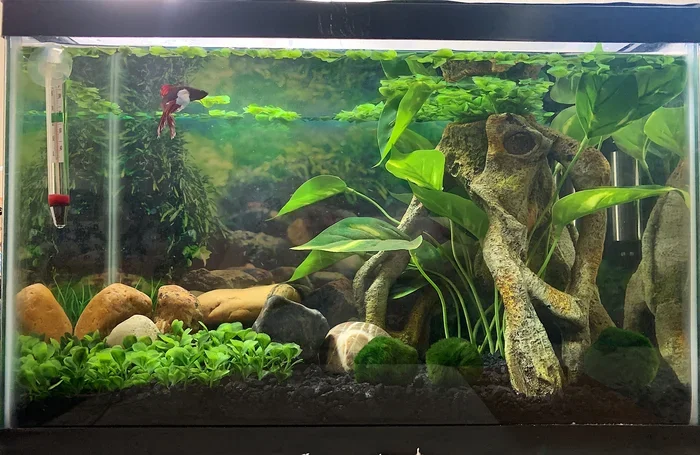
Provide plenty of vertical and horizontal hiding spots throughout the mid and lower levels of the tank. Betta fish are anxious by nature and need places to retreat. A well-planted tank with tall plants like Amazon swords or vallisneria that reach the surface is ideal. Floating plants like hornwort or water lettuce are perfect, as they naturally break up surface tension slightly, provide cover, and offer a structure for the betta to anchor the nest’s edges. The betta will often build its nest directly beneath or beside a floating leaf. Caves, PVC pipes, and smooth rocks also contribute to a sense of security that allows the betta to focus on the upper, more exposed part of the tank for nesting.
Frequently Asked Questions
Will a betta blow bubbles if it’s stressed or sick?
No, the opposite is true. Chronic stress or illness typically suppresses bubble-nesting behavior because the fish’s energy is diverted to survival. A healthy, unstressed betta is far more likely to build a nest. The sudden cessation of a previously regular nest is a common sign to check for health issues.
Is it okay to touch or move my betta’s bubble nest?
It’s best to avoid touching or moving the nest if possible. If you must adjust it (e.g., it’s blocking a feeding ring), do so as gently and minimally as possible with a clean spoon or your finger. Remember, the nest represents a huge investment for your fish, and destruction causes significant stress.
Do female betta fish blow bubbles?
Yes, female bettas can and do build bubble nests, though it’s less common and the nests are usually smaller and less elaborate than those built by males. A dominant or highly instinctive female may build one, especially if she is alone or in a calm environment.
What water conditions are best for encouraging bubble nests?
Optimal conditions include warm, stable water (78-80°F or 25-27°C), excellent water quality (ammonia and nitrite at 0 ppm), and calm surface movement. Floating plants or leaves provide a sense of security and a structure to help anchor the nest. Clean, soft to moderately hard water is generally preferred.
Should I add a female betta to my male’s tank if he has a bubble nest?
Absolutely not. A bubble nest is not an invitation to introduce a female. Male bettas are notoriously aggressive toward females (and vice versa) outside of carefully controlled breeding scenarios. Adding a female to a male’s established territory will almost certainly result in severe fighting, injury, or death. Bubble nests are built on instinct, not social desire.
How often do betta fish build bubble nests?
This varies wildly by individual. Some males build a new nest every few weeks, especially after a water change or temperature rise. Others may only build once or twice a year, or even less frequently. Some may build continuously, repairing their nest daily. There is no standard schedule; it depends on the fish’s age, health, hormones, and environment.