Why Did My Betta Fish Die Overnight

Betta fish dying overnight is a heartbreaking but common event, usually caused by acute water quality issues, sudden temperature drops, or severe stress. Unlike chronic illnesses, these factors can escalate to lethal levels within hours, often while you sleep. Understanding the silent killers in your aquarium—like ammonia spikes, pH crashes, or heater failure—is the first step to ensuring your next betta lives a long, healthy life.
Key Takeaways
- Water quality is the #1 killer: Ammonia, nitrite, and pH crashes can become fatal within hours, not days.
- Temperature shock is silent and fast: A heater malfunction or cold draft can drop tank temperature by 10+ degrees overnight.
- Overfeeding pollutes instantly: Uneaten food decomposes rapidly, producing deadly ammonia and clouding water.
- Stress is a silent catalyst: Loud noises, tank mates, or sudden movements weaken their immune system overnight.
- Disease often shows too late: Conditions like dropsy or internal parasites may only become visibly critical at night.
- Tank setup errors are foundational: A lack of filter, heater, or cycled tank sets the stage for a swift, unexpected death.
- Post-death investigation is crucial: Checking water parameters and tank conditions after a death is the only way to prevent recurrence.
📑 Table of Contents
- The Devastating Mystery of the Morning Discovery
- Culprit #1: The Invisible Poison – Water Quality Collapse
- Culprit #2: The Temperature Trap – When the Heater Fails
- Culprit #3: Overfeeding and the Decay Chain Reaction
- Culprit #4: The Stress Epidemic – What You Can’t See
- Culprit #5: Disease and Hidden Illness
- The Investigation: What to Do When You Find Your Betta
- Prevention: Building a Bulletproof Betta Habitat
- Conclusion: From Tragedy to Knowledge
The Devastating Mystery of the Morning Discovery
You wake up, shuffle to your desk or kitchen, and peer into your betta’s world. Your vibrant, flowing friend is perfectly still, floating listlessly at the top or resting on the bottom. A gentle tap on the glass gets no response. The colorful fins that greeted you yesterday are now still. The sinking feeling in your stomach is immediate and profound. Why did my betta fish die overnight? This question echoes in the minds of so many betta owners, often with no obvious answer. Unlike a slow decline where you might see fading colors or lethargy over weeks, an overnight death feels like a betrayal—a sudden, silent catastrophe.
The truth is, betta fish are surprisingly fragile in captivity. Their famous “labyrinth organ” allows them to breathe air, which gives them a reputation for hardiness, but this is a double-edged sword. It masks underlying problems until it’s too late. An overnight fatality is almost never a simple case of “old age.” It’s a clear, urgent signal that one or more critical environmental parameters crossed a lethal threshold while you were asleep and unaware. This guide will dissect the most common, fast-acting culprits behind why a betta fish might die overnight, moving beyond guesswork to actionable knowledge. We will explore the silent killers in your water, the hidden stress in your home, and the setup flaws that set the stage for tragedy.
Culprit #1: The Invisible Poison – Water Quality Collapse
This is, by far, the most frequent reason for a sudden betta death. The water in your aquarium is not just a medium for your fish to live in; it’s the very air they breathe and the foundation of their health. A stable, cycled aquarium hosts beneficial bacteria that convert toxic fish waste (ammonia) into less harmful substances (nitrite, then nitrate). This “nitrogen cycle” is non-negotiable for any fish. When this cycle is broken, compromised, or never properly established, ammonia and nitrite levels can spike to lethal concentrations incredibly quickly.
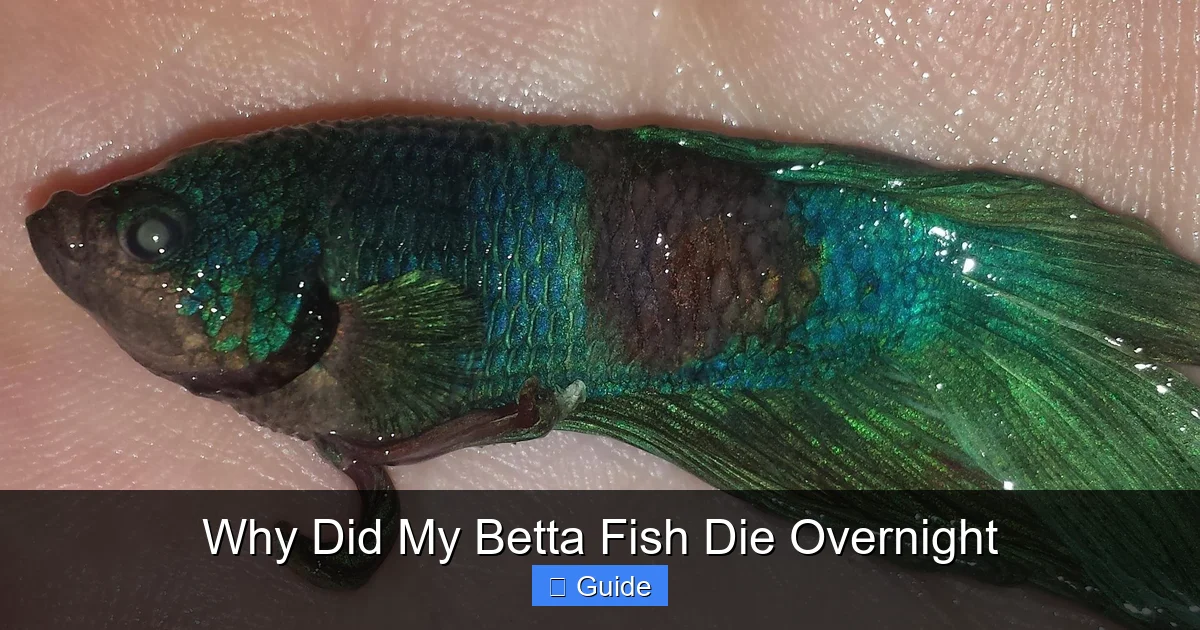
Visual guide about Why Did My Betta Fish Die Overnight
Image source: fishingform.com
The Ammonia Tsunami
Ammonia (NH3/NH4+) is excreted directly by fish through their gills and skin. It’s also produced when uneaten food, dead plant matter, or fish waste decomposes. In a well-cycled tank, bacteria convert it. But if you overfeed even a little, have a filter that stops working, or haven’t properly cycled the tank before adding your betta, ammonia can build up. The difference between “safe” and “deadly” ammonia levels is smaller than you think. Levels above 0.5 ppm (parts per million) are stressful, and anything over 1.0-2.0 ppm can cause acute gill damage, respiratory distress, and death within hours. A betta sleeping at the surface, gasping for air from the labyrinth organ, is often the last visible sign of ammonia poisoning.
The Nitrite Nightmare
Nitrite (NO2-) is the intermediate product of ammonia conversion. It’s even more insidious in some ways because it binds to the hemoglobin in a fish’s blood, preventing oxygen transport—a condition called methemoglobinemia or “brown blood disease.” A betta suffering from nitrite poisoning will struggle to breathe even if oxygen levels are high. They may appear lethargic and have bright red or brownish gills. A sudden spike in nitrite, often following a massive ammonia spike or a disturbance to the bacterial colony (like cleaning filter media in chlorinated tap water), can kill a betta overnight.
The pH Rollercoaster
Stable pH is just as critical as low ammonia. In a new or unstable tank, pH can swing dramatically between day and night due to plant respiration and CO2 levels. A rapid drop in pH (acid crash) is particularly dangerous. It can cause “pH shock,” damaging a fish’s slime coat and gills, and it can also convert less toxic ammonium (NH4+) into highly toxic ammonia (NH3) overnight. This means a tank that tested “safe” for ammonia at 8 PM could become a tank of poison by 3 AM as pH drops. Using untreated driftwood or certain substrates can also cause slow, steady pH drops that eventually cross a lethal line.
Culprit #2: The Temperature Trap – When the Heater Fails
Betta fish are tropical fish, native to the warm, shallow waters of Thailand. They thrive in a consistent temperature range of 76-82°F (24-28°C). Their metabolism, immune function, and digestion are all directly tied to water temperature. A sudden, significant drop in temperature—even of just 5-10 degrees—is a severe shock that can be fatal.
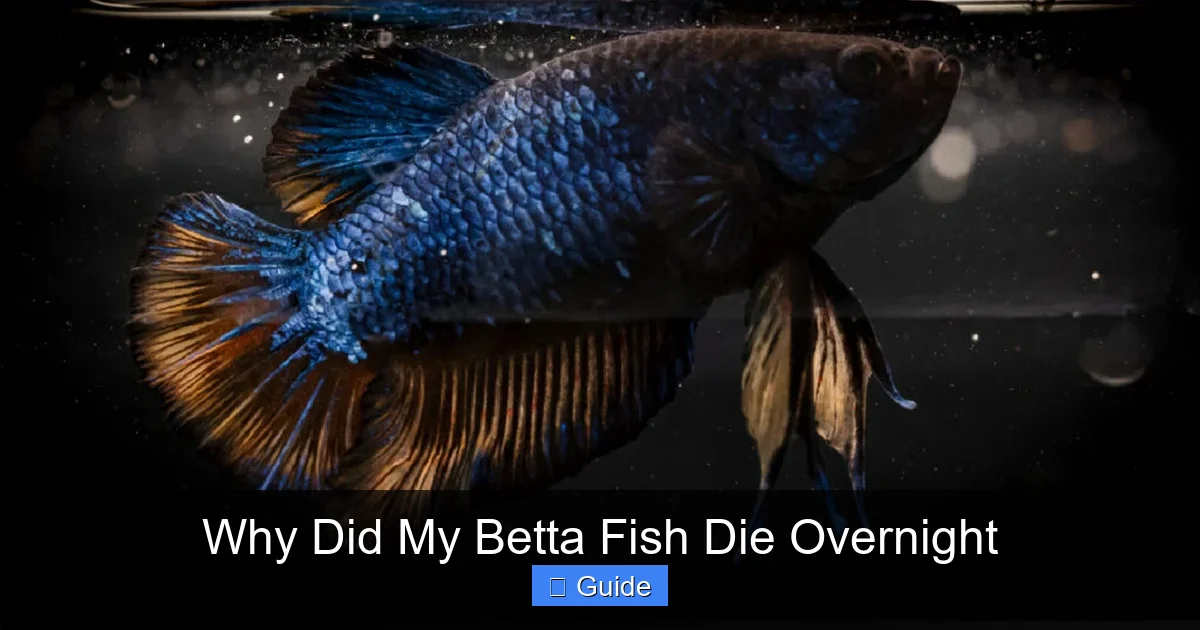
Visual guide about Why Did My Betta Fish Die Overnight
Image source: buildyouraquarium.com
Heater Malfunction: The Silent Nighttime Killer
Most aquarium heaters are on 24/7. If one fails in the “off” position during the night, the tank temperature can plummet, especially in a cold room or during winter. A betta’s body cannot regulate its temperature; it is entirely at the mercy of its environment. A rapid cooldown slows its metabolism to a crawl, suppresses its immune system entirely, and can cause organ failure. You may find your betta in the morning, perfectly colored but stone-cold and stiff. This is often mistaken for “old age,” but it’s almost certainly temperature shock.
The Draft and the Window
Even with a working heater, placement is key. A tank sitting in a draft from an air conditioner vent, an open window, or an exterior wall can experience a persistent cold layer of water that the heater cannot adequately overcome. The betta will sit in this colder microclimate, suffering chronic stress that weakens it until a single night of particularly cold air finishes the job.
Culprit #3: Overfeeding and the Decay Chain Reaction
It’s a natural instinct to want to feed your beautiful betta. But bettas have stomachs only about the size of their eye. Overfeeding, even by a few extra pellets, is one of the most common mistakes new owners make. The consequences are not just constipation; they are a direct attack on water quality.
The 24-Hour Decay Timeline
Think about what happens when you leave a piece of bread out. It molds, it decays, it attracts pests. The same thing happens to uneaten betta food in a warm aquarium, but faster. Within hours, that food breaks down into ammonia and other organic wastes. If you fed your betta a hearty portion right before bed, by morning, the water could be cloudy with bacterial bloom and saturated with ammonia from the decomposing feast. Your betta has been breathing and swimming in that toxic soup for 6-8 hours. This is a classic scenario for an overnight death with no prior signs of illness.
Constipation and Swim Bladder Issues
While not always an overnight killer, severe constipation from overfeeding can cause a swim bladder disorder. A betta with a swollen gut and impaired buoyancy may sink and be unable to reach the surface for air. If this happens overnight while you’re asleep, they can suffocate. Their position at the bottom, seemingly “resting,” is actually a death sentence.
Culprit #4: The Stress Epidemic – What You Can’t See
Stress is the silent accomplice to every other killer. A stressed betta has a suppressed immune system, making it vulnerable to pathogens that would otherwise be harmless. But stress itself can be a direct cause of death through “stress-induced shock.”
Environmental Stressors That Build Overnight
Consider your home at night. Is the betta’s tank in a high-traffic hallway? Do pets or children bang on the glass? Is there a loud TV or music playing late? Sudden, loud noises or vibrations cause immediate, intense stress. During the day, your betta might recover, but at night, in the dark, with no distractions, a series of stressful events can overwhelm its system. Flashing (rubbing against objects) from parasites might go unnoticed in the day, but at night, the irritation and stress prevent rest, leading to exhaustion and death.
Tank Mates and Bullying
If you have a community tank, the night is not a peaceful time for a betta. While you sleep, more aggressive fish may corner, nip, or harass the betta, who has nowhere to flee. A betta with torn fins and a constant sense of threat will be in a perpetual state of stress. One particularly aggressive night can lead to fatal injury or such extreme stress that the betta succumbs.
Culprit #5: Disease and Hidden Illness
Many betta diseases have an incubation period. You might see a tiny white spot (ich) or a faint fuzz (fungus) in the afternoon, but by morning, the infection has taken hold. Some diseases are simply fast-moving.
Dropsy: The Rapid Decline
Dropsy is not a disease itself but a symptom of severe internal organ failure, often bacterial. It causes the betta’s body to swell with fluid due to kidney failure. The progression can be alarmingly fast. A betta with mild pineconing scales one evening can be completely bloated, lethargic, and near death by morning. The internal damage is simply too extensive.
Internal Parasites
Parasites like Hexamita (which causes “hole-in-the-head” disease) or severe worm infestations can be present for weeks with minimal symptoms. They slowly damage the digestive tract and organs. The betta appears to waste away. Eventually, the organ damage becomes critical, and the fish dies, seemingly suddenly, though the cause was long in the making.
The Investigation: What to Do When You Find Your Betta
Do not just flush the fish and clean the tank immediately. This is your chance to get critical diagnostic data. Your goal is to find the “smoking gun” that caused the death to prevent it from happening again.
Step 1: Check the Water Parameters Immediately
Use a liquid test kit (test strips are notoriously inaccurate). Test for:
- Ammonia (NH3/NH4+): Should be 0 ppm.
- Nitrite (NO2-): Should be 0 ppm.
- Nitrate (NO3-): Should be under 20 ppm for a betta tank.
- pH: Note the value. Has it shifted dramatically since your last test?
Write these numbers down. If ammonia or nitrite is present, that is almost certainly the cause.
Step 2: Inspect the Tank and Equipment
Is the heater plugged in? Is it warm? Is the filter flowing? Is the tank overly cloudy? Is there a layer of uneaten food on the bottom? Smell the water. A strong, sour, or “fishy” odor indicates advanced decay and high organics. Check for recent changes: a new decoration, a different food, a cleaning product used nearby.
Step 3: Perform a Partial Water Change (PWC)
Regardless of the cause, a 25-50% water change with properly dechlorinated water is the single best immediate action to dilute any toxins. Use a water conditioner that detoxifies ammonia and nitrite (like Seachem Prime). This can save other fish in the tank if the issue is water quality.
Prevention: Building a Bulletproof Betta Habitat
The best way to answer “why did my betta die overnight?” is to make sure the question never needs asking again. Prevention is a system of habits, not a one-time setup.
The Non-Negotiable Foundation
A betta needs a minimum of 5 gallons. A 1-gallon “bowl” is a death trap with no water stability. You must have:
- A Heater with a Thermostat: A 25-50 watt heater for a 5-gallon tank, set to 78°F. Use a separate thermometer to verify accuracy.
- A Filter: A gentle sponge filter is ideal for bettas, providing crucial biological filtration without strong currents.
- A Lid: Betta fish are notorious jumpers. A secure lid prevents escape, which is an instant death.
- A Water Conditioner: Always treat tap water to neutralize chlorine and chloramines.
The Routine That Saves Lives
Consistency is everything.
- Test Water Weekly: Ammonia, nitrite, nitrate, pH. Log the results.
- Perform 25% Water Changes Weekly: Use a gravel vacuum to remove debris from the substrate.
- Feed Sparingly: 2-3 pellets, once a day, 6 days a week. One day of fasting is beneficial.
- Observe Daily: Spend 60 seconds just watching. Note behavior, appetite, and appearance. Changes are your earliest warning.
Conclusion: From Tragedy to Knowledge
Losing a pet is always hard. A betta fish dying overnight adds a layer of confusion and guilt—what did I miss? The answer is almost always a failure in the fundamental pillars of aquarium husbandry: water quality, temperature stability, and stress management. It is rarely a personal failing, but rather a gap in understanding the delicate, closed ecosystem you are responsible for. By viewing your betta’s tank not as a simple vase with a fish, but as a complex, living system that requires daily attention and respect for its parameters, you transform from a potential victim of circumstance into a proactive guardian. The next betta you bring home deserves that knowledge. Do the research, set up the proper equipment, establish a testing routine, and feed with restraint. In doing so, you honor the memory of your lost fish by ensuring its successor thrives for years, greeting you each morning with vibrant, flowing life.
Frequently Asked Questions
What are the first signs my betta is in trouble from poor water?
Look for lethargy (resting on the bottom or plant), loss of appetite, faded or clamped fins, and frantic gasping for air at the surface. If you see these, test your water immediately.
Can a water change kill my betta if done wrong?
Yes. A large, sudden water change with water that is drastically different in temperature or pH can cause shock. Always match the new water’s temperature to the tank, dechlorinate it, and perform changes gradually (25-50%).
Is it normal for a betta to sleep at the bottom?
Yes, bettas often rest on the substrate or on a leaf. However, this should be a relaxed, occasional position. If your betta is *constantly* on the bottom, pale, and unresponsive, it is a sign of severe illness or poor water conditions.
My betta’s tank is cycled and parameters are good. What else could cause an overnight death?
>Focus on temperature (heater failure, cold draft) and unseen stress (loud noises at night, tank mates bullying). Also, consider if you recently introduced a new decoration that leached toxins or a new food that caused a digestive impaction.
Should I get my betta a friend to prevent loneliness?
No. Betta fish are solitary and territorial. They are famously aggressive toward other bettas and often toward other colorful, long-finned fish. A tank mate is far more likely to cause fatal stress or injury than to provide companionship.
What is the single most important thing I can do to prevent an overnight death?
Invest in a reliable, accurate thermometer and an adjustable aquarium heater with a thermostat. Test your water temperature daily and your water parameters weekly. Consistent, warm water and zero ammonia/nitrite are the absolute pillars of betta survival.