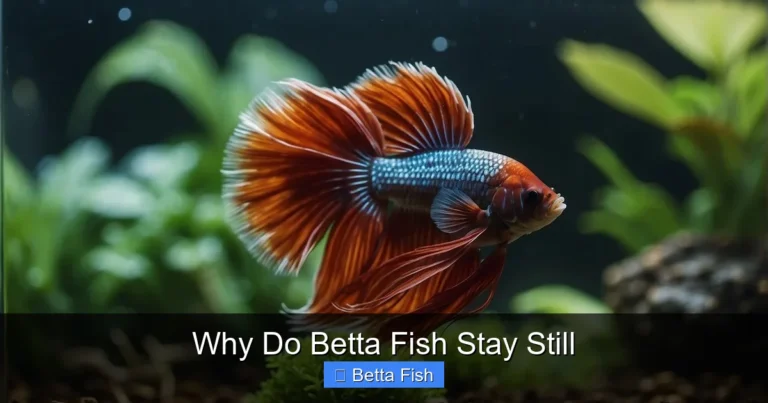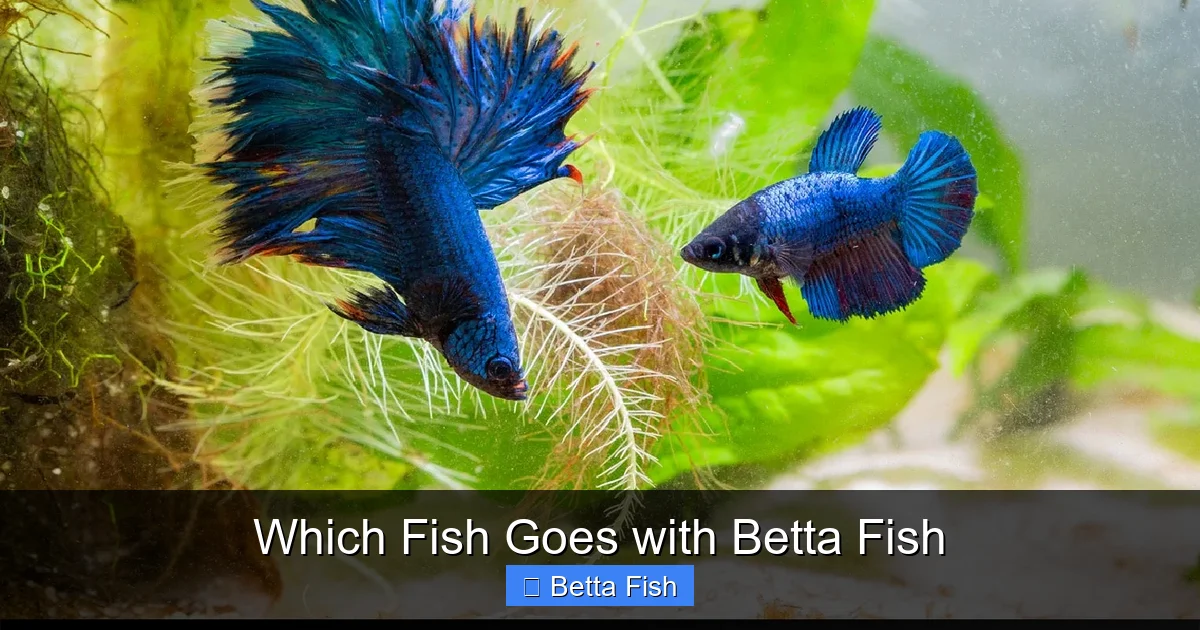
Which Fish Goes with Betta Fish
Choosing the right tank mates for your betta fish is crucial for a peaceful community aquarium. Betta fish, known for their territorial nature, require specific, calm tank mates that won’t trigger their aggression. Success depends on understanding your betta’s unique personality, providing ample space and hiding spots, and following a careful, patient introduction process. With the right companions like certain rasboras, corydoras catfish, and snails, you can create a thriving, stress-free aquatic environment.
Key Takeaways
- Your Betta’s Personality is Key: A betta’s tolerance for tank mates is highly individual. A peaceful betta may accept companions, while a notoriously aggressive one may need to be a solitary specimen. Always observe your specific betta first.
- Tank Size is Non-Negotiable: The absolute minimum for a betta community is 20 gallons. Larger tanks (30+ gallons) provide significantly more space for territories, reducing stress and the likelihood of conflict.
- Choose Calm, Fast, and Plain: Ideal mates are peaceful, schooling fish that are fast swimmers and have plain, non-flashy fins and colors. They should occupy different tank levels (top/middle/bottom) to minimize interaction.
- Avoid Fin-Nippers and Lookalikes: Never house bettas with fish known to nip fins (like some tetras) or other fish with large, flowing fins (guppies, fancy guppies) that a betta may mistake for a rival.
- Setup Before Introduction: A properly cycled tank with abundant plants, caves, and visual barriers must be fully established *before* adding any fish, including the betta. This provides immediate escape routes.
- Introduce with Extreme Caution: Use a divider or quarantine tank for initial observations. Never drop a new fish directly into the betta’s territory. Be prepared to separate immediately at the first sign of persistent aggression.
- Bottom Dwellers are Often Safest: Small, peaceful bottom-feeders like certain corydoras or Kuhli loaches are frequently the most successful tank mates because they inhabit a different niche and are less likely to be seen as threats.
📑 Table of Contents
- Understanding the Solitary Nature of Your Betta
- Decoding Betta Temperament: What Truly Matters
- The Non-Negotiable Foundation: Tank Setup & Conditions
- Top Contenders: Fish That Often Succeed with Bettas
- High-Risk & Absolutely Forbidden Tank Mates
- The Critical Introduction Process: Patience is Everything
- Conclusion: A Rewarding Endeavor Built on Knowledge
Understanding the Solitary Nature of Your Betta
So, you’ve got a beautiful, flowing betta fish, probably in a solo tank right now. You look at that stunning setup and think, “It’s so lonely in there. Which fish goes with betta fish?” It’s a natural and wonderful question. The desire to create a bustling, lively community tank is shared by almost every aquarist. But with bettas—those iconic, feisty fish with personalities as big as their fins—the answer is never simple. It’s a journey of understanding, patience, and careful planning, not just a simple list of names.
The first and most critical fact to internalize is that the betta splendens, or Siamese fighting fish, earned its name for a reason. Centuries of selective breeding for aggression in the wild have created a fish with a strong territorial instinct, particularly towards other fish that look like them—those with long, flowing fins and bright colors. A male betta will almost always fight another male to the death. But their territorial nature doesn’t stop at their own species. They can be perfectly willing to defend their patch of water from any perceived intruder. This isn’t to say they can’t live with others; many do, successfully. But it means we must be smarter and more thoughtful about our choices than with almost any other common pet fish. We are not asking “which fish can a betta not kill?” but rather, “which fish can coexist with a betta’s specific personality and environment?”
The Myth of the “Community Betta”
You might have seen videos online of bettas swimming peacefully with schools of neon tetras or even shrimp. These are real, but they represent best-case scenarios, not guarantees. These setups often involve a particularly docile betta individual, a generously sized and heavily planted tank, and careful species selection. Using these viral examples as a baseline can lead to disaster. Every betta is an individual. Some are laid-back “gentle giants,” while others will flare at their own reflection. Your job is to become a detective, learning your betta’s specific triggers and tolerances before even considering adding a first tank mate.
Decoding Betta Temperament: What Truly Matters
Before we even glance at a list of potential friends, we must become experts on our betta. This is the single most important step. The compatibility question is 50% about the prospective tank mate and 50% about your specific betta. You need to assess your betta’s baseline behavior in its current, solitary tank.
Visual guide about Which Fish Goes with Betta Fish
Image source: infoanimales.net
- The Flare Test: Does your betta flare (puff up its gills and extend its fins aggressively) at everything that moves outside the tank? At your hand? At a passing shadow? A betta that is constantly on high alert is a poor candidate for community life.
- Reaction to Reflections: Place a small mirror against the tank for a minute. A violent, sustained attack on the reflection suggests high aggression. A brief, curious flare followed by disinterest is more promising.
- General Activity: Is your betta a curious explorer, swimming actively throughout the tank, or does it mostly hide in a specific corner or behind a plant? A hiding betta is a stressed betta, and adding more fish will only increase that stress.
If your betta shows chronic stress or extreme aggression, the kindest and safest choice is to keep it as a solitary fish. There is no shame in this. A peaceful, stress-free single betta is far happier than a betta in a constant state of conflict. For those with a calmer, more curious betta, the adventure of building a community can begin.
The Non-Negotiable Foundation: Tank Setup & Conditions
You cannot put a peace-loving fish into a warzone and expect harmony. The physical environment is your primary tool for managing betta behavior. A well-designed tank provides escape routes, breaks lines of sight, and distributes territories.
Visual guide about Which Fish Goes with Betta Fish
Image source: w0.peakpx.com
Tank Size: Bigger is Infinitely Better
The classic betta in a vase or a 5-gallon tank is a relic of the past. Modern best practice for a *solitary* betta is a minimum of 5 gallons. For any community, you must immediately throw that number out. The absolute, bare minimum tank size for attempting a betta community is 20 gallons (long or standard). A 20-gallon long tank provides a crucial 30 inches of horizontal swimming space, which is far more important than vertical height. This length allows for the establishment of distinct territories. Ideal and much safer starting points are 29-gallon, 30-gallon, or 40-gallon breeder tanks. The extra space dilutes the betta’s territorial focus and gives other fish room to avoid him.
The Art of Aquascaping for Peace
Your tank must be a jungle, not an open arena. The goal is to create a labyrinth of visual barriers so the betta cannot constantly see (and thus constantly challenge) his tank mates.
- Dense Planting: Live plants are gold. Fast-growing stem plants like hornwort, water sprite, or wisteria can create thick mid-water forests. Floating plants like frogbit or dwarf water lettuce are fantastic for breaking up the surface, a betta’s favorite layer. If using silk or plastic plants, ensure they have soft, flowing leaves that won’t tear delicate betta fins.
- Hardscape & Caves: Use driftwood, rocks (smooth, no sharp edges), and ceramic or plastic caves to create hideouts on the bottom. This is especially vital for bottom-dwelling fish like corydoras, who need a place to feel secure.
- Vertical Layers: Design the tank to have distinct zones: open swimming space at the top/middle, dense middle planting, and a covered bottom with substrate and hides. This encourages different fish to occupy different spaces.
Top Contenders: Fish That Often Succeed with Bettas
With the right betta and the right tank, these categories of fish have the highest success rates. Remember the mantra: peaceful, fast, plain.
Peaceful, Schooling Mid-Level Fish
These are your classic community fish. They should be kept in groups of 6-10+ to feel secure and exhibit natural behavior. A school of confident, fast fish is less likely to be singled out by a betta.
- Harlequin Rasboras (Trigonostigma heteromorpha): Often considered the gold standard betta companion. They are peaceful, active, and have a subtle, elegant orange/red patch that is different enough from a betta’s colors to not usually trigger aggression. They are fast swimmers and thrive in groups of 8+ in a well-planted tank.
- Celestial Pearl Danios (Danio margaritatus): Also known as Galaxy Rasboras. These tiny, stunning fish with speckled blue bodies are peaceful, prefer cooler water (76-78°F is a good compromise with a betta’s 78-80°F), and stay in the top/middle levels. Their small size and active nature make them excellent, though they require a very peaceful betta.
- Chili Rasboras (Boraras brigittae): The smallest of the rasboras, these fiery red fish are peaceful and occupy the top of the water column. Their tiny size (under 0.5 inches) means they are usually not seen as a threat, but they are also not seen as food by most bettas. Keep in a large school (10+) for best results.
- Ember Tetras (Hyphessobrycon amandae): Another small, fiery orange tetra. They are peaceful, schooling fish that add a beautiful pop of color. Their tiny size and preference for the middle levels make them a good candidate, but ensure your betta is not a prolific hunter, as they could be seen as a snack.
- Neon/Cardinal Tetra Caution: While popular, traditional neon tetras (Paracheirodon innesi) have a reputation for being fin-nippers when not kept in a large, healthy school. Their bright blue/red stripe can also mimic a betta’s colors. They are a higher-risk choice and require a very peaceful betta and a massive school (15+) in a large, heavily planted tank.
Peaceful Bottom-Dwellers: The Secret Weapon
Fish that inhabit the bottom third of the tank are often the safest bet. They are out of the betta’s primary line of sight (which is fixed high in the water due to its labyrinth organ) and occupy a completely different niche.
- Corydoras Catfish: The quintessential bottom-dweller. These small, armored catfish are gentle, social, and must be kept in groups of 6+ of the same species. They are constantly on the move, sifting through the substrate for food. Their “armor” and different body shape make them uninteresting to a betta. Pygmy Corydoras (Corydoras pygmaeus) are excellent for smaller tanks (20+ gallons), while larger species like the Bronze Cory (C. aeneus) are great for bigger setups.
- Kuhli Loaches (Pangio kuhlii): These fascinating, eel-like loaches are nocturnal and spend their days burrowed in the substrate or hiding under decorations. They are completely non-threatening, peaceful, and their snake-like appearance is not recognized as fish by a betta. Keep in groups of 5+.
- Otocinclus Catfish (“Otos”): These tiny, algae-eating catfish are peaceful and stay on the glass and hardscape. They are excellent for a betta tank if you have a well-established tank with ample algae or supplemental food (like algae wafers). They are sensitive and require pristine water quality.
Invertebrate Companions: Shrimp & Snails
Invertebrates can make fantastic, low-profile additions. However, they are not without risk.
- Amano Shrimp (Caridina multidentata): The best shrimp choice for a betta tank. They are large (2+ inches), fast, and have a plain, translucent appearance. They are primarily algae eaters and are quick enough to usually evade a curious betta. Their size also means they are not seen as food.
- Ghost Shrimp / Bamboo Shrimp: Ghost shrimp are transparent and fast, making them decent options. Bamboo shrimp are larger filter-feeders that are mostly sedentary on the filter output, making them less likely to be harassed. Cherry Shrimp (Neocaridina davidi) are a high-risk choice. Their bright red color is a major trigger for many bettas, who will see them as tasty, colorful snacks. Some bettas ignore them, but many will hunt them relentlessly.
- Snails: Almost all snails are safe. Their hard shells and completely different biology mean a betta will not see them as competition or food (with rare exceptions). Nerite snails (great algae eaters, don’t reproduce in freshwater), mystery/Apple snails, and ramshorn snails are all excellent, low-maintenance choices that help clean the tank.
High-Risk & Absolutely Forbidden Tank Mates
This list is just as important as the “good” list. These fish are either guaranteed to cause problems or are so likely to that the risk is never worth it.

Visual guide about Which Fish Goes with Betta Fish
Image source: static.vecteezy.com
Fish to Avoid at All Costs
- Any Fish with Long, Flowing Fins: This is rule number one. Guppies (especially males), fancy goldfish, angelfish, and Siamese algae eaters (Crossocheilus siamensis) with their flowing fins look exactly like a rival betta. Your betta will almost certainly attack and potentially kill them.
- Fin-Nippers: Some fish are genetically prone to nipping the long, flowing fins of a betta. Tiger barbs, serpae tetras, and even some schools of tetras (like some neons) can become relentless nippers, causing severe stress and injury to your betta.
- Other Territorial Fish: Fish that defend their own space aggressively, like some dwarf cichlids (e.g., German Blue Rams, Apistogramma), will clash with a betta. Two territorial fish in a confined space is a recipe for constant fighting.
- Large or Predatory Fish: Any fish large enough to see a betta as a snack is out. This includes many larger cichlids, gouramis (who are closely related and often aggressive), and even some larger catfish.
- Other Bettas: Male with male is a death sentence. Male with female is only for controlled breeding, not community housing. Female bettas can sometimes be kept in a “sorority” of 5+ in a large, heavily planted tank, but this is an advanced, high-risk setup not for beginners.
The “It Depends” Category
Some fish are frequently tried with mixed results. Their success is 100% dependent on the individual betta and tank setup.
- Other Gouramis (Dwarf Gouramis): They are related to bettas and can be territorial. A peaceful dwarf gourami in a huge tank with a very calm betta might work, but many bettas will see them as a rival and fight. The risk is very high.
- Snakeskin Barbs / Tiger Barbs: Despite their fin-nipping reputation, some aquarists report success with a very large school (12+) of these fast, active fish in a 40+ gallon tank, as the betta is too exhausted to chase them all. This is a high-risk experiment, not a recommendation.
The Critical Introduction Process: Patience is Everything
You have a peaceful betta, a 30-gallon jungle of a tank, and a school of harlequin rasboras. Now what? The introduction is a multi-step process that can take weeks. Rushing it is the #1 reason community attempts fail.
Step 1: The Quarantine
All new fish must be quarantined in a separate tank for at least 2-4 weeks. This prevents you from introducing disease into your main display tank. It also gives you time to observe the new fish for illness and allows you to acclimate them to your water parameters separately. Never add store water to your display tank.
Step 2: The Initial Setup & Observation
Before you even bring the new fish home, your display tank should be fully cycled and stocked with the betta and all the plants/hardscape. The betta should have been living in this enriched environment for at least a week. When you bring the new, quarantined fish home, float their bag in the display tank to equalize temperature. Then, use a drip acclimation method to slowly introduce your display water into their quarantine bag over 1-2 hours. After acclimation, do not release the new fish directly into the tank.
Step 3: The Divider Method (Strongly Recommended)
Use a clear, sealed divider (like those made for breeder tanks) to split the tank into two sections. Place the new fish on one side and the betta on the other. They can see each other but cannot physically interact. This allows the betta to “investigate” the new arrivals without being able to attack. Leave the divider in place for 48-72 hours. Watch the betta’s reaction. Does it flare constantly at the barrier? Or does it show mild curiosity and then ignore them? If the betta is in a state of constant, violent flaring, the introduction is likely to fail. You may need to reconsider the pairing.
Step 4: The Careful Release
If the betta’s reaction is mild (brief flares, then disinterest), you can proceed. At night, when fish are less active, carefully remove the divider. Do not net the fish. Let them swim into their new, shared space on their own. Turn off the tank lights for the evening to reduce stress.
Step 5: Vigilant Monitoring
For the first week, be a hawk. Watch the betta like a hawk, especially during feeding times when competition can spark aggression. Look for:
- Chasing: Occasional, short chases that end quickly can be normal territory establishment. Sustained, relentless chasing is not.
- Flaring: Constant flaring directed at a specific fish is a red flag.
- Nipped Fins: Check all fish daily for torn or shredded fins.
- Hiding: If the new fish are permanently hiding and not coming out to eat, the stress level is too high.
Have a backup plan—a spare 10-gallon tank or a breeder net—ready to instantly separate a bully or a victim. Sometimes, even with perfect planning, two individuals simply cannot coexist. Be prepared to make the humane choice to separate them permanently. A successful community is a balanced ecosystem, not a forced cohabitation.
Conclusion: A Rewarding Endeavor Built on Knowledge
Creating a thriving community tank with a betta is one of the most rewarding challenges in the aquarium hobby. It moves you from a simple keeper of a single fish to a true ecosystem manager. The question “which fish goes with betta fish?” has no single answer, but it has a clear path to discovery. It starts with brutal honesty about your betta’s personality. It is built on the unshakeable foundation of a spacious, heavily planted tank. It is executed through the meticulous selection of peaceful, fast, and appropriately sized tank mates that occupy different niches. And it is sustained by the patient, careful, and observant introduction process.
When you get it right, the result is magical. You’ll see your betta, no longer a solitary king in a bare castle, but a curious, confident resident of a vibrant community. You’ll watch schools of rasboras dance in the open water, corydoras catfish playfully tumble over the substrate, and your betta occasionally investigate, not with aggression, but with mild curiosity. That peaceful coexistence, built on your knowledge and effort, is the ultimate reward. Always prioritize the well-being of all your fish over the aesthetic of a “community tank.” A happy, stress-free betta, whether solitary or social, is the true mark of a successful aquarist.
Frequently Asked Questions
Can betta fish live with shrimp?
It depends heavily on the shrimp species and your betta’s personality. Large, fast, plain shrimp like Amano shrimp have a good chance of cohabiting successfully. Small, brightly colored shrimp like Cherry Shrimp are often seen as food and are at high risk of being eaten. A very peaceful betta in a large, heavily planted tank provides the best chance for shrimp survival.
What about snails? Are they always safe?
Yes, snails are almost universally safe tank mates for bettas. Their hard shells and completely different biology mean a betta does not recognize them as fish or food. Snails like Nerite, Mystery, and Ramshorn snails are excellent, low-maintenance additions that also help clean algae from the tank.
Can I keep a betta with other gouramis?
It is not recommended. Dwarf gouramis are closely related to bettas and can be territorial. While some aquarists report success in very large tanks, the risk of aggression and fighting is extremely high. It is generally considered a poor and risky combination.
How many fish can I put with my betta?
There is no magic number, but the guiding principle is: the larger the school of peaceful fish, the better. A school of 8-10 small rasboras or tetras is far safer than a solitary fish, as the betta cannot single out one individual. The total bioload must also be appropriate for your tank size (e.g., in a 20-gallon tank, you might have a betta + 8-10 small rasboras + 6 corydoras). Always understock rather than overstock.
My betta is flaring at the new fish through the divider. Should I give up?
Constant, violent flaring during the divider phase is a strong warning sign. It indicates your betta perceives the new fish as a serious threat. While a brief flare is normal, if your betta is spending most of its time in a flared state, the likelihood of successful cohabitation is very low. It may be best to return the new fish or find them a different home and keep your betta solitary.
What is the very first sign that the community is failing?
The first and most urgent sign is sustained chasing. If your betta relentlessly pursues one or more specific fish across the tank, day after day, that is not normal territory establishment—it is persecution. The second sign is the victim fish permanently hiding and refusing to come out to eat. Both indicate extreme stress that will lead to illness or death. You must be prepared to separate the fish immediately at the first clear sign of persistent aggression.