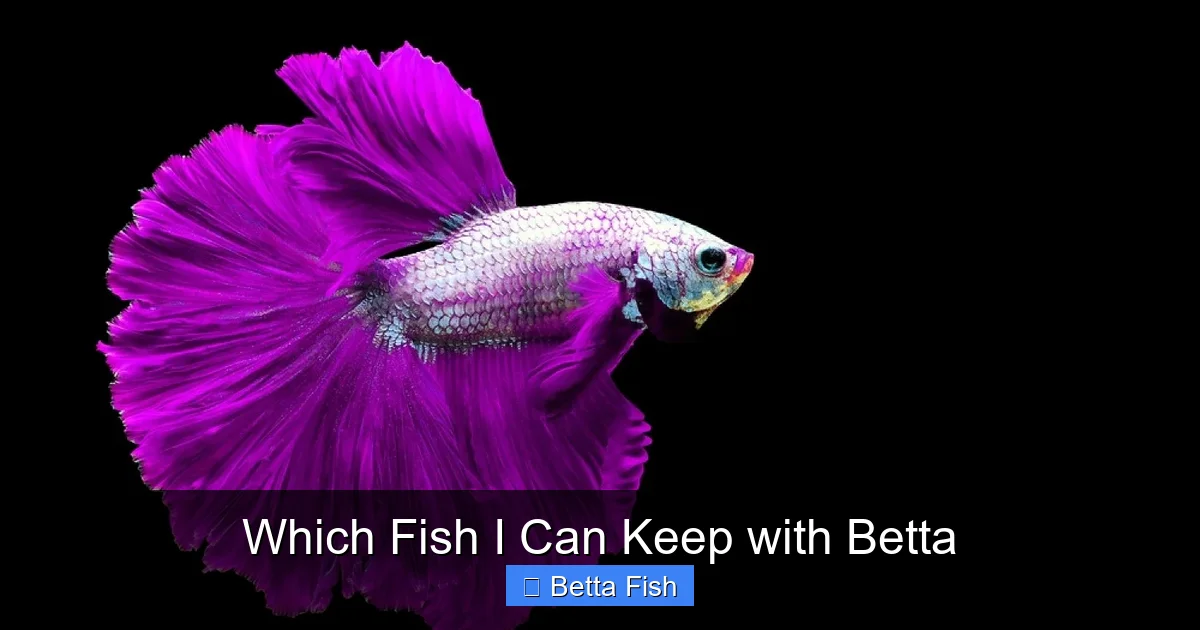
Which Fish I Can Keep with Betta
Contrary to popular belief, Betta fish can often share a tank with carefully chosen companions. Success hinges entirely on understanding your Betta’s individual personality, providing a spacious, richly decorated tank, and selecting peaceful, non-aggressive species that won’t trigger their territorial instincts. This guide details the best fish, shrimp, and snail tank mates, critical setup requirements, and the precise steps to introduce new inhabitants safely for a harmonious aquarium.
Key Takeaways
- Your Betta’s personality is the ultimate deciding factor. Some are peaceful community fish, while others are fiercely territorial; observation is non-negotiable before adding any tank mate.
- Tank size is the foundation of compatibility. A minimum of 10 gallons is strongly recommended for any community setup; larger is always better to dilute aggression and provide territories.
- Tank layout is as important as tank mates. Use live plants, driftwood, rocks, and ornaments to create visual barriers and break lines of sight, reducing stress and chasing.
- Target peaceful, schooling fish from the bottom and middle levels. Ideal candidates are fast-moving, non-flashy, and occupy different tank strata than the Betta, such as small rasboras or corydoras catfish.
- Avoid all fish with flowing fins or bright colors. Guppies, fancy guppies, and male gouramis will be seen as rivals and attacked. Also avoid fin-nippers like tiger barbs.
- Invertebrates like shrimp and snails can be great, but with caution. Amano shrimp and mystery snails often succeed, while small cherry shrimp may be eaten. The Betta’s temperament is the final judge.
- Quarantine and introduce all new fish properly. Never add a new fish directly to the Betta’s tank. Use a divider or separate quarantine tank for observation before full integration.
📑 Table of Contents
- Understanding the Betta: It’s All About Personality
- The Non-Negotiable Foundation: Tank Setup Before Tank Mates
- Top Contenders: The Best Fish for Your Betta’s Community
- Proceed with Caution: Shrimp and Snails
- The Absolute “No” List: Fish to Never House with a Betta
- The Art of Introduction: A Step-by-Step Guide
- Troubleshooting: When Things Go Wrong
- Conclusion: Patience and Observation are Your Best Tools
Understanding the Betta: It’s All About Personality
Let’s clear the air right away. The image of the Betta fish, or Siamese fighting fish, living a lonely, solitary life in a tiny, barren vase is not only sad but also scientifically inaccurate. While it’s absolutely true that male Bettas are famously territorial and aggressive toward other male Bettas—hence their common name—their behavior toward other species is a completely different story. The key phrase you must embrace is: “It depends on the individual Betta.”
Betta fish are intelligent, curious, and possess distinct personalities. Some are laid-back, almost docile characters who will largely ignore other peaceful fish in a well-set-up tank. Others are little Napoleons, viewing any fish with a hint of color or flowing fin as an invading rival and will flare, chase, and attack relentlessly. Your first and most important task is to become a keen observer of your own Betta’s behavior. How does it react when you pass the tank? Is it curious or immediately flaring at its own reflection? This gives you your first clue.
The Science of Aggression: Why Bettas React
Betta aggression is primarily driven by two instincts: territory defense and mate competition. In the wild, male Bettas (the ones with the spectacular fins) defend small, resource-rich patches of water against rival males. They are not chasing every creature in sight; they are targeting specific threats. A long, flowing fin (like a guppy’s) mimics a rival male Betta. Bright, bold colors can also trigger this response. Conversely, a small, fast, silvery fish that darts around the mid-levels or a quiet shrimp that minds its own business on the substrate is often seen as irrelevant—or even as potential food—but not as a direct competitor. This biological insight is what guides our tank mate selection.
The Non-Negotiable Foundation: Tank Setup Before Tank Mates
You cannot discuss compatible fish for a Betta without first discussing the environment. A poorly set-up tank is a recipe for disaster, guaranteed to bring out the worst in even the mildest Betta. Think of the tank not as a stage for your Betta, but as a complex landscape where multiple creatures can find their own space. The goal is to eliminate constant visual contact and provide endless escape routes.
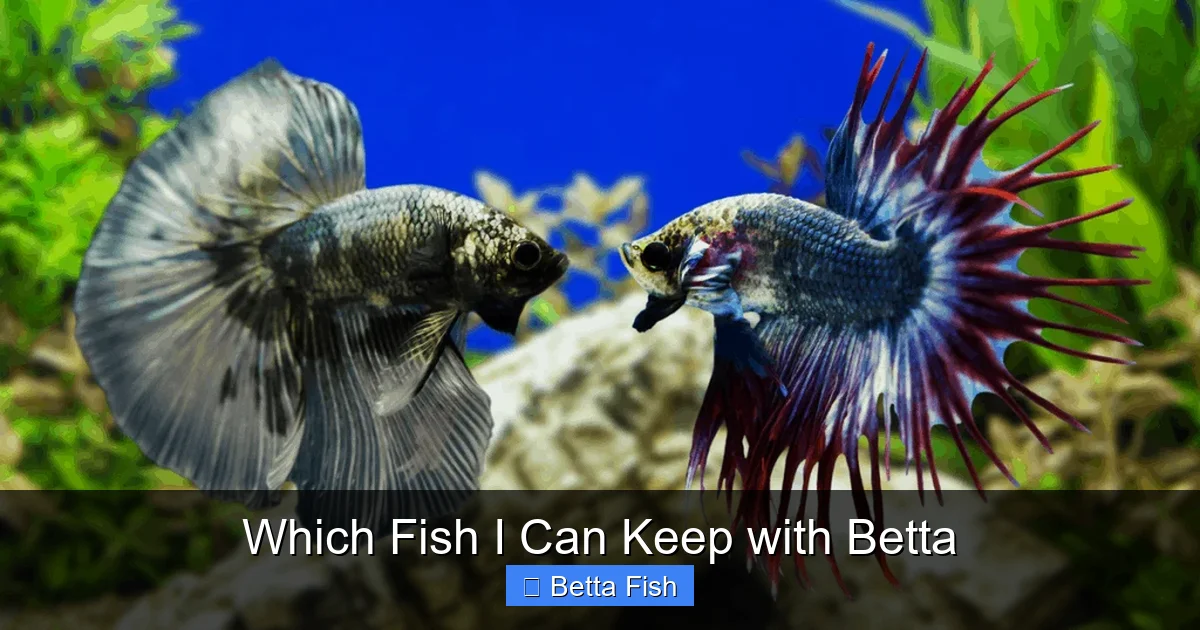
Visual guide about Which Fish I Can Keep with Betta
Image source: japanesefightingfish.org
Tank Size: Bigger is Infinitely Better
The absolute minimum for a Betta community is a 10-gallon (40-liter) tank. This is a hard rule. In a 5-gallon tank, your Betta has nowhere to go. Every movement of a tank mate will be in its immediate space, provoking stress and aggression. A 10-gallon tank provides enough horizontal space for territories to form. If you can manage 15, 20, or more gallons, you dramatically increase your success rate and the number of potential companions. The extra water volume also dilutes any aggression-related stress hormones and provides more stable water parameters.
Aquascaping for Peace: Breaking the Line of Sight
This is your most powerful tool. You must design the tank so your Betta cannot see from one end to the other in a straight line. Use a combination of:
- Dense Plant Life: Live plants like java fern, anubias, cryptocorynes, and floating plants (salvinia, frogbit) are fantastic. They create thick forests where fish can hide. Even silk plants work well if they’re abundant.
- Hardscape: Driftwood, large smooth rocks, and ceramic ornaments create caves, overhangs, and tunnels.
- Vertical Layers: Place tall plants in the back, medium in the middle, and leave some open swimming space near the top (Bettas like to breathe from the surface). This creates distinct zones.
The idea is that if your Betta sees a potential tank mate, it should be a fleeting glimpse through a leaf or behind a piece of wood, not a constant, in-your-face view that triggers a chase response.
Top Contenders: The Best Fish for Your Betta’s Community
Armed with a proper tank and aquascape, we can now look at species. The best candidates share common traits: they are peaceful, prefer the middle or bottom levels of the tank, are fast and agile (to evade a curious Betta), and have dull, non-flashy coloration. They are also typically schooling fish, meaning they should be kept in groups of 6 or more, which further reduces stress on them and makes them less of a target as individuals.
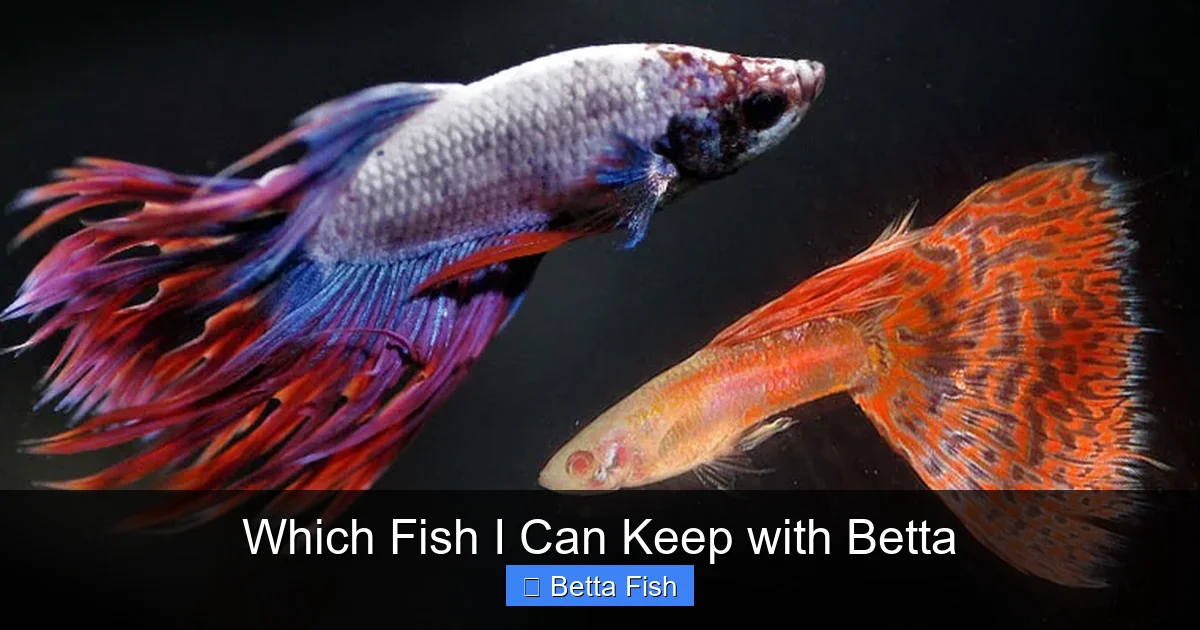
Visual guide about Which Fish I Can Keep with Betta
Image source: guppyexpert.com
Middle & Top Schoolers (The Classic Choices)
- Harlequin Rasboras (Trigonostigma heteromorpha): Often called the gold standard for Betta tank mates. They are peaceful, active, and their orange/red patch is on their tail, not their body. They school beautifully in the mid-levels and are fast enough to avoid a flare. Keep in groups of 8+.
- Lambchop Rasboras (Trigonostigma espei): Similar to their larger cousins but smaller (about 1 inch). Their “lambchop” marking is subtle. They are incredibly peaceful and make a great, less intimidating option for a 10-gallon tank with a particularly feisty Betta.
- Ember Tetras (Hyphessobrycon amandae): Tiny, fiery orange fish that school near the top/mid-levels. Their color is diffuse, not a bold stripe or large patch. In a group of 10+, they create a stunning, shimmering cloud that is generally ignored by Bettas. Perfect for a well-planted nano or 10-gallon community.
- Neon/Cardinal Tetras (Paracheirodon innesi/axelrodi): The classic neon stripe can sometimes trigger a Betta, but many keepers have great success. Their speed and schooling nature (keep in groups of 10+) often override the Betta’s curiosity. The larger Cardinal Tetra is sometimes a better choice as its red stripe extends further back.
- Celestial Pearl Danios (Danio margaritatus): Also known as Galaxy Rasboras. These tiny, jewel-like fish are active, peaceful, and prefer cooler water (72-78°F), which is on the lower end for Bettas. They are a fantastic, if slightly more fragile, choice for a cool, heavily planted tank.
Bottom Dwellers (Essential for a Balanced Tank)
Adding fish that occupy the bottom third of the tank is crucial. They clean up leftover food and provide activity in a zone the Betta usually ignores.
- Corydoras Catfish (Corydoras spp.): The undisputed champions. These small, armored catfish are adorable, social, and must be kept in groups of 5-6+. Species like the Corydoras pygmaeus (Pygmy Cory), C. hastatus (Dwarf Cory), or C. trilineatus (Three-Line) are ideal. They sift through sand and are completely non-threatening.
- Kuhli Loaches (Pangio kuhlii): Eel-like, peaceful, and nocturnal. They burrow into the substrate and are rarely seen during the day. They add a unique element and are completely ignored by Bettas. Keep in groups of 3+.
- Otocinclus Catfish (Otocinclus affinis): The dedicated algae eater. These tiny, shy suckermouth cats are best kept in groups of 5+ in a tank with established algae growth. They are so non-confrontational they are often the last to eat, so supplemental feeding with algae wafers is necessary.
Proceed with Caution: Shrimp and Snails
Invertebrates can add wonderful activity and cleanup to a Betta tank, but they exist in a gray area. To a Betta, a shrimp is a tasty, moving snack. A snail is a hard-shelled curiosity. Success depends 100% on your Betta’s hunger and temperament.
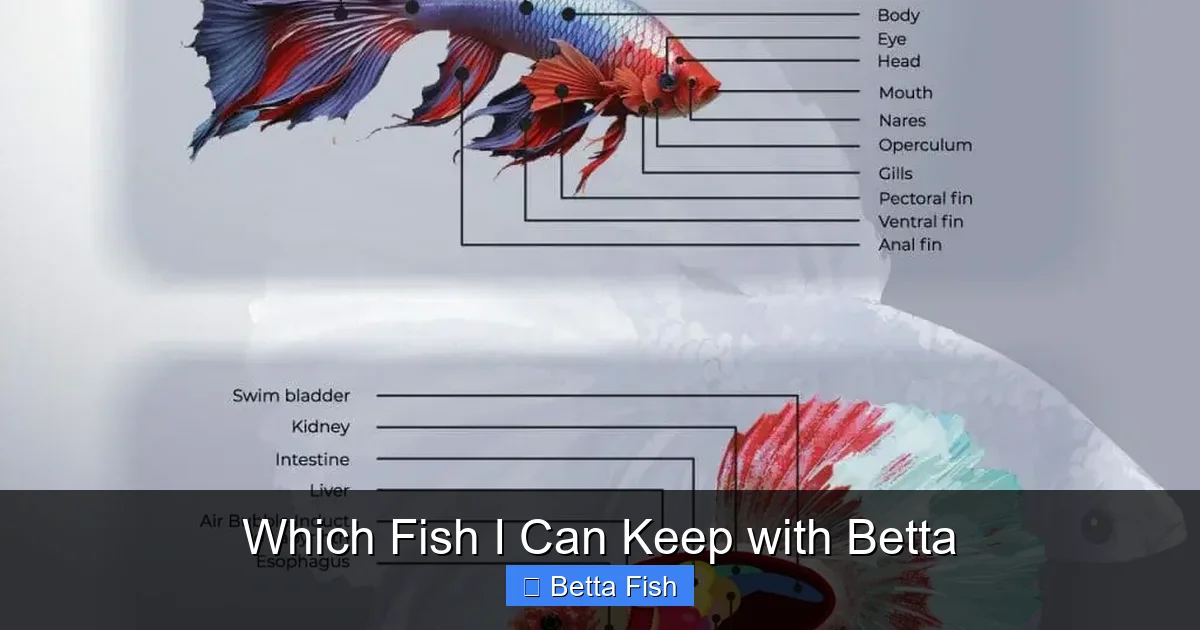
Visual guide about Which Fish I Can Keep with Betta
Image source: ekk4j69ebaa.exactdn.com
Shrimp: The Gamble
- Amano Shrimp (Caridina multidentata): The best bet. They are large (2+ inches), fast, and spend most of their time climbing plants and scavenging. Their size makes them less likely to be seen as food, and their speed allows escape.
- Ghost Shrimp (Palaemonetes spp.): A common and cheap option. They are transparent and fast, which helps. However, they are a favorite snack for many Bettas. If your Betta is curious, it will likely hunt them.
- Cherry Shrimp (Neocaridina davidi): Very high risk. Their brilliant red color is exactly what triggers a Betta’s aggression. Small size makes them easy prey. Only attempt with a proven, very peaceful Betta in a large, heavily planted tank. Expect losses.
Snails: The Reliable Cleanup Crew
Snails are generally excellent. Their hard shells protect them from a curious Betta’s nipping (though a persistent Betta can still stress them).
- Mystery Snails (Pomacea bridgesii): Perfect. They are large, colorful but not flashy in a “rival” way, and incredibly peaceful. They eat algae and leftover food. They also lay eggs above the waterline, preventing overpopulation.
- Nerite Snails (Neritina spp.): The best algae eaters. They come in many patterns and sizes. They cannot reproduce in freshwater, so no snail explosion. Their operculum (trapdoor) snaps shut tight if bothered.
- Ramshorn Snails: Good, but they breed prolifically. In a Betta tank, their population will likely be kept in check by the Betta eating the babies.
The Absolute “No” List: Fish to Never House with a Betta
Some fish are guaranteed to create conflict. Do not attempt to house your Betta with any of the following, regardless of tank size.
- Other Male Bettas: This is the cardinal rule. They will fight to the death. The only exception is a very large, heavily planted tank with a permanent, solid divider (a “split tank”), but even then, the stress of constant visual contact is high.
- Female Bettas (for a male): A male Betta will relentlessly harass a female, trying to mate and often biting her fins. This causes extreme stress and injury. Female Bettas can sometimes be kept in a “Betta sorority” (group of 5+ females) in a large, heavily planted tank, but this is advanced and not for beginners.
- Gouramis (Dwarf, Pearl, etc.): All gouramis are closely related to Bettas (family Osphronemidae). They share the same labyrinth organ and, more importantly, the same territorial, aggressive breeding behaviors. They will flare at each other constantly and likely fight.
- Fancy Guppies & Endlers: Their long, flowing, colorful tails are a direct challenge to a male Betta’s dominance. They will be shredded.
- Fin-Nippers: Fish like Tiger Barbs, Serpae Tetras, or Black Skirt Tetras have a reputation for nipping the long, flowing fins of Bettas, causing severe stress and infection.
- Large, Aggressive, or Boisterous Cichlids: Oscars, Jack Dempseys, etc., will either eat a Betta or be so hyperactive they stress it to death.
The Art of Introduction: A Step-by-Step Guide
Choosing the right fish is only half the battle. How you introduce them is critical. Never, under any circumstances, simply drop a new fish into your Betta’s established tank.
Step 1: Quarantine
All new fish should be quarantined in a separate tank for at least 2-4 weeks. This is to check for diseases (like ich or velvet) that could devastate your main aquarium. It also allows you to observe the new fish’s behavior separately.
Step 2: The First Glimpse (Using a Divider)
The safest method is to use a tank divider. Place the new fish in one half of the partitioned tank and your Betta in the other for 24-48 hours. They can see each other but not interact. Observe your Betta’s reaction. Is it flaring aggressively at the barrier constantly, or does it largely ignore the other fish after a few minutes? Constant, unrelenting flaring is a red flag.
Step 3: Rearranging the Tank
On the day of full introduction, do a major rearrange of the main tank’s decorations. Move plants, rocks, and driftwood to new positions. This disrupts established territories and makes the tank feel like a “new” environment to your Betta, reducing its instinct to defend what it already “owns.” Then, net the new fish and gently place it into the main tank.
Step 4: Close Monitoring (The First 72 Hours)
For the next three days, watch the tank closely, especially during feeding times. A little flaring and posturing is normal as a hierarchy is established. However, look for signs of true aggression: relentless chasing that prevents the other fish from eating or resting, biting, torn fins, or the other fish hiding constantly in the deepest corners. Have a Plan B (a net and a backup quarantine tank) ready to immediately remove any fish that is being bullied or is bullying.
Troubleshooting: When Things Go Wrong
Even with perfect planning, you might encounter issues. Here’s how to handle them.
“My Betta is chasing the new fish constantly!”
First, assess the severity. Is it a few flares and chases, or is it non-stop? If it’s the latter, you must act. The chased fish is under severe stress. Your options are: 1) Remove the new fish and return it to the store or your quarantine tank. 2) If the tank is large enough, add many more decorations *immediately* to create more hiding spots. 3) Consider if the tank is simply too small for the Betta’s personality.
“The new fish is nipping at my Betta’s fins!”
This is less common but can happen with hyperactive species. The solution is the same: remove the aggressor. A Betta with nipped fins is susceptible to infection (fin rot). Do not wait for it to resolve itself.
“My Betta just seems stressed and hides all day now.”
This could be from the introduction of a new tank mate, even if there’s no direct chasing. The Betta feels its territory is compromised. Ensure there are plenty of hiding places *at all levels*, including at the surface (floating plants are great). Check water parameters immediately, as stress makes fish more susceptible to disease. Be patient; it can take a week or two for a new social order to settle.
Conclusion: Patience and Observation are Your Best Tools
Keeping a Betta in a community tank is one of the most rewarding experiences in the aquarium hobby. Watching your elegant Betta glide past a school of darting rasboras or investigate a busy herd of corydoras is a joy. But it is a privilege earned through careful planning, not a right. Start with the right tank—big, planted, and complex. Choose tank mates from the safe lists, always in appropriate groups. And above all, know your Betta. Its unique personality is the final authority on who gets to stay. By respecting its natural instincts and providing an environment that meets its needs, you can create a thriving, peaceful underwater world that showcases the beauty and personality of the magnificent Betta fish alongside its fascinating companions.
Frequently Asked Questions
Can I keep two male Betta fish together?
No, never. Two male Bettas will fight aggressively to establish dominance, and in a confined tank, this will almost always result in severe injury or death for one or both fish. They require complete separation, with a solid divider if in the same tank system.
What about keeping a group of female Betta fish (a sorority)?
Female Betta sororities are possible but are not recommended for beginners. They require a very large tank (minimum 20+ gallons), at least 5-6 females to spread aggression, and an extremely heavily planted environment with no visual barriers. Even then, aggression can flare up, requiring constant monitoring and sometimes re-homing.
Can I keep my Betta with shrimp?
It’s a possibility, but not a guarantee. Larger, fast shrimp like Amano shrimp have the best chance of survival. Small, colorful shrimp like cherry shrimp are often viewed as food by Bettas and may be eaten. Your Betta’s individual personality is the deciding factor.
How long should I wait to add tank mates to a new Betta?
You should wait at least 2-4 weeks after bringing your Betta home before introducing any tank mates. This allows the Betta to fully acclimate to its new tank, establish its territory, and recover from any transport stress. Adding fish to a newly cycled or newly decorated tank adds too many variables at once.
My Betta flares at its own reflection. Will it flare at tank mates?
Constant flaring at its own reflection is a sign of a highly territorial and potentially aggressive Betta. This is a major red flag that your Betta may not be a good candidate for a community tank. You should strongly reconsider adding other fish, as this behavior indicates a low tolerance for any perceived rival, which includes new tank mates.
What is the single most important factor for Betta community tank success?
While tank size and species selection are critical, the single most important factor is aquascaping. A tank with zero sightlines—filled with plants, driftwood, and rocks—gives a potentially aggressive Betta no constant target to focus on. It breaks up the space and allows all fish to feel they have a private area, which is the foundation of reducing stress and aggression.