Which Fish Go Well with Betta

Successfully housing a betta with other fish is possible but requires careful planning. The key is choosing peaceful, non-territorial species that won’t provoke your betta’s aggressive instincts. Proper tank size, abundant hiding spots, and close initial monitoring are non-negotiable for a thriving community tank. Remember, every betta has a unique personality, so there are no absolute guarantees.
Key Takeaways
- Betta aggression is the primary challenge: Bettas are naturally territorial and may attack fish with long fins, bright colors, or those that invade their space.
- Tank conditions are foundational: A minimum of 20 gallons is strongly recommended to provide enough territory and reduce stress for all inhabitants.
- Schooling fish are your best bet: Small, peaceful schooling species like neon tetras or harlequin rasboras can thrive if kept in proper groups (6+).
- Bottom-dwellers often make great companions: Fish like corydoras catfish or kuhli loaches occupy different tank layers, minimizing interaction with the betta.
- Invertebrates are low-risk options: Shrimp (Amano, Ghost) and snails (Nerite, Mystery) can be excellent, but be aware bettas may eat smaller shrimp.
- Acclimation and observation are critical: Use a divider or introduce tank mates first, and watch for signs of stress or aggression for the first 48-72 hours.
- Always have a backup plan: Be prepared to separate and rehome a fish if compatibility fails, as the betta’s behavior is the final determinant.
📑 Table of Contents
- Understanding Betta Temperament: The Key to Successful Pairings
- The Perfect Tank Setup: Foundation for Harmony
- Top Schooling Fish Companions for Your Betta
- Peaceful Bottom-Dwellers: The Unsung Heroes
- Invertebrate Tank Mates: Shrimp, Snails, and More
- High-Risk Candidates: Fish to Avoid with Bettas
- The Step-by-Step Guide to Introducing Tank Mates
- Conclusion: Patience, Observation, and Realistic Expectations
Understanding Betta Temperament: The Key to Successful Pairings
So, you’ve got a magnificent betta fish. That flowing veil of fins, that sassy personality, that vibrant splash of color. It’s a stunning solo act. But you look at your aquarium and think, “Wouldn’t it be nice to have a little community in there?” You’re not alone. Many betta owners dream of a peaceful, bustling underwater world with their betta as the charismatic star. The burning question is: which fish go well with betta?
The honest answer is: it depends. The key to unlocking this puzzle lies in understanding one fundamental truth—your betta is a Betta splendens, a fish bred for centuries for its aggressive, territorial nature. In the wild, they are solitary “siamese fighting fish” who defend a small patch of water fiercely. This instinct doesn’t vanish in captivity. Therefore, any potential tank mate must be chosen with this innate behavior as your primary guide. Compatibility is not about finding a fish your betta *likes*; it’s about finding a fish your betta doesn’t perceive as a threat, a rival, or food. This article will be your comprehensive guide to navigating this delicate process, moving from broad principles to specific species recommendations, and arming you with the practical strategies to give your community tank the best chance for success.
Debunking the “Peaceful Betta” Myth
You may have heard about “peaceful” or “community” bettas. While some individual bettas, particularly certain wild-type varieties like the Betta imbellis, are less aggressive, the standard pet store betta (Betta splendens) is almost always a potential tank bully. Do not be fooled by a calm disposition in the store cup. The stress of transport and confinement can suppress aggression, which often flares once the fish is established in a stable, spacious territory. Assuming your betta will be the exception is the number one reason for failed community tanks. You must always start with the assumption that your betta is aggressive and select tank mates accordingly.
The Perfect Tank Setup: Foundation for Harmony
Before you even think about another fish, you must address the stage: the aquarium itself. A poor tank setup is a guaranteed recipe for disaster, regardless of how “compatible” your species choices seem. The right environment reduces stress for all fish, provides escape routes, and breaks up line-of-sight, which is crucial for a territorial betta.
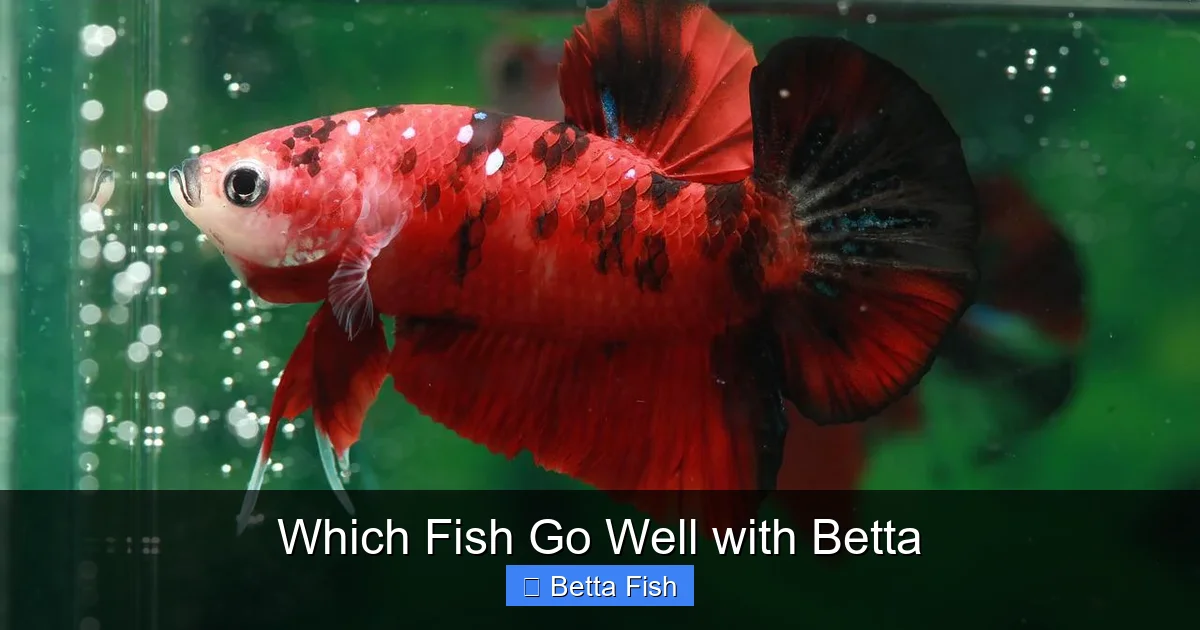
Visual guide about Which Fish Go Well with Betta
Image source: japanesefightingfish.org
Tank Size: Bigger is Unquestionably Better
Let’s settle this now: a 5-gallon tank is not suitable for tank mates. It is the absolute bare minimum for a single, solitary betta. To even consider community housing, you need to start with a minimum of 20 gallons. A 20-gallon long tank is ideal because it provides a larger footprint (length and width) rather than just height. This gives your betta a more substantial territory to defend and, more importantly, provides ample space for other fish to live out of the betta’s “bubble.” In a larger tank, a betta’s territory is a smaller percentage of the total water volume, reducing the feeling of constant invasion. If you can manage a 29-gallon or larger, your success rate increases dramatically. Think of it this way: would you rather live in a studio apartment with a noisy, unpredictable roommate, or a spacious house with plenty of rooms to avoid each other? The choice is clear.
The Art of Aquascaping: Creating Visual Barriers
Open water is your enemy. A long, unbroken sightline from one end of the tank to the other is an invitation for your betta to patrol and chase. You must break that line of sight. Use a combination of:
- Plants: Live plants are best (like java fern, anubias, cryptocorynes), but high-quality silk plants work too. Create dense patches, especially in the mid to upper levels where the betta patrols.
- Driftwood & Rockwork: Large pieces can create caves, overhangs, and partitions. Ensure all decorations are smooth and have no sharp edges that could tear delicate betta fins.
- PVC Pipes or Terracotta Pots: These are excellent, cheap hiding spots. You can even glue several together to create a complex structure.
- Floating Plants: Species like frogbit or water lettuce create a beautiful canopy on the surface. This is perfect because bettas often claim the top layer as their personal domain. Floating plants give other fish a place to swim underneath, out of the betta’s direct line of fire, and also make the betta feel more secure with overhead cover.
The goal is a tank that looks like a lush, complex jungle, not an empty arena.
Essential Equipment and Water Parameters
A stable, cycled tank is non-negotiable. All fish, especially stressed bettas, are sensitive to ammonia and nitrite spikes. Ensure your filter is fully cycled and running efficiently. A heater is mandatory for bettas, who prefer 78-80°F (25.5-26.5°C). Most tropical community fish thrive in this range, making temperature matching easier. A gentle filter flow is important; a strong current will stress a betta and make it harder for other fish to swim. Use a spray bar or sponge pre-filter to diffuse the flow. Finally, a secure lid is a must. Bettas are notorious jumpers, and a startled tank mate might also try to leap.
Top Schooling Fish Companions for Your Betta
This category offers your highest probability of success. Schooling fish are fascinating to watch, and their key advantage is that they are focused on each other, not on your betta. They swim as a unit, dashing here and there in a coordinated flash. A lone betta is less likely to chase a whole school that moves as one confusing, shimmering entity. The critical rule: they must be kept in proper schools of 6 or more. A group of 3 or 4 is not a school; it’s a target. In a proper school, any individual fish is less likely to be singled out, and the group’s collective movement is more intimidating to a bullying betta.
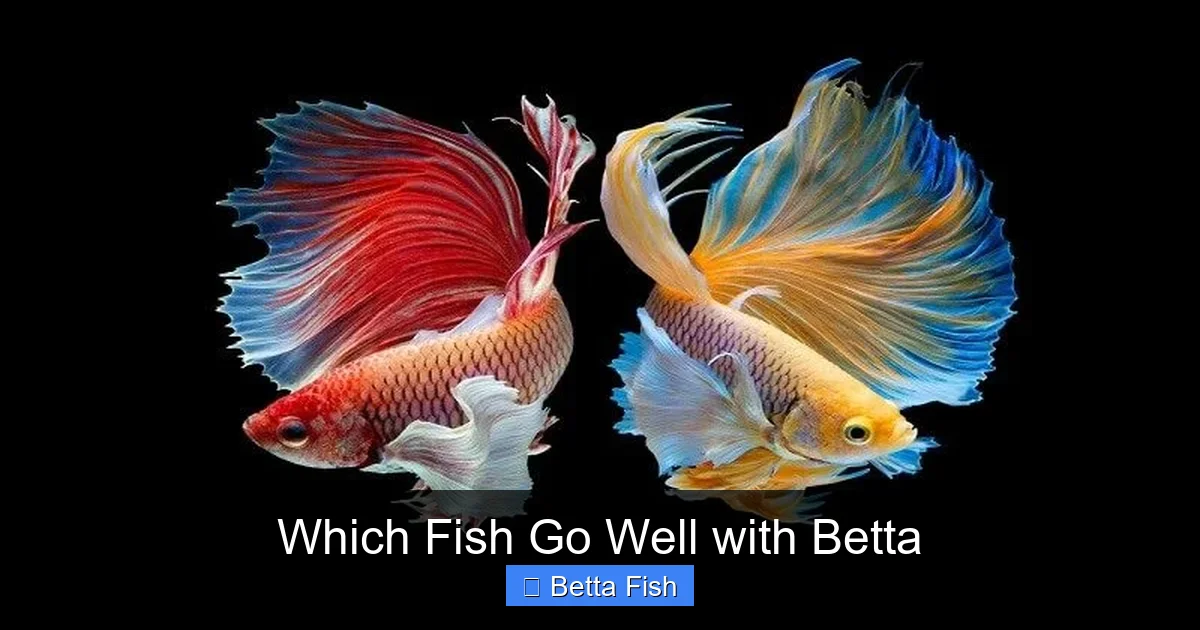
Visual guide about Which Fish Go Well with Betta
Image source: petculiars.com
Neon Tetras (Paracheirodon innesi)
The classic choice for a reason. Their small size (1.5 inches), peaceful nature, and stunning blue-red stripe make them a popular candidate. They inhabit the mid to upper levels and are fast swimmers.
- Pros: Beautiful, active, very peaceful, and they stay small.
- Cons: They require excellent water quality (sensitive to ammonia/nitrite). Their bright, horizontal stripe can, in rare cases, mimic the flash of another betta’s fin and trigger a chase response. They must be in a large school (10+ is ideal) to look their best and feel secure.
- Tank Setup Tip: Ensure your tank is heavily planted. The more places they can dart into, the safer they feel, and the less noticeable they are to a patrolling betta.
Harlequin Rasboras (Trigonostigma heteromorpha)
Perhaps an even better choice than neon tetras. They are slightly larger (2 inches), hardier, and have a more triangular shape that is less “fin-like.” Their distinctive black “slash” mark is not as provocative as a long fin.
- Pros: Very hardy, active, and peaceful. Their deeper body shape is less likely to be mistaken for a rival male betta. They are also less nervous than neons in a community setting.
- Cons: Need a school of 8-10. They prefer slightly softer, more acidic water than some other species, but are quite adaptable.
- Tank Setup Tip: They love to shoal in the open water mid-level. Provide a mix of open swimming space and planted areas.
Ember Tetras (Hyphessobrycon amandae)
A fantastic, often overlooked option. These are tiny (0.8 inches), fiery orange fish that are almost comical in their activity. Their small size makes them less of a threat in a betta’s eyes, and they are incredibly peaceful.
- Pros: Their small size means they are less likely to be seen as competition. They are very active and add a beautiful “embers in the water” glow to a planted tank.
- Cons: Their tiny size means they need a very large school (12+) to feel secure and to be a visually impactful presence. They can also be outcompeted for food by faster fish.
- Tank Setup Tip: Perfect for a heavily planted nano or 20-gallon community tank. Their small size means they can use tiny hiding spots that larger fish cannot.
Peaceful Bottom-Dwellers: The Unsung Heroes
Fish that occupy the bottom layer of the tank are your secret weapon. They literally live in a different world from your betta, who is a top- and mid-level swimmer. This vertical separation drastically reduces encounters. These fish are also generally armored, hardy, and have no long, flowing fins to provoke the betta.

Visual guide about Which Fish Go Well with Betta
Image source: japanesefightingfish.org
Corydoras Catfish (The “Cory” Cat)
There are many species (Pygmy, Panda, Bronze, Albino, etc.), but all share the same delightful, social personality. They are small (1-3 inches depending on species), armored catfish that spend their days sifting through the substrate for food, often in a cute little group.
- Pros: They are the ultimate peaceful bottom feeder. They are social and must be kept in groups of 5 or 6. Their bony plates and whiskers (barbels) make them unappetizing and uninteresting to a betta. They are also excellent “clean-up crew” for leftover food.
- Cons: They need a soft, sandy substrate to protect their delicate barbels. Gravel can injure them. Some larger species (like the Bandit Cory) need more space.
- Tank Setup Tip: Provide sinking wafers or blanched vegetables (zucchini, cucumber) as a primary food source, as they are not great at competing for flake food that floats to the top.
Kuhli Loaches (Pangio kuhlii)
If you want an exotic, snake-like addition, the Kuhli loach is perfect. These eel-like fish are incredibly peaceful, nocturnal, and spend their days burrowed in the substrate or hiding under decorations.
- Pros: They occupy a niche almost no other fish do. They are so shy and hidden that your betta will barely know they exist. They are fascinating to watch when they come out at night.
- Cons: They are very shy and need a group of 5+ to feel secure enough to come out. They require a soft, sandy substrate for burrowing. They are prone to jumping if startled, so a tight-fitting lid is essential.
- Tank Setup Tip: Create a “loach hideaway” with a pile of smooth river rocks, a large piece of driftwood with gaps underneath, or a section of the tank dedicated to a deep sand bed.
Bristlenose Plecos (Ancistrus sp.)
Among the plecostomus family, the Bristlenose is one of the smallest and most suitable. The males have distinctive tentacle-like growths on their snouts. They are primarily algae eaters but also enjoy wood and protein.
- Pros: They are excellent at controlling algae. They are armored and have a low profile. They generally ignore other fish.
- Cons: They produce a lot of waste, requiring excellent filtration. They need driftwood in the tank for digestion. They can grow to 5 inches, so ensure your 20+ gallon tank has space.
- Tank Setup Tip: Supplement their diet with algae wafers, blanched veggies, and occasional protein (like a shrimp pellet). They will not clean your tank of all algae; they are a supplement to your cleaning routine, not a replacement.
Invertebrate Tank Mates: Shrimp, Snails, and More
Invertebrates are often the safest and most interesting additions to a betta tank. They don’t have fins that trigger aggression in the same way, and they occupy different niches. However, caution is still required, as your betta may view them as a tasty snack.
Shrimp: A Spectrum of Risk
Shrimp are a popular choice, but size is everything.
- Low-Risk (Large Species): Amano Shrimp (Caridina multidentata) are the gold standard. They grow to 2+ inches, are excellent algae eaters, and are too big for most bettas to bother with. Ghost Shrimp (Palaemonetes sp.) and Bamboo Shrimp are also good large options, though Bamboo Shrimp require very specific water flow to filter feed.
- Medium-Risk (Medium Species): Cherry Shrimp (Neocaridina davidi) and other Neocaridina species are beautiful and prolific breeders. A large, determined betta will absolutely eat them, especially the young. However, in a large, heavily planted tank with a “mellow” betta, a colony can often thrive as the shrimp use the plants for constant cover.
- High-Risk (Small Species): Bee shrimp, Crystal Red shrimp, and other Caridina species are small, expensive, and sensitive. They are not recommended for a betta tank. The risk of them being eaten is extremely high.
General Shrimp Tip: Always introduce shrimp before the betta if possible. A betta that grows up seeing shrimp as part of the environment is less likely to see them as food. Dense planting is absolutely critical for shrimp survival.
Snails: The Ultimate Janitors
Snails are almost always safe. Bettas may peck at a snail’s foot or antenna out of curiosity, but the shell provides ultimate protection. They are fantastic algae eaters and cleanup crew.
- Top Picks: Nerite Snails (Zebra, Tiger, etc.) are the best—they eat a wide variety of algae, do not reproduce in freshwater (no snail explosion), and have a beautiful patterned shell. Mystery/Apple Snails are large, colorful, and also good algae eaters, but they produce a lot of waste and can breed if you get a male and female.
- Pros: Zero aggression risk. They are fascinating to watch and very effective at cleaning glass and decor.
- Cons: Some snails (like the common Pond Snail) can become pests if you accidentally introduce them on plants. Nerites require a source of algae or algae wafers; they will starve in a spotless tank.
High-Risk Candidates: Fish to Avoid with Bettas
Just as important as knowing who *might* work is knowing who absolutely will not. This list is not exhaustive, but it covers the most common and dangerous mistakes.
Fish with Long, Flowing Fins
This is the cardinal rule. Your betta’s most prized feature is also its greatest trigger for aggression. Any fish that resembles a rival male betta is a target.
- Guppies: Especially males with large, colorful tails. Your betta will see a rival and likely attack relentlessly. Even a “peaceful” female guppy can be targeted.
- Fancy Goldfish: Beyond the temperature mismatch (goldfish are cold-water), their long fins are a red flag. Plus, goldfish are messy and produce ammonia quickly, which can harm a sensitive betta.
- Angelfish: While not having flowing fins like a betta, they are tall, slow-moving, and can be semi-aggressive. An angelfish may also see the betta’s long fins as food and nip at them. A bad combination.
- Other Bettas: Never, ever house two male bettas together. A male and female pair is also risky and requires a massive, heavily planted tank and close supervision, as the male may harass the female to death.
Fin-Nippers and Fast, Boisterous Swimmers
Some fish are genetically predisposed to nip at the long, flowing fins of other fish. Others are so hyperactive and fast that they will stress a slower, more deliberate betta by constantly invading its space.
- Tiger Barbs: The classic fin-nipper. They are notorious for this behavior and should never be with a betta.
- Serpae Tetras: Another known fin-nipper, despite being a tetra. Their red color can also be provocative.
- Danios (Zebra, Leopard): Extremely fast, active, and prone to “pestering” slower fish. They will drive a betta nuts.
- Some “Feisty” Tetras: Like Black Skirt Tetras or Buenos Aires Tetras, which can be semi-aggressive and nippy.
Brightly Colored, “Showy” Fish
Bettas are visual hunters and are stimulated by color and movement. A fish that is as brightly colored as the betta itself is essentially waving a red flag at a bull.
- Male Swordtails/Platys: Their bright orange/red coloration and sword-like tail extension are major triggers.
- Some Rainbowfish: Their iridescent scales can flash and provoke a chase response.
- Male Paradise Fish: A closely related gourami that is even more aggressive than a betta. Absolute no.
Remember: This is a guideline, not a law. Some bettas are so mellow they ignore these rules. But you must assume your betta will follow them. Starting with these high-risk fish is setting yourself up for failure, injury, and death.
The Step-by-Step Guide to Introducing Tank Mates
You’ve chosen your species. You’ve built the perfect 20+ gallon jungle. Now, the most critical phase: introduction. How you add fish to the tank is as important as which fish you choose.
Step 1: The Order Matters
The single most important rule is: Introduce all other tank mates FIRST, and add the betta LAST. Here’s why: if you put the betta in first, it will claim the entire tank as its territory. Any new fish added later is an invader and will be chased relentlessly. If you add the community fish first, they will establish their own territories and routines. When you finally add the betta (using a proper acclimation process like drip acclimation), it is entering an *already established* community. It will be the newcomer, the one that has to adjust. This flips the script and gives the other fish a massive advantage. The betta is less likely to see the entire tank as “its” space to defend from day one.
Step 2: The Divider Method (Highly Recommended)
For the first 1-2 weeks, use a tank divider. This is a clear acrylic or mesh barrier that splits the tank into two separate compartments. Place the betta on one side and the new community on the other. They can see each other but cannot physically interact.
- Benefits: It allows the betta to acclimate to the presence of the other fish without the stress of constant chasing. It lets you observe if the betta is obsessively flaring (gills out) at a specific fish for hours on end—a bad sign. It gives the other fish a safe zone to settle in.
- Process: After a week or two of calm observation (the betta may flare initially but should settle), you can remove the divider for short, supervised “playdates.” Start with 15-30 minutes, then return the divider. Gradually increase the time over several days. Watch constantly. If any fish is being chased to the point of exhaustion or hiding constantly, the divider goes back up. You may need to try again in a few days or accept that this combination may not work.
Step 3: The Direct Introduction (With Caution)
If you choose not to use a divider, you must be extremely vigilant. Rearrange all tank decorations and plants just before introducing the betta. This disrupts the territories of the existing fish and makes the tank feel “new” to everyone, reducing the urge to defend specific spots. Then, use a cup or net to gently introduce the betta. Watch the tank non-stop for at least an hour. Be prepared with a second, cycled hospital tank to immediately remove any fish that is being relentlessly attacked or is attacking.
What to Look For: Signs of Stress vs. Normal Behavior
Not all interaction is bad. A few initial flares and chases are normal as a pecking order is established. You must distinguish between “checking out” and “relentless persecution.”
- Acceptable: A brief flare (2-3 seconds) when a fish swims into the betta’s immediate space, followed by the betta losing interest. A quick chase that ends with the other fish finding a hiding spot and the betta moving on.
- Unacceptable (Time to Remove the Betta or the Other Fish): The betta spending 80% of its time patrolling and chasing one specific fish. The chased fish is constantly hiding, not eating, clamped fins, pale color, or gasping at the surface from exhaustion. Any fish with torn or nipped fins. The betta attacking and injuring any tank mate at any time.
Conclusion: Patience, Observation, and Realistic Expectations
Creating a successful community tank with a betta is a rewarding challenge, but it is precisely that—a challenge. It is not the default setting. Your journey should follow this mantra: research, prepare, observe, and be prepared to intervene. Start with the safest, most compatible species from the lists above—a school of harlequin rasboras and a group of corydoras in a well-planted 20-gallon long is a classic, high-success starting point. Avoid the temptation to add too many fish too quickly. Add one species at a time and give the ecosystem weeks to stabilize.
Finally, manage your expectations. Your betta may be the star, but it is also the potential villain of the story. Its personality is the ultimate variable. A tank that works for one betta may fail with another. The goal is to create an environment where the betta’s territorial instincts are minimized by space and distraction, and where other fish have ample opportunity to thrive out of its way. If you achieve that, you will be rewarded with a dynamic, beautiful, and endlessly fascinating aquatic community. If you don’t, there is no shame in returning to a single-species betta tank—it is what millions of bettas live happy, healthy lives in. The most important outcome is the health and well-being of every creature in your care.
Frequently Asked Questions
Can a female betta live with other fish?
Yes, female bettas are generally less aggressive than males and can often be kept in sororities (groups of 4-6) or with very peaceful community fish. However, individual personalities vary, and some females can still be quite territorial. The same strict rules about tank size, species selection, and observation apply.
Will my betta eat my shrimp?
It depends on the size of both the betta and the shrimp. A full-grown betta will almost certainly eat small cherry shrimp or shrimp fry. Larger shrimp like Amanos or Ghost Shrimp have a much better chance of survival, especially in a heavily planted tank with plenty of hiding places. There are no guarantees.
What is the absolute minimum tank size for a betta with tank mates?
While a single betta can live in a 5-gallon tank, adding tank mates requires significantly more space. The absolute, bare minimum we would ever consider is a 20-gallon long tank. This provides the necessary horizontal swimming space and territorial separation to give both the betta and its companions a fighting chance.
How can I tell if my betta is stressed by tank mates?
Look for constant, frantic patrolling of the entire tank, relentless chasing of one specific fish, loss of appetite, faded or pale colors, clamped (tightly held) fins, frequent hiding, and gasping for air at the surface. The other fish will also show signs: constant hiding, lack of eating, torn fins, or extreme skittishness.
How many tank mates can I add to a betta tank?
This is governed by the general stocking rules for your tank size and filter capacity, not by the betta’s preference. In a 20-gallon tank, a good starting point is: 1 betta + a school of 8-10 small tetras/rasboras + a group of 6 corydoras + a few snails. Always add fish slowly and monitor water parameters closely.
What should I do if my betta starts attacking its tank mates?
Act immediately. Have a backup cycled tank (a “hospital” or “quarantine” tank) ready. Use a net to carefully remove the fish that is being attacked. If it’s a single fish being targeted, you may be able to rehome just that one. If the betta is attacking multiple fish or showing persistent aggression, you will likely need to move the betta to a separate, permanent solo tank. Do not hope the problem will resolve itself—it usually escalates, leading to injury or death.