Where Is a Betta Fish’s Natural Habitat
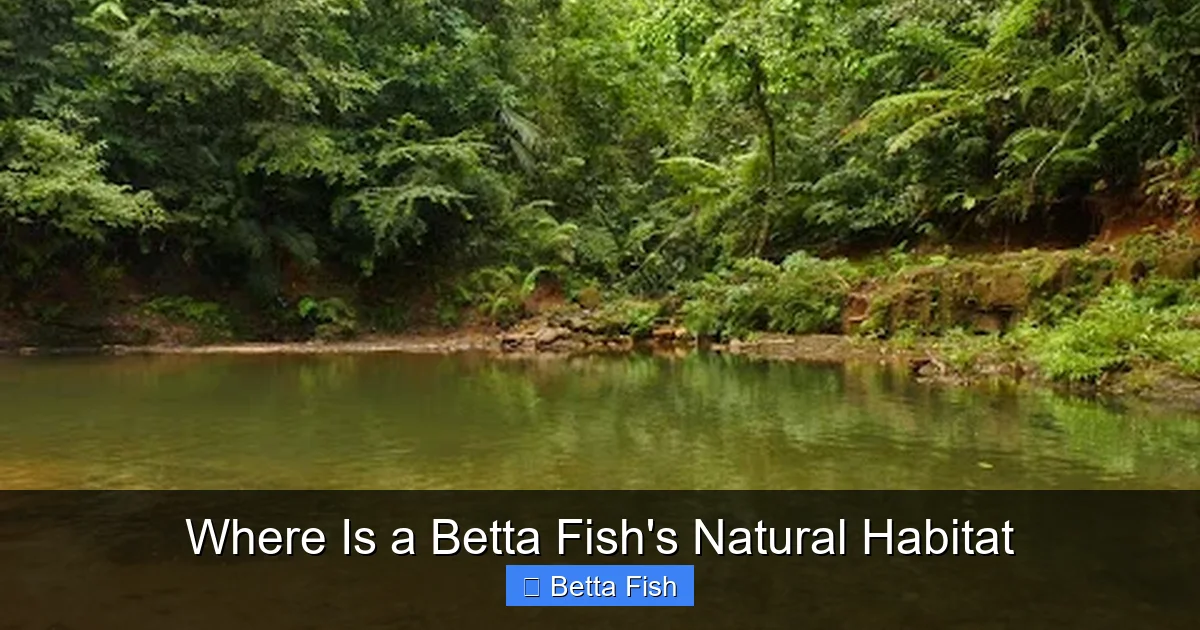
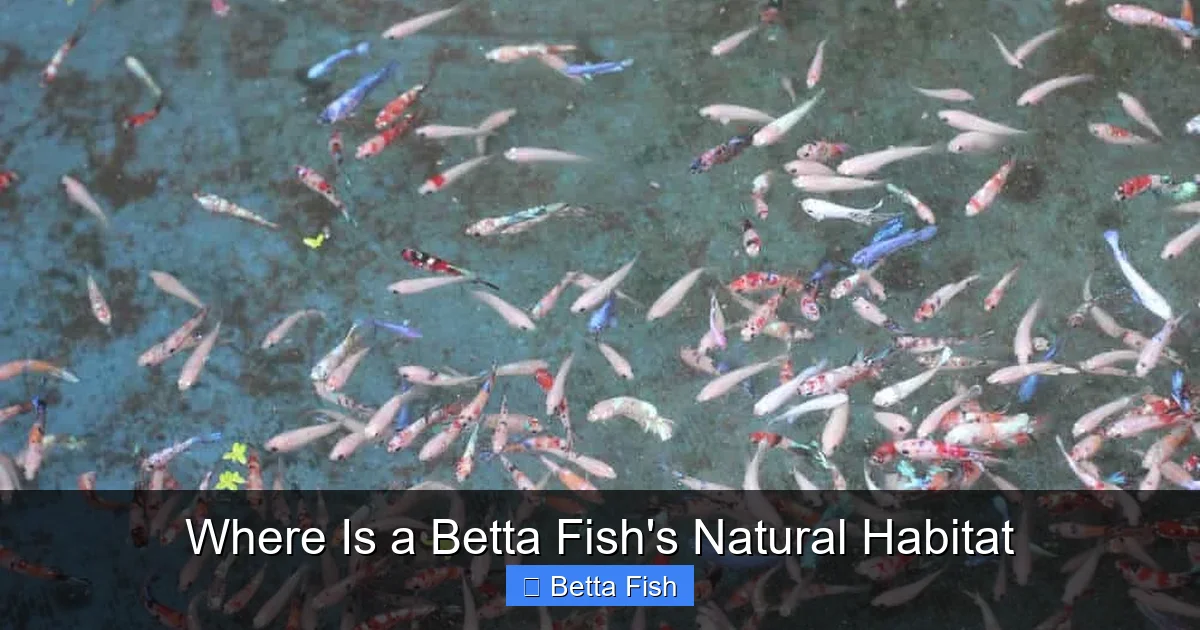
Contrary to popular belief, betta fish do not come from tiny, dirty puddles. Their true natural habitat is the shallow, slow-moving, and often vegetated waters of Southeast Asia, including rice paddies, marshes, and floodplain streams. These environments are warm, have soft, acidic water, and are rich in hiding places. Understanding this wild setting is crucial for providing proper care, as it reveals the need for warm water, gentle filtration, ample space, and a protein-based diet, not a small, stagnant jar.
Key Takeaways
- Geographic Origin: Wild bettas (Betta splendens) are native to the central and northern regions of Thailand, with populations also found in parts of Cambodia, Laos, Myanmar, and Vietnam’s Mekong basin.
- Habitat Type: They thrive in shallow, sluggish bodies of water like rice paddies, marshes, drainage ditches, and the edges of slow streams and ponds—not deep, fast-flowing rivers.
- Water Conditions: Their natural waters are warm (often 75-85°F / 24-29°C), soft, and slightly acidic to neutral, with abundant plant matter that provides cover and influences water chemistry.
- Key Adaptation: The famous “labyrinth organ” allows them to survive in oxygen-poor water by breathing atmospheric air, a trait evolved for their seasonally drying habitats.
- Diet & Behavior: In the wild, they are carnivorous insectivores and opportunists, feeding on larvae and small crustaceans. They are territorial, especially males, but not constantly fighting; they often avoid conflict.
- Major Threats: Their natural habitats are critically threatened by pollution from agriculture, palm oil plantations, and urban development, along with habitat destruction and the pet trade.
- Captivity Myth: The “betta in a cup” myth is dangerously false. Replicating key elements of their wild habitat—warmth, space, filtration, and enrichment—is essential for their health and longevity.
📑 Table of Contents
- The Surprising Truth Behind the Betta Fish’s Home
- Geographic Origins: Mapping the Wild Betta’s Range
- The Hydrological Home: Characteristics of Wild Betta Waters
- Evolutionary Marvel: The Labyrinth Organ and Other Adaptations
- Life in the Wild: Diet, Behavior, and Social Structure
- The Perilous Present: Threats to the Wild Betta Habitat
- Bringing the Wild Home: Replicating the Natural Habitat in Your Aquarium
- Conclusion: Conservation Through Compassionate Care
The Surprising Truth Behind the Betta Fish’s Home
When you picture a betta fish, what comes to mind? For many, it’s the iconic image of a solitary, flamboyant fish swimming in a small, decorative vase or cup on a desk or shelf. This pervasive marketing myth has done a profound disservice to one of the world’s most popular aquarium fish. The truth about the betta fish’s natural habitat is not only far more fascinating but also fundamentally critical to understanding how to care for them properly. These fish, scientifically known as Betta splendens, are not denizens of isolated, filthy puddles. They are specialized inhabitants of a specific, vibrant, and increasingly threatened ecosystem in Southeast Asia.
To truly appreciate the betta, we must journey to the tropical lowlands of Thailand and its neighboring countries. Here, we find the fish in its element: not in a cup, but in shallow, sun-dappled waters teeming with life, where the air is humid and the water is warm. Their entire biology—from their magnificent fins to their unique respiratory system—is a masterpiece of adaptation to this particular environment. By debunking the small-vase myth and exploring their real wild world, we unlock the secrets to providing a thriving, ethical, and enriching life for bettas in our homes. This article will dive deep into the geography, hydrology, ecology, and conservation of the betta’s natural habitat, translating that wild knowledge into practical, life-saving aquarium care tips.
Geographic Origins: Mapping the Wild Betta’s Range
The story of the betta fish begins in the tropical heart of Southeast Asia. While the domesticated Siamese fighting fish we know today has been selectively bred for centuries, its wild ancestors have a much more defined and restricted native range. Understanding this geography is the first step in visualizing their true home.
Visual guide about Where Is a Betta Fish’s Natural Habitat
Image source: lh5.googleusercontent.com
The Cradle of Civilization: Central and Northern Thailand
The undisputed core native range for Betta splendens is the Chao Phraya and Mae Khlong river basins in central and northern Thailand. This region, encompassing areas around Bangkok and extending northwards, is where the species was first described and from whence the majority of the wild stock originates. Historical accounts suggest local people in the Ayutthaya region (central Thailand) were collecting and pitting wild bettas against each other for sport as early as the 19th century, which led to their international discovery. The wild populations here are considered the “type locality” for the species.
Within Thailand, they are found in low-lying floodplains, shallow oxbow lakes formed by meandering rivers, and the margins of slow-moving streams. The terrain is generally flat, dominated by agricultural land, but pockets of natural wetland habitat remain. These waters are typically stained a dark “tea” color from decaying plant matter—tannins—which is a key characteristic of their environment.
Neighboring Nations: Cambodia, Laos, and Vietnam
While Thailand is the epicenter, the betta’s native range extends into neighboring countries. Reliable, genetically distinct wild populations are found in:
- Cambodia: Particularly in the Tonle Sap (Great Lake) and the connected Mekong and Bassac river floodplains. The massive seasonal flooding of Tonle Sap creates ideal, expansive shallow habitats.
- Laos: In the southern parts of the country, within the Mekong basin and its tributaries.
- Vietnam: Specifically in the Mekong Delta in the south, where the river fans out into a network of slow-moving channels, swamps, and rice fields.
- Myanmar (Burma): There are documented populations in the southern regions, likely in the lower Salween River basin, though this is less studied.
It’s important to note that in some areas, particularly outside this core range, you may find other species of bettas (Betta genus), but Betta splendens is native to this specific Southeast Asian belt. Their distribution is tied not to large rivers, but to the complex, seasonal wetland mosaic of the Mekong and Chao Phraya basins.
The Hydrological Home: Characteristics of Wild Betta Waters
Knowing the country is one thing; understanding the actual water they live in is another. The physical and chemical properties of their habitat are non-negotiable factors in their survival and are often completely misunderstood. Wild betta habitats are defined by four key parameters: depth, flow, vegetation, and water chemistry.
Visual guide about Where Is a Betta Fish’s Natural Habitat
Image source: lh4.googleusercontent.com
Shallow, Sun-Drenched, and Still
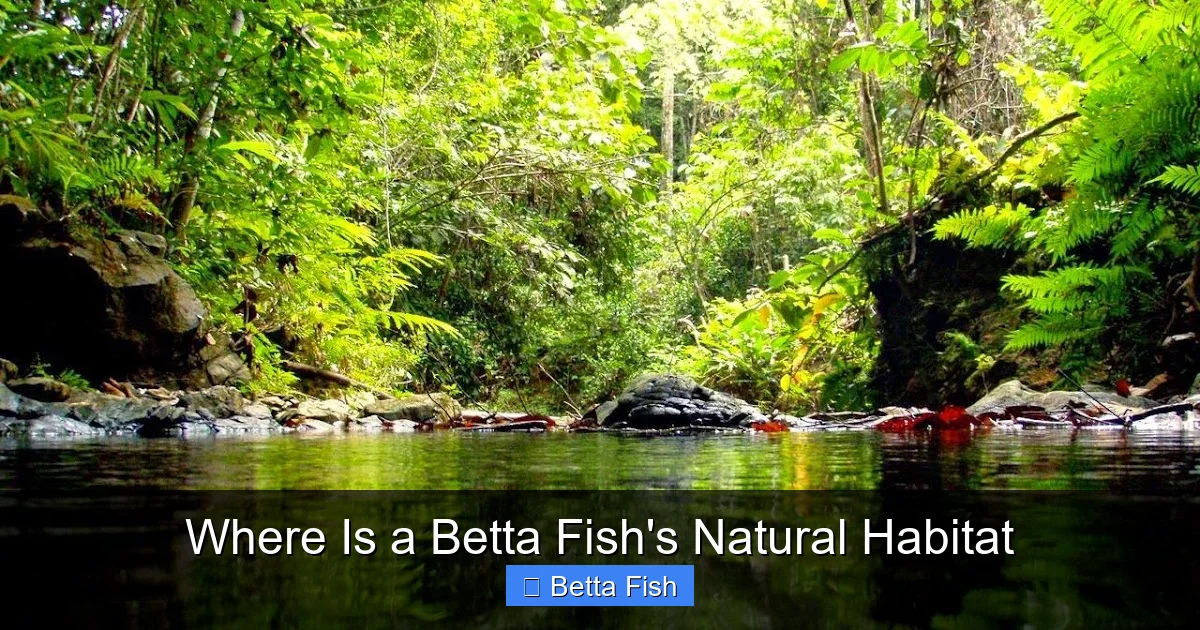
The single most defining feature is extreme shallowness. We are talking water depths that are often just a few inches to maybe a foot deep. This allows the water to heat up rapidly under the tropical sun and enables the betta to easily reach the surface to take its obligatory gulp of atmospheric air using its labyrinth organ. The water movement is negligible to slow. You will not find bettas in rapids or even moderate currents. They inhabit the absolute edges of waterways—the backwaters, ditches, and stagnant pools where silt and leaf litter accumulate. This slow flow, or lack thereof, leads to low dissolved oxygen levels in the water column, which is the very evolutionary pressure that led to the development of their special breathing organ.
A World of Green: The Role of Aquatic Vegetation
Abundant, dense aquatic vegetation is not a luxury for wild bettas; it is a fundamental requirement for survival. Plants like Cryptocoryne (water trumpets), Vallisneria (eelgrass), Hygrophila, and floating species like Lemna (duckweed) and Salvinia create a three-dimensional jungle. This vegetation serves multiple critical purposes: it provides essential hiding places and visual barriers to reduce stress and territorial conflict; it offers surfaces for the male to build his iconic bubble nest among; it provides shade, moderating water temperature and light intensity; and it is a source of microorganisms and infusoria that form the base of the food web supporting the insects and larvae bettas eat. A barren, open water body would be a death trap for a wild betta, leaving it exposed to predators and the sun.
Stained and Soft: Water Chemistry in the Wild
The water in a natural betta habitat is rarely clear. It is typically a dark amber or brown color, often called “blackwater” or “tea-stained.” This coloration comes from tannins and humic acids released by decaying plant matter, leaf litter, and peat in the soil. This creates a naturally soft and acidic to neutral water profile. The pH can range from about 5.5 to 7.0, and the mineral content (GH/KH) is very low. This soft, acidic environment is intrinsic to their physiology. Furthermore, these waters are often warm year-round, with temperatures consistently in the 75-85°F (24-29°C) range, and can fluctuate daily by a few degrees, mirroring the tropical climate.
Evolutionary Marvel: The Labyrinth Organ and Other Adaptations
How could a fish survive in such warm, oxygen-poor, shallow water? The answer lies in one of the most remarkable evolutionary adaptations in the fish world: the labyrinth organ. This specialized structure allows bettas—and their cousins in the Anabantoidei suborder—to breathe air directly from the surface.
Visual guide about Where Is a Betta Fish’s Natural Habitat
Image source: aquariumsphere.com
Breathing Air: The Labyrinth Organ Explained
Located in a chamber above the gills, the labyrinth organ is a folded, bony structure rich in blood vessels. It functions like a primitive lung. A betta must regularly swim to the surface and gulp a bubble of air. This air passes into the labyrinth chamber, where oxygen is extracted directly into the bloodstream. This adaptation is a direct response to their habitat’s frequent hypoxia (low oxygen). It means they can survive in water that would suffocate most other fish, and it also explains why they are obligate surface breathers—they cannot survive without access to the air. In an aquarium, this necessitates a gap between the water surface and the tank lid to allow for this essential behavior.
Built for Battle and Beauty: Fins and Coloration
The betta’s famous, flowing fins are another adaptation with a wild purpose. In nature, males have much shorter, more practical fins than their flamboyant domesticated counterparts. However, they still possess slightly elongated fins, particularly the caudal (tail) fin. These are used in displays during territorial disputes and courtship—fanning out to appear larger and more impressive to rivals or potential mates. The vibrant reds, blues, and greens common in pet stores are the result of selective breeding. Wild bettas are typically a more subdued, mottled brown, grey, or green—excellent camouflage among the plants and leaf litter. Their wild coloration can flash brilliant iridescence (structural color from light-reflecting guanine crystals in their skin) when agitated or displaying, a trait that has been amplified in captivity.
Life in the Wild: Diet, Behavior, and Social Structure
Observing a betta in a sparse tank reveals little of its natural behavior. In the complex wild habitat, bettas are active, intelligent, and behaviorally nuanced creatures.
A Carnivore’s Diet: Not a Vegetarian
The betta is a carnivorous insectivore. Its upturned mouth is perfectly adapted for snatching prey from the water’s surface and the water column. Its diet consists primarily of:
- Insect larvae (especially mosquito and midge larvae)
- Small crustaceans (water fleas, copepods, shrimp fry)
- Small worms
- Flying insects that fall onto the water surface
They are ambush predators, often hovering near the surface or under plant cover, waiting for prey to drift by. This is why a high-quality, protein-based diet (pellets, frozen or live foods like daphnia, brine shrimp, and bloodworms) is essential in captivity—flaked vegetable-based foods do not meet their nutritional needs.
Territorial but Not Bloodthirsty
The reputation for constant, fatal aggression is largely a product of staged fighting for gambling. In the wild, male bettas establish and defend small territories centered around a bubble nest or a dense patch of plants. Their strategy is display and deterrence, not constant combat. They will flare (extend gills, spread fins) to appear larger and warn off intruders. Actual physical fights are brief, stressful, and risky, and are avoided if possible through visual barriers. They spend most of their time foraging, resting among plants, or patrolling their territory. Females have their own smaller territories and are far less aggressive, often schooling loosely in areas with abundant food and cover.
The Perilous Present: Threats to the Wild Betta Habitat
The romantic image of a pristine Thai rice paddy is increasingly at odds with reality. The natural habitats of Betta splendens are under severe and escalating threat, making wild populations conservation concerns.
Agricultural and Industrial Pollution
The very landscapes that create betta habitat—low-lying floodplains—are also prime agricultural land. The massive expansion of palm oil plantations in Thailand and Cambodia has been devastating. Runoff from these plantations carries sediment, fertilizers, and pesticides into the waterways. Pesticides like organophosphates are acutely toxic to fish and destroy the invertebrate food base. Fertilizers cause algal blooms that deplete oxygen when they die and decompose, creating dead zones. Rice farming itself, while historically creating habitat, now often uses heavy chemical inputs that pollute the irrigation canals and ditches bettas call home.
Habitat Destruction and Urbanization
As populations grow, wetlands are drained for urban development, industry, and infrastructure. Canals are lined with concrete, removing all vegetation and natural substrate. Floodplain forests are cleared. This not only removes physical habitat but also disrupts the natural hydrology—the seasonal flooding cycle that replenishes these ecosystems and connects isolated pools, allowing for genetic exchange between betta populations. Fragmented, polluted, and vegetation-free canals are ecological deserts compared to the lush, complex wetlands of the past.
The Pet Trade: A Double-Edged Sword
The global popularity of bettas has created a multi-billion dollar industry. While captive breeding has removed pressure from wild collection for the aquarium trade (almost all pet store bettas are captive-bred), there are still concerns. Some localized, unregulated collection for the “wild-type” collector market can occur. More significantly, the industry’s demand has sometimes encouraged habitat destruction in the name of “captive breeding farms” that are little more than dense, polluted holding facilities, though standards vary widely. The greatest threat from the trade is indirect: it popularizes the animal without educating on its needs, perpetuating the harmful cup habitat myth.
Bringing the Wild Home: Replicating the Natural Habitat in Your Aquarium
This is where knowledge transforms into action. Your goal as a betta keeper should be to create a miniature, controlled version of the Thai floodplain. This is not just about aesthetics; it is about fulfilling their biological and psychological needs.
Tank Size and Setup: Ditch the Cup, Embrace the Biotope
The absolute minimum tank size for a single betta is 5 gallons (19 liters), but larger is always better. A 10-gallon (38-liter) tank is a much better starting point and allows for a proper community. The tank should have a tight-fitting lid (bettas are notorious jumpers) but with air space above the water for labyrinth breathing. Substrate should be soft (sand or fine gravel) and can be supplemented with dried leaf litter (like Indian almond or oak leaves) to release tannins, lower pH slightly, and provide microbial surface area. The most critical element is dense planting. Use live plants like Anubias, Java fern, Cryptocoryne, and Marimo moss balls. Floating plants like Frogbit or Duckweed are excellent for providing surface cover and reducing stress. Add silk or live plants to create a jungle of hiding spots and visual barriers.
Water Parameters and Filtration: Warm, Clean, and Stable
Maintain a stable temperature between 76-82°F (24-28°C) using an adjustable aquarium heater. This is non-negotiable. Use a gentle filter. A strong current will stress a betta, whose fins are not built for battling flow. Sponge filters are ideal—they provide excellent biological filtration with minimal current and a surface for beneficial bacteria. The water should be clean (low ammonia/nitrite) but can be slightly soft. Perform regular water changes (25-50% weekly) to maintain quality. While they can tolerate a range, aiming for a pH of 6.5-7.5 and soft to moderately hard water is closer to their natural state.
Diet and Tank Mates: Respecting Their Nature
Feed a high-quality pellet formulated for bettas or carnivorous fish as a staple, supplemented 2-3 times a week with frozen or live foods (daphnia, brine shrimp, bloodworms). Feed only what they can consume in 2-3 minutes, once or twice daily. When considering tank mates, choose peaceful, slow-moving, short-finned fish that won’t nip at the betta’s flowing fins (e.g., ember tetras, harlequin rasboras, corydoras catfish, snails, shrimp). Avoid other male bettas, fin-nippers like tiger barbs, and overly active fish. Always have a backup plan (a separate “hospital” tank) as individual personalities vary.
Conclusion: Conservation Through Compassionate Care
The journey into the betta fish’s natural habitat reveals a creature of remarkable adaptation and beauty, evolved for a specific, lush, and tranquil environment. It shatters the damaging myth of the disposable cup-dweller. By understanding that our betta is a descendant of fish that navigated the shaded, plant-choked, warm waters of Southeast Asia, we accept a profound responsibility. Our care is not just about keeping a fish alive; it is about honoring its evolutionary legacy.
Every warm, filtered, planted tank with a spacious swimming area is a small act of conservation. It reduces the demand for wild-caught specimens and, more importantly, it educates. When someone sees a thriving betta in a proper biotope, they learn that this animal deserves respect, space, and environmental enrichment. The threats to its wild home—pollution, deforestation, and unchecked development—are vast. But our collective choices as aquarists, by rejecting minimalist cruelty and embracing informed, empathetic husbandry, can help ensure that the story of Betta splendens is not just one of a beautiful animal exploited, but of a resilient species protected, both in the wild and in our homes. The next time you see a betta, see not a cup ornament, but a glimpse of the tropical wetlands—a reminder of the intricate, wild world we must strive to understand and preserve.
Frequently Asked Questions
Can betta fish live in cold water?
No. Bettas are tropical fish and require warm water between 76-82°F (24-28°C) to thrive. Cold water weakens their immune system, slows their metabolism, and can lead to fatal diseases like dropsy.
Do bettas need a filter?
Yes, absolutely. While they can survive in stagnant water due to their labyrinth organ, a gentle filter is essential for maintaining water quality by removing toxic ammonia and nitrites. A sponge filter is an excellent, low-flow choice.
What do bettas eat in the wild?
Wild bettas are carnivores. Their diet consists mainly of insect larvae (like mosquitoes), small crustaceans, and worms that they find on the water’s surface or among plants. They do not eat plants or vegetation.
Are betta fish always aggressive?
No. Male bettas are territorial and will fight other males if housed together, but they are not constantly aggressive. In a properly sized, well-planted tank with suitable tank mates, they can be peaceful and even curious. Female bettas are generally less aggressive and can sometimes be kept in small groups.
Are wild betta fish endangered?
Wild Betta splendens populations are currently listed as “Vulnerable” by the IUCN. Their natural wetland habitats are critically threatened by pollution (especially from palm oil and agriculture), habitat destruction, and urbanization. Their survival in the wild is not guaranteed.
Can I keep my betta with other fish?
Often, yes. A single male betta can usually coexist with peaceful, short-finned community fish that prefer similar warm water conditions, such as certain tetras, rasboras, corydoras catfish, and snails. Always research potential tank mates carefully and have a backup plan, as individual betta personalities vary.