Where Did Betta Fish Come From
Betta fish, or Siamese fighting fish, originate from the shallow, warm waters of Southeast Asia, particularly Thailand, Cambodia, and Vietnam. For centuries, they were selectively bred for aggression in combat matches, a practice that directly led to the vibrant colors and flowing fins of modern aquarium varieties. Understanding their wild roots—as solitary, territorial labyrinth fish adapted to fluctuating environments—is crucial for providing proper care and appreciating their complex history.
Imagine the scene: a quiet afternoon in a lush, green rice paddy in rural Thailand. The water is still, warm, and tea-colored from decaying leaves. A flash of iridescent blue catches the eye—a fish, no longer than your pinky finger, darts through tangled water hyacinths, its fins like delicate silk. This isn’t just any fish; this is the wild ancestor of the betta fish dazzling in aquariums worldwide. The story of the betta is a journey from these humble, muddy waters to the center of global aquarium culture, a tale woven with threads of natural adaptation, human spectacle, and artistic breeding. To truly understand the betta fish in your home, you must travel back to its source.
The question “where did betta fish come from?” opens a window into a rich history that spans continents and centuries. It’s more than a geographic origin story; it’s about the evolutionary pressures that shaped a unique fish and the cultural practices that transformed it. Their journey from a survivalist in a challenging ecosystem to a symbol of beauty and, historically, violence, is a cornerstone of ichthyology and hobbyist knowledge. By tracing these roots, we gain profound insight into the betta’s biology, behavior, and, most importantly, its needs in captivity. This guide will dive deep into the swamps of Southeast Asia, explore royal traditions and brutal contests, and follow the fish’s path to becoming a beloved, yet often misunderstood, pet.
Key Takeaways
- Native Southeast Asian Origins: Wild bettas (Betta splendens) are indigenous to the Chao Phraya and Mekong river basins in Thailand, Cambodia, and Vietnam, thriving in shallow, vegetated rice paddies and stagnant pools.
- Natural Labyrinth Adaptation: They possess a specialized “labyrinth organ” allowing them to breathe atmospheric air, a key survival trait for living in oxygen-poor, warm waters.
- Fighting Heritage: Their English name comes from a centuries-old tradition of pitting males against each other, not to the death, but until one retreated, which drove early selective breeding for aggression and stamina.
- Domestication in Thailand: Local people, likely in the 19th century, were the first to collect and breed wild bettas specifically for fighting, a practice documented by Western visitors.
- Modern Breeding Explosion: In the 20th century, especially post-World War II, Western and later Asian breeders shifted focus to aesthetics, creating the diverse colors, tail types, and fin shapes seen today through intensive selective breeding.
- Wild vs. Captive Behavior: Wild bettas are drab, short-finned, and highly territorial but not inherently aggressive towards other species. Most captive aggression is a legacy of fighting breeding, not a natural state.
- Care Implications: Their origins dictate critical needs: warm water (78-80°F), a secure tank with hiding spots, a surface for air-breathing, and a understanding of their solitary nature to ensure welfare.
📑 Table of Contents
- The Ancient Roots: Southeast Asian Origins
- The Wild Betta: Natural Habitat and Behavior
- From Wild to Captive: Early Domestication in Thailand
- The Dark History of Betta Fighting
- The Modern Betta: Selective Breeding Boom
- Understanding Your Betta’s Origins for Better Care
- Conclusion: A Fish Steeped in History
The Ancient Roots: Southeast Asian Origins
The definitive homeland of the betta fish (Betta splendens) is the tropical river basins of Southeast Asia. Specifically, scientific consensus points to the Chao Phraya River basin in central Thailand and the lower Mekong River basin, which flows through Cambodia and Vietnam. These regions are characterized by vast, shallow floodplains, slow-moving streams, and, most iconically, flooded rice paddies. It is in these nutrient-rich, warm, and often oxygen-depleted waters that the wild betta evolved its signature traits.
A Landscape of Challenges
The wild habitat is a dynamic and harsh environment. During the monsoon season, these areas flood completely, connecting isolated pools and allowing fish to disperse. In the dry season, water bodies shrink, becoming hot, stagnant, and low in dissolved oxygen. Vegetation like rice plants, water hyacinths, and cattails becomes incredibly dense, providing both cover from predators (like birds and larger fish) and a complex three-dimensional world to navigate. The water is often tannin-stained, resembling weak tea, which limits visibility and provides camouflage for the drably colored wild bettas. This environment of cyclical abundance and scarcity, with dramatic shifts in water chemistry and temperature, forged a resilient survivor.
The First Discovery by Western Eyes
While local populations in Thailand and Cambodia had undoubtedly known and collected these fish for generations, the first written Western account is generally attributed to a Thai person. In 1840, a member of the Thai royal family, possibly Prince Maha Mongkut (later King Rama IV), gifted some fighting fish to a Danish physician and botanist named Theodore Cantor, who worked in Bengal. Cantor formally described the species in 1849, naming it Macropodus pugnax. The name was later changed to Betta splendens in 1909 by Charles Tate Regan, with “Betta” believed to derive from the Thai word “ikan bettah,” meaning “fighting fish,” and “splendens” Latin for “shining,” a nod to their captive colors. This formal scientific description marked the betta’s entry into the Western world, but its story in its native land was already ancient.
The Wild Betta: Natural Habitat and Behavior
To contrast the flamboyant aquarium fish, we must understand the wild Betta splendens. The wild-type male is small, typically 2-2.5 inches long, with short, rounded fins. Its coloration is a masterclass in camouflage: muted shades of olive green, muddy brown, and dull blue or red blotches that break up its outline against the leaf litter and dark water. Females are even plainer, lacking the dramatic finnage and vibrant hues of their captive-bred cousins. Their beauty in the wild is not in pigment, but in efficient survival.

Visual guide about Where Did Betta Fish Come From
Image source: buildyouraquarium.com
The Labyrinth Organ: A Marvel of Evolution
The betta’s most critical adaptation is its labyrinth organ. This complex structure, located in a chamber above the gills, is filled with folded, vascularized tissue that allows the fish to extract oxygen directly from the air. This is not a replacement for gills but a supplementary system. You will often see a wild betta dart to the surface for a quick gulp of air. This adaptation is the reason bettas can survive in water that would suffocate most other fish—the stagnant, warm rice paddies with low oxygen levels. In captivity, this means they must have access to the water’s surface; a tight lid is fine, but no barrier to atmospheric air. A lack of surface access is a common cause of distress and death in home aquariums.
Solitary and Territorial, Not Inherently Aggressive
Contrary to their “fighting fish” moniker, wild bettas are not flamboyantly aggressive bullies. They are, by nature, solitary and highly territorial. A male will aggressively defend a small patch of dense vegetation—his “bubble nest” site—from rival males. These disputes are ritualized displays: flaring gills, spreading fins, and charging. Physical combat is a last resort, often ending when one fish retreats. They do not constantly seek out fights. In the vast, vegetated wild, a betta can easily avoid another by ducking into the reeds. Furthermore, they are not predisposed to attack other species. A wild betta will ignore small, non-threatening shoaling fish like tiny rasboras or shrimp that share its habitat, focusing its energy on territory defense and finding food (insect larvae, small crustaceans, zooplankton). This natural history is the key to understanding why bettas can sometimes be kept in community tanks—with careful, non-aggressive tank mates—but why solitary housing is always the safest bet.
From Wild to Captive: Early Domestication in Thailand
The transformation from wild fish to fighting stock began not in a laboratory, but in the rice fields and villages of what is now Thailand. The practice, known as plakat betta (literally “biting fish”), has been part of local culture for at least several centuries, possibly over a thousand. Its exact origins are shrouded in folklore, but it was deeply intertwined with gambling, social status, and even royalty.

Visual guide about Where Did Betta Fish Come From
Image source: bettafishnest.com
The Culture of the Fight
Fights were not bloody spectacles to the death, as sometimes misrepresented. They were contests of courage and endurance. Two males would be placed in a small, clear bowl or vat. They would flare, charge, and lock jaws, wrestling and nipping at each other’s fins. The fight ended when one fish turned tail and fled, signaling surrender. Bets were placed on the winner, often based on the fish’s apparent bravery and stamina. The victors—the fish that fought longest without retreating—were bred. This selective pressure over generations dramatically enhanced two key traits: aggression and stamina. The plakat-type betta, with its short, powerful fins built for maneuverability rather than display, is the direct descendant of these fighting lines.
Royal Patronage and Spread
The fighting betta became so popular that it attracted royal attention. Kings of Siam (Thailand) were known to own and breed champion fighters. It was through this royal connection that the fish first reached the West. In the 1840s, as mentioned, King Rama IV gifted fish to Danish envoy Theodore Cantor. Later, in 1874, a Frenchman named Pierre Carbonnier imported the first bettas to Europe, bringing them from Malaysia (likely sourced from Thailand). They were initially called “Siamese fighting fish” and were exhibited in aquaria across Europe, fascinating the public with their dramatic behavior. The fighting culture, however, remained largely confined to Southeast Asia, while the West began to see the fish’s ornamental potential.
The Dark History of Betta Fighting
It is impossible to separate the betta’s history from its violent past. The fighting tradition is the engine that drove its initial domestication and shaped its genetics. Understanding this history is essential for modern keepers, as it explains much of the betta’s temperament.

Visual guide about Where Did Betta Fish Come From
Image source: buildyouraquarium.com
The Selective Pressure for Aggression
Breeders did not select for color or long fins initially—those came much later. The sole criterion was a willingness to fight. Fish that showed hesitation, that retreated quickly, were culled from the breeding pool. Over generations, this amplified innate territorial aggression and suppressed any tendency towards submission. The result was a fish with a high threshold for provocation and a powerful instinct to dominate a perceived space. This is why a male betta will flare at its own reflection—it sees a rival intruding on its territory. This is also why co-housing males is virtually always fatal; the selective breeding has hardwired them to view other males as existential threats to be eliminated.
The Shift from Aggression to Aesthetics
The pivotal moment in betta history came when breeders, particularly in the West and later in Japan and Thailand itself, began selecting for different traits. Around the early 20th century, some fanciers started appreciating the beauty of the flaring fins and seeking out spontaneous color mutations (like the first metallic blues). The focus shifted from “how long can it fight?” to “how beautiful can it look?” This marked the birth of the ornamental betta. The famous “halfmoon” tail, where the tail spreads a full 180 degrees like a Greek letter, was first developed in the 1960s in Germany and perfected in the 1980s in the United States. This aesthetic revolution, however, did not erase the fighting genetics. Even the most flowing, colorful modern male retains the territorial aggression of his ancestor, a fact that surprises many new owners who see only a pretty face.
The Modern Betta: Selective Breeding Boom
The 20th and 21st centuries have seen an explosion in betta varieties, driven by dedicated breeders worldwide. What was once a fish with two primary forms—the short-finned fighter (plakat) and the longer-finned veiltail—is now a kaleidoscope of forms and colors.
The Spectrum of Fin Types
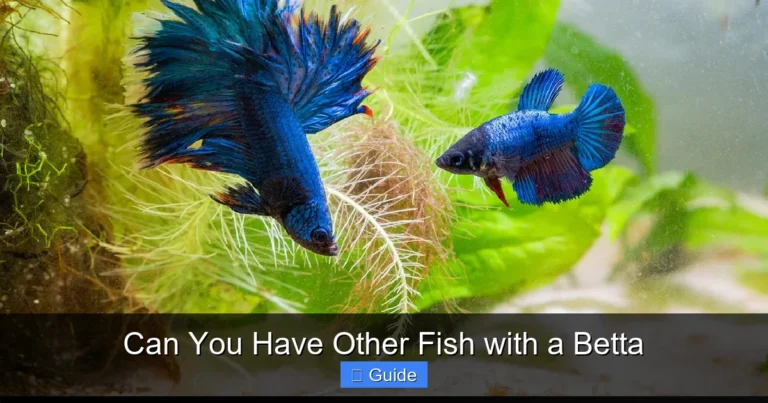
Today’s bettas are categorized by their tail and fin morphology. The Veiltail (VT) was the first long-finned variety, with a single, flowing tail that drapes like a veil. The Halfmoon (HM) is the pinnacle of show bettas, with a 180-degree tail spread. The Crowntail (CT) features tail rays that extend beyond the web, creating a spiky, crown-like effect. The Doubletail (DT) has two distinct tail lobes, giving a fuller appearance but often with shorter fins. The Rosetail is a variation of the halfmoon with extra, overlapping fin rays that create a rose-like fullness. The Dumbo Ear is prized for its enlarged, pectoral fins that resemble an elephant’s ears. Each type is the product of careful, multi-generational breeding to enhance specific genetic traits for fin length, shape, and symmetry.
The Rainbow of Colors
Wild bettas display only a few colors: dull reds, blues, and greens. Modern bettas, however, come in every color of the rainbow and beyond. This is achieved through layers of pigment cells (chromatophores) in the skin: melanin (black/brown), xanthophores (yellow), erythrophores (red), and iridophores (blue/green, which reflect light). Breeders have mastered combining these layers. Colors like “Mustard Gas” (yellow body with blue/black fins) or “Galaxy” (iridescent blues and purples) are complex results of stacking these pigments. The solid, vibrant “red” or “blue” is actually a lack of certain pigment layers. There are also patterns: marbles (shifting colors), butterflies (distinct color blocks), and koi (mottled, fish-like patterns). This color breeding, while stunning, can sometimes be linked to genetic weaknesses, such as reduced hardiness or the “cross of steel” condition (bent spine) in some lines.
Understanding Your Betta’s Origins for Better Care
Knowing where a betta comes from is not just trivia; it’s the blueprint for proper care. The disconnect between a betta’s wild biology and its common portrayal as a low-maintenance “disposable” pet is the root of most welfare issues.
Mimicking the Natural Environment
Your goal is to recreate key elements of the Southeast Asian floodplain. Water Temperature: This is non-negotiable. Their native waters are consistently warm (78-80°F / 25.5-26.5°C year-round). A heater is essential in most climates. Cold water suppresses their immune system and metabolism. Tank Size and Setup: Forget the myth of the “bowl.” A minimum of 5 gallons (19 liters) is the widely accepted standard for a single betta. This provides stable water parameters and space to establish a territory. The tank must have a secure lid (they are skilled jumpers) and, critically, gentle surface access for their labyrinth organ. Avoid strong filtration currents; a gentle sponge filter or a hang-on-back filter with a flow baffle is ideal. Hiding Places: Dense vegetation, live or silk plants, and decorations like caves or driftwood are vital. They provide security, break up sightlines to reduce stress, and mimic the thick cover of their wild home. Floating plants are especially beneficial, as bettas in the wild often build bubble nests at the surface under overhanging foliage.
Feeding: Carnivorous Needs
Wild bettas are micro-predators, eating insects, larvae, and tiny crustaceans. They are not plant-eaters. A diet of solely flake or pellet food is inadequate. High-quality betta pellets should be the staple, but they must be supplemented with live or frozen foods like daphnia, brine shrimp, mosquito larvae, or bloodworms 2-3 times a week. This provides essential protein and aids digestion. Overfeeding is a major cause of constipation and swim bladder issues; a betta’s stomach is roughly the size of its eye. Feed only what it can consume in 2-3 minutes, once or twice daily.
Social Behavior: Respecting the Fighting Spirit
The cardinal rule, born from fighting heritage and territorial nature: never house two male bettas together. They will fight to the death. Female bettas can sometimes be kept in sorority groups (5+ females in a large, heavily planted tank), but this requires expert-level management and is not recommended for beginners. The idea of a “betta community” is possible but fraught with risk. Tank mates must be chosen with extreme care: they should be non-aggressive, not have long, flowing fins (which trigger a betta’s instinct to nip), and be able to thrive in the warm water. Good candidates include small, fast schooling fish like neon tetras (in a large enough school), ember tetras, or harlequin rasboras, and certain bottom-dwellers like kuhli loaches or harmless shrimp like cherry or ghost shrimp (with the understanding some bettas may see them as food). Always have a backup plan and a separate quarantine tank.
Conclusion: A Fish Steeped in History
The betta fish in your living room is the product of a remarkable journey. It began as a tough, resourceful survivor in the seasonal swamps of Southeast Asia, its labyrinth organ a brilliant adaptation to a challenging world. Humans, first in Thailand, saw in this small fish a symbol of courage and a catalyst for wagers, shaping its behavior through centuries of selective breeding for the arena. Then, a shift occurred: the appreciation for its form overtook the appetite for its fight, leading to an artistic explosion of color and finnage that captivates us today.
This history is not a dusty relic; it is alive in every flare of a male’s gills, in every bubble nest he builds at the surface, in his need for warm, still water and a territory to call his own. To keep a betta is to be a steward of this legacy. It means providing an environment that honors its wild roots—a warm, spacious, planted sanctuary with clean water and a surface to breathe. It means understanding that its aggression is a cultural artifact, not a personal failing, and managing its interactions accordingly. By looking past the commercialized image of the “low-maintenance” fish in a cup and seeing the descendant of the rice paddy warrior, we move from mere ownership to responsible guardianship. The betta’s story is one of transformation, and with informed care, we can ensure its next chapter is one of health, vibrancy, and respect for its extraordinary past.
Frequently Asked Questions
Are betta fish naturally aggressive?
Wild bettas are territorial but not inherently aggressive towards other species. The intense aggression seen in many captive males is a direct result of centuries of selective breeding for fighting. A wild-type or plakat betta may show less aggression than a highly bred halfmoon, but all males retain strong territorial instincts.
Can betta fish live with other fish?
It is possible but requires careful planning. Tank mates must be non-aggressive, fast-moving, and not have long, flowing fins that trigger the betta’s instinct to nip. Suitable species include small schooling fish like neon tetras or harlequin rasboras, and some bottom-dwellers. A heavily planted 20+ gallon tank is strongly recommended for any community setup.
What is the average lifespan of a betta fish?
With proper care—including a heated, filtered tank of at least 5 gallons, a varied diet, and regular water maintenance—a betta fish can live 3 to 5 years, and sometimes longer. Bettas kept in small, unheated bowls often only survive 1-2 years due to chronic stress and poor water quality.
Why do betta fish change color?
Betta color can change due to a few reasons. “Stress stripes” are horizontal pale stripes that appear on a stressed fish. More positively, “marble” bettas have a genetic trait that can cause their colors and patterns to shift over their lifetime. A healthy betta in a good environment may also deepen in color as it matures.
Do betta fish need a heater?
Absolutely. Originating from the tropical waters of Southeast Asia, bettas require consistently warm water between 78-80°F (25.5-26.5°C). Cold water slows their metabolism, compromises their immune system, and makes them susceptible to diseases like dropsy. An adjustable aquarium heater is essential for their long-term health.
What is the difference between a wild betta and a pet store betta?
Wild bettas (Betta splendens) are drab green/brown with short fins, are smaller, and are adapted to survive in harsh, oxygen-poor environments. Pet store bettas are the result of over a century of intensive selective breeding for vibrant colors and elaborate fins (like halfmoons or crowntails). They are genetically distinct from their wild counterparts and are almost exclusively captive-bred, with no wild fish in the modern pet trade.