Where Can You Find Betta Fish in the Wild
Wild betta fish are not found in pet stores but in the shallow, warm waters of Southeast Asia. They inhabit rice paddies, slow-moving streams, and muddy ponds in Thailand, Cambodia, Vietnam, and Malaysia. Their famous aggression and labyrinth organ are evolutionary traits for surviving in these challenging, oxygen-poor environments. Understanding their wild origins is crucial for proper care and conservation.
Key Takeaways
- Native Range: Wild bettas (Betta splendens) are indigenous to the Chao Phraya and Mae Khlong basins of central Thailand, with related species found across Southeast Asia.
- Habitat Specialists: They thrive in shallow, warm, slow-moving or stagnant bodies of water like rice paddies, drainage ditches, and forest swamps, often with heavy vegetation.
- Adaptations for Survival: Their labyrinth organ allows them to breathe atmospheric air, and their aggression is a trait for surviving in cramped, resource-limited spaces.
- Major Threats: Wild populations face severe threats from habitat destruction (palm oil, urban development), pollution, and hybridization with released pet store bettas.
- Not a “Starter Fish”: Their wild needs—stable warm temperatures, soft acidic water, and live food—are complex, contradicting their reputation as an easy pet.
- Conservation Status: While not currently listed as endangered, wild betta populations are declining, and their natural genetic diversity is at risk.
- Observation, Not Collection: Ethical wildlife observation focuses on appreciating their natural behaviors without disturbing habitats or removing fish.
📑 Table of Contents
- The Surprising Truth About Wild Betta Fish
- The Geographic Heartland: Southeast Asia’s Tropical Belt
- The Micro-Habitat: Decoding the Wild Betta’s Address
- Evolutionary Marvels: Adaptations for a Marginal Life
- A Day in the Life: Behavioral Ecology of the Wild Betta
- The Gathering Storm: Threats to Wild Betta Habitats
- Conservation and Ethical Observation: What Can Be Done?
- Conclusion: A Window into a Vanishing World
The Surprising Truth About Wild Betta Fish
When you picture a betta fish, you likely imagine a vibrant, frilly-finned creature in a small glass vase on a desk. This iconic image, sold by pet stores worldwide, is a world away from the resilient, wild animal that inspired it. The question “where can you find betta fish in the wild?” opens a door to a fascinating story of evolution, survival, and urgent conservation. The answer is not a global one; it is a specific, geographically limited truth centered in the tropical heart of Southeast Asia. These are not fish of clear mountain streams or vast oceans. They are masters of the shallow, warm, and often challenging edges of the aquatic world.
Understanding the wild betta’s true home is the first step toward becoming a more knowledgeable and responsible aquarist or simply an appreciator of nature. It shatters the myth of the “easy” fish and reveals a complex creature perfectly adapted to a niche environment that is rapidly disappearing. Let’s journey from the muddy paddies of Thailand to the hidden swamps of Cambodia to see the betta as it truly lives.
The Geographic Heartland: Southeast Asia’s Tropical Belt
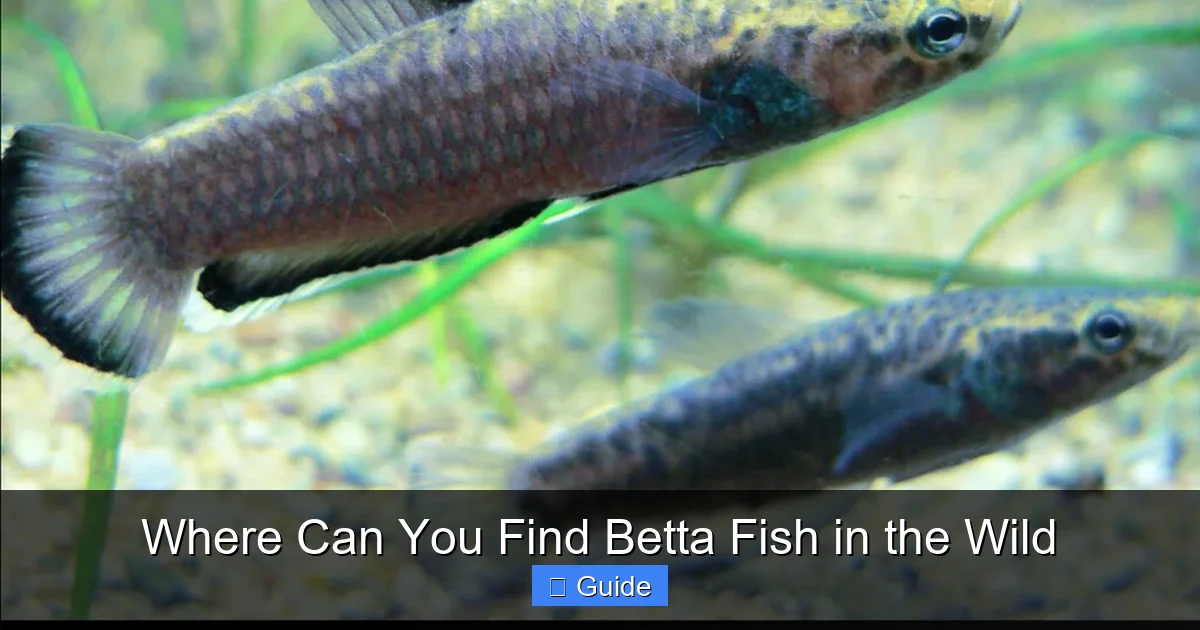
The wild betta fish, scientifically known as Betta splendens, has a native range that is surprisingly small. Its core habitat is the lowland river basins of central Thailand. Specifically, the fish is indigenous to the Chao Phraya River basin and the Mae Khlong River basin. These river systems drain the central plains of Thailand, creating a vast network of interconnected waterways, floodplains, and seasonal wetlands. This is the historical and genetic homeland of the bettas that eventually populated our aquariums.
Visual guide about Where Can You Find Betta Fish in the Wild
Image source: buildyouraquarium.com
Beyond Thailand: The Broader Betta Genus
While Betta splendens is the famous “Siamese fighting fish,” the genus Betta contains over 70 species, each with its own restricted range. If you expand the question beyond just the common betta, you find these labyrinth fish scattered across a wider but still specific part of the globe:
- Cambodia: Wild B. splendens populations are found in the Tonle Sap lake and its connecting rivers, as well as in smaller coastal drainages.
- Southern Vietnam: Species like Betta imbellis (the peaceful betta) and Betta smaragdina inhabit the peat swamps and slow streams of the Mekong Delta and adjacent areas.
- Malaysia & Indonesia: The Malay Peninsula and islands like Sumatra and Borneo host a high diversity of Betta species, such as Betta bellica and Betta pugnax, often in acidic blackwater streams and swamps.
- Southern Myanmar: The Tanintharyi region is home to several endemic Betta species.
This distribution pattern shows that bettas are a classic tropical Southeast Asian group, with their diversity hotspot in the ancient, peat-rich lowlands of the region. They are creatures of warm, stagnant or slow-flowing, often tannin-stained waters.
The Micro-Habitat: Decoding the Wild Betta’s Address
Knowing the country isn’t enough. To truly understand where a wild betta lives, you must zoom in to the micro-habitat. This is the specific, small-scale environment that meets all its survival needs. Wild bettas are not found in open water. They are habitat specialists of the littoral zone—the shallow margins where water meets land.
Visual guide about Where Can You Find Betta Fish in the Wild
Image source: i.ytimg.com
Primary Wild Habitats: Nature’s Betta Condos
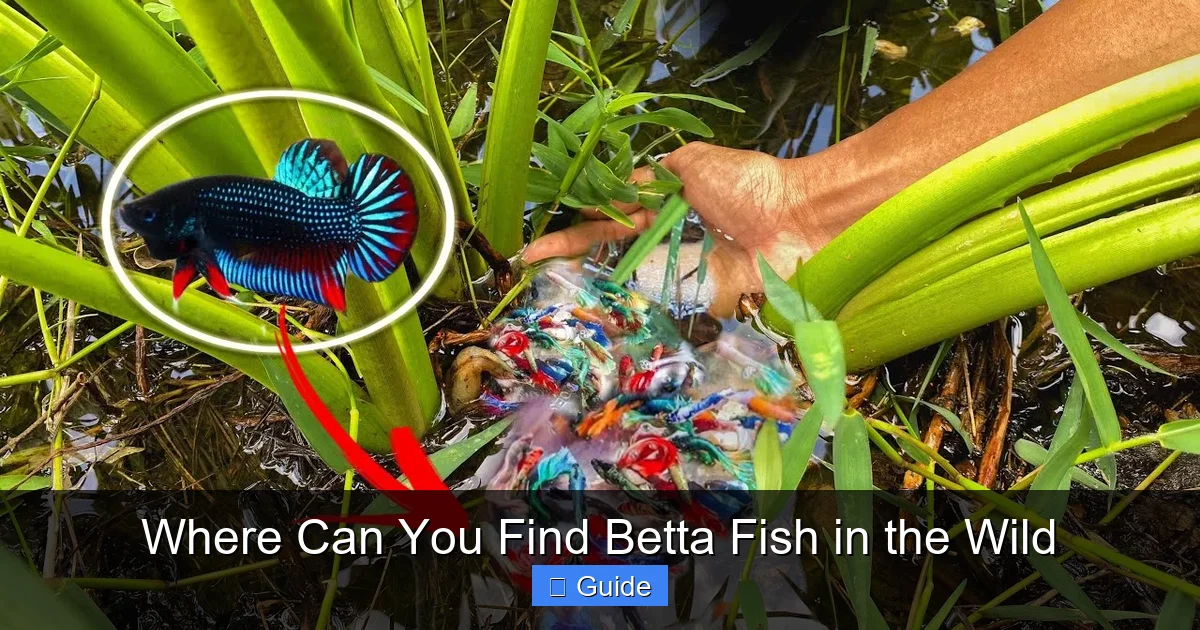
- Rice Paddies: This is the quintessential wild betta habitat. During the rainy season, flooded rice fields become vast, shallow, warm lagoons choked with aquatic plants. They provide ideal cover from predators, abundant insect prey, and the still or very slow-moving water bettas require. The water is often soft and slightly acidic from decomposing organic matter.
- Swamps & Peat Bogs: Forest swamps, particularly those with peat soil, create “blackwater” conditions. This water is darkly stained by tannins from decaying leaves, very soft (low mineral content), and acidic. These environments are nutrient-poor but teem with microfauna. Species like B. smaragdina are classic peat swamp dwellers.
- Drainage Ditches & Canals: Human-altered landscapes have ironically created new habitats. Slow-moving irrigation ditches and roadside canals, especially in rural Thailand and Cambodia, can support healthy betta populations if they have vegetation and no pesticides.
- Slow-Moving Stream Margins: In forested areas, bettas occupy the backwaters, leaf-litter-filled pools, and overhanging vegetated edges of otherwise clear, faster streams. They avoid the main current.
- Temporary Pools & Puddles: Their labyrinth organ is a key adaptation here. During the dry season, many of their habitats shrink to isolated, warming puddles or muddy depressions. The ability to gulp air allows them to survive in these oxygen-depleted conditions until the rains return.
The Critical Role of Vegetation and Cover
You will never find a wild betta out in the open. Dense aquatic vegetation—plants like Ceratophyllum (hornwort), Vallisneria, and various floating plants—is non-negotiable. It provides:
- Security: Hiding places from bird and snake predators.
- Breeding Sites: Males build bubble nests among plant stems or under overhanging leaves.
- Territorial Boundaries: In a dense plant maze, a male can claim a small patch as his territory.
- Food Source: The plants harbor infusoria, insect larvae, and other tiny prey.
The substrate is typically soft—silt, mud, or fine sand—often covered in fallen leaves and decaying plant matter. This detritus forms the base of the food web, supporting the microorganisms bettas eat.
Evolutionary Marvels: Adaptations for a Marginal Life
The wild betta’s habitat is not a pristine aquarium. It is a dynamic, often stressful environment with fluctuating oxygen levels, temperature spikes, and changing chemistry. Their famous traits are direct responses to these pressures.
Visual guide about Where Can You Find Betta Fish in the Wild
Image source: i.ytimg.com
The Labyrinth Organ: Breathing Air
This is the defining feature of all gouramis and bettas. It is a folded, vascularized structure above the gills that allows them to extract oxygen directly from the air. In their wild, stagnant waters, this is a lifesaver. On a hot, humid afternoon, a betta will rise to the surface every few minutes to take a gulp of air. This adaptation lets them live in conditions that would suffocate most other fish. It also means they are absolutely dependent on access to the air-water surface; a tight lid or deep, plant-choked tank without a clear surface area can be fatal.
Aggression and Territoriality: The “Fighter” Instinct
The betta’s notorious aggression, especially in males, is an evolutionary strategy for a habitat with limited, patchy resources. In a small, vegetated puddle, there is only so much space and food. A male betta establishes and fiercely defends a small territory centered around his bubble nest. This behavior ensures he has the resources to attract a female and rear young. In the wild, fights are usually brief displays and chases, not to the death, as the loser can retreat into the dense vegetation—a luxury not available in a small, bare aquarium or fighting cup.
Breeding Strategy: The Bubble Nest
The male betta’s elaborate bubble nest is a direct response to their environment. In waters with little oxygen and many egg-eating predators and microorganisms, a floating nest provides:
- Oxygenation: The bubbles are oxygen-rich, keeping the eggs and newly hatched fry (which have a rudimentary gill) in a well-oxygenated zone.
- Protection: It keeps the eggs off the muddy, microbe-rich bottom where they would quickly fungus and die.
- Camouflage: The nest often incorporates bits of plant material and debris, making it less conspicuous.
The male meticulously tends this nest, repairing it and retrieving any eggs or fry that fall.
A Day in the Life: Behavioral Ecology of the Wild Betta
Imagine a warm, still morning in a Thai rice paddy just after the monsoon. The water is a mirror reflecting the sky, littered with green patches of water hyacinth and duckweed. Here, a wild male betta goes about his business. He is not swimming in open water. He is a horizontal creature, patrolling the vertical stems of plants, his body held rigid, his flared gills a sign of his ownership of this small column. His diet consists of whatever falls into his territory: mosquito larvae, tiny water beetles, small crustaceans like Daphnia, and insect eggs.
Activity Patterns: Crepuscular Creatures
Wild bettas are most active during dawn and dusk—the “golden hours” of the tropics. During the intense midday heat, they may rest quietly among vegetation, breathing air more frequently. Their activity is a balance between foraging and conserving energy in an environment that can heat up rapidly under the sun.
Social Structure: Solitary with Purpose
Outside of breeding, wild bettas are solitary. A single male occupies his vegetative patch. Multiple females may pass through his territory, but they are not “schooling” with him. A female’s role is to select a male with a good territory and a well-built bubble nest. She will inspect the nest, and if she approves, she will spawn with him, depositing her eggs as he milks them from her body. After spawning, the female is often chased away, as she is a potential egg-eater. The male then assumes sole responsibility for the nest, fanning it with his fins to provide oxygen and water flow, and vigilantly guarding it.
The Gathering Storm: Threats to Wild Betta Habitats
The very habitats that nurtured the betta for millennia are under unprecedented assault. The question “where can you find them?” is becoming harder to answer each year. The primary threats are not targeted fishing but large-scale habitat destruction.
1. Agricultural Expansion, Especially Palm Oil
The single greatest threat is the conversion of natural wetlands and lowland forests into monoculture plantations, particularly oil palm. Vast areas of peat swamp forest in Malaysia and Indonesia—home to unique Betta species—have been drained and burned to make way for plantations. This destroys the blackwater ecosystem completely. In Thailand, the expansion of agricultural land and infrastructure continues to shrink and fragment the remaining natural floodplains and swamps.
2. Pollution and Pesticide Runoff
The shallow waters bettas inhabit are directly in the path of agricultural runoff. Fertilizers cause algal blooms that deplete oxygen. Pesticides and herbicides are acutely toxic to fish and destroy the insect larvae and microfauna that form the betta’s food web. In Thailand’s intensive rice-growing regions, chemical pollution is a severe problem.
3. Urbanization and Infrastructure
As cities expand, wetlands are filled in for development. Canals are lined with concrete, removing all vegetation and natural substrate. Water extraction for human use lowers water tables, causing seasonal pools to dry up permanently.
4. Genetic Swamping from Released Captive Bettas
This is a silent, insidious threat. Millions of pet store bettas, often hybrids of various wild lineages and selectively bred for extreme colors and fins, are released into the wild—either intentionally or through flooding. These fish can interbreed with wild populations. Over time, this dilutes the unique genetic adaptations that local wild populations have developed over thousands of years. It can also introduce diseases to which wild bettas have no immunity. A wild betta population that starts to look like a pet store fish is a population losing its wild genetic integrity.
Conservation and Ethical Observation: What Can Be Done?
The future of the wild betta is not hopeless, but it requires awareness and action. Conservation efforts are multifaceted.
Supporting In-Situ Conservation
In-situ (in the wild) conservation focuses on protecting habitats. This means supporting:
- Protected Areas: National parks and wildlife sanctuaries that include lowland peat swamps and wetlands (e.g., Khao Yai National Park in Thailand has some relevant habitats).
- Sustainable Agriculture: Consumer pressure for sustainably sourced palm oil (RSPO certification) can help reduce deforestation.
- Wetland Restoration: Projects that restore natural hydrology to degraded peatlands and floodplains.
The Role of Responsible Aquarists
The aquarium hobby has a direct responsibility. The chain starts with the wild-caught fish that were the foundation of the modern betta. Today:
- Seek Captive-Bred Stock: Never buy a fish advertised as “wild-caught” unless from a highly reputable, conservation-focused breeder. The vast majority of bettas in the trade are captive-bred, and that is the ethical choice.
- Never Release Pet Fish: This is paramount. A released betta is a potential ecological disaster and a genetic threat. If you can no longer care for a fish, find it a new home or surrender it to a reputable aquarium society or rescue.
- Replicate Their Wild Needs: By providing a spacious, planted tank with warm, soft water, a surface for air-breathing, and a varied diet, you are not just keeping a pet—you are simulating the complex world they come from. This respect for their biology is a form of conservation in itself.
Ethical Wildlife Observation
For the naturalist wanting to see a wild betta:
- Go with Local Experts: Hire a local guide from a conservation NGO. They know the habitats and ethical viewing practices.
- Observe, Don’t Disturb: Use binoculars. Do not wade into sensitive habitats, chase fish with nets, or collect them.
- Support Local Ecotourism: Your visit funds conservation if done correctly. Look for initiatives that protect wetlands and involve local communities.
The best way to “find” a wild betta is to support the preservation of the rice paddies, swamps, and slow streams they call home. Their survival is tied to the health of these marginal, often overlooked ecosystems.
Conclusion: A Window into a Vanishing World
The answer to “where can you find betta fish in the wild?” is a precise geographical and ecological pinpoint: in the warm, shallow, vegetated, and often challenging waters of Southeast Asia’s lowland wetlands. They are not fish of the open water but of the crowded, plant-filled edges. Their legendary aggression, their need to breathe air, their bubble nests—all are brilliant adaptations to this specific niche. This wild heritage is a stark contrast to their common portrayal as a simple, decorative desk ornament.
This knowledge carries a weight of responsibility. The habitats that shaped the betta are among the most threatened on the planet. The next time you see a betta in a store—a flash of red and blue, a veil of flowing fins—remember the muddy, green, mosquito-filled paddy field it came from. Remember the evolutionary journey that created that labyrinth organ. By understanding and respecting its wild origins, we can move from being mere owners to becoming stewards. We can ensure that the wild betta’s story continues to be written in the sun-dappled waters of Southeast Asia, not just in the glass tanks of our homes. The most beautiful betta is the one thriving, wild and free, in its vanishing home.
Frequently Asked Questions
Are pet store bettas from the wild?
Almost never. The vast majority of bettas sold worldwide are captive-bred over many generations in commercial fish farms, primarily in Thailand. Wild bettas are rarely, if ever, sourced for the pet trade due to conservation concerns and their less flashy appearance compared to selectively bred varieties.
Can wild betta fish survive in cold water?
No. Wild bettas are tropical fish native to waters that consistently stay between 75°F and 85°F (24°C – 29°C). Their metabolism and labyrinth organ function are optimized for these warm temperatures. Exposure to cold water (below 70°F/21°C) severely compromises their immune system and can be fatal.
Can I go find and catch a wild betta fish myself?
Ethically and legally, you should not. In their native countries, collecting wild bettas may be regulated or illegal without special permits to protect populations. More importantly, their habitats are fragile. Trampling vegetation, disturbing sediment, and removing fish can severely damage a small, isolated population. Appreciation should be through observation only.
Are wild bettas more aggressive than pet store bettas?
Not necessarily. Pet store bettas, especially males, are often selectively bred for heightened aggression for fighting. Wild bettas exhibit strong territorial behavior, but in their vast, densely vegetated habitats, disputes are usually brief displays. A wild betta in a bare tank might appear more aggressive due to extreme stress and lack of escape routes.
What do wild betta fish eat?
Wild bettas are opportunistic carnivores. Their diet consists of insects and larvae that fall into the water (mosquitoes, midges), small crustaceans (water fleas, copepods), zooplankton, and occasionally tiny worms. They are surface and mid-level predators, not algae eaters.
How can I tell if my betta is a wild-type or a captive breed?
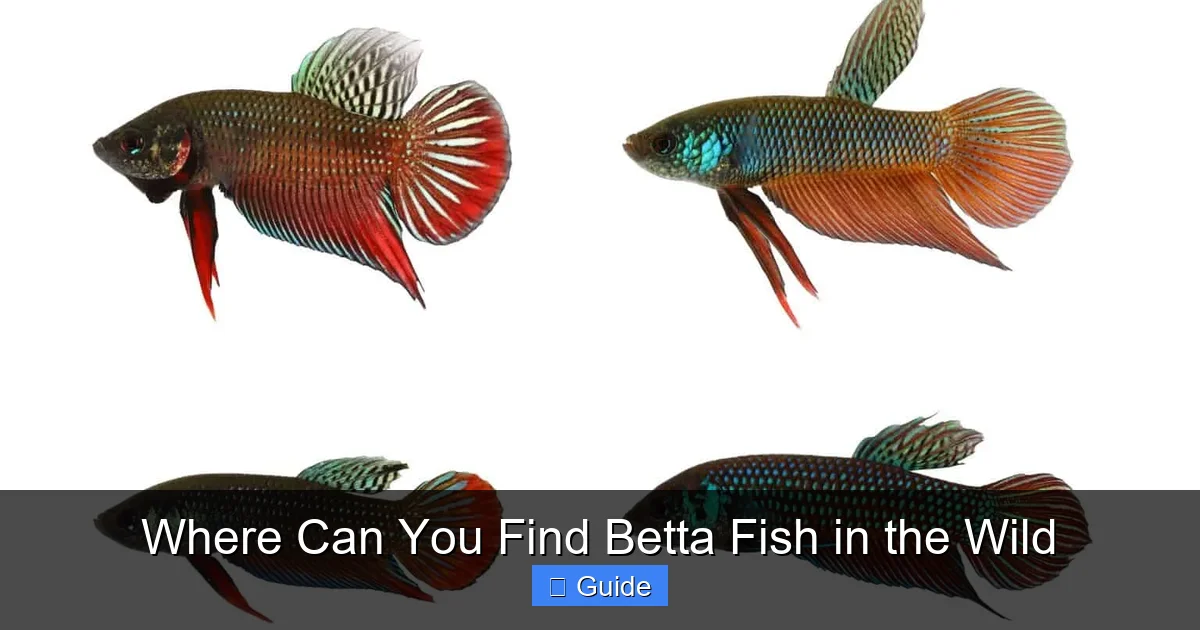
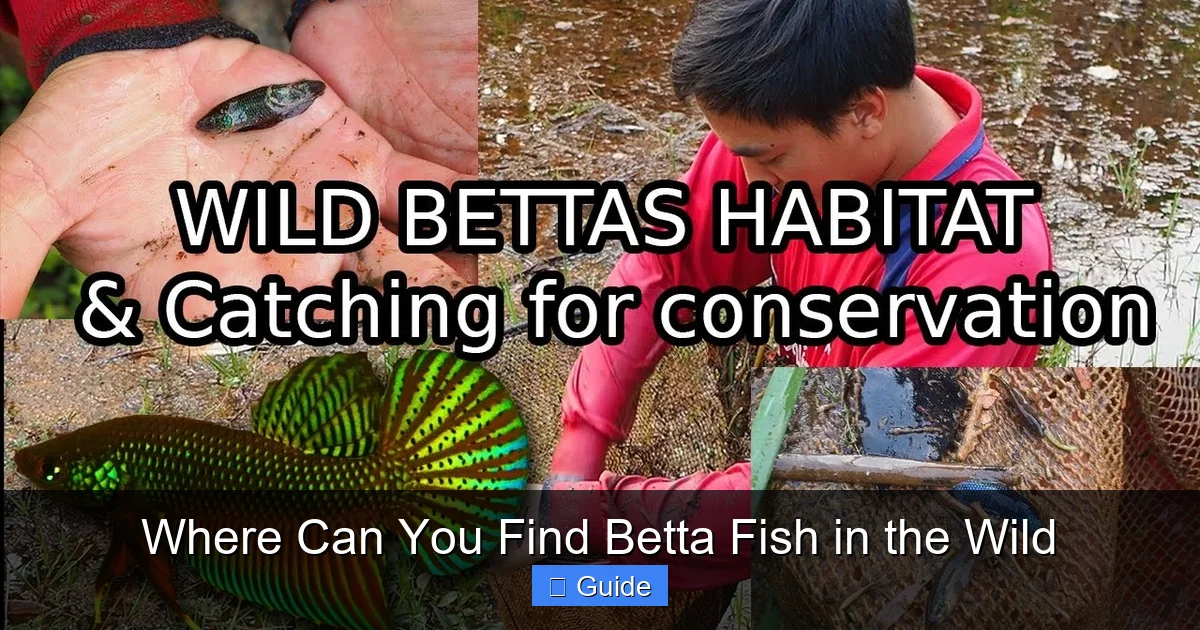
Wild-type bettas (Betta splendens) have short, rounded fins (especially the tail), and their color is typically a muted, iridescent blue, green, or red with minimal patterning. Captive breeds have been developed for long, flowing fins (veiltail, halfmoon, rosetail) and intense, solid, or multicolored patterns (marble, koi) that are not seen in nature. A short-finned, subtly colored betta is closer to the wild form.