When Do Betta Fish Die
Betta fish typically live 2-5 years in captivity, but many die prematurely due to poor care. Their lifespan is heavily influenced by water quality, diet, tank size, and genetics. Misconceptions about their hardiness often lead to neglect, drastically shortening their lives. By providing a heated, filtered, properly sized tank with a balanced diet, owners can significantly increase their betta’s chances of reaching the upper end of their lifespan.
So, you have a beautiful betta fish, with its flowing fins and vibrant colors, swimming gracefully in its home. You’ve probably wondered, as you watch it flare at its reflection or lazily drift among the plants: “When do betta fish die?” It’s a natural question, but the answer isn’t a simple number. The date on a betta’s “expiration” is less about fate and more about the daily choices you make as its caregiver. This isn’t a morbid inquiry; it’s the key to unlocking a long, vibrant life for your aquatic companion. Understanding the factors that determine a betta’s lifespan transforms you from a passive owner into an active steward of its wellbeing.
The common, heartbreaking answer to “when do betta fish die” is far too often: “much sooner than they should.” The myth of the hardy, disposable fish, perpetuated by their sale in tiny cups, leads to catastrophic care. Bettas, or Siamese fighting fish, are complex, tropical creatures with specific needs. Their average lifespan in the wild is around 2 years, but with proper captive care, they routinely live 3-5 years, and some exceptional individuals reach 7 or 8. The stark difference between these two timelines is everything. This article will dissect the precise biological and practical factors that answer the question of betta mortality. We will move beyond the simplistic “they live 2 years” myth and explore the cascade of events—from water chemistry to genetics—that ultimately decides when your betta’s story ends.
Key Takeaways
- Average Lifespan: A well-cared-for betta fish lives 3-5 years, with some reaching 6-7. Many die within 1-2 years due to improper housing.
- Water Quality is Critical: Poor water quality from lack of filtration, infrequent changes, and wrong temperature is the #1 cause of premature betta death.
- Tank Size Matters: The cruel “bowl myth” kills. Bettas need a minimum 5-gallon heated and filtered tank to thrive long-term.
- Diet Directly Impacts Health: Overfeeding and a poor diet (like only pellets or live foods) causes constipation, swim bladder disease, and organ failure.
- Genetics & Source: Bettas from big-box stores or breeding mills often have weak immune systems due to inbreeding and poor genetics, leading to shorter, sicklier lives.
- Stress is a Silent Killer: Constant stress from poor water, incompatible tank mates, or loud environments weakens their immune system, making them susceptible to disease.
- Disease Progression is Fast: Bettas are delicate. Visible signs of illness (clamped fins, lethargy) often mean the internal condition is severe and fatal if not treated immediately.
📑 Table of Contents
- Understanding the Natural Betta Lifespan
- The Primary Killer: Water Quality & Parameters
- The Diet Dilemma: Feeding for Longevity
- Tank Setup: Beyond the Decorative Bowl
- Genetics and the Source of Your Betta
- Common Diseases and the Speed of Decline
- Maximizing Your Betta’s Lifespan: The Proactive Approach
- Conclusion: Your Betta’s Lifespan is in Your Hands
Understanding the Natural Betta Lifespan
To grasp why bettas die when they do, we must first establish a baseline. In the shallow, warm rice paddies and slow-moving streams of Southeast Asia, bettas face predators, pollution, and territorial disputes. Their natural lifespan is a tough, short struggle, rarely exceeding two years. This evolutionary history is crucial. Their labyrinth organ, which allows them to breathe atmospheric air, is an adaptation to survive in oxygen-poor, stagnant water—a trait that tragically leads many to believe they thrive in such conditions. They survive in them; they do not thrive. This adaptation is for emergency survival, not optimal health.
The captive betta’s potential is vastly different. In a stable, clean, warm, and enriching environment with consistent, high-quality food, their bodies are not expending energy on basic survival. That energy is redirected to growth, immune function, and vibrant coloration. This shift can nearly double or triple their expected lifespan. The “when” becomes a range: 3-5 years for the average attentive owner, with 5+ years being a testament to exceptional care. The “when” for the neglected betta in a cold, dirty bowl is often measured in months. The single biggest variable in the equation of “when do betta fish die” is the quality of the artificial environment we provide.
The Biology Behind the Years
A betta’s body is a complex system of delicate fins, a labyrinth organ, and a sensitive lateral line. Their cells, like all vertebrates, undergo senescence—the gradual deterioration of function. However, the rate of this cellular aging is profoundly affected by external stressors. Chronic stress elevates cortisol, which suppresses the immune system. Poor water quality introduces toxins like ammonia and nitrite that directly damage gill tissues and internal organs. A suboptimal diet leads to fatty liver disease and constipation, which can precipitate fatal swim bladder disorders. The “when” of death is, in many cases, the cumulative result of these slowly accumulating insults. A betta living in pristine conditions ages more slowly at the cellular level than one fighting daily to maintain homeostasis in a toxic cup.
The Primary Killer: Water Quality & Parameters
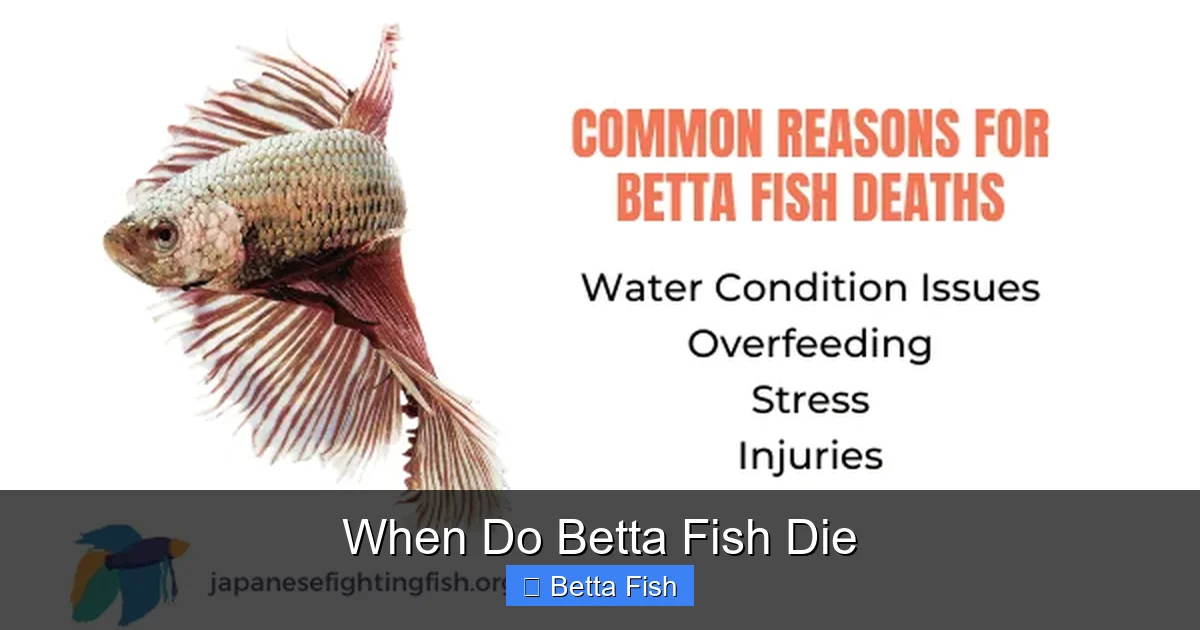
If you were to identify a single villain in the story of “when do betta fish die,” it is almost always poor water quality. This encompasses three critical areas: temperature, filtration, and toxin levels. Bettas are tropical fish, native to waters that consistently sit between 75°F and 82°F (24°C–28°C). Their metabolism, immune function, and digestive processes are calibrated to this range. Water that is too cold (below 74°F/23°C) slows their metabolism to a crawl, leading to lethargy, loss of appetite, and a crippled immune response. It is a slow, chilling death. Water that is too warm (above 84°F/29°C) accelerates metabolism unsustainably, increases oxygen demand (a problem in stagnant water), and can cause heat stress and organ strain.

Visual guide about When Do Betta Fish Die
Image source: japanesefightingfish.org
The absence of a filter is the second part of this deadly duo. A filter does two essential jobs: it mechanically removes debris and, more importantly, it houses beneficial bacteria that perform the nitrogen cycle. This cycle converts toxic fish waste (ammonia) into less harmful nitrite, and finally into nitrate. In an unfiltered bowl, ammonia builds up within days from the betta’s own gills and waste. Ammonia burns gills and skin, causing immense stress and pain. It is a poison that leads to rapid respiratory failure and death. “Frequent water changes” in a tiny, unfiltered vessel are merely a stressful band-aid; they do not establish the stable biofiltration necessary for long-term health. The question “when do betta fish die” in this scenario is answered: “as soon as the ammonia spikes, which is often weekly.”
The Nitrogen Cycle: Your Non-Negotiable Foundation
Cycling a tank is the single most important technical step in betta keeping. It means establishing a population of Nitrosomonas bacteria (to eat ammonia) and Nitrobacter bacteria (to eat nitrite). This process takes 4-6 weeks. During this time, you are building a living ecosystem that will process waste safely. A cycled filter is a constant, silent guardian. Without it, you are managing a toxic waste dump. Testing water parameters with a liquid test kit (not strips) is non-negotiable. You must know your ammonia (0 ppm), nitrite (0 ppm), and nitrate (under 20 ppm) levels. High nitrates from infrequent water changes also cause long-term organ damage. Consistent, partial water changes (25-50% weekly in a cycled tank) are for maintaining nitrate levels, not for preventing ammonia poisoning in an uncycled system. The betta dying from water toxicity isn’t “sick”—it’s being slowly poisoned by its own environment.
The Diet Dilemma: Feeding for Longevity
You are what you eat, and this is exponentially true for a betta fish. Their short digestive tracts are designed for a carnivorous diet of insects, larvae, and zooplankton in the wild. The staple of many betta diets—low-quality pellets—often contain fillers like wheat, soy, and potato that their systems cannot process efficiently. Overfeeding these fillers is the #1 cause of constipation, which compresses the swim bladder, leading to the infamous “swim bladder disorder” where the fish floats upside down, sinks, or swims erratically. This is not a disease; it is a symptom of a poor diet and often, overfeeding. A constipated betta is a stressed betta, and a stressed betta is a betta whose “when” is coming sooner.
Visual guide about When Do Betta Fish Die
Image source: japanesefightingfish.org
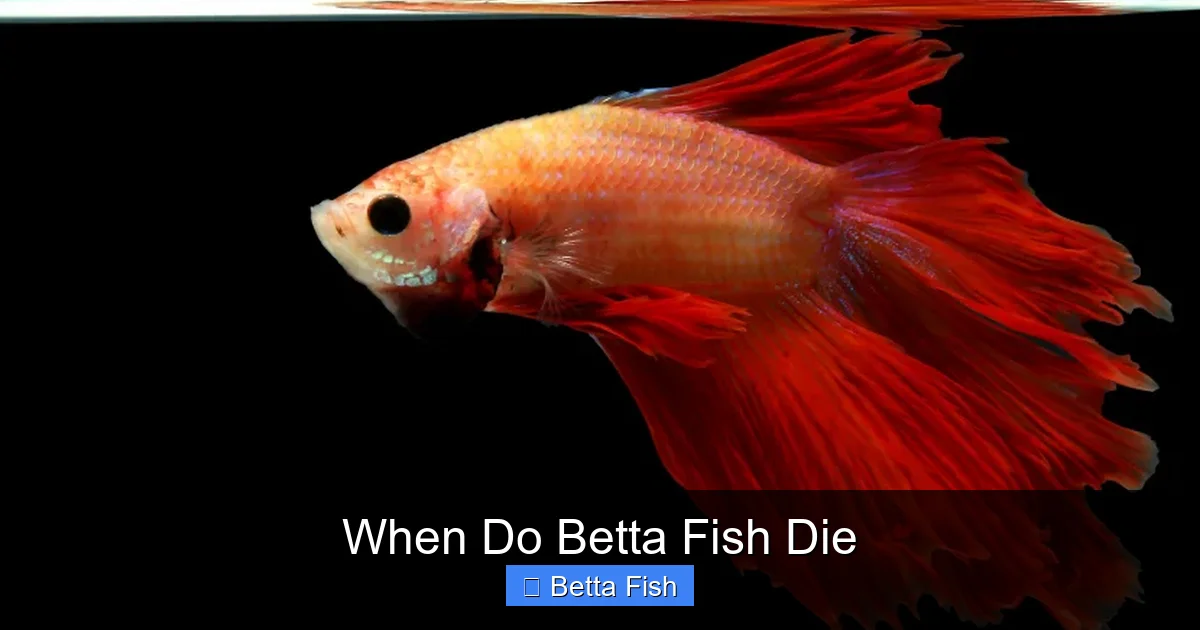
True betta nutrition is about quality, variety, and moderation. High-quality pellets or granules should be the base, with ingredients like whole fish, shrimp, or squid at the top of the list. These should be supplemented with occasional high-protein treats: frozen or live daphnia (a natural laxative), brine shrimp, or bloodworms. **The rule of thumb is to feed an amount no larger than the betta’s eye, once or twice a day.** Any food not eaten in 2-3 minutes must be siphoned out to decay and pollute the water. A fast once a week (skipping a feeding) is beneficial for their digestive system. A well-nourished betta has strong fins, intense colors, a robust immune system, and clear eyes—all signs of a fish on the longer end of the lifespan spectrum. A malnourished or constipated betta is on the fast track to an early grave.
Recognizing Dietary Distress
The signs of poor diet are often subtle at first. You might notice stringy feces hanging from the fish, a slight swelling near the vent, reduced activity after feeding, or faded colors. The acute sign is swim bladder dysfunction. If your betta is struggling to swim normally, immediately fast it for 3 days. On the 4th day, offer a cooked, skinned pea (a natural laxative for humans, effective for fish due to its fiber) or a small piece of daphnia. Prevention, however, is everything. Establish a proper feeding routine from day one. The moment you answer “what do I feed my betta?” with “just pellets” or “a bunch of bloodworms every day,” you have directly influenced the answer to “when do betta fish die.”
Tank Setup: Beyond the Decorative Bowl
The iconic image of a betta in a small, plant-filled vase or bowl is arguably the greatest disservice done to this species. It is the visual root cause of their premature death. A betta’s territory in the wild is not a puddle; it is a section of a slow-moving stream or rice paddy with plants to explore, surfaces to rest on, and room to patrol. Confining them to a gallon or less of water is akin to locking a dog in a closet for life. The stress of this confinement, combined with the rapid water quality deterioration in such a small volume, is a guaranteed path to an early death. The minimum recommended tank size for a single betta is 5 gallons. This volume provides stable water parameters, dilutes toxins, and allows for a proper heater and filter to function effectively without creating a torrential current.
Visual guide about When Do Betta Fish Die
Image source: buildyouraquarium.com
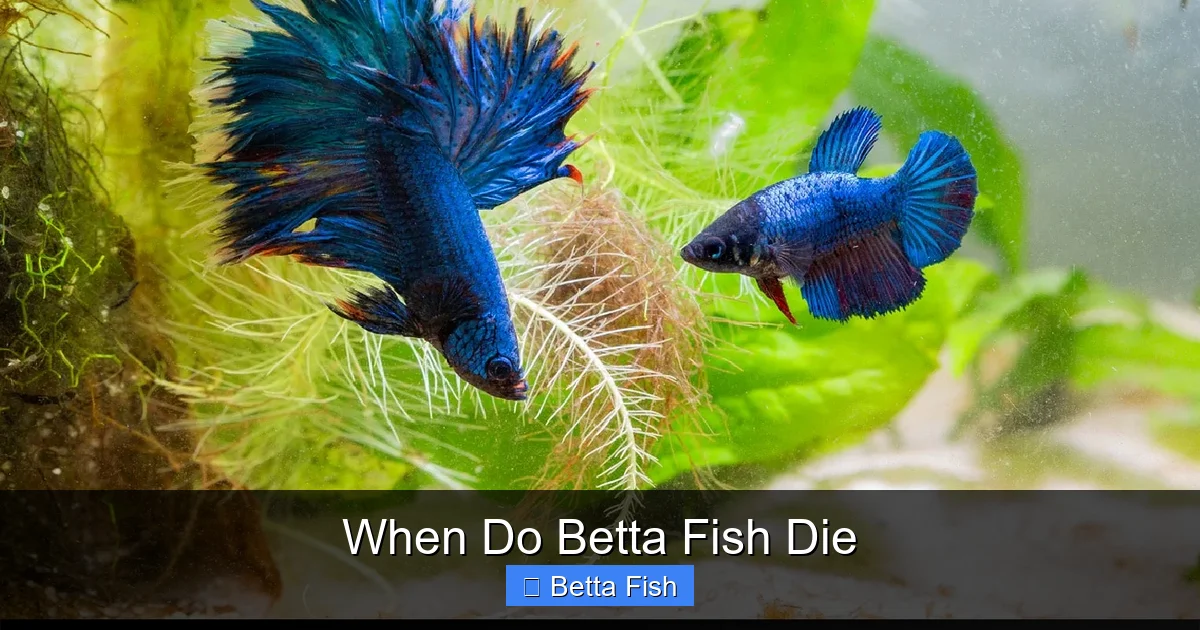
Within this tank, enrichment is vital. Bettas are intelligent, curious fish. A bare tank is a sensory deprivation chamber. Provide silk or live plants (like Anubias or Java Fern) for them to rest on and explore. Add smooth, non-abrasive decorations like ceramic pots or PVC pipes to create caves and break lines of sight. This reduces stress by giving them a sense of security and ownership. The substrate (sand or smooth gravel) should be fine enough not to damage their delicate fins. Avoid sharp rocks or rough plastic decor. A tank that mimics a natural, complex environment stimulates natural behaviors—building bubble nests (males), exploring, resting—which is a direct indicator of good mental and physical health. A bored, stressed betta in a barren tank is a betta whose lifespan is being shortened by chronic ennui and cortisol.
Heating and Filtration: The Engine of Life
We must revisit these two pillars. A heater is not optional; it is essential. An ambient room temperature that feels comfortable to you is not sufficient. It fluctuates and is often too cool. A reliable, adjustable aquarium heater (25-50 watts for a 5-gallon tank) set to 78-80°F (25.5-26.5°C) provides the stable warmth their bodies require. Use a separate thermometer to verify the heater’s accuracy. A filter is equally essential. For a betta, the flow should be gentle. Sponge filters are excellent, as are hang-on-back (HOB) filters with flow adjusters. The sound and vibration of the filter also provide environmental enrichment—the gentle hum is familiar and reassuring. A tank without a heater is a cold cell; a tank without a filter is a chemical reactor. Both will answer “when do betta fish die” with “sooner than you think.”
Genetics and the Source of Your Betta
Here lies a harsh, often overlooked truth: not all bettas are created equal. The flamboyant, large-finned bettas sold in big-box stores are the product of generations of intense, sometimes unethical, selective breeding for extreme traits. The massive, heavy fins of a Halfmoon or Rosetail are beautiful but come at a cost. They are energetically expensive to maintain, harder to swim with, and more prone to tearing. More insidiously, the breeding practices that prioritize color and finnage over health have often led to weakened immune systems and genetic predispositions to diseases like dropsy or tumors.
The source of your betta is the first genetic gamble. Bettas from reputable breeders who prioritize health, vigor, and moderate finnage (like Plakats or some Halfmoons from health-conscious lines) often have far more robust constitutions. They are less likely to develop fin rot, are better swimmers, and generally hardier. Bettas from large-scale commercial breeders, shipped across countries in tiny bags, are often stressed, immunosuppressed, and carrying latent diseases. Their genetic lottery ticket is a losing one. When you buy a betta from a source that does not prioritize health, you are statistically increasing the probability that “when do betta fish die” will be a date much closer to the purchase date. Choosing your betta’s origin is choosing its genetic lottery ticket.
The Hidden Cost of “Fancy”
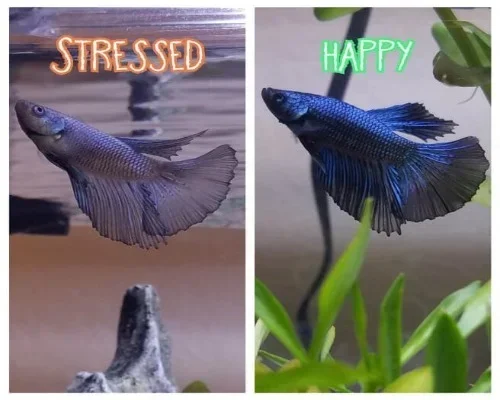
Extreme finnage can directly cause death. A betta with a massive, heavy tail can struggle to reach the surface to breathe its labyrinth air. It can become exhausted, sink, and drown (yes, fish can drown if they cannot reach the surface). These fins also create more surface area for water to cling to, making the fish work harder to move and increasing the risk of fin rot from constant moisture and poor water flow. A simpler, more athletic fin type (like a Plakat) is not only more active and interactive but is also built for longevity. When selecting your betta, observe its activity in the cup. Is it alert and responsive, or listless and clamped? The latter is a sign of a compromised immune system, often from poor genetics and chronic stress at the store. This initial observation is your first clue to its potential lifespan.
Common Diseases and the Speed of Decline
Bettas do not get “a little sick.” Their decline is often swift and severe because their small bodies have little reserve. A disease that might take weeks to manifest in a larger fish can kill a betta in days. The most common culprits are fungal infections (white cotton-like growths), bacterial infections (fin rot, red sores, bloating), and parasitic infections (ich—white spots). However, the most frequent “disease” is actually Columnaris, a bacterial infection that appears as frayed, rotting fin edges or mouth ulcers, often triggered by poor water quality and stress. The progression is terrifyingly fast. One day your betta is fine; the next, its fins are disintegrating.
The key to surviving disease is two-fold: pristine water and immediate, targeted treatment. In a cycled, clean tank, a betta’s immune system can often fight off minor issues. But once visible symptoms appear, the internal battle is already lost. You must act within hours. This means having a hospital tank set up and a basic medicine cabinet (e.g., Methylene Blue for fungus/eggs, Kanamycin or Furan-2 for bacterial, Malachite Green for parasites) ready. The “when” of death from disease is determined by your response time. A 12-hour delay can be fatal. Furthermore, many diseases are secondary to poor water. Treating the symptom (the sore) without curing the cause (the ammonia) is pointless. The fish will get sick again. This is why water quality is the foundational pillar of disease prevention. A betta in a perfect tank may never get sick. A betta in a compromised tank is a ticking time bomb.
Swim Bladder Disorder: A Symptom, Not a Disease
As mentioned, SBD is the most commonly searched betta ailment. It’s crucial to understand it is almost always a symptom of another problem: constipation from overfeeding/poor diet, bacterial infection, parasites, or physical injury. The erratic swimming is distressing to watch. The treatment protocol starts with fasting, then a laxative (cooked pea or daphnia). If there is no improvement in 48 hours, the cause is likely infectious or parasitic, requiring antibiotics or antiparasitics in a medicated bath. The prognosis depends on the underlying cause and how quickly you intervene. A constipated betta treated promptly will recover. One with a severe internal bacterial infection may not. The speed of your diagnostic thinking directly influences the “when” of its potential death from this condition.
Maximizing Your Betta’s Lifespan: The Proactive Approach
So, how do you actively push that “when” date as far into the future as possible? It comes down to obsessive attention to the fundamentals. First, commit to the proper setup: a 5+ gallon cycled tank with a gentle filter and a calibrated heater. This is your non-negotiable foundation. Second, master water chemistry. Test weekly. Perform regular, consistent water changes (25% weekly in a cycled tank). Use a dechlorinator. Keep parameters pristine. Third, perfect the diet: high-quality food, fed sparingly, with variety. Fast once a week. Fourth, provide enrichment: live plants (or high-quality silk), hiding spots, and objects to explore. Change the layout occasionally to stimulate curiosity.
Fifth, observe your betta daily. You are its primary healthcare provider. Know its normal behavior: how it eats, where it rests, how its fins look. Any deviation—clamped fins, loss of appetite, scratching on objects, lethargy, pale colors—is a red flag. Act immediately. Change water, isolate in a hospital tank, and begin treatment based on symptoms. Early intervention is everything. Sixth, choose your betta wisely. If possible, seek out a reputable breeder. If buying from a store, select the most alert, vibrant, and active fish in the cup. Its past genetics are a gamble, but its current health is visible. By integrating these practices, you are not just asking “when do betta fish die?” You are actively writing the answer: “Not today, and hopefully, many years from now.”
The Role of Tank Mates and Environment
While bettas are often kept alone (and this is the safest option for longevity), compatible tank mates can provide enrichment if done correctly. The cardinal rule is no fin-nippers (like tiger barbs) and no fish with similar body types that will be seen as rivals (other bettas, fancy guppies). Good candidates for a heavily planted 10+ gallon community include small, peaceful schooling fish like ember tetras or harlequin rasboras, or bottom-dwellers like Kuhli loaches or Amano shrimp. The betta must have established territories and visual barriers. A stressed betta from constant harassment will have a shortened lifespan. Similarly, the tank’s location matters. Place it away from high-traffic areas, loud noises, direct sunlight (which causes algae and temperature swings), and drafts. A peaceful, stable environment is a prescription for a long life. Constant environmental stress is a slow-acting poison.
Conclusion: Your Betta’s Lifespan is in Your Hands
The question “when do betta fish die” is ultimately a question about stewardship. The biological potential for a betta to live 5, 6, or even 7 years is real and achievable. The tragic reality is that the majority of bettas die within a year or two of purchase, victims of a care paradigm stuck in the 1950s. Their death is not an accident; it is a direct consequence of misinformation—the idea that they are disposable, hardy plants that can live in a vase. They are sentient, tropical animals with complex physiological needs. Their lifespan is a mirror reflecting the quality of care they receive. Every day you maintain stable, warm water, you feed a proper diet, you provide space and enrichment, you are adding days, weeks, and months to their life. You are actively answering the question of their mortality with a resounding, “Not yet.” The power to see your betta through to the upper end of its natural lifespan—to witness it grow older, its colors perhaps mellowing but its spirit intact—is yours. It begins with rejecting the myth, embracing the science, and committing to the daily rituals of care. Your betta’s long, healthy life doesn’t start in a pet store; it starts with the decisions you make today.
Frequently Asked Questions
What is the most common reason betta fish die prematurely?
The most common reason is poor water quality, specifically cold water and a lack of filtration leading to toxic ammonia and nitrite buildup. This often stems from keeping them in small, unheated bowls without a proper nitrogen cycle.
How can I tell if my betta is sick or just old?
Signs of sickness are usually acute and include clamped fins, lethargy, loss of appetite, visible spots/sores, or erratic swimming (swim bladder issues). Signs of aging are gradual: faded colors, slower movement, reduced reactivity, and worn fins. Sudden changes almost always indicate illness.
Can a betta live in a vase or bowl without a filter?
No, a betta cannot live a full, healthy life in a vase or small bowl. While they may survive for a time due to their labyrinth organ, the lack of heating, stable cycling, and water volume will cause chronic stress and organ damage, leading to a significantly shortened lifespan of often less than a year.
What temperature should a betta tank be?
The ideal temperature range is 78-80°F (25.5-26.5°C). It must be stable and maintained 24/7 with an aquarium heater and a separate thermometer to verify. Temperatures below 74°F (23°C) severely depress their immune system and metabolism.
Is it normal for a betta to sleep a lot?
Bettas do rest, often on plants or the tank bottom. However, prolonged lethargy, lying on its side for extended periods, or not responding to food is not normal sleep—it is a sign of illness, poor water quality, or incorrect temperature and requires immediate investigation.
How do I know if my betta is at the end of its natural lifespan?
Natural aging is a slow process. Signs include very faded colors, extreme lethargy, inability to eat, worn or torn fins that don’t heal, and a general decline over months. This is different from the rapid deterioration (days) seen with most diseases. There is no treatment for old age, only palliative care like pristine, warm water and easily digestible food.