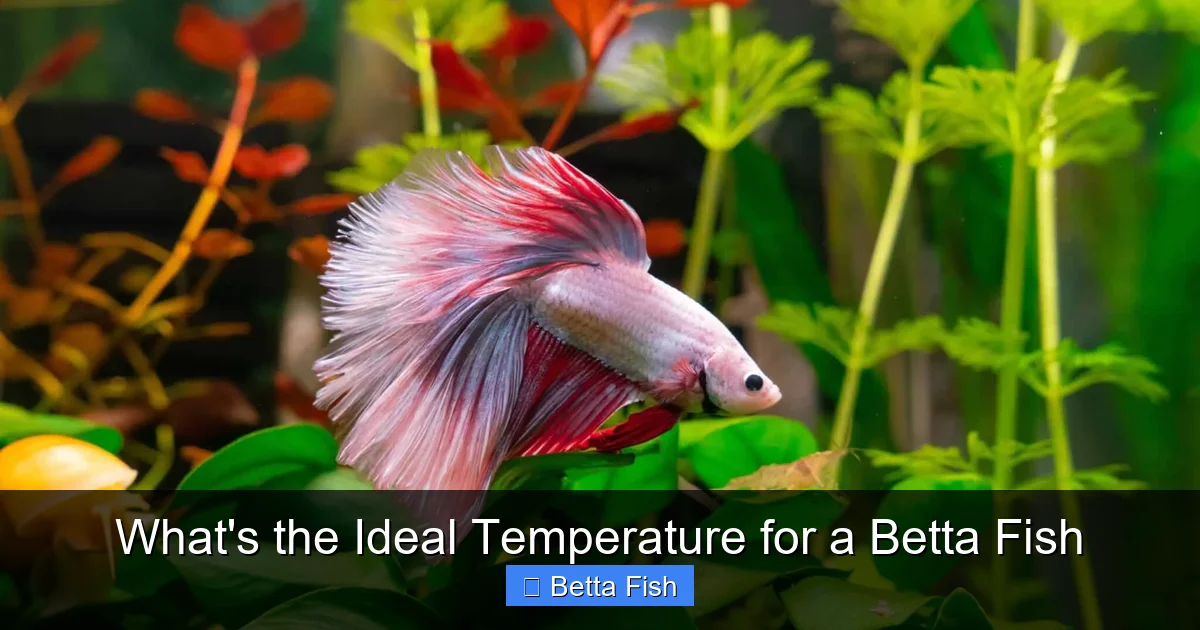
What’s the Ideal Temperature for a Betta Fish
The ideal temperature for a betta fish is a stable 78-80°F (25.5-26.7°C). As a tropical species from Southeast Asia, bettas require consistently warm water to maintain a healthy metabolism, robust immune system, and active behavior. Fluctuations or temperatures outside this range can lead to stress, a weakened immune response, and serious illness. Achieving this requires a reliable aquarium heater, an accurate thermometer for constant monitoring, and a stable room environment. Never rely on room temperature alone, as it often falls below their needs and varies daily.
Key Takeaways
- Target Range: The scientifically-backed ideal temperature for a betta fish is a stable 78-80°F (25.5-26.7°C), mimicking their native warm, shallow waters.
- Stability is Crucial: Sudden drops or spikes of even 2-3 degrees are extremely stressful and more dangerous than a consistent, slightly off temperature.
- Heater is Non-Negotiable: A small, adjustable aquarium heater (2.5-5 watts per gallon) is essential equipment for virtually all betta tanks, regardless of location.
- Thermometer is Mandatory: You cannot trust your hand or room thermostat. A floating or stick-on thermometer provides the only accurate, real-time water temperature reading.
- Beware of Overheating: Temperatures above 82°F accelerate metabolism, reduce oxygen levels, and can cause heat stress, especially in small, uncovered tanks.
- Seasonal Vigilance: Room temperature changes with seasons. A heater with a thermostat and a thermometer are your primary tools to combat winter chills and summer heat waves.
- Stress Signals: Lethargy, clamped fins, loss of appetite, or rapid gill movement are classic signs your betta is suffering from improper water temperature.
📑 Table of Contents
- Why Temperature Isn’t Just a Number: It’s a Lifeline for Your Betta
- The Goldilocks Zone: Defining the Ideal Temperature for a Betta Fish
- Essential Equipment: Your Toolkit for Perfect Temperature Control
- Common Mistakes and How to Avoid Them
- Seasonal and Situational Adjustments: Beyond the Basics
- Recognizing Temperature Stress: Your Betta’s SOS Signals
- A Final Word: Commitment to Consistency
Why Temperature Isn’t Just a Number: It’s a Lifeline for Your Betta
Imagine stepping into a room where the air is suddenly freezing cold, or oppressively hot. Your body reacts instantly—shivering, sweating, feeling miserable. Your betta fish feels the exact same way about its water. For these magnificent, intelligent creatures, the water temperature is the single most critical environmental factor governing every aspect of their physiology. It’s not about comfort in the human sense; it’s about fundamental biological function. Getting the ideal temperature for a betta fish right is the cornerstone of preventative healthcare, directly influencing digestion, immune strength, energy levels, and even lifespan. Many new owners mistakenly believe their betta, often sold in tiny cups at room temperature, is a “hardy” fish that can adapt. This is a dangerous myth. Bettas are tropical fish, native to the warm, stagnant rice paddies and shallow streams of Southeast Asia. Their bodies are finely tuned machines designed to operate within a narrow thermal window. Deviate from that window, and you’re not just making your fish uncomfortable—you’re compromising its entire system from the inside out.
The Biological Engine: Metabolism and the Immune System
Think of your betta’s body as a car engine. Water temperature is the thermostat controlling that engine’s RPMs. In too-cold water (below 76°F), the engine stalls. Metabolism slows to a crawl. Digestion becomes inefficient, often leading to constipation and swim bladder issues. The immune system, which requires a baseline metabolic rate to produce white blood cells and antibodies, becomes sluggish and ineffective. This is why cold water is the #1 precursor to common betta illnesses like Dropsy, Fin Rot, and fungal infections—the fish simply can’t mount a proper defense. Conversely, water that’s too hot (above 82°F) revs the engine into overdrive. The betta’s heart works harder, its oxygen consumption skyrockets, and its tiny body burns energy at an unsustainable rate. This leads to premature aging, increased stress, and, paradoxically, can also suppress the immune system over time. The ideal temperature for a betta fish creates a perfect, stable “cruising speed” where all bodily systems function harmoniously and efficiently.
The Goldilocks Zone: Defining the Ideal Temperature for a Betta Fish
So, what exactly is that magic number? Based on decades of aquaculture science and the consensus of reputable betta breeders and veterinarians, the ideal temperature for a betta fish is a consistent 78-80°F (25.5-26.7°C). This range is the sweet spot that replicates the warm, sun-drenched shallows of their natural habitat. Why this specific range? At 78°F, a betta’s metabolism is active enough for vibrant color display, energetic exploration, and hearty appetite. Its immune system operates at peak efficiency. At 80°F, these benefits are slightly amplified, which can be therapeutic for a sick betta (often used in hospital tanks), but is not ideal for long-term, everyday life due to the increased metabolic strain. The key takeaway here is the emphasis on stability. A tank holding a rock-solid 77°F is far healthier for a betta than one that fluctuates wildly between 75°F and 81°F throughout the day. Those fluctuations are what cause real harm, shocking the fish’s system and forcing it to constantly adapt, which is exhausting and stress-inducing.

Visual guide about What’s the Ideal Temperature for a Betta Fish
Image source: bettacarefishguide.com
Debunking the “Room Temperature” Myth
This is the most pervasive and dangerous piece of bad advice in betta care. “Just keep it in a room at room temperature.” Let’s be clear: the average human home’s “room temperature” (68-72°F or 20-22.2°C) is 10 degrees Fahrenheit too cold for a betta fish. That’s the difference between a pleasant spring day and a deep winter freeze for us. Bettas in unheated tanks at room temperature exist in a constant state of sub-clinical stress. They may appear “fine” for months, but their immune system is chronically suppressed, making them a ticking time bomb for disease. Furthermore, room temperature is not stable. It drops at night,尤其是在 winter, and can spike if the tank is near a window or electronics. Relying on ambient air temperature is a gamble with your fish’s health. The only way to provide the true ideal temperature for a betta fish is with a dedicated, controllable heat source: an aquarium heater.
Essential Equipment: Your Toolkit for Perfect Temperature Control
Achieving and maintaining that goldilocks zone requires two pieces of equipment, no exceptions. They are as essential as the water itself.
Visual guide about What’s the Ideal Temperature for a Betta Fish
Image source: ud-machine.com
The Aquarium Heater: Your Betta’s Personal Sunlamp
An aquarium heater is a simple but critical device. It contains a heating element and a thermostat (either built-in or in the controller). For a betta, you want a submersible, fully adjustable heater. Avoid “preset” or “stick-on” heaters that you cannot calibrate; they are often inaccurate and can overheat small tanks. For a standard 5-gallon betta tank, a 25-watt heater is usually sufficient. For a 2.5-gallon tank, a 7.5-watt or 10-watt heater is appropriate. Always choose a heater with a protective plastic cage to prevent your betta from burning itself if it rests against the element. Reputable brands like Eheim Jager, Aqueon Pro, or Fluval offer reliable, accurate models. Installation Tip: Place the heater near a water flow (like the filter output) to distribute heat evenly and prevent hot spots. Never run a heater outside of water, even for a moment, as it can crack or overheat.
The Aquarium Thermometer: Your Unbiased Truth-Teller
This is the other half of the equation. You must know the exact temperature. Do not guess. Do not use your finger. Invest in a good quality thermometer. Floating digital thermometers are excellent as they are accurate and easy to read. Stick-on liquid crystal strip thermometers (like those from API) are a good budget option, though they can be slightly less precise and are affected by ambient air temperature if not fully submerged. Place the thermometer on the opposite side of the tank from the heater to get a true average reading. Check it daily as part of your routine. A malfunctioning heater or a dead thermometer is a silent killer. Having both a working heater and a separate thermometer creates a fail-safe system; you use the thermometer to verify the heater is doing its job.
Tank Size and Material Matters
The ideal temperature for a betta fish is easier to maintain in a larger volume of water. A 5-gallon tank has far more thermal mass than a 1-gallon bowl. It heats up and cools down much more slowly, creating a more stable environment. This is another major reason to avoid tiny containers. Glass or acrylic tanks retain heat slightly better than open, mesh-topped tanks. If you have a very open tank, you may need a slightly higher wattage heater to compensate for evaporation and surface heat loss. Always match your heater’s wattage to your tank size and material for best results.
Common Mistakes and How to Avoid Them
Even with the right gear, mistakes happen. Here are the most frequent pitfalls in betta temperature management and how to sidestep them.

Visual guide about What’s the Ideal Temperature for a Betta Fish
Image source: bettabotanicals.com
Mistake 1: “I Don’t Need a Heater Because It’s a Tropical Fish.”
This is the cardinal sin. As established, room temperature is not tropical temperature. A betta kept without a heater in a climate-controlled home is living in chronic cold stress. Its fins may become shorter, its colors duller, and its appetite diminished. It is a sitting duck for disease. Solution: Get a heater. Period. Even in consistently warm climates (like Florida), nighttime AC use can drop temperatures dangerously low.
Mistake 2: Using a Heater That’s Too Powerful or Too Small
An oversized heater (e.g., a 50-watt in a 2.5-gallon tank) can rapidly overheat the water, cooking your betta before the thermostat clicks off. An undersized heater (e.g., a 5-watt in a 10-gallon tank) will struggle to reach or maintain temperature, running constantly and burning out prematurely. Solution: Follow the general rule of 2.5-5 watts per gallon. When in doubt, err on the side of a slightly smaller heater and monitor closely.
Mistake 3: Not Using a Thermometer or Ignoring It
Trusting the heater’s built-in gauge alone is risky. They can be inaccurate. Placing the thermometer in the wrong spot (right next to the heater) gives a false high reading. Solution: Use a separate, quality thermometer. Place it in a central location away from direct heater flow. Check it every day. Calibrate it occasionally against another thermometer if you’re paranoid.
Mistake 4: Placing the Tank in a Drafty or Sunny Spot
A draft from an AC vent, window, or door can create a cold layer at the water’s surface, chilling your betta even if the main water column is warm. Direct, intense sunlight can cause rapid, dangerous overheating and algae blooms. Solution: Place your tank away from vents, windows, and exterior walls. Find a spot with stable, gentle room temperature.
Seasonal and Situational Adjustments: Beyond the Basics
Setting your heater to 79°F and forgetting about it is a good start, but responsible ownership requires proactive monitoring, especially during seasonal transitions.
Winter: The Silent Threat
This is the most dangerous season for tropical fish. As outdoor temperatures plummet, so does the ambient air temperature in your home, especially at night. Your heater will work harder. This is the time to: 1) Check your thermometer religiously, morning and night. 2) Ensure your tank is not near a cold window or draft. 3) Consider using a tank lid or cover (with adequate ventilation) to trap heat, especially for open-top betta tanks. 4) Have a backup plan. A small battery-powered air pump can help agitate the surface and prevent water from getting too stagnant and cold if the power goes out briefly. Never use a hot water bottle or heating pad on the outside of the glass—these create uneven, dangerous hot spots.
Summer: The Overlooked Danger
Many think heat is only a problem in winter. Actually, summer can be a silent killer through overheating. If your tank is in a room without AC, or near a sunny window, the water temperature can quickly soar past 82°F, especially in small tanks. High water temperature holds less dissolved oxygen, which is a double problem for a betta with its labyrinth organ (which *does* help, but is not foolproof). Solution: Use an aquarium fan to blow across the water surface, promoting evaporative cooling. A frozen water bottle, sealed in a plastic bag, can be floated temporarily to bring down a dangerous spike. Most importantly, move the tank to a cooler, shadier part of the house. Never use ice cubes directly, as they cause a sudden temperature shock.
During Illness: Therapeutic Adjustments
Veterinarians and experienced aquarists will sometimes raise the ideal temperature for a betta fish by 1-2 degrees (to 80-81°F) when treating certain bacterial or parasitic infections. The theory is that a slightly elevated metabolic rate can help the fish’s immune system work faster and can speed up the life cycle of some parasites, making them more vulnerable to medication. This is a targeted, short-term tactic, not a permanent setting. Always consult a treatment guide or vet before doing this, as it can be detrimental if the fish is already weak or if the water quality is poor. The increased metabolism also means the fish will eat more and produce more waste, requiring impeccable water quality.
Recognizing Temperature Stress: Your Betta’s SOS Signals
Your betta cannot verbally tell you it’s too hot or too cold, but its body language and behavior are clear indicators. Learning to read these signs is crucial for early intervention.
Signs of Cold Stress (Below 76°F)
- Lethargy and Listlessness: The fish rests on the bottom, often propped on a plant or decoration, barely moving. It may not even flare at you.
- Loss of Appetite: It ignores food entirely or spits it out.
- Clamped Fins: Fins are held tightly against the body instead of being flared and flowing.
- Dulled Colors: The vibrant reds, blues, and greens become muted, grayish, or pale.
- Susceptibility to Disease: The onset of white spots (Ich), fuzzy growths (fungus), or rotting fins (Fin Rot) often follows prolonged cold exposure.
Signs of Heat Stress (Above 82°F)
- Rapid Gilling: Gills move very quickly as the fish struggles to get enough oxygen from the warm, oxygen-poor water.
- Gasping at the Surface: The fish frequently darts to the top to take a gulp of air, more than its normal routine.
- Erratic Swimming: May swim frantically, bump into things, or seem disoriented.
- Lethargy (Paradoxically): Extreme heat can also cause listlessness as the fish’s systems become overwhelmed.
- Faded or Bleached Color: Colors can look washed out or “bleached.”
Immediate Action: If you see these signs, immediately check your thermometer. If the temperature is out of the 78-80°F range, adjust your heater gradually (no more than 1-2 degrees per hour). For overheating, perform a partial water change with slightly cooler (not cold) water, and use a fan. For severe cold, use a sealed, warm water bottle floated in the tank to gently raise the temperature while you fix the heater issue.
A Final Word: Commitment to Consistency
Providing the perfect ideal temperature for a betta fish is one of the easiest and most impactful ways to ensure your companion lives a long, healthy, and spectacularly colorful life—often 3-5 years or more. It’s not a set-and-forget task. It’s a commitment to daily observation and the use of simple, reliable tools. That $5 thermometer and $20 heater are not optional accessories; they are fundamental pieces of life-support equipment. By creating a stable, warm environment, you are directly empowering your betta’s immune system, fueling its vibrant personality, and allowing its natural beauty to shine. You are not just keeping a fish; you are providing a sanctuary. And it all starts with the right temperature.
Frequently Asked Questions
Can a betta fish survive without a heater?
While a betta might survive for a time in unheated water at the lower end of room temperature (72-74°F), it will live in chronic stress with a suppressed immune system, making it highly prone to disease and significantly shortening its lifespan. A heater is essential equipment for its long-term health.
What is the safest way to warm up a cold betta tank quickly?
The safest method is to perform a partial water change (25-30%) with water that is 2-3 degrees warmer than the current tank temperature. Simultaneously, check your heater and thermometer for failures. You can also float a sealed plastic bag filled with warm (not hot) tap water in the tank as a temporary measure while troubleshooting.
Is 82°F too hot for my betta fish?
Yes, 82°F is above the recommended long-term ideal temperature for a betta fish. While it can be used therapeutically for a short period to combat illness, sustained temperatures at or above 82°F increase metabolic stress, reduce oxygen levels, and can lead to premature aging. Aim to keep it between 78-80°F.
My room temperature is 78°F, do I still need a heater?
Almost certainly, yes. Room temperature fluctuates, especially at night. A thermometer in your tank will likely show the water is several degrees cooler than the air due to evaporation and lack of a constant heat source. You need a heater to maintain a stable 78-80°F inside the water, regardless of air temperature.
How can I tell if my heater is working properly?
Use a separate, accurate thermometer. Place it in the tank away from the heater. Turn the heater to your desired setting (79°F). Wait 2-4 hours and check the thermometer. It should read within 1 degree of your setting. Do this check monthly as part of your tank maintenance routine.
My betta is lethargic and has clamped fins. Is it the temperature?
These are classic signs of cold stress. First, immediately check your water temperature with a thermometer. If it’s below 76°F, the temperature is very likely the primary cause. Raise the temperature slowly by 1-2 degrees per hour until you reach 79°F. Also, test water quality (ammonia, nitrite, nitrate) as poor water can cause similar symptoms.