How Often Change Water in Betta Fish Tank
Changing the water in your betta fish tank is one of the most important parts of betta care. Most experts recommend doing a 20-30% water change every 1-2 weeks to keep your betta healthy. Regular water changes remove harmful toxins, reduce stress, and help your betta fish live a longer, happier life. This guide covers everything you need to know about how often to change water in a betta fish tank, from simple schedules to step-by-step instructions.
Keeping your betta fish tank clean is one of the easiest ways to make sure your fish stays healthy and happy. But how often should you actually change the water? The answer depends on a few key factors like tank size, filtration, and how many fish you have. In this guide, we will walk you through everything you need to know about how often change water in betta fish tank setups.
Whether you have a tiny 2.5-gallon bowl or a spacious 10-gallon aquarium, regular water changes are essential. Dirty water builds up ammonia and nitrates fast. These toxins can make your betta sick or even shorten its lifespan. The good news? A simple routine makes this task quick and easy. Let us dive in and break it all down for you.
Key Takeaways
- Do a 20-30% water change every 1-2 weeks for a healthy betta fish tank.
- Always use water conditioner to remove chlorine and chloramine from tap water.
- Match the new water temperature to your existing tank water to avoid stressing your betta.
- Watch for cloudy water, bad smells, and behavioral changes as signs your tank needs a water change.
- Over-changing water can be just as harmful as not changing it often enough.
- Use a gravel vacuum to remove debris from the tank floor during each water change.
- Test your water parameters regularly to catch ammonia and nitrate buildup early.
📑 Table of Contents
Why Regular Water Changes Matter for Your Betta
Your betta fish lives in a small world inside its tank. Everything it does, eating, breathing, and producing waste, affects the water quality. Unlike bigger aquariums, a betta tank has less water to dilute waste products. This means toxins build up faster and need to be removed regularly.
Here is why betta fish tank maintenance through water changes is so important:
- Ammonia removal: Fish waste and uneaten food create ammonia. Even small amounts are toxic to bettas.
- Nitrate control: Nitrates build up over time and cause stress and illness if left unchecked.
- Oxygen levels: Fresh water holds more oxygen, which helps your betta breathe easier.
- Disease prevention: Clean water reduces the risk of bacterial infections and fin rot.
- Stress reduction: Bettas thrive in stable, clean environments. Dirty water causes unnecessary stress.
Think of it like changing the air filters in your home. You do it regularly to keep things fresh and healthy. The same logic applies to your betta aquarium water. A consistent schedule keeps the environment safe and comfortable for your fish.
What Happens If You Skip Water Changes
Skipping water changes leads to a slow buildup of harmful substances. At first, you might not notice anything wrong. But over time, the water quality drops. Your betta might become less active, lose its color, or develop health problems. In severe cases, poor water quality can be fatal.
If you ever notice why is my betta fish tank cloudy after skipping maintenance, that is your tank telling you it needs attention. Cloudy water often signals a bacterial bloom caused by excess waste. Fixing this requires both a water change and a closer look at your cleaning routine.
How Often Should You Change Betta Tank Water
The ideal water change schedule depends on your specific setup. There is no one-size-fits-all answer, but here are the general guidelines most betta keepers follow.
For Small Tanks (Under 5 Gallons)
Small tanks need more frequent water changes because waste concentrates quickly. If you keep your betta in a 2.5- or 3-gallon tank, you should:
- Do a 25-30% water change every 5-7 days.
- Use a gentle gravel vacuum to clean the substrate.
- Always add water conditioner for betta before refilling.
Small tanks also benefit from how often to change water for betta fish routines that are as consistent as possible. Set a reminder on your phone so you never miss a scheduled change.
For Medium Tanks (5-10 Gallons)
A 5- to 10-gallon tank gives you a little more breathing room. With a good filter running, you can follow this schedule:
- Perform a 20-25% water change every 7-10 days.
- Test the water for ammonia and nitrates once a week.
- Clean the filter media gently during water changes.
For Larger Tanks (10+ Gallons)
Larger tanks are more stable, but they still need regular attention. If you have a 10-gallon or bigger setup with a betta:
- Do a 15-20% water change every 10-14 days.
- Keep up with weekly water parameter tests.
- Remember that even big tanks benefit from a steady water change schedule.
Quick Reference: Water Change Frequency Chart
| Tank Size | Change Percentage | Frequency |
|---|---|---|
| 2.5 Gallons | 25-30% | Every 5-7 days |
| 3-5 Gallons | 20-25% | Every 7 days |
| 5-10 Gallons | 15-20% | Every 7-10 days |
| 10+ Gallons | 10-15% | Every 10-14 days |
These numbers are starting points. Adjust based on your tank water quality and how your betta responds. Some tanks need more frequent changes if you overfeed or keep the tank in a warm room.
Step-by-Step Guide to Changing Betta Water
Changing water in a betta tank does not need to be complicated. Follow these simple steps to do it safely and efficiently.
Step 1: Gather Your Supplies
Before you start, make sure you have everything ready:
- A clean bucket dedicated to fish use only
- A gravel vacuum or siphon
- Water conditioner (also called dechlorinator)
- A thermometer to check water temperature
- A clean towel or rag for spills
Step 2: Prepare the New Water
Fill your bucket with fresh water. Add the water conditioner according to the product instructions. Let the water sit for a few minutes so it reaches room temperature. You can also use a heater to match the tank temperature exactly.
If you are wondering about tap water safety for fish, the answer is yes, as long as you use conditioner. Tap water contains chlorine and chloramine that harm fish. A good conditioner neutralizes these chemicals quickly.
Step 3: Remove Old Water
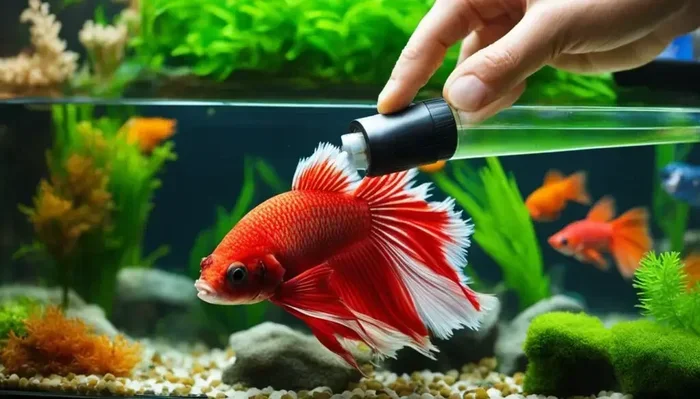
Use the gravel vacuum to siphon out about 20-30% of the tank water. Start at the substrate and work your way across the tank floor. This removes debris, fish waste, and leftover food particles.
Be gentle near your betta. Some fish get startled by the siphon. If your betta seems stressed, take a break and finish the job slowly.
Step 4: Add Fresh Water
Pour the new water slowly into the tank. Pouring onto a plate or your hand helps reduce disturbance. Check the temperature to make sure it matches the existing tank water. Even a small temperature difference can stress your betta.
After adding the new water, test the water parameters to confirm everything looks good. Ammonia should be at zero, and nitrates should be below 20 ppm.
Quick Tips for a Smooth Water Change
- Never change more than 50% of the water at once. This can crash your beneficial bacteria in tank colonies.
- Always use a bucket that has never held soap or chemicals.
- Do water changes at the same time each week to build a routine.
- Watch your betta during and after the change for any signs of distress.
Signs Your Betta Tank Water Needs Changing
Even with a set schedule, sometimes your tank needs attention sooner. Watch for these warning signs that tell you the water quality is dropping.
Cloudy or Discolored Water
Clear water should be your goal. If the water turns yellow, brown, or cloudy, it is time for a change. Discoloration often comes from dissolved organic compounds or excess waste. If you notice why is the water in my betta fish tank cloudy, do not wait. A partial water change will clear things up fast.
Bad Smell
A healthy tank should not smell bad. If you notice a strong, rotten-egg or fishy odor, harmful gases are building up. This is a clear signal that you need to change the water and clean the substrate.
Behavioral Changes in Your Betta
Your betta will tell you when something is wrong. Watch for these signs:
- Staying near the surface and gasping for air
- Lethargy or hiding more than usual
- Loss of appetite
- Clamped fins or faded colors
- Restless swimming or flashing against decorations
If you notice any of these behaviors after a missed water change, do a partial change right away. In serious cases, you may need to how to save a dying betta fish after water change by checking ammonia levels and adding conditioner immediately.
High Nitrate Readings
A simple water test kit is a betta keeper’s best friend. Test your water weekly for ammonia, nitrite, and nitrate. If nitrates climb above 20 ppm, it is time for a water change. Keeping nitrate levels low is one of the easiest ways to protect your betta’s long-term health.
Common Mistakes to Avoid When Changing Water
Even experienced fish keepers make mistakes. Here are the most common ones and how to avoid them.
Changing Too Much Water at Once
This is the number one mistake new betta owners make. Removing more than 50% of the water at once can destroy the beneficial bacteria that keep your tank cycling. These good bacteria break down toxic ammonia and nitrite. Losing them causes a water quality crash that puts your betta at serious risk.
Using Untreated Tap Water
Tap water contains chlorine and chloramine that are deadly to fish. Always use a water conditioner for betta before adding new water to the tank. Some conditioners also neutralize heavy metals and chloramines, so read the label carefully.
Ignoring Water Temperature
Bettas are tropical fish and need warm, stable water. Adding cold water during a change can shock your fish. Always match the temperature of the new water to the tank water. A difference of more than 2 degrees Fahrenheit can cause stress.
Forgetting to Clean the Substrate
Dirty gravel traps waste and releases it back into the water. Use a gravel vacuum during every water change to remove buildup. This simple step makes a huge difference in betta tank cleaning routine effectiveness.
Overfeeding Before a Water Change
Extra food creates extra waste. Feed your betta lightly the day before a water change. This reduces the amount of debris in the tank and makes the water change more effective.
Expert Tips for Maintaining Crystal-Clear Tank Water
Want to go above and beyond basic water changes? These expert tips will help you keep your betta tank in top shape between changes.
Invest in a Good Filter
A quality filter does a lot of the heavy lifting when it comes to water quality. It removes debris, hosts beneficial bacteria, and keeps water flowing. Choose a filter with adjustable flow, since bettas prefer gentle currents. Clean the filter media in old tank water, never tap water, to preserve the good bacteria.
Do Not Overfeed Your Betta
Overfeeding is one of the biggest culprits behind poor water quality. Bettas have small stomachs and only need a few pellets or flakes per feeding. Remove any uneaten food after 2-3 minutes. This simple habit reduces waste and keeps your water cleaner longer.
Add Live Plants to Your Tank
Live plants absorb nitrates and help oxygenate the water. They create a more natural environment for your betta and reduce the frequency of water changes. Easy plants like java fern, anubias, and amazon sword work great in betta tanks.
Keep Up with Weekly Maintenance
Consistency beats intensity when it comes to betta fish care tips. A small weekly water change is much more effective than one big cleaning session. Stick to your schedule and your betta will reward you with vibrant colors and active behavior.
If you ever feel overwhelmed, remember that even doing a little is better than doing nothing. Your betta depends on you for a clean home, and every water change you do makes a real difference.
Conclusion
Knowing how often change water in betta fish tank setups is the foundation of good betta care. A simple routine of 20-30% water changes every 1-2 weeks keeps your tank clean, your water parameters stable, and your betta healthy. Combine regular changes with proper feeding, good filtration, and consistent testing, and you will give your fish the best possible life.
Start today. Set a schedule, gather your supplies, and make water changes a habit. Your betta will thank you with bright colors, energetic swimming, and a long, happy life. Clean water is the single most important thing you can provide for your betta fish, and now you have all the tools to do it right.
Frequently Asked Questions
How often should I change water in a betta fish tank?
For most betta tanks, a 20-30% water change every 1-2 weeks is ideal. Small tanks under 5 gallons need changes every 5-7 days, while larger tanks over 10 gallons can go every 10-14 days. The key is consistency and testing your water regularly to ensure ammonia and nitrates stay low.
Can I use tap water for my betta fish tank?
Yes, you can use tap water, but you must add a water conditioner first. Conditioner removes chlorine, chloramine, and heavy metals that are harmful to bettas. Always let the water reach the right temperature before adding it to the tank.
What happens if I change too much water at once?
Changing more than 50% of the water at once can crash your tank’s beneficial bacteria colony. This leads to ammonia and nitrite spikes that are dangerous for your betta. Stick to 20-30% changes to keep the water stable and your fish safe.
Do I need a water test kit for my betta tank?
Yes, a basic water test kit is very helpful. It lets you monitor ammonia, nitrite, nitrate, and pH levels. Testing weekly gives you early warning signs of water quality problems before they affect your betta’s health.
How can I tell if my betta tank needs a water change?
Watch for cloudy water, bad smells, and behavioral changes like lethargy or loss of appetite. High nitrate readings on a water test also signal that it is time for a water change. Catching these signs early keeps your betta healthy and comfortable.
Should I remove my betta during a water change?
No, you do not need to remove your betta during a water change. In fact, keeping your betta in the tank helps maintain the beneficial bacteria in the filter. Just be gentle with the siphon and avoid creating strong currents that might stress your fish.