What Fish Can Be with Betta
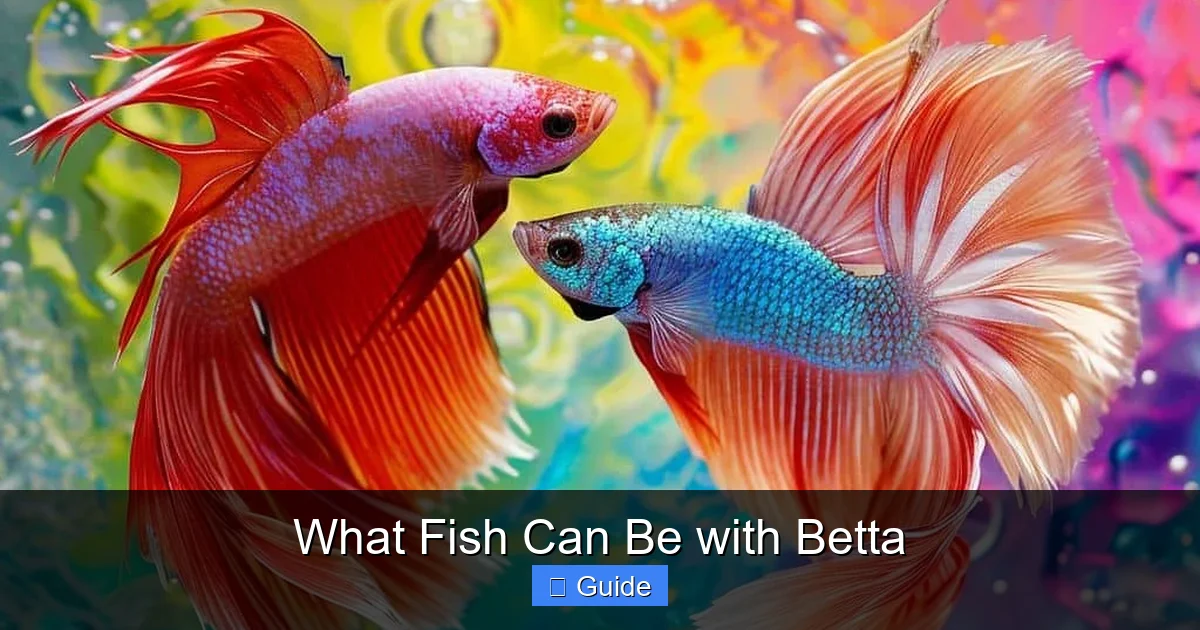
Betta fish, often wrongly labeled as solitary aggressors, can successfully live with many peaceful tank mates if their specific needs are met. The key is understanding your individual betta’s personality, providing a spacious, well-decorated tank (minimum 20 gallons), and selecting slow-moving, non-fluffy-finned species from the top water layer. Avoid other Bettas, brightly colored fish with long fins, and fin-nippers. With careful selection and proper setup, you can create a vibrant, harmonious community aquarium for your betta.
Key Takeaways
- Your Betta’s Personality is Key: Some bettas are tolerant, others are highly aggressive. Always observe your specific fish before introducing any tank mate.
- Tank Size is Non-Negotiable: A 20-gallon long tank is the absolute minimum recommended for a betta community; larger is always better to provide territory and dilute aggression.
- Choose Peaceful, Subdued Tank Mates: Target fish that are fast, schooling, bottom-dwelling, and have dull colors/short fins to avoid triggering your betta’s aggression.
- Aquascaping is Your Best Defense: Use dense plants, driftwood, and caves to create visual barriers and break lines of sight, giving all fish places to hide and establish territory.
- Never Mix Male Bettas: Two male bettas in the same tank will fight to the death. A single male with a sorority of females is also extremely risky and not recommended.
- Introduce the Betta Last: Add all other peaceful community fish first and allow them to establish their territories for several weeks before introducing the betta to the tank.
- Always Have a Backup Plan: Be prepared with a separate hospital tank to remove a betta or a tank mate if aggression or stress becomes a problem.
📑 Table of Contents
- Understanding the Betta: Beyond the “Fighting Fish” Myth
- The Golden Rules: Prerequisites for a Successful Betta Community
- Ideal Tank Mate Categories & Specific Species Recommendations
- The “No-Fly” List: Fish to Absolutely Avoid with Bettas
- Step-by-Step: Setting Up the Perfect Betta Community Tank
- Special Scenarios & Advanced Considerations
- Conclusion: Patience and Observation are Your Greatest Tools
Understanding the Betta: Beyond the “Fighting Fish” Myth
When people think of the Betta splendens, the first image that comes to mind is often two vibrant fish locked in combat, flaring their gills in a tiny cup of water. This outdated reputation as a solitary, irritable fighter has led many to believe these fish must live alone. The truth is far more nuanced. Bettas are intelligent, curious, and possess distinct personalities. With the right environment and carefully chosen companions, many bettas can thrive in a community setting. The question of what fish can be with betta isn’t about finding a universal list, but about learning to read your individual fish and providing an ecosystem that meets everyone’s needs.
Native to the shallow, slow-moving rice paddies and streams of Southeast Asia, wild bettas are not solitary hunters. They coexist with other small fish, shrimp, and insects. Their aggression is primarily territorial, directed at other male bettas or fish that resemble them (bright colors, flowing fins). In a spacious, planted tank that mimics their natural habitat, a betta’s territorial instincts can be managed, allowing for peaceful cohabitation. This guide will walk you through everything you need to know to answer the question “what fish can be with betta” for your specific situation.
The Golden Rules: Prerequisites for a Successful Betta Community
Before you even consider another species, you must establish the foundational rules. These are not suggestions; they are critical requirements for the health and safety of your betta and any potential tank mates. Skipping these steps is the number one reason community tanks with bettas fail.

Visual guide about What Fish Can Be with Betta
Image source: saraichinwag.com
Rule #1: Tank Size & Dimensions Matter More Than You Think
The single most important factor is space. A betta in a 5-gallon tank alone is a stretch for a healthy, active life. Adding tank mates to such a confined space is a recipe for disaster. The aggressive betta has nowhere to retreat, and other fish cannot escape his attention. The absolute minimum tank size for a betta with peaceful tank mates is 20 gallons (long/breeder dimensions preferred). This provides enough horizontal swimming space for other fish and, crucially, enough depth and territory to allow the betta to claim a section without dominating the entire water column. A 29-gallon or larger tank is ideal and gives you far more flexibility in species selection.
Rule #2: Aquascaping is Your Secret Weapon
A bare tank is a stress factory. Your goal is to break the line of sight. Use live plants (like Anubias, Java Fern, Cryptocorynes) or high-quality silk plants to create dense forests, especially in the mid and upper levels. Driftwood, rock caves, and ceramic hides provide essential bottom-level refuge. This vertical and horizontal complexity allows a shy betta to hide, a curious one to explore, and other fish to establish their own territories away from the betta’s primary “patrol route.” Think of it as building walls and neighborhoods in your aquatic city.
Rule #3: Water Parameters & Cycling Are Foundational
All fish need stable, clean water. A community tank has a higher bioload than a single betta. You must fully cycle the tank (establish beneficial bacteria) before adding any fish. Bettas prefer warm, soft, slightly acidic water (78-80°F / 25.5-27°C, pH 6.5-7.5). Most compatible tank mates share this preference. A reliable heater and a gentle filter (a sponge filter is perfect for not stressing betta fins) are essential. Consistent water changes (25-50% weekly) are non-negotiable.
Ideal Tank Mate Categories & Specific Species Recommendations
Now for the fun part! When selecting companions, we look for fish that occupy different niches (top, mid, bottom), are fast and agile, are non-aggressive, and lack the flamboyant fins or bright reds/blues that trigger a betta’s instinct to attack. Here are the safest, most successful categories, with specific examples.
Visual guide about What Fish Can Be with Betta
Image source: japanesefightingfish.org
The Top-Dweller Avoidance: Why It’s Crucial
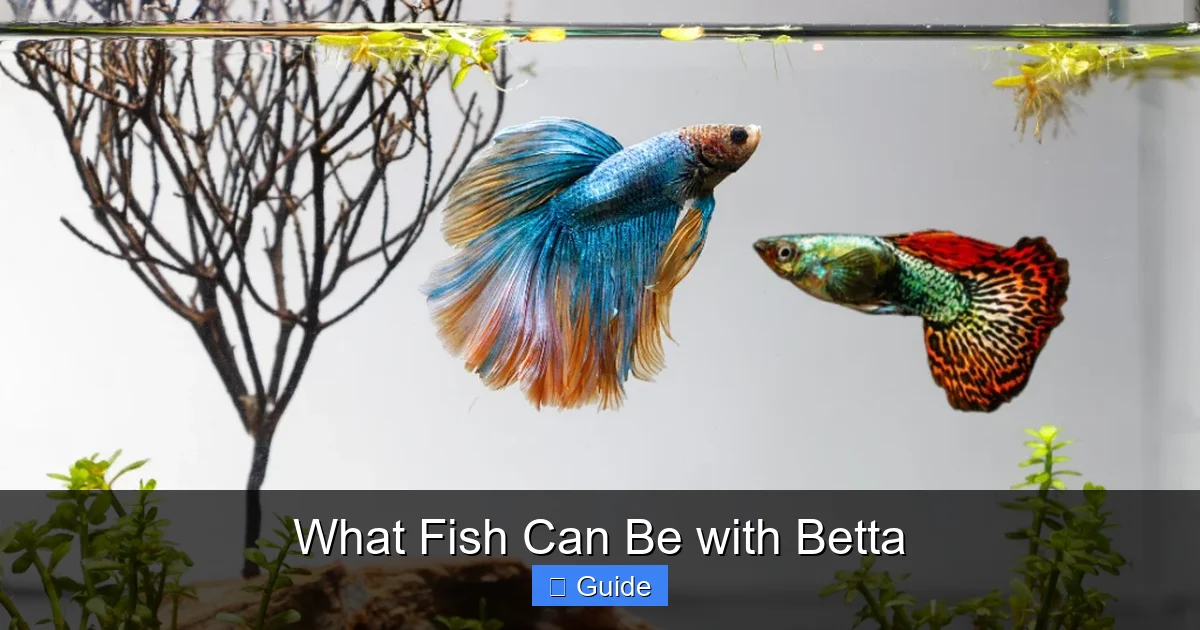
Bettas are labyrinth fish who naturally surface for air. They are most defensive of the top layer of the water column. Therefore, avoid any fish that are constant top dwellers. This includes guppies (which also have flowing fins), fancy guppies, and many gouramis (who are closely related and will spar). Fish that primarily stay in the middle and lower levels are far safer choices.
Category 1: The Fast & Schooling Mid-Level Fish
These are your best bets. Their speed and group behavior make it impossible for a betta to single one out. They add beautiful activity to the middle of the tank.
- Neon Tetras & Cardinal Tetras: The classic choice. Their iridescent blue/red stripe is actually less provocative than solid bright colors. They are fast, peaceful, and thrive in schools of 6+. Keep in a 20+ gallon tank.
- Harlequin Rasboras: Slightly larger and hardier than neons, with a distinctive black triangle. Very peaceful, active schooling fish. A great alternative.
- Ember Tetras: Tiny, fiery orange fish that are incredibly peaceful. Their small size and constant movement make them excellent, low-risk tank mates. A school of 8-10 in a 20-gallon is stunning.
- Celestial Pearl Danios (CPDs): A newer favorite. Tiny, with striking blue and orange markings. They are shy and prefer densely planted tanks. Their speed and preference for the lower half make them excellent.
Category 2: The Peaceful Bottom-Dwellers
These fish occupy a completely different zone, cleaning up scraps and adding interest to the substrate. They are generally oblivious to the betta’s surface activities.
- Corydoras Catfish: The absolute gold standard. These gentle, social “cories” must be kept in groups of 5-6 of the same species. They are adorable, active, and completely harmless. Pygmy, Panda, and Bronze Corys are all excellent choices for a 20-gallon tank.
- Kuhli Loaches: Eel-like, nocturnal, and incredibly peaceful. They are masters of disguise, hiding in the substrate or driftwood during the day. A group of 3-5 is ideal. They add a unique element to the tank’s cleanup crew.
- Otocinclus Catfish (“Ottos”): The dedicated algae eater. These tiny suckers are completely peaceful but can be sensitive to water quality. They are best added to a well-established, algae-rich tank in a group of 3-4.
Category 3: The Invertebrate Option (Shrimp & Snails)
Invertebrates can be fantastic, low-biomass additions, but they come with significant caveats. Your betta’s personality is the ultimate decider here.
- Amano Shrimp: Large (for a shrimp), fast, and primarily algae-eaters. Their size and speed make them the most likely to survive a curious betta. Start with 3-4.
- Ghost Shrimp / Cherry Shrimp: These are a gamble. A peaceful betta may ignore them. A predatory or bored betta will view them as snacks. Cherry shrimp are especially colorful and may be targeted. If you try, use a heavily planted tank and accept that you may lose a few.
- Nerite Snails: Excellent algae controllers that cannot reproduce in freshwater. Their hard shell protects them from most bettas, though a persistent betta may still nip at their antennae. They are a very safe bet.
- Mystery / Apple Snails: Larger and more noticeable. Generally safe due to size, but they produce a lot of waste. Ensure your filter can handle the bioload.
The “No-Fly” List: Fish to Absolutely Avoid with Bettas
Just as important as knowing who to include is knowing who to exclude. The following species are almost guaranteed to cause stress, injury, or death.
Visual guide about What Fish Can Be with Betta
Image source: light.fish
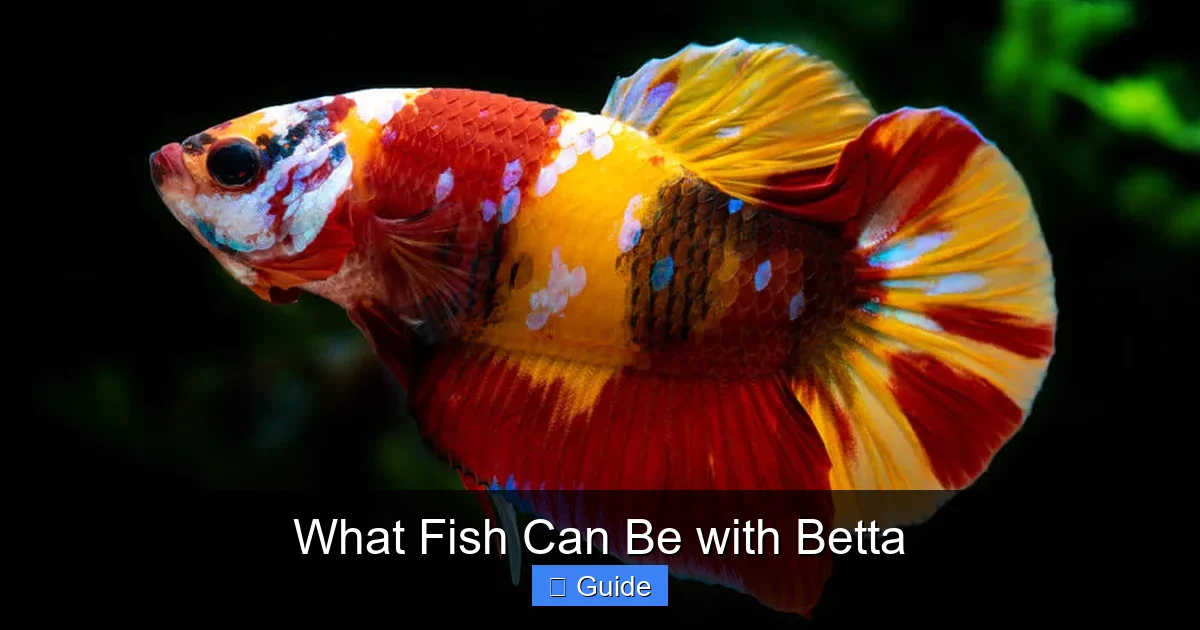
- Other Male Bettas (Siamese Fighting Fish): Never. Two males in the same tank will fight relentlessly until one dies. A “betta sorority” (multiple females) is also high-risk and requires a very large, expertly set-up tank; it is not recommended for beginners.
- Gouramis (Dwarf, Pearl, Kissing, etc.): They are in the same family (Anabantidae) and have a similar body shape and labyrinth organ. They will likely spar constantly, causing extreme stress.
- Fancy Guppies & Endlers: Their long, flowing fins and bright colors are a direct trigger for a betta’s instinct to nip and attack. Even if the betta is initially tolerant, the constant harassment will kill the guppy.
- Long-Finned or Slow-Moving Fish: This includes some varieties of swordtails, platies, and fancy goldfish. Their flowing appendages look like rival bettas and are too slow to escape a determined chase.
- Fin-Nippers: Tiger Barbs, Serpae Tetras, and some Danios are notorious for nipping the long, flowing fins of a betta, leading to infection and severe stress.
- Large or Aggressive Fish: Cichlids, large catfish, or any fish known to be territorial or aggressive will either bully the betta or be bullied by it. Size mismatches are dangerous.
- Very Small “Dwarf” Species: While neon tetras are small, they are fast and school. A single, tiny fish like a male guppy or a lone neon will be seen as food or a threat. Always keep small, peaceful fish in appropriate schools.
Step-by-Step: Setting Up the Perfect Betta Community Tank
You have your 20+ gallon tank, your plants, your filter, and your chosen list of potential mates. Now, the process. Rushing this is the downfall of many aspiring community tanks.
Step 1: Cycle the Tank Thoroughly
Set up the tank with all equipment, substrate, and decorations. Add your plants. Use a water test kit to monitor ammonia, nitrite, and nitrate. The cycle is complete when you can add ammonia and see it convert to nitrite and then to nitrate within 24 hours, with zero ammonia and nitrite readings. This takes 4-6 weeks. Do not skip this.
Step 2: Introduce the “Dither Fish” First
This is the most critical strategic step. Add your chosen schooling fish (e.g., neon tetras, harlequin rasboras) and bottom dwellers (e.g., corydoras) first. Allow them to acclimate and establish their territories for at least 2-3 weeks. They will learn the tank’s layout, claim their spaces, and become comfortable. This means when the betta arrives, the tank is already “occupied” by confident, fast fish who know where to hide.
Step 3: The Betta’s Grand Entrance
After the 2-3 week period, it’s time to add the betta. Acclimate him slowly using the drip method. Once he’s in, observe him closely for the first hour. Flaring gills is normal as he checks out his new home. Aggressive chasing, ramming, or cornering of other fish is a major red flag. If this happens, be prepared to remove the betta to a separate hospital tank immediately.
Step 4: Long-Term Observation & Management
For the first few days, watch the dynamics during feeding times (a high-stress moment). Ensure the betta is not monopolizing the food and that all fish are eating. Look for signs of stress in other fish: hiding constantly, loss of color, torn or frayed fins (from nipping), or lethargy. Also, watch your betta: is he constantly patrolling and flaring, or does he settle into a routine with occasional curiosity? A settled betta who leaves his tank mates alone is a success.
Special Scenarios & Advanced Considerations
What about a female betta? What about shrimp-only tanks? Let’s address some common follow-up questions.
Female Betta (Betta Splendens) Tank Mates
Females are generally less flamboyant and can be slightly less aggressive than males, but they still have strong personalities. The same rules apply: large, planted tank, peaceful mid/bottom dwellers. They can often be housed with the same species listed above (tetras, rasboras, cories) with slightly less risk, but individual variation is huge. Never assume a female will be peaceful. The “betta sorority” (group of females) is a complex, advanced setup requiring a minimum 40-gallon, heavily planted tank with 5+ females to diffuse aggression. It is not for beginners.
The “Shrimp-Only” or “Nano” Community
For a smaller tank (10-15 gallons), your safest betta companion is often no fish at all. A heavily planted “nature aquarium” with a single male betta and a colony of shrimp (Amano, and possibly some Cherry if you’re lucky) and snails can be beautiful and low-conflict. The key is providing immense amounts of visual cover with mosses (Java Moss, Marimo Moss Balls), dense plants (Cryptocoryne, Anubias), and driftwood. This gives shrimp endless places to hide and forage, making them less visible targets.
What About Snails Alone?
Yes! A betta with a small group of Nerite or Mystery snails in a well-planted 10-gallon tank is a perfectly valid and often very peaceful setup. The snails are fascinating to watch and help with algae, with virtually no risk of aggression from either side.
Conclusion: Patience and Observation are Your Greatest Tools
So, what fish can be with betta? The answer is a curated list of peaceful, fast, non-flashy species that occupy different tank levels, introduced into a spacious, heavily planted environment where the betta arrives last. The core of a successful community is not just a checklist, but a mindset of providing ample space, hiding places, and respecting the betta’s innate territorial nature. Start with the safest, most bulletproof combinations: a betta in a 20-gallon long with a school of harlequin rasboras and a group of pygmy corydoras. Watch, learn, and enjoy the dynamic beauty of a well-balanced ecosystem. Your betta is not doomed to a lonely life in a vase; with the right knowledge and setup, he can be the majestic centerpiece of a thriving aquatic community.
Frequently Asked Questions
Can a betta live with a goldfish?
No, bettas and goldfish are incompatible. Bettas require warm water (78-80°F), while goldfish are cold-water fish. Goldfish also produce massive amounts of waste, which would quickly foul the warm water a betta needs, and their slow, fancy varieties could be nipped by a betta.
What is the absolute safest fish to put with a betta?
The safest options are fast, schooling fish like neon tetras, ember tetras, or harlequin rasboras (in a 20+ gallon tank with 6+ of the same species), and peaceful bottom-dwellers like corydoras catfish (in groups of 5+). Their speed, group behavior, and different tank levels minimize conflict.
Can I put shrimp in with my betta?
It’s a gamble. Large, fast shrimp like Amanos have the best chance. Small, colorful shrimp like Cherry shrimp are often seen as food by bettas. Success depends entirely on your individual betta’s personality and the amount of dense hiding places (moss, plants) you provide.
How big should the tank be for a betta with tank mates?
The absolute minimum is a 20-gallon long tank. This provides enough horizontal space for other fish to swim away and enough territory to dilute the betta’s dominance. A 29-gallon or larger tank offers even more stability and a greater choice of tank mates.
My betta is flaring at his reflection, is that a problem?
Flaring at its own reflection is common and usually not harmful in short bursts. It’s a sign of territorial behavior. If it’s constant and causing the betta to crash into the glass or become lethargic, try covering the sides of the tank with a towel or paper to block the reflection for a few days.
Should I introduce the betta or the other fish first?
Always introduce all the other peaceful community fish first and let them establish their territories for 2-3 weeks. Then, add the betta. This prevents the betta from claiming the entire tank as its own from day one and allows the other fish to be confident residents when the betta arrives.