What Can I Clean My Betta Fish Tank With
You can clean your betta fish tank with aquarium-safe cleaners, warm water, and gentle tools like sponges and gravel vacuums. Never use soap, bleach, or harsh chemicals. Learn the safest and most effective ways to keep your betta fish tank clean without harming your fish.
Keeping your betta fish tank clean is one of the most important things you can do for your fish. A dirty tank leads to poor water quality, stress, and illness. But here is the big question many betta owners face: what can I clean my betta fish tank with?
The answer is not as simple as grabbing any household cleaner. Many common cleaning products are toxic to fish. Even small residues can harm your betta. That is why it matters a lot to choose the right cleaning tools and solutions.
In this guide, we will walk you through every safe option for cleaning your betta tank. We will cover tools, natural solutions, commercial products, and common mistakes to avoid. By the end, you will know exactly how to keep your tank sparkling clean and your betta happy.
Key Takeaways
- Use aquarium-safe cleaners only: Avoid soap, bleach, and chemical sprays that can harm your betta.
- Warm water and soft sponges work great: These are simple and safe for routine tank cleaning.
- A gravel vacuum is essential: It removes debris from the substrate without disturbing your fish.
- Natural cleaners like algae magnets help: They keep glass clean without adding chemicals.
- Always rinse tools with tank water: Tap water can kill beneficial bacteria your tank needs.
- Establish a cleaning routine: Regular maintenance prevents buildup and keeps your betta healthy.
- Never clean everything at once: Preserve good bacteria by cleaning parts of the tank on different days.
📑 Table of Contents
- Why Cleaning Your Betta Fish Tank Matters
- Safe Cleaning Tools for Your Betta Tank
- What Can I Clean My Betta Fish Tank With: Safe Cleaners
- What NOT to Clean Your Betta Tank With
- How to Clean Your Betta Tank the Right Way
- Quick Tips for Keeping Your Betta Tank Clean Longer
- Common Mistakes People Make When Cleaning Betta Tanks
- Expert Insights on Betta Tank Cleaning
- Conclusion
Why Cleaning Your Betta Fish Tank Matters
A clean tank is not just about looks. It directly affects your betta fish health. Waste, uneaten food, and algae buildup can spike ammonia levels. Ammonia is deadly to fish even in small amounts.
Regular cleaning helps maintain the right pH and oxygen levels. It also reduces the chance of bacterial and fungal infections. When you know what can I clean my betta fish tank with, you make smarter choices for your pet.
Here are a few reasons why tank cleaning matters so much:
- Removes harmful toxins: Waste and decomposing food release ammonia and nitrites.
- Prevents algae growth: Algae competes with your betta for nutrients and light.
- Improves water clarity: Clear water lets you spot health issues early.
- Reduces stress: A clean environment keeps your betta calm and active.
- Supports good bacteria: Proper cleaning preserves beneficial bacteria that keep the tank balanced.
Safe Cleaning Tools for Your Betta Tank
Before you think about chemicals or cleaners, let us talk about tools. The right tools make cleaning easier and safer. You do not need fancy equipment either.
Gravel Vacuum
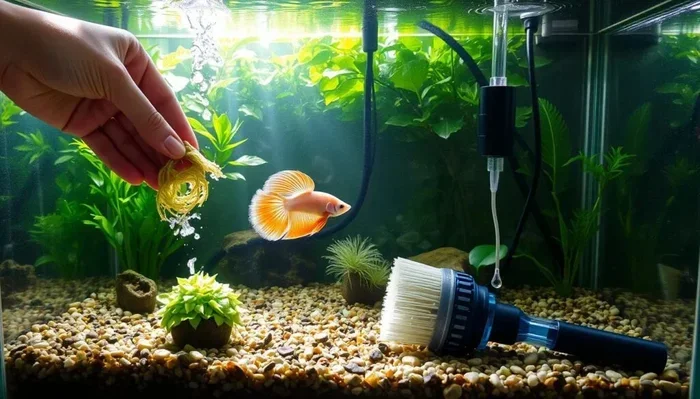
A gravel vacuum is one of the most useful tools for any betta tank. It sucks up debris, leftover food, and fish waste from the substrate. It also makes water changes much faster and more efficient.
You can find gravel vacuums at most pet stores. They come in different sizes. Pick one that fits your tank size. For a small betta tank, a simple siphon vacuum works perfectly. Using a gravel vacuum regularly means you do not have to deep clean as often.
Algae Scraper and Algae Magnet
Algae buildup on the glass is inevitable. An algae scraper or algae magnet makes quick work of it. These tools let you clean the glass without reaching into the tank.
Algae magnets are especially convenient. You hold one piece on the outside and move it around the glass. The magnetic piece inside follows. No need to get your hands wet. Just be gentle so you do not scratch the glass.
Soft Sponge or Cloth
When you need to wipe down the inside walls or decorations, use a soft sponge. Never use a sponge that has been used for household cleaning. Always dedicate a sponge just for your aquarium.
A soft-bristled brush also works well for textured decorations. Just make sure it has never touched soap or chemicals. The golden rule is simple: if it has touched a household cleaner, it does not belong in your betta tank.
Bucket and Siphon Hose
A clean bucket dedicated only to aquarium use is essential. Use it for water changes and for mixing in any cleaning solutions. A siphon hose helps move water in and out of the tank without spilling.
Keep all your aquarium tools separate from household cleaning supplies. This prevents accidental contamination. A small investment in dedicated tools pays off in a healthy tank.
What Can I Clean My Betta Fish Tank With: Safe Cleaners
Now let us get to the heart of the topic. What can I clean my betta fish tank with that is actually safe? There are several options, ranging from simple household items to purpose-built aquarium products.
Warm Water
The simplest and safest cleaner is warm water. It works wonders on glass, decorations, and removable equipment. Just make sure the water is not hot. Lukewarm water is best because it helps dissolve grime without shocking your fish.
When you take out a filter pad or decoration for cleaning, rinse it in warm water from the tank itself. This preserves the good bacteria living on those surfaces. Never use cold tap water directly because the temperature shock can kill beneficial bacteria.
White Vinegar Solution
White vinegar is a natural and safe option for tough algae and mineral deposits. Mix one part white vinegar with one part water. Apply it to the outside of the tank or to removable items like the lid or filter housing.
Rinse everything thoroughly with clean water after using vinegar. You want no vinegar residue left behind. Vinegar works great for descaling hard water stains too. It is cheap, natural, and effective.
Aquarium-Safe Commercial Cleaners
Several commercial products are designed specifically for aquarium cleaning. Look for products labeled as fish-safe or aquarium-safe. These are formulated to be non-toxic to fish and plants.
Some popular options include algae pads treated with safe cleaning agents and tank cleaning solutions that break down organic waste. Always read the label carefully. If a product does not explicitly say it is safe for aquariums, do not use it.
Baking Soda
Baking soda is another gentle and natural cleaner. It works well for removing stubborn algae from decorations. Make a paste with a little water, apply it to the affected area, and scrub gently with a soft brush.
Rinse the decoration thoroughly before placing it back in the tank. Baking soda is safe in small amounts, but you do not want any residue. It is a great option for items you can remove from the tank.
What NOT to Clean Your Betta Tank With
This part is just as important. There are many things that seem like they would work but can be extremely dangerous for your betta fish. Knowing what to avoid protects your fish and your tank ecosystem.
Soap and Detergent
Never use soap, dish detergent, or any bathroom or kitchen cleaner in or near your betta tank. Even a tiny residue can be lethal. Soap strips the slime coat on your betta fish, leaving them vulnerable to infections.
Some people think rinsing well enough removes all traces. That is a risky assumption. Soap residue clings to surfaces and is nearly impossible to fully rinse away. Always keep soap far away from your aquarium.
Bleach and Chlorine-Based Cleaners
Bleach is extremely toxic to fish. It kills beneficial bacteria and damages your betta’s gills and skin. Even diluted bleach can cause serious harm or death.
If you must sterilize a tool or decoration, use a diluted bleach solution of no more than 1 part bleach to 19 parts water. Rinse it extremely thoroughly and let it air dry completely. But honestly, there are safer alternatives for most cleaning jobs.
Abrasive Cleaners and Scouring Pads
Steel wool, scouring pads, and abrasive powders can scratch your tank. Scratches create hiding spots for bacteria and algae that are hard to reach later. They can also release tiny particles into the water.
Stick with soft sponges, microfiber cloths, and aquarium-specific scrub pads. Your tank glass will stay clear and smooth without the risk of scratches.
Ammonia-Based Cleaners
This one might surprise you. Ammonia-based window or surface cleaners are toxic to fish. Since ammonia is already a concern in aquariums, adding more through cleaning products makes no sense. Always check labels and avoid anything that lists ammonia as an ingredient.
How to Clean Your Betta Tank the Right Way
Knowing what can I clean my betta fish tank with is only half the battle. How you clean matters just as much. A bad cleaning routine can do more harm than good. Here is a step-by-step approach that keeps your betta safe.
Step 1: Prepare a Water Change
Start by preparing fresh water. If you use tap water, let it sit for 24 hours to allow chlorine to evaporate. Alternatively, you can use a water conditioner to neutralize chlorine instantly. The water should be close to the tank temperature, around 78-80 degrees Fahrenheit for bettas.
Use a siphon to remove about 25-30 percent of the tank water. Vacuum the gravel at the same time to pull out debris. This is the most effective way to keep water quality high between full cleanings.
Step 2: Clean the Glass
Use an algae magnet or scraper to clean the inside glass. Wipe down the outside with a damp, clean cloth. If you have hard water spots, a light vinegar solution on the outside works well. Just never spray anything directly into the tank.
Step 3: Rinse Decorations and Equipment
Remove any decorations that look dirty. Rinse them in a bucket of tank water you removed during the water change. This keeps the beneficial bacteria alive on those surfaces. The same goes for filter media. Rinse it gently in old tank water, never in tap water.
Step 4: Refill and Condition
Add the fresh water back slowly to avoid disturbing your betta. Use a plate or bowl to diffuse the flow of incoming water. Add your water conditioner if you have not already treated the fresh water. Check the temperature before finishing.
Step 5: Monitor Your Fish
After cleaning, watch your betta for the next few hours. Look for signs of stress like rapid breathing or hiding. A normal betta should return to its usual behavior within an hour or so. If something seems off, test the water parameters.
Quick Tips for Keeping Your Betta Tank Clean Longer
Cleaning is easier when you do it a little at a time. Here are some quick tips that make a big difference:
- Feed less: Overfeeding creates more waste. Feed your betta small amounts twice a day and remove any uneaten food after five minutes.
- Add live plants: Plants absorb nitrates and compete with algae for nutrients. They naturally help keep the tank cleaner.
- Do not overstock: A betta tank should not have too many fish or creatures. More inhabitants means more waste.
- Clean filter media gently: Rinse it in old tank water once a month. Never use soap or tap water.
- Test water regularly: A liquid test kit gives you accurate readings of ammonia, nitrite, and nitrate levels.
- Clean the filter regularly: A clogged filter does not work well. But remember to never replace all filter media at once.
If you are wondering about the best ways to maintain water quality between cleanings, check out our guide on how to clean your betta fish tank for more detailed tips. Also, make sure you are using the right water source. Learn about using tap water safely and adding water to your betta tank the right way.
Another helpful topic is cleaning your tank filter properly. Find out if you can use a filter with your betta fish and how to maintain it without disrupting the tank ecosystem.
Common Mistakes People Make When Cleaning Betta Tanks
Even well-meaning betta owners make mistakes. Here are the most common ones and how to avoid them.
Replacing All the Water at Once
This is probably the biggest mistake. Replacing 100 percent of the water removes all beneficial bacteria. It also shocks your betta with a sudden change in water parameters. Always stick to partial water changes of 25-30 percent at a time.
Using Hot Water to Rinse Decorations
Hot water can kill good bacteria and warp plastic decorations. Always use lukewarm or room temperature tank water for rinsing anything that goes back into the aquarium.
Cleaning Everything on the Same Day
It might seem efficient to clean the filter, gravel, and decorations all at once. But this strips too many beneficial bacteria from the tank. Spread your cleaning tasks across different days to maintain a healthy bacterial colony.
Ignoring the Filter
A dirty filter means dirty water. But cleaning the filter too aggressively also causes problems. The key is gentle rinsing of filter media in old tank water. Never wring it out or scrub it with soap.
Skipping Water Testing After Cleaning
After a cleaning session, always test your water. Cleaning can sometimes disturb the nitrogen cycle. Testing helps you catch any problems before they affect your betta fish.
Expert Insights on Betta Tank Cleaning
Experienced betta keepers agree on a few key principles. First, consistency beats intensity. A little cleaning done regularly works far better than a big deep clean once a month. Second, always prioritize your betta’s comfort. If your fish seems stressed after cleaning, check the water parameters immediately.
Many experts also recommend keeping a cleaning log. Note what you cleaned, when, and how your betta responded. Over time, you will see patterns that help you fine-tune your routine. This simple habit can transform how you care for your tank.
One more expert tip: do not underestimate the power of live plants. They are nature’s cleaning crew. Plants absorb ammonia, nitrates, and phosphates. They produce oxygen and create a more natural, stress-free environment for your betta. If you have not added plants yet, consider starting with easy options like java moss or anubias.
If you are curious about other tank inhabitants and how they affect cleaning routines, learn more about what fish can go in your betta tank and how different species impact tank maintenance.
Conclusion
Now you know exactly what can I clean my betta fish tank with. The answer is simple: warm water, soft tools, natural solutions like vinegar and baking soda, and aquarium-safe commercial products. The key is to avoid anything harsh like soap, bleach, or ammonia-based cleaners.
Building a regular cleaning routine makes all the difference. Small, consistent efforts keep your tank healthy and your betta thriving. Remember to use the right tools, rinse everything in tank water, and never clean too much at once.
Your betta fish deserves a clean and safe home. With the right approach, keeping the tank spotless is easy and even enjoyable. Start applying these tips today and watch your betta flourish in a sparkling clean environment.
Frequently Asked Questions
Can I use soap to clean my betta fish tank?
No, you should never use soap to clean your betta fish tank. Soap residue is extremely toxic to fish and can damage their gills and skin. Even thorough rinsing may not remove all traces of soap. Always stick to aquarium-safe cleaning methods like warm water, vinegar solutions, or dedicated tank tools.
What is the safest cleaner for a betta fish tank?
The safest cleaner is plain warm water. For tougher grime, a diluted white vinegar solution works well on removable items. Aquarium-specific commercial cleaners labeled as fish-safe are also good options. The key is to never introduce chemicals that are not designed for aquarium use.
How often should I clean my betta fish tank?
A partial water change of 25-30 percent should be done every one to two weeks. A deeper cleaning of decorations and glass can happen once a month. The frequency depends on your tank size, filtration, and how many fish you have. Regular testing of water parameters helps you decide when cleaning is needed.
Can I use tap water to rinse my betta tank equipment?
It is best to rinse equipment in tank water you removed during a water change. Tap water contains chlorine and chloramines that can kill beneficial bacteria and harm your betta. If you must use tap water, let it sit for 24 hours or treat it with a water conditioner first.
Is vinegar safe for cleaning a betta fish tank?
Yes, white vinegar diluted with water is safe for cleaning removable tank items and the outside of the tank. Never spray vinegar directly into the tank or use it on items that cannot be rinsed thoroughly. Always rinse everything well with clean water before putting it back in the aquarium.
What should I do if my betta seems stressed after tank cleaning?
First, test the water parameters to check for ammonia, nitrite, or pH swings. Make sure the new water temperature matches the tank temperature. If the stress continues, do a small water change with conditioned water. Give your betta some quiet time and observe for 24 hours. If symptoms worsen, consult a fish veterinarian.