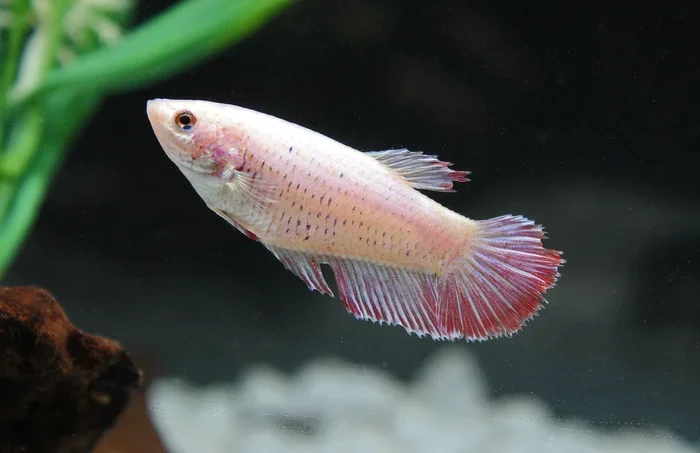
Is My Betta Fish a Girl or Boy

Figuring out if your betta fish is a girl or boy is easier than you think. You can tell the gender by looking at fin shape, body color, and even behavior like bubble nest building. This guide covers every simple method to help you identify your betta’s sex with confidence.
Is my betta fish a girl or boy? This is one of the most common questions new betta owners ask. Whether you just brought home a beautiful betta or you have had one for a while, knowing the gender helps you provide better care. It also matters if you are thinking about tank mates or breeding.
The good news is that telling the difference between a male and female betta is not hard. You just need to know what to look for. In this guide, we will walk you through every simple method. By the end, you will feel confident identifying your betta’s gender every time.
Betta fish gender identification relies on a few clear physical and behavioral signs. These include fin length, body shape, color intensity, and the presence of an egg spot. Let us break each one down so it is easy to understand.
Key Takeaways
- Fin shape is the biggest clue: Males have longer, flowing fins while females have shorter, rounded ones.
- Body shape and size differ: Females tend to be wider and stockier, especially when carrying eggs.
- Color intensity varies by gender: Males typically display brighter, more vivid colors than females.
- Bubble nests are a male trait: Only male bettas build bubble nests to attract mates.
- The egg spot helps identify females: A small white spot on the belly is a key female characteristic.
- Behavioral differences exist: Males are more aggressive and display more flaring behavior.
- Age matters for identification: It gets easier to tell gender once your betta reaches 2-3 months old.
📑 Table of Contents
- Why Knowing Your Betta’s Gender Matters
- Physical Differences: How to Tell a Male From a Female
- Behavioral Clues to Identify Gender
- The Egg Spot: A Key Female Identifier
- How Age Affects Gender Identification
- Common Mistakes When Identifying Betta Gender
- Quick Tips for Accurate Gender Identification
- Can Male and Female Bettas Live Together?
- Conclusion
Why Knowing Your Betta’s Gender Matters
You might wonder why gender identification is so important. It actually affects many parts of betta care. Understanding whether your fish is male or female helps you make smarter decisions about housing, tank setup, and overall well-being.
Housing and Tank Mate Decisions
If you want to keep multiple bettas, gender is a big factor. Male bettas are highly territorial and cannot live together. Can you put a boy and girl betta fish together? Sometimes yes, but it requires careful setup. Knowing your betta’s gender helps you avoid fights and stress in the tank.
Breeding Considerations
If you ever plan to breed bettas, you need a male and a female pair. Identifying gender early helps you prepare the right breeding environment. It also helps you understand the behaviors that come with each sex during the breeding process.
General Care Adjustments
Female bettas sometimes have different care needs than males. For example, females may need more hiding spots. Males may need space to build bubble nests. Why is my male betta fish making a bubble nest? This is a natural behavior that only males display, and it is one of the best gender clues.
Physical Differences: How to Tell a Male From a Female
The easiest way to answer “is my betta fish a girl or boy” is by looking at physical traits. Males and females have distinct body features that become more obvious as they mature.
Fin Shape and Length
Male bettas have long, flowing fins that trail behind them as they swim. Their dorsal fin, tail fin, and anal fin are all extended and dramatic. Females have much shorter fins that sit closer to the body. The fins are rounded and compact rather than pointed and long.
If your betta has fins that look like beautiful ribbons streaming through the water, it is most likely a male. Shorter, stubbier fins usually mean a female.
Body Shape and Size
Female bettas tend to have a wider, rounder body shape. This is especially true when they are carrying eggs. Males are generally slimmer and more streamlined in appearance.
When you look at your betta from above, a female may appear bulkier in the midsection. A male will look more narrow and elongated. Are boy betta fish or girl betta bigger? Males are often slightly larger overall, but the body shape difference is a more reliable clue than size alone.
Color Intensity
Male bettas are famous for their vibrant, intense colors. They display bright blues, reds, greens, and purples that seem to glow. Females usually have more muted, lighter colors.
That said, some female bettas can still be quite colorful. The key is that males tend to have deeper, more saturated hues. If your fish looks like a living jewel, there is a good chance it is a boy.
Behavioral Clues to Identify Gender
Beyond looks, betta behavior gives you strong hints about gender. Watching how your fish acts can confirm what you see physically.
Bubble Nest Building
One of the clearest signs of a male betta is bubble nest building. Males blow tiny bubbles and stick them together at the surface of the water. This nest is meant to attract a female and protect future fry.
If you see a cluster of bubbles floating near the surface, your betta is almost certainly a male. Females do not build bubble nests. However, not all males build nests at the same rate. Some build large nests, while others build small ones or none at all, especially in certain conditions.
Flaring and Aggression
Male bettas flare their gills and spread their fins to look bigger and more intimidating. They do this when they see another male, their own reflection, or even when they feel threatened. Females flare too, but much less frequently and less dramatically.
If your betta puts on a big show every time it sees something new, it is likely a male. Females tend to be calmer and less showy in their responses.
Chasing and Nesting Behavior
Males may chase other fish or even their own reflection. This territorial behavior is much more common in males. Females can be territorial too, but they are generally less aggressive toward other fish.
The Egg Spot: A Key Female Identifier
One of the most reliable ways to tell if your betta is female is by looking for an egg spot. This is a small white or pale dot located on the underside of the belly, near the vent area.
The egg spot is also called the ovipositor. It is where the female releases her eggs during breeding. Not all females show a visible egg spot, especially young or non-mature females. But when it is present, it is a strong indicator that your betta is a girl.
Males do not have an egg spot. If you see a small white dot on the belly of your fish, you are likely looking at a female betta.
How Age Affects Gender Identification
Telling the gender of a very young betta can be tricky. Baby bettas do not show clear physical differences until they reach a certain age. Here is what to expect at different stages:
- Under 2 months: Gender differences are barely visible. Fins are short and colors are dull for both sexes.
- 2 to 3 months: Males start developing longer fins and brighter colors. The egg spot may appear on females.
- 3 months and older: Gender becomes much easier to identify. Fin differences, body shape, and color intensity are all clearly visible.
If you have a young betta, give it some time before trying to determine gender. Wait until it is at least 2 to 3 months old for the most accurate results.
Common Mistakes When Identifying Betta Gender
Many people make mistakes when trying to figure out if their betta is male or female. Here are the most common errors to avoid:
- Relying only on color: Some females can be quite colorful, especially certain breeding strains. Do not assume a colorful fish is always male.
- Checking too early: Young bettas under 2 months often look the same regardless of gender. Wait until they mature.
- Ignoring body shape: Focusing only on fins and forgetting about body shape can lead to misidentification.
- Assuming all females have visible egg spots: Some females never show a clear egg spot, even when they are fully mature.
- Confusing fin length with fin damage: Ripped or torn fins can make a male look like a female. Look at the overall fin length and shape, not just the condition.
Quick Tips for Accurate Gender Identification
Here are some practical tips to help you identify your betta’s gender quickly and accurately:
- Look at your betta in a calm, well-lit environment. Stress can change how a fish appears.
- Observe your betta from above to check body shape. A wider midsection often means female.
- Check the fins. Long, flowing fins point to a male. Short, rounded fins point to a female.
- Look for the egg spot near the belly. A visible white dot is a strong female indicator.
- Watch for bubble nest activity at the water surface. This is a clear male behavior.
- Compare your betta to reference images of male and female bettas online for visual confirmation.
- Be patient. Wait until your betta is at least 2 to 3 months old before making a final determination.
When in doubt, try using more than one method together. Combining fin shape, body shape, color, and behavior gives you the most accurate answer to “is my betta fish a girl or boy.”
Can Male and Female Bettas Live Together?
This is a question many betta owners ask. The short answer is sometimes, but it is not always easy. Male and female bettas can live together in a carefully set up tank with plenty of space and hiding spots. However, there is always some risk of aggression.
If you want to try keeping a male and female together, make sure the tank is at least 10 gallons. Add lots of plants and decorations to break up lines of sight. Monitor them closely for signs of stress or fighting. Can you put a girl and boy betta fish together? Yes, but it requires preparation and ongoing attention.
Remember that every betta has its own personality. Some individuals are more tolerant than others, regardless of gender.
Conclusion
Figuring out if your betta fish is a girl or boy is a fun and rewarding process. You now know the key physical signs like fin shape, body shape, and color intensity. You also understand the behavioral clues such as bubble nest building and flaring. The egg spot is one of the most reliable female identifiers, and age plays an important role in when these differences become visible.
By using the tips in this guide, you can confidently answer “is my betta fish a girl or boy” with accuracy. Take your time, observe your fish closely, and use multiple methods together for the best results. Whether your betta is a boy or a girl, understanding its gender helps you provide the best possible care and create a happy, healthy home for your colorful companion.
Frequently Asked Questions
How can I tell if my betta fish is male or female?
Look at fin length, body shape, color intensity, and the presence of an egg spot. Males have longer fins, slimmer bodies, and brighter colors. Females have shorter fins, wider bodies, and a small white egg spot on the belly.
At what age can you tell a betta fish’s gender?
You can usually tell the gender once your betta is about 2 to 3 months old. Before that, the physical differences are too subtle to see clearly. Wait until fins and colors start developing for the most accurate identification.
Do female bettas build bubble nests?
No, bubble nest building is a male behavior. If you see bubbles clustered at the water surface, your betta is most likely a male. Females do not build bubble nests.
Can a betta fish change gender?
No, betta fish do not change gender. They are born either male or female, and this does not change over their lifetime. However, young bettas may look the same until they mature, which can make identification confusing at first.
Why is my female betta fish not eating?
If your female betta is not eating, it could be due to stress, illness, or preparation for breeding. A loss of appetite is a common sign that something needs attention. Check water parameters and look for other symptoms like lethargy or color changes.
Is it easier to care for a male or female betta fish?
Both genders are relatively easy to care for. Males are often more colorful and display more interesting behaviors like bubble nest building. Females tend to be less aggressive and can sometimes be kept in small groups called sororities. Each has its own care considerations.