How to Treat Bloated Betta Fish
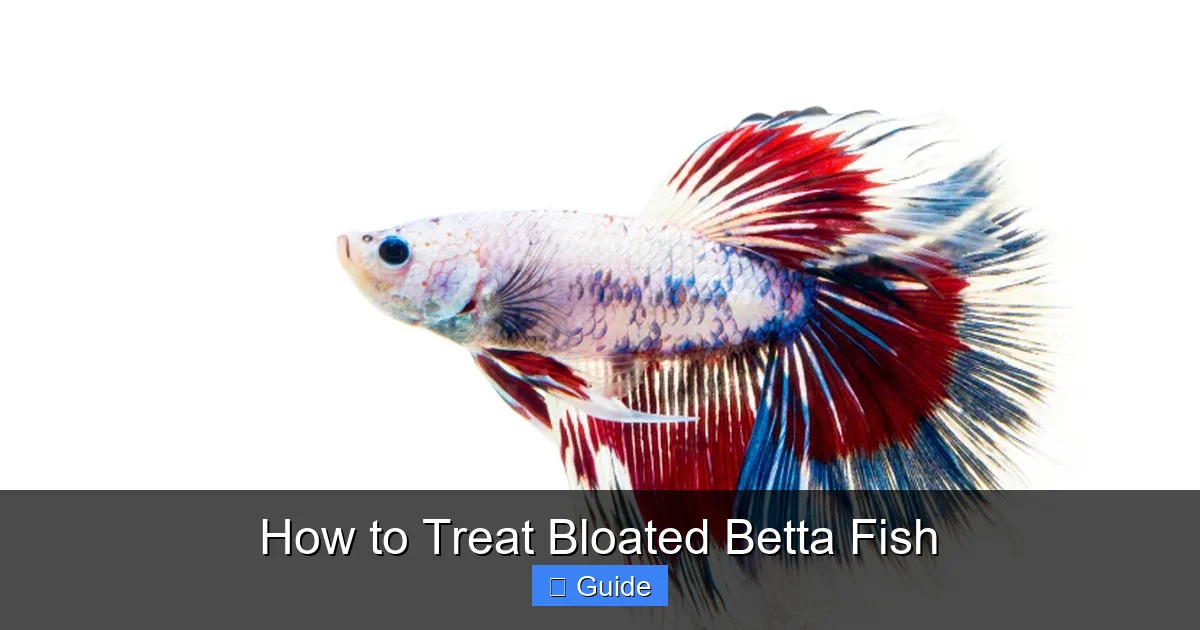
Seeing your betta fish swollen and lethargic is alarming, but often treatable. Bloating is usually caused by constipation from overfeeding, poor diet, or infection like dropsy. The first and most critical step is to fast your betta for 24-48 hours to clear its digestive system. Follow up with a high-fiber diet like daphnia and ensure pristine water quality. If swelling persists or pinecone scales appear, it may be incurable dropsy, requiring immediate, aggressive antibiotic treatment or humane euthanasia.
Key Takeaways
- Fast First: Always begin treatment by fasting your bloated betta for 24-48 hours to relieve constipation, the most common cause of bloat.
- Water is Medicine: Perform a 25-50% water change with dechlorinated, temperature-matched water to improve water quality and reduce stress, which is fundamental for recovery.
- Dietary Fix: After fasting, feed a tiny amount of a high-fiber laxative food like skinned, blanched peas or live/frozen daphnia to stimulate digestion.
- Identify Dropsy: Pinecone-like raised scales are the definitive sign of dropsy (bacterial infection). This is often fatal and requires immediate antibiotic treatment in a quarantine tank.
- Epsom Salt Baths: For non-dropsy bloat, a 30-minute bath in water with 1 tsp of Epsom salt per gallon can help reduce swelling and soothe the fish.
- Prevent with Routine: Prevent bloat by feeding high-quality pellets sparingly (2-3 pellets, once daily), avoiding overfeeding, and maintaining weekly water changes.
- Quarantine New Additions: Always quarantine new fish, plants, or invertebrates for at least 2 weeks to prevent introducing pathogens that can cause diseases like dropsy.
📑 Table of Contents
- Understanding Bloat: It’s Not Always What It Seems
- Immediate First Aid: The Critical First 48 Hours
- Treatment Path A: Tackling Constipation
- Treatment Path B: The Dreaded Dropsy Diagnosis
- Prevention: The Best Medicine for Bloated Betta Fish
- When to Say Goodbye: The Difficult Decision
- Recovery and Returning to Normal
Understanding Bloat: It’s Not Always What It Seems
You walk over to your betta’s tank, ready for your daily “hello,” and your heart sinks. Your usually active, flaring fish is listless, floating awkwardly, and its belly looks swollen and distended. That familiar feeling of worry and guilt kicks in. “What did I do wrong? Is my betta fish bloated because of me?” First, take a breath. Bloating in betta fish is an extremely common issue, and while serious, it’s often treatable if you act quickly and correctly. The term “bloat” is a symptom, not a disease itself. It’s your betta’s way of signaling that something is wrong internally. Your job is to become a detective and figure out the root cause.
Two primary culprits are responsible for the vast majority of bloated betta fish cases: constipation and dropsy. These are fundamentally different problems requiring opposite approaches. Constipation is a digestive blockage, usually from poor diet or overfeeding. It’s like a traffic jam in the gut. Dropsy, on the other hand, is a systemic bacterial infection (often Aeromonas spp.) that causes fluid buildup internally, leading to severe edema. The body’s response is to swell, and a classic tell-tale sign is “pineconing,” where the scales stand outward like a pinecone. This is a critical distinction. One is often manageable with simple home care. The other is a grave, life-threatening emergency. This guide will walk you through identifying the cause and implementing the correct treatment plan for your bloated betta fish.
Immediate First Aid: The Critical First 48 Hours
Regardless of the suspected cause, the first 24-48 hours of treatment are almost identical and are non-negotiable. This period is about stabilizing your fish, reducing stress, and addressing the most common issue: constipation. Skipping these steps drastically reduces your betta’s chances of recovery.
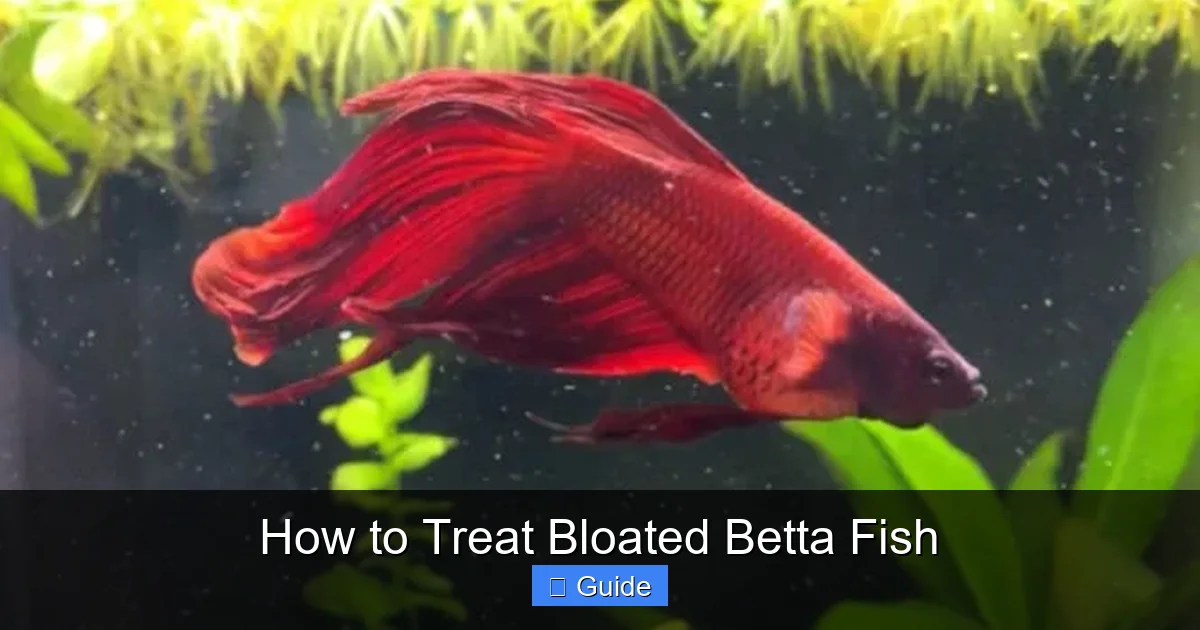
Visual guide about How to Treat Bloated Betta Fish
Image source: aquanswers.com
Step 1: The Fast
Yes, you read that right. Stop feeding your betta immediately. This is the hardest step for many devoted owners, but it is the most important. A constipated digestive tract is inflamed and full of undigested matter. Adding more food is like adding more cars to a gridlocked highway. Fasting gives the entire digestive system a complete rest. It allows inflammation to subside and any impaction to potentially move through. For a bloated betta fish, a fast of 24 to 48 hours is the standard protocol. Do not worry about your betta starving; in good water, a healthy betta can easily go a week without food. This short fast is a therapeutic tool.
Step 2: The Water Change
While your betta fasts, you must address its environment. Poor water quality is a massive stressor that suppresses the immune system, making any underlying condition worse. Perform a 25-50% water change immediately. Use a water conditioner to remove chlorine and chloramines. Crucially, the new water must be within 1-2 degrees Fahrenheit of your tank’s temperature. A sudden temperature change is a severe shock. This water change dilutes any ammonia, nitrite, or nitrate spikes and removes excess waste, giving your fish a cleaner, less stressful environment to heal in. Repeat a 25% water change daily for the next 2-3 days.
Step 3: Temperature Increase
Gently raise the temperature of your betta’s tank by 2-3 degrees Fahrenheit (to around 80-82°F / 27-28°C is ideal). Warmer water speeds up a betta’s metabolism, which can help move things along in the digestive tract during and after the fast. It also boosts immune function. Use your aquarium heater to make this adjustment slowly over an hour or so. Do not use an external heat source like a lamp directly on the tank, as this causes dangerous temperature swings.
Treatment Path A: Tackling Constipation
If after the 24-48 hour fast the bloated betta fish shows signs of improvement—slightly less swollen, perhaps a bit more active—constipation is the likely culprit. The swelling should visibly reduce, and your fish may start to pass waste. Now, it’s time to gently restart the digestive system with the right food.

Visual guide about How to Treat Bloated Betta Fish
Image source: aquanswers.com
The Magic of the Pea
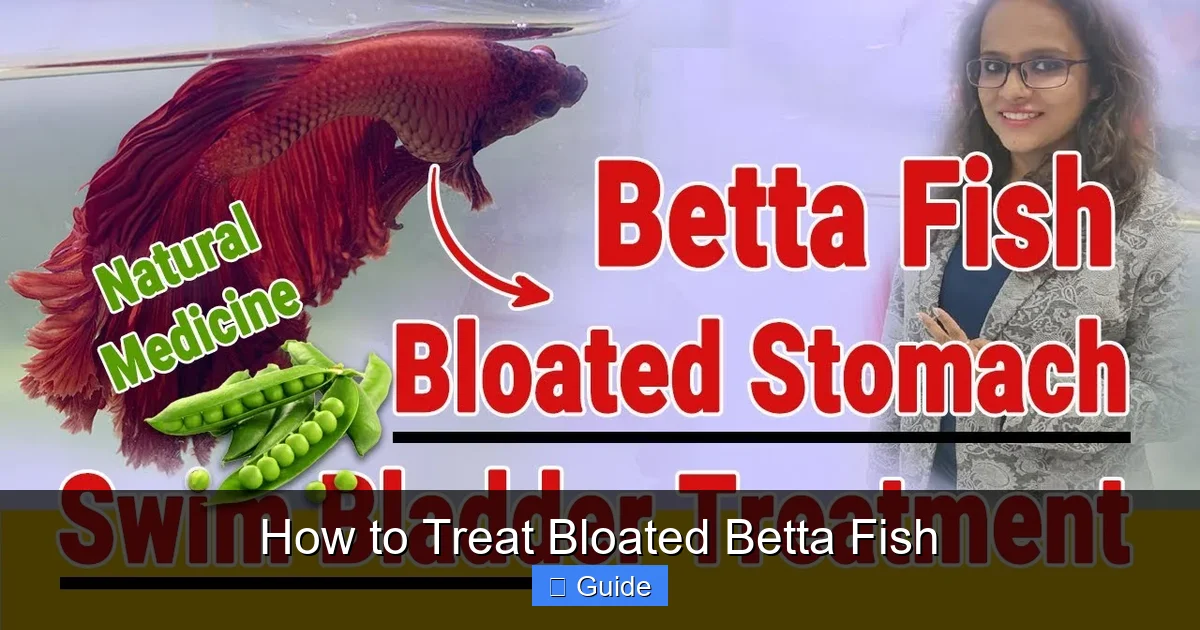
The classic home remedy for constipated bettas is the humble green pea. It’s high in fiber and acts as a natural laxative. Here’s how to prepare it correctly: Take a frozen or fresh green pea, remove the skin (this is vital, as the skin is hard to digest), and boil or steam it until very soft. Let it cool completely, then mash it into a tiny paste. Offer your betta a minuscule amount—a dab smaller than its eye—using a tweezers or your finger. Watch to see if it eats. If it does, you may offer this once a day for 2-3 days. Any uneaten pea must be removed within 15 minutes to fouling the water. Alternatively, you can use high-quality frozen or live daphnia. Daphnia are tiny crustaceans with a hard exoskeleton that acts as a gentle scrub brush in the intestines, promoting regularity. A few frozen daphnia, thawed, is an excellent option.
Epsom Salt (Magnesium Sulfate) Baths
For persistent bloat not related to dropsy, an Epsom salt bath can help draw out excess fluid and reduce swelling. Do not add Epsom salt directly to your main tank, as it can disrupt the beneficial bacteria. Instead, prepare a separate hospital container. Use 1 teaspoon of unscented, plain Epsom salt per gallon of clean, dechlorinated water. The water should be the same temperature as your main tank. Gently net your betta and place it in this bath for 15-30 minutes. Observe closely for signs of severe stress. After the bath, return it to its clean main tank. You can repeat this once daily for 2-3 days. This is a supportive treatment, not a cure for infection.
Treatment Path B: The Dreaded Dropsy Diagnosis
This is the scenario every betta owner fears. If your bloated betta fish’s scales are starting to lift away from its body, creating that distinctive pinecone texture, the diagnosis is almost certainly dropsy. This is not constipation. Dropsy is a symptom of a severe internal bacterial infection, typically of the kidney, which causes the body to retain massive amounts of fluid. The pineconing is the fluid pushing the scales out. Dropsy is almost always fatal if not treated with extreme aggression from the very beginning. The key is catching it at the first sign of scale lifting.
Visual guide about How to Treat Bloated Betta Fish
Image source: i.ytimg.com
Aggressive Antibiotic Treatment
Dropsy requires a full course of a broad-spectrum antibiotic that is effective against gram-negative bacteria like Aeromonas. Over-the-counter “cure-all” medications are often weak and ineffective. You need a strong antibiotic. The most effective and recommended treatments are:
- Kanamycin Sulfate or Kanaplex (by Seachem): This is a top-tier, highly effective antibiotic for internal infections. It is usually administered via a medicated food soak or directly in the water in a quarantine tank.
- Furan-2 (or similar): Another potent antibacterial medication.
- Maracyn 2 (by Mardel): Specifically formulated for gram-negative infections.
Crucially, antibiotics must be administered in a separate, bare-bottom quarantine tank. You cannot treat the main display tank with these strong medications, as they will destroy the beneficial bacteria cycle. Set up a small, filtered, heated quarantine tank with clean, dechlorinated water. Move your betta there immediately. Follow the medication dosage instructions exactly for the full recommended course (usually 5-7 days), even if your betta seems better after 2 days. Stopping early allows resilient bacteria to survive and cause a relapse. Water changes in the quarantine tank should be done with medicated water (replace removed water with water pre-mixed with the correct medication dose) to maintain therapeutic levels.
Supportive Care During Dropsy Treatment
While the antibiotic fights the infection, you must support your betta’s failing body. Add 1-2 teaspoons of Epsom salt per 5 gallons in the quarantine tank to help with edema. Do not fast a dropsy-affected betta. Its body is wasting; it needs calories to fight. Offer easily digestible, high-quality foods like frozen daphnia or brine shrimp multiple times a day. Use a turkey baster to gently syringe food near its mouth if it cannot swim well. The goal is to keep its energy up. The prognosis for dropsy is guarded to poor, even with perfect treatment. Success depends on the fish’s immune strength and how early treatment began. If the betta is pineconed, lethargic, and not eating, the humane choice may need to be considered.
Prevention: The Best Medicine for Bloated Betta Fish
An ounce of prevention is worth a pound of cure. The good news is that most cases of betta bloat are entirely preventable with proper husbandry. Your goal is to mimic the betta’s natural, protein-rich, insect-larva diet in a clean, stable environment.
Feed a Proper, Minimal Diet
Bettas are carnivores with short digestive tracts. Their staple should be a high-quality pellet or granule formulated specifically for bettas (look for protein as the first ingredient, >40%). The rule is: feed what your betta can eat in 30 seconds, once a day. For most bettas, this is 2-3 small pellets. Overfeeding is the #1 cause of constipation. Supplement this staple diet 2-3 times a week with a treat of frozen or live daphnia, brine shrimp, or bloodworms. These provide essential nutrients and fiber. Avoid feeding bits of human food, especially bread or potatoes, which are useless to a betta. Always soak dry pellets in tank water for a minute before feeding to prevent them from expanding in the fish’s stomach.
Maintain Impeccable Water Quality
Bettas are from shallow, slow-moving waters. Their labyrinth organ allows them to breathe air, but they are still highly sensitive to poor water quality, which causes stress and compromises immunity. For a filtered tank, perform a 25% water change weekly. For a unfiltered bowl or small tank (which is not ideal), perform a 50% water change every other day. Use a reliable water conditioner. Test water regularly for ammonia, nitrite, and nitrate. Ammonia and nitrite should always be 0 ppm. Nitrate should be below 20 ppm. A clean tank is a healthy tank.
Quarantine and Observe
Never add a new fish, live plant, or even a decoration from another tank directly into your betta’s home. These can carry pathogens that cause dropsy or other diseases. Always quarantine new arrivals for a minimum of 2-4 weeks in a separate tank. Observe them closely for any signs of illness before introducing them. This simple step can save your entire aquarium from an outbreak.
When to Say Goodbye: The Difficult Decision
This is the hardest part of being a pet owner. Not every betta fish can be saved, and prolonging suffering is not kindness. You must assess your fish’s quality of life. If your bloated betta fish is pineconed (dropsy), is lying on the bottom, unable to maintain buoyancy, not eating for several days, and shows no response to treatment after 48-72 hours, its internal systems are likely shutting down. Dropsy causes immense discomfort. In these cases, a swift and humane euthanasia is the most compassionate act of love you can provide. The most recommended method for fish is the clove oil method, which is peaceful and effective. Consult online resources from reputable aquarium or veterinary sources for a step-by-step guide. It is okay to let go. You provided a good home and tried your best. That is what matters.
Recovery and Returning to Normal
If your betta survives the bloat episode, its recovery needs to be managed carefully. For the first week after symptoms subside, continue feeding only the high-fiber, easily digestible foods like daphnia and skinned peas. Slowly reintroduce high-quality pellets over the next week. Maintain excellent water quality with frequent small water changes. Keep the water temperature at the warmer end of its comfort range (78-80°F) for another week to aid digestion. Observe your fish closely for any return of symptoms. Once fully recovered for two weeks, you can return to a normal, preventive feeding schedule. This experience is a lesson in proper betta care. Use it to refine your husbandry practices and ensure your fish lives a long, healthy, bloat-free life.
Frequently Asked Questions
How long should I fast my bloated betta fish?
You should fast your bloated betta for 24 to 48 hours. This gives its digestive system a complete rest to clear a potential constipation blockage. After the fast, reintroduce food with a high-fiber laxative like a skinned pea or daphnia.
Can I treat dropsy at home?
Yes, dropsy can be treated at home, but it requires aggressive, immediate action. You must move the fish to a separate quarantine tank and administer a strong, full-course antibiotic like Kanamycin (Kanaplex) for 5-7 days. The prognosis is poor, and treatment must start at the very first sign of pineconing.
What’s the difference between constipation and dropsy?
Constipation causes swelling from a gut blockage and the fish usually remains active. Dropsy is a fatal bacterial infection causing fluid retention; the definitive sign is raised, pinecone-like scales. Constipation is treated with fasting and fiber; dropsy requires immediate, powerful antibiotics in quarantine.
My betta is bloated but not pineconed. What should I do?
>Focus on constipation treatment: fast for 24-48 hours, perform daily 25% water changes, and gently raise the temperature to 80°F. After the fast, offer a tiny amount of skinned, blanched pea or frozen daphnia. An Epsom salt bath in separate water can also help reduce swelling.
How can I prevent my betta from getting bloated again?
Prevent bloat by feeding 2-3 high-quality betta pellets once daily (what it eats in 30 seconds), supplementing with daphnia 2-3 times a week, and performing weekly 25% water changes. Never overfeed and always quarantine new tank additions for 2+ weeks.
When should I consider euthanasia for my bloated betta?
Consider humane euthanasia if your betta shows clear signs of dropsy (pineconing), is completely lethargic, unable to swim or eat, and shows no improvement after 48-72 hours of proper antibiotic treatment. Prolonging severe suffering is not compassionate.