How to Start Breeding Betta Fish
Breeding betta fish starts with proper preparation, a healthy breeding pair, and the right tank setup. You will learn how to condition your fish, create the perfect spawning environment, and care for betta fry from day one. This guide covers every step you need to raise healthy baby bettas successfully.
Breeding betta fish can feel exciting and a little intimidating at first. But with the right knowledge, anyone can raise healthy baby bettas at home. This guide walks you through every step of the process in plain language.
Whether you are a complete beginner or someone who already keeps bettas, you will find useful tips here. We cover how to pick the right pair, set up the breeding tank, and care for betta fry. Let us jump right in and learn how to start breeding betta fish the smart way.
Key Takeaways
- Start with a healthy breeding pair: Choose a male and female betta that are at least 4–6 months old and show vibrant colors.
- Condition your fish properly: Feed high-quality foods like live brine shrimp to get your bettas ready for spawning.
- Set up the right tank: A 10-gallon tank with a heater, sponge filter, and floating plants creates the ideal breeding environment.
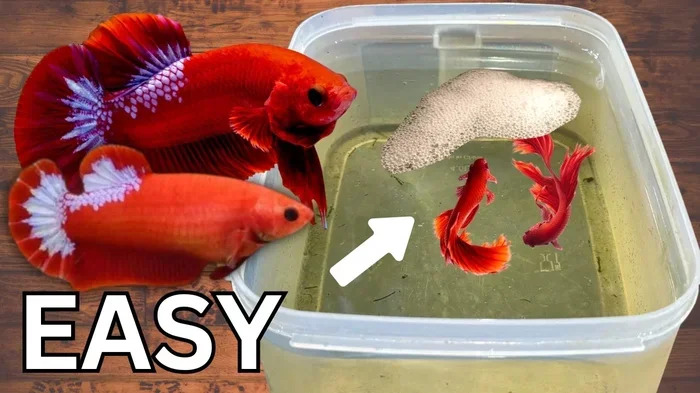
- Watch for the bubble nest: This is the male’s signal that he is ready to spawn and care for the eggs.
- Separate the female after spawning: The male may become aggressive, so removing the female keeps both fish safe.
- Feed betta fry carefully: Infusoria and baby brine shrimp are the best first foods for tiny fry.
📑 Table of Contents
Why Breed Betta Fish?
Breeding betta fish is a rewarding hobby. It lets you witness the full life cycle of these beautiful creatures. You also get to see unique color patterns emerge in the fry that you might not find in stores.
Many hobbyists start breeding to improve their stock. Others do it simply for the joy of watching a male build a bubble nest and care for his babies. Whatever your reason, preparation is the key to success.
Betta fish breeding requires patience and attention to detail. You cannot rush the process. Each stage has its own needs, and skipping steps can lead to problems. But do not worry, we will break it all down for you.
Step 1: Choose a Healthy Breeding Pair
The first and most important step is picking the right fish. Not all bettas are ready to breed. You need a healthy male and a healthy female of the right age.
How to Pick the Male
Choose a male betta with bright, vivid colors. His fins should be long and flowing without any tears. A healthy male will build a strong bubble nest when he is ready.
Look for a male that is at least 4 to 6 months old. Younger males may not be mature enough. Avoid males that show signs of lethargy or clamped fins.
How to Pick the Female
A good breeding female should also be at least 4 to 6 months old. She should have a visible white spot on her underside called the egg spot. Her colors should be vibrant, and her body should be plump but not sickly.
If you are unsure how to identify a female betta, check out our guide on how to know female betta fish for helpful visual cues. A healthy female will show a white egg tube when she is ready to release eggs.
Age and Size Matters
Both fish should be roughly the same size. A big size difference can cause problems during spawning. The male might harm a much smaller female. Aim for fish that are about the same length, around 2 to 3 inches.
Step 2: Condition the Breeding Pair
Conditioning means feeding your bettas high-quality foods for 1 to 2 weeks before breeding. This prepares their bodies for spawning and raises the chances of healthy eggs.
Best Foods for Conditioning
Live or frozen foods work best during conditioning. Here are the top options:
- Live brine shrimp — packed with protein and nutrients
- Bloodworms — a favorite treat for bettas
- Daphnia — helps with digestion and overall health
- High-quality pellets — a good daily staple
Feed the pair 2 to 3 times a day in small amounts. Overfeeding can dirty the water fast. You want your fish to be in peak shape before you introduce them.
Proper conditioning is the foundation of successful betta fish breeding. If you skip this step, the pair may not be interested in spawning at all.
Step 3: Set Up the Breeding Tank
A separate breeding tank is essential. You should never breed bettas in a community tank. The male can be aggressive, and the female needs a safe escape route.
Tank Size and Setup
A 10-gallon tank works perfectly for breeding. Keep the water level around 5 to 6 inches deep. This gives the male enough space to build his bubble nest near the surface.
You will need a few key items:
- Aquarium heater — set to 78–80°F (25–27°C)
- Sponge filter — gentle flow to keep water clean
- Floating plants or a breeding mop — the bubble nest needs something to attach to
- Soft lighting — dim lights keep the fish calm
If you need help setting up the tank, our article on how to set up a fish tank for betta fish gives you detailed instructions on equipment and layout.
Water Preparation
Clean water is critical for breeding. Use treated water that is free of chlorine and chloramine. The water temperature should stay stable between 78 and 80 degrees Fahrenheit.
To make sure your water is safe, use a tap water conditioner before adding it to the tank. Test the pH too — it should be around 6.5 to 7.0 for best results.
Step 4: Introduce the Pair and Watch for Spawning
After conditioning for 1 to 2 weeks, you can introduce the pair. Place the female in a clear container inside the breeding tank first. Let them see each other for 1 to 2 days.
This helps them get used to each other without direct contact. You will see the male flare his fins and the female show interest. If the female has vertical stripes on her body, that is a good sign she is ready.
What Happens During Spawning
Once you release the female, the male will wrap his body around her to collect the eggs. This process can last several hours. The male will then place the eggs into his bubble nest.
Watch carefully during this time. If the male becomes too aggressive toward the female, remove her immediately. A healthy pair will spawn several times over a few hours.
After spawning is complete, remove the female from the tank. The male will guard the eggs and the bubble nest on his own. Leaving the female in the tank can lead to injuries.
Step 5: Care for the Eggs and Betta Fry
The male betta will take care of the eggs for 24 to 48 hours until they hatch. During this time, he will keep the bubble nest intact and pick up any eggs that fall.
After the Eggs Hatch
Once the fry hatch, remove the male from the tank. He may start eating the fry if left in the same space. The fry are tiny and very vulnerable at this stage.
For the first 2 to 3 days, the fry will live off their yolk sac. After that, you need to start feeding them. The best first foods include:
- Infusoria — tiny organisms you can culture at home
- Baby brine shrimp — the gold standard for fry food
- Crushed betta pellets — ground into a fine powder
Feed the fry small amounts 3 to 4 times a day. Remove any uneaten food right away to keep the water clean. Betta fry care requires clean water and consistent feeding.
Raising the Fry
As the fry grow, you can move them to a larger container or grow-out tank. Keep the water temperature stable and do regular small water changes. Within 2 to 3 months, you will start to see their colors develop.
Raising betta fry is a slow process, but it is very rewarding. You will learn so much about betta fish behavior and health along the way.
Common Mistakes to Avoid
Even experienced hobbyists make mistakes when breeding bettas. Here are the most common ones to watch out for:
- Skipping the conditioning phase — this lowers the chances of successful spawning
- Using a tank that is too large or too small — a 10-gallon tank is the sweet spot
- Leaving the female in the tank after spawning — the male may harm her
- Feeding fry too much — overfeeding causes dirty water and fry death
- Not monitoring water temperature — sudden temperature drops can shock the fish
Avoiding these mistakes will save you time, money, and heartache. Take your time and follow each step carefully.
Final Thoughts
Breeding betta fish is a journey that requires patience, planning, and love. You start by choosing a healthy pair, conditioning them well, and setting up the right tank. Then you watch the magic of spawning and carefully raise the fry until they are strong enough to thrive on their own.
If you want to deepen your understanding of betta care, check out our guide on how to properly take care of betta fish for more tips on keeping your fish happy and healthy.
Start small, learn from each experience, and enjoy the process. Every successful spawn teaches you something new. Happy breeding!
Frequently Asked Questions
How long does it take to breed betta fish?
The entire process from conditioning to hatching takes about 3 to 4 weeks. Conditioning takes 1 to 2 weeks, spawning happens within a few days of introduction, and the eggs hatch in 24 to 48 hours. Raising the fry to a manageable size takes another 2 to 3 months.
How do I know if my betta fish are ready to breed?
A ready male will build a bubble nest at the surface of the water. A ready female will show vertical stripes on her body and have a visible egg spot on her underside. Both fish should be at least 4 to 6 months old and in good health.
Can I breed betta fish in a bowl?
It is not recommended. Breeding bettas need a properly set up tank with a heater, sponge filter, and stable water conditions. A bowl does not provide enough space or water quality for successful breeding and fry survival.
What should I feed betta fry?
Start with infusoria or liquid fry food for the first week. After that, you can introduce baby brine shrimp, which is the best food for growing fry. Feed small amounts 3 to 4 times a day and remove any leftovers immediately.
Do I need to separate the male after the fry hatch?
Yes, you should remove the male as soon as the eggs hatch. He may start eating the fry or become less attentive to their needs. The fry can survive and grow well on their own in a properly maintained tank.
Why did my betta pair not spawn?
This can happen if the fish are not properly conditioned, if the water parameters are off, or if the pair is not compatible. Make sure both fish are healthy, well-fed, and at the right age. Also check that the water temperature is between 78 and 80 degrees Fahrenheit.