Which Betta Fish Can Live Together
Most betta fish, especially males, are solitary and aggressive and should live alone. However, female bettas can sometimes form peaceful groups called sororities with careful planning. A few specific, less-aggressive betta species may also tolerate tank mates. Success depends entirely on tank size, proper setup, and close observation to prevent fighting and ensure the well-being of all your fish.
So you’ve fallen in love with the majestic, flowing fins and vibrant colors of the betta fish. You’ve set up a beautiful tank, but now you’re wondering: can I get my betta a friend? The short, and most common, answer is a firm no. The reputation of the betta, or Siamese fighting fish, as a solitary, aggressive creature is well-earned. But the world of betta fish is more nuanced than a simple “they fight.” The question of which betta fish can live together isn’t about finding a friendly betta; it’s about understanding species, sex, environment, and managing profound risk. This guide will dive deep into the complex social dynamics of bettas, separating myth from reality, and providing a clear roadmap for the rare, successful multi-betta or betta community tank.
Key Takeaways
- Male Betta Fish: Almost always must be housed alone due to their extreme territorial aggression towards other males and often towards any fish with flowing fins.
- Female Betta Sororities: Groups of 4-6 females can sometimes live together in a very large, heavily planted tank (minimum 40+ gallons), but it requires expert-level management and carries risk.
- Species Matters: Wild-type bettas like *Betta imbellis* (Peaceful Betta) or *Betta smaragdina* are generally less aggressive and more compatible with community tanks than flashy, selectively bred *Betta splendens*.
- Tank Size is Non-Negotiable: For any group housing, a minimum of 40 gallons is the starting point for a sorority or community tank; smaller tanks guarantee conflict.
- Compatible Tank Mates: If attempting a community, choose fast, non-flashy, bottom-dwelling fish like certain tetras, rasboras, or corydoras catfish; avoid guppies, other bettas, and long-finned fish.
- Setup is Everything: Ample hiding spots, dense plants (live or silk), visual barriers, and a tight-fitting lid are critical to reduce stress and territory disputes.
- Constant Vigilance Required: Even in ideal setups, bettas can turn aggressive suddenly. Be prepared to separate fish immediately at the first sign of fin-nipping or chasing.
📑 Table of Contents
The Betta’s Nature: Why Solitude is the Default
To understand which betta fish can live together, you must first understand why they usually cannot. This behavior is written in their DNA. In the shallow, resource-limited rice paddies and slow-moving streams of Southeast Asia, male bettas evolved to defend tiny territories fiercely. A rival male entering that space is a direct threat to mating opportunities and survival, leading to the legendary fights that gave them their name. This aggression isn’t just towards other bettas; it can be triggered by any fish that looks like a competitor—especially those with long, flowing fins (like fancy guppies or angelfish) or bright colors.
The Male Betta’s World: A Kingdom of One
The male *Betta splendens* you buy from a store is the pinnacle of this selective aggression. Decades of breeding for color and finnage have intensified their territorial instincts. A male betta in a community tank will often perceive a reflective surface, a floating plant leaf, or a passing fish as an intruder. He will flare his gills, spread his fins to appear huge, and may attack relentlessly. This stress weakens his immune system and can lead to death from exhaustion or injury. There is virtually no tank size or setup that reliably makes a male betta safe with another male betta or with flashy, slow-moving tank mates. The default, safest, and most ethical choice for a male betta is a species-only tank of at least 5 gallons.
Female Betta Dynamics: A Different Social Structure
Female bettas, in the wild, live in loose social groups where a dominance hierarchy is established. This is the biological basis for the possibility of a “sorority” tank. However, this is not a peaceful, friendly gathering. It’s a constantly negotiated pecking order. In a properly sized and decorated tank, a hierarchy can stabilize with minimal violence. But in too-small tanks or poorly decorated ones, the hierarchy cannot form peacefully, leading to relentless bullying, injury, and death. This is why female betta sororities are considered an advanced, high-risk endeavor, not a beginner-friendly option.
Species That Can Live Together: Beyond the Standard Betta
When asking which betta fish can live together, we must distinguish between the common aquarium betta (*Betta splendens*) and its wild cousins. Many other *Betta* species are far less aggressive and more adapted to sharing their environment.

Visual guide about Which Betta Fish Can Live Together
Image source: articles.hepper.com
Wild-Type and “Peaceful” Betta Species
Species like the Peaceful Betta (*Betta imbellis*) and the Emerald Betta (*Betta smaragdina*) are known for their relatively docile nature. They are mouthbrooders (males carry eggs in their mouth) rather than bubble-nesters, a behavior linked to less intense territoriality around a nest site. These species often originate from environments with more cover and slightly different social structures. They can sometimes be kept in pairs (male and female) or in small groups in a heavily planted, spacious community tank (50+ gallons). However, “peaceful” is a relative term; individual temperaments vary, and a male *B. imbellis* may still view another male as a rival. Always research the specific species thoroughly.
The “Pairing” Myth: Male and Female Betta
A very common question is whether a male and female betta can live together permanently. The answer is almost always no. The only exception is for experienced breeders in a dedicated, massive breeding tank (often 40+ gallons) with constant supervision, where the pair is introduced temporarily for spawning and then separated immediately afterward. In a permanent community setting, the male will see the female as an intruder on his territory or, if he accepts her initially, will harass her constantly to spawn, causing her extreme stress and physical harm. Coerced spawning leads to injured or dead females. Do not attempt a permanent male-female pair.
The Blueprint for Success: Tank Setup for Groups
If you are determined to try keeping multiple bettas or a betta with other fish, your tank setup is not just important—it is the single biggest factor determining life or death. For which betta fish can live together, the answer is “the ones with a perfectly designed environment.”
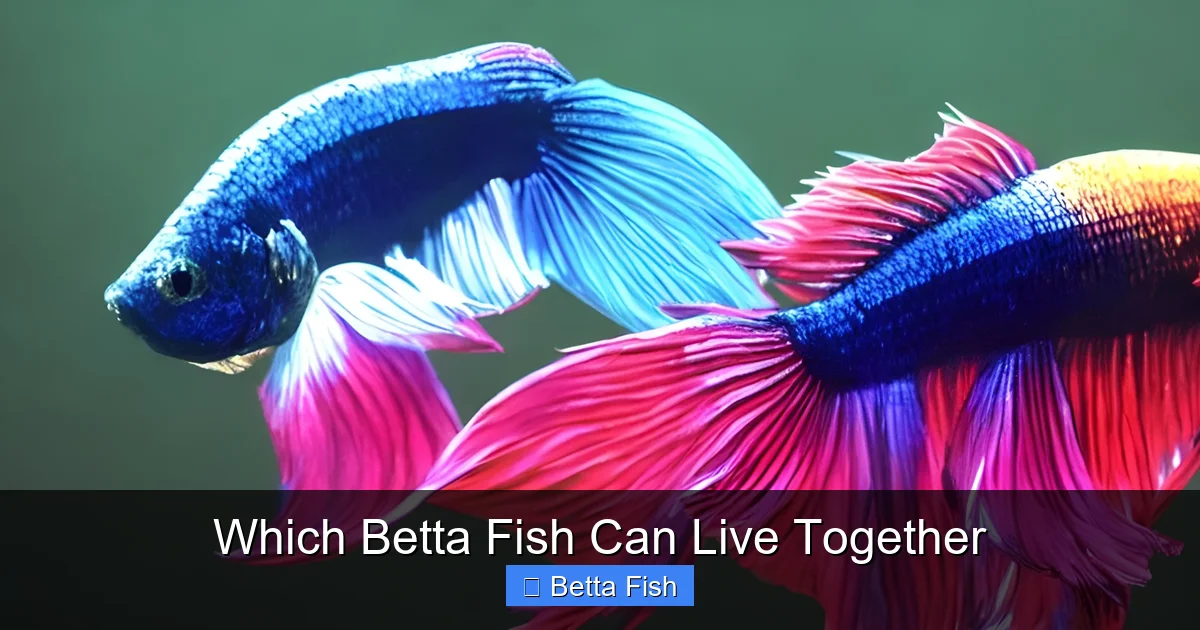
Visual guide about Which Betta Fish Can Live Together
Image source: tankofish.com
Tank Size: You Cannot Overestimate This
This is the first and hardest rule. For a female betta sorority, the absolute minimum is a 40-gallon long tank (48+ inches in length). This provides enough horizontal space for multiple territories to form. For a community with a single male betta or a peaceful *Betta* species, the tank should still be no smaller than 20 gallons, but 40+ is vastly safer and more stable. Why so big? In a small tank, there is no escape. The betta’s territory encompasses the entire water column. A larger tank allows other fish to have their own spaces and provides more room for the betta to patrol a truly “king-sized” domain without seeing every corner as an immediate threat.
Aquascaping: Creating a Maze of Safety
Your tank must look like a dense jungle, not an open arena. The goal is to break lines of sight. Use:
- Dense Planting: Live plants like Java fern, Anubias, Cryptocoryne, and floating plants (duckweed, frogbit) are ideal. They provide cover, reduce stress, and mimic natural habitat. Silk plants are a viable alternative if live plants are challenging.
- Hardscape & Caves: Driftwood, rock piles, and ceramic caves offer physical barriers and hiding spots. Arrange them to create visual partitions.
- Substrate Variation: Use different heights of substrate or add leaf litter to create more complexity on the tank floor.
A well-aquascaped sorority or community tank will have fish disappearing into the greenery for hours. If you can see every fish from every angle at all times, your tank is too open and conflict is inevitable.
Compatible Tank Mates: Choosing the Right Neighbors
For a single, carefully chosen betta (often a male in a community setting), selecting tank mates is a delicate process. The mantra is: fast, non-flashy, and non-territorial.
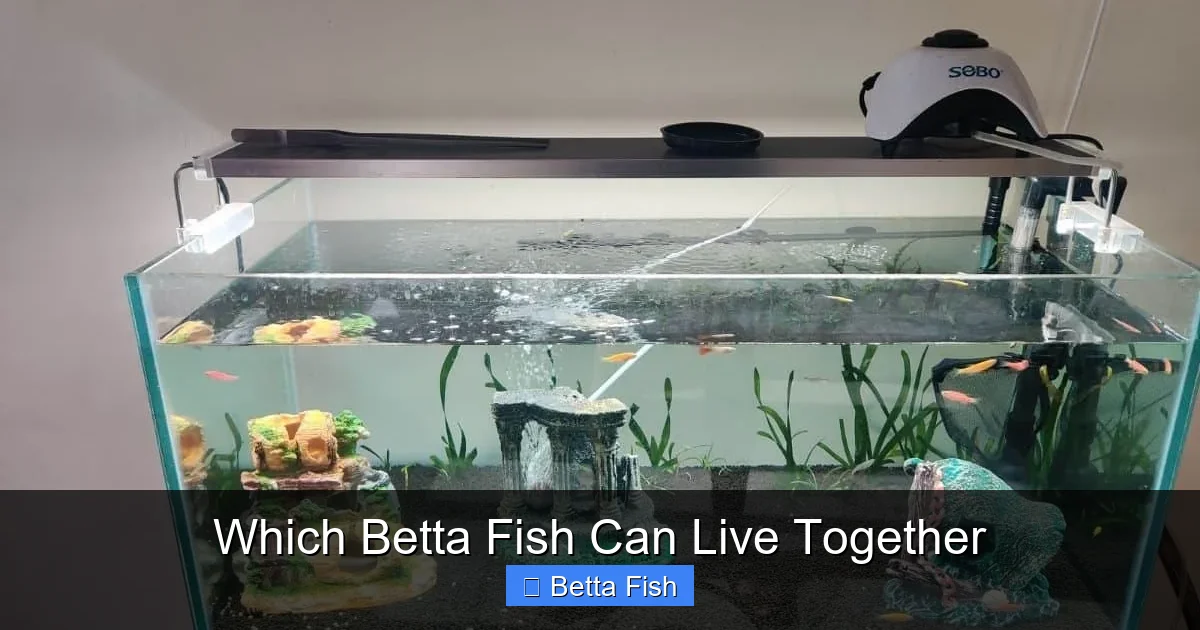
Visual guide about Which Betta Fish Can Live Together
Image source: housedpet.com
The “Good” List: Speed and Subtlety
These fish are generally successful because they are too fast to be caught, do not resemble bettas, and prefer different areas of the tank.
- Small, Fast Tetras & Rasboras: Schools of Ember Tetras, Neon Tetras, Harlequin Rasboras, or Chili Rasboras. Their speed and schooling nature make them elusive targets. They occupy the mid to upper levels.
- Corydoras Catfish: These adorable, armored bottom-dwellers are perfect. They are peaceful, social, and stay on the substrate, completely out of the betta’s mid-water domain.
- Kuhli Loaches: Eel-like, nocturnal, and constantly burrowing in the substrate. They are rarely seen during the day and pose no threat.
- Snails: Large apple snails or nerite snails are excellent. They have no fins to nip, move slowly, and help with algae. Some bettas may peck at them, but they are generally safe.
- Shrimp: Amano shrimp or large, fast-moving ghost shrimp can work. Cherry shrimp are often seen as food and will likely be eaten, especially the babies. Dense planting is crucial for shrimp survival.
The “Never” List: Inviting Disaster
These fish are a recipe for a bloodbath:
- Any other Betta Fish: This includes other males, females (for permanent housing), and even closely related *Betta* species unless you are an expert with a massive tank.
- Fancy, Long-Finned Fish: Guppies, fancy mollies, angelfish, and veil-tail bettas. Their flowing fins trigger the betta’s aggression instantly.
- Brightly Colored Fish: Male guppies, some male swordtails, or any fish with intense reds and blues may be seen as a rival male betta.
- Territorial or Aggressive Fish: Tiger barbs, some cichlids, or fish that will nip fins back (like some serpae tetras) will lead to mutual destruction.
- Slow, Swims Bladder-Prone Fish: Fancy goldfish or balloon mollies. They cannot escape a betta’s pursuit.
Common Mistakes and Warning Signs
Even with the best intentions, things go wrong. Knowing the pitfalls and early warnings is crucial for anyone asking which betta fish can live together.
The “It Was Fine at the Store” Fallacy
Seeing a betta in a community tank at a big-box store is not an endorsement. Those tanks are often overstocked, stressed, and the betta is usually too exhausted or defeated to react. This is a sign of poor welfare, not compatibility. You are bringing home a stressed animal into a new, permanent environment where its true personality will emerge.
Ignoring the First Signs of Trouble
Act immediately if you see:
- Fin-nipping: Any torn, shredded, or missing fin rays on the betta or another fish.
- Constant Chasing: One fish relentlessly pursuing another around the tank, not just a brief flare-up.
- Hiding: The betta or tank mates spending all day locked in caves or behind filters, refusing to eat.
- Faded Colors and Lethargy: Stress manifests as paleness and listlessness in bettas.
- Vertical Hanging (Clamped Fins): A classic sign of severe stress or disease in fish.
If you see these, you must have a backup plan—a separate hospital tank—ready to house the aggressor or victim within hours. Do not hope it will get better.
Conclusion: A Responsible Approach to Betta Companionship
So, which betta fish can live together? The honest, comprehensive answer is: very few, and only under perfect, expert-level conditions. The vast majority of betta fish, particularly the popular male *Betta splendens*, are destined for a life of solitary grandeur. Their vibrant colors and dramatic displays are meant for you, their keeper, not for a tankmate. Providing a single male betta with a spacious, beautifully planted, species-only tank is the pinnacle of good betta care. If you desire a community tank, choose a peaceful, wild-type betta species and pair it with fast, non-threatening fish in a generously sized, meticulously aquascaped aquarium. For the intrepid few attempting a female sorority, commit to a 40+ gallon tank, a group of at least 6 females to disperse aggression, and the readiness to rehome individuals at a moment’s notice. The joy of watching a thriving, peaceful betta community is immense, but it is a reward earned through research, investment, and unwavering vigilance. Always prioritize the well-being of the fish over our desire for a cute tankscape. When in doubt, choose solitude. Your betta’s long, healthy life depends on it.
Frequently Asked Questions
Can I keep two male betta fish together if the tank is huge?
No. Even in a 100-gallon tank, two male bettas will see each other as mortal rivals and will fight until one is severely injured or dead. Their aggression is instinctual and not negated by space.
How many female bettas can I keep in a sorority tank?
A sorority requires a minimum of 4-6 females in a 40+ gallon long tank. This number allows a stable pecking order to form, preventing one from being singled out and killed. Never start with just 2 or 3 females.
What is the best tank mate for a male betta?
The safest and most compatible tank mates are small, fast, schooling fish like ember tetras or harlequin rasboras, and peaceful bottom-dwellers like corydoras catfish or kuhli loaches. Always introduce the tank mates first, let them establish their territories, and then add the betta.
Can I keep my betta with shrimp or snails?
Yes, large snails (nerite, apple) and large, fast shrimp (Amano, ghost) are generally safe. Cherry shrimp are often viewed as food and will likely be eaten, especially by a male betta. Dense planting is essential to give shrimp a chance to breed and hide.
How do I know if my betta is stressed from tank mates?
Look for faded or pale colors, clamped (tight) fins, constant hiding, lethargy, loss of appetite, and frantic swimming or glass surfing. If your betta is flaring at its reflection or other fish constantly, that is also a sign of high stress.
My betta is chasing my other fish. What should I do?
You must act immediately. Have a separate “hospital” or quarantine tank ready. Remove the aggressor (the betta) or the victim (the other fish) within hours. Do not hope they will work it out; prolonged stress and injury will likely lead to death. Rehome the aggressive fish or return it to the store if necessary.