How to Clean My Betta Fish Tank Safely and Quickly
Cleaning your betta fish tank doesn’t have to be stressful or complicated. With the right tools and routine, you can maintain pristine water quality without harming your fish. This guide shows you exactly how to clean my betta fish tank safely while keeping your aquatic friend happy and healthy.
This is a comprehensive guide about how to clean my betta fish tank.
Key Takeaways
- Regular maintenance matters: Weekly partial water changes prevent toxin buildup and keep your betta thriving.
- Never use soap or chemicals: Harsh cleaners leave residues that can kill fish, so stick to warm water and aquarium-safe tools.
- Match water temperature: Always acclimate new water to the tank temperature to avoid shocking your betta.
- Clean the substrate gently: Use a gravel vacuum to remove waste without disturbing beneficial bacteria.
- Maintain the filter properly: Rinse filter media in tank water, not tap water, to preserve helpful bacteria colonies.
- Test water parameters: Monitor ammonia, nitrite, and nitrate levels to catch issues before they become dangerous.
- Keep a consistent schedule: A predictable cleaning routine reduces stress for both you and your fish.
[FEATURED_IMAGE_PLACEHOLDER]
Introduction
Taking care of a betta fish is rewarding, but many new owners worry about maintenance. You want your fish to live a long, vibrant life, and clean water is the foundation of that goal. The good news is that you don’t need fancy equipment or hours of free time to keep things running smoothly.
If you have ever wondered how to clean my betta fish tank without causing stress, you are in the right place. This guide breaks down every step into simple, manageable actions. You will learn what to do, what to avoid, and how to build a routine that works for your schedule.
Let’s dive in and make tank care easy and effective.
Gather the Right Supplies Before You Start
Preparation makes every cleaning session faster and safer. When you have everything ready, you avoid rushing and making mistakes. Here is what you need to have on hand before you begin.
Essential Cleaning Tools
You do not need expensive gear to get the job done well. A few basic items will cover most of your needs. Keep these in a dedicated spot so you can grab them quickly.
- Gravel vacuum or siphon: This removes debris and old water from the substrate without disturbing the entire tank.
- Clean buckets: Use buckets that have never held soap, chemicals, or cleaning agents. Residue from other uses can harm fish.
- Water conditioner: This neutralizes chlorine, chloramine, and heavy metals in tap water.
- Thermometer: Checking water temperature helps you match new water to the tank.
- Soft algae scraper or sponge: Gentle tools remove glass buildup without scratching the surface.
- Clean towels: Keep a few dedicated towels nearby for spills and drying equipment.
What to Avoid
Some common household items seem harmless but can cause serious problems. Never use soap, detergent, bleach, or antibacterial cleaners anywhere near your tank or equipment. Even a tiny amount of residue can damage your fish’s delicate gills and slime coat.
If you want to learn more about safe cleaning products, read our guide on can you use soap to clean a betta fish tank. The short answer is no, and this article explains why in detail.
Quick Tip: Label your cleaning buckets clearly so no one else uses them for other purposes.
Understand Your Water Before You Change It
Water quality is the heart of a healthy aquarium. Betta fish are sensitive to sudden changes, so understanding your water source matters a lot. Not all water is safe straight from the tap, and knowing the difference saves you from costly mistakes.
Tap Water and Treatment
Tap water is convenient and affordable, but it usually contains chlorine or chloramine. These chemicals kill harmful bacteria in pipes, but they also harm fish. A good water conditioner removes these toxins quickly and makes the water safe for your betta.
If you are unsure about your local water supply, check out can i add tap water to my betta fish tank for a clear breakdown of what to watch for. You will learn how to treat tap water properly and when to consider alternatives.
Temperature Matching
Betta fish thrive in warm water, usually between 76 and 82 degrees Fahrenheit. Adding cold water can cause temperature shock, which stresses the fish and weakens its immune system. Always measure the temperature of your new water before adding it to the tank.
You can find helpful advice on this topic at can you add warm water to betta fish tank. It covers safe warming methods and why gradual changes matter.
Alternative Water Sources
Some owners wonder about bottled, purified, or alkaline water. These options can work in certain situations, but they are not always necessary. Tap water with proper treatment is usually the best balance of safety and cost.
For a deeper look at water choices, see can i use purified water in my betta fish tank. You will get a clear comparison of different water types and when each makes sense.
Common Mistake: Adding untreated tap water directly to the tank. Always condition your water first.
Step-by-Step Cleaning Routine
Now let’s walk through a simple cleaning process you can follow every week. This routine focuses on partial water changes, gentle substrate cleaning, and basic glass maintenance. You do not need to empty the entire tank unless you are setting it up for the first time.
Step 1: Prepare the New Water
Fill a clean bucket with the amount of water you plan to add. A good rule is to change about 25 to 30 percent of the tank volume each week. Add your water conditioner and let it sit for a few minutes. Check the temperature and adjust it to match the tank.
Step 2: Remove Old Water
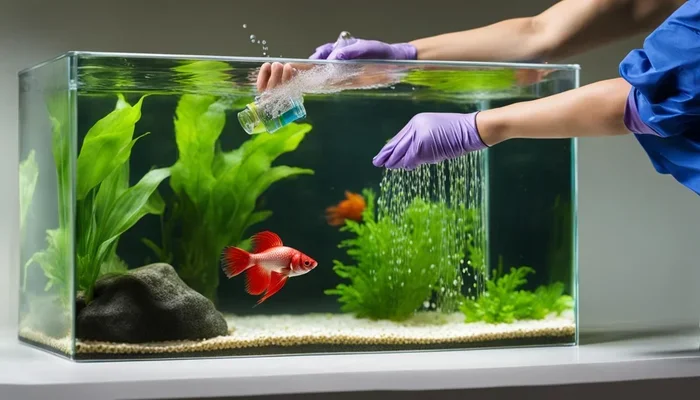
Use your gravel vacuum to siphon out the old water. Move the vacuum slowly through the substrate to lift waste without digging too deeply. If your tank has live plants, be careful around the roots. You want to remove debris, not uproot everything.
Step 3: Clean the Glass
Use a soft algae scraper or clean sponge to wipe the inside glass. Work from top to bottom and avoid spreading algae across the surface. If you see stubborn spots, a gentle scrub usually solves the problem. Never use razor blades on acrylic tanks, as they can scratch easily.
Step 4: Rinse Decorations and Equipment
Take out any decorations, rocks, or artificial plants that need cleaning. Rinse them in the old tank water you just removed. This keeps beneficial bacteria intact while removing excess algae or debris. Avoid using tap water on these items, since it can shock the biological balance.
Step 5: Add the New Water
Slowly pour or drip the treated water into the tank. Pouring near the surface or using a plate to diffuse the flow helps prevent disturbance. Your betta may swim away at first, but this is normal. Give the fish a moment to settle back into its space.
Step 6: Check the Filter
After the water change, look at your filter. If the flow seems weak or the media looks clogged, rinse it in a small amount of old tank water. This clears debris without washing away the helpful bacteria that keep the tank stable.
If you are unsure whether your setup needs a filter, check do betta fish have to be in a filtered tank. It explains the role of filtration and how to choose the right setup for your fish.
Quick Tip: Keep a small notebook or phone note to track your cleaning dates and water parameters.
Maintain the Substrate and Decorations
The bottom of your tank and the items inside it play a big role in water quality. Waste, uneaten food, and decaying plant matter can collect in the substrate and release harmful compounds over time. Regular attention keeps the environment clean without disrupting the whole tank.
Gravel and Substrate Care
If you use gravel, a siphon vacuum is your best friend. Pass it gently across the surface during each water change. You do not need to clean every inch each time. Rotating sections over several weeks keeps the substrate healthy while preserving beneficial bacteria.
If you are considering sand instead of gravel, read can i use sand in my betta fish tank. Sand has different cleaning needs, and this guide helps you decide what works best for your setup.
Decorations and Plants
Artificial decorations can collect algae and grime. Remove them occasionally and rinse them in old tank water. Live plants need different care. Trim dead leaves, remove decaying matter, and make sure they have enough light and nutrients.
If you like adding natural elements, you may wonder about safe plant choices. For example, see can put moss rose cuttings in my betta fish tank to understand which plants are suitable and which should stay out of the aquarium.
Avoid Overcleaning
It is tempting to scrub everything until it looks brand new, but that can do more harm than good. Beneficial bacteria live on surfaces throughout the tank, and they help break down waste. Removing too much at once can upset the balance and cause ammonia spikes.
Expert Insight: A slightly aged tank with stable bacteria is often healthier than a spotless tank that keeps getting fully stripped down.
Keep the Filter Running Smoothly
Your filter is a major part of the cleaning system. It traps debris, supports beneficial bacteria, and keeps water moving. A well-maintained filter makes every water change more effective and helps your betta stay healthy.
Rinse, Don’t Replace
When filter media looks dirty, rinse it in water you removed from the tank. This removes loose debris while keeping the bacteria colonies alive. Tap water can contain chlorine that kills those bacteria, so avoid using it directly on filter parts.
Watch for Flow Changes
If water moves slowly through the filter or you hear unusual noises, check for clogs. Debris can build up in the intake tube or sponge. A quick rinse usually restores normal flow. If the problem continues, inspect the impeller and other moving parts.
Choosing the Right Filter
Not every filter suits every tank. Some bettas prefer gentle flow, while others do better with more circulation. The right choice depends on tank size, decoration, and your fish’s comfort. If you want to compare options, look at do betta fish have to be in a filtered tank for practical guidance.
Common Mistake: Replacing all filter media at once. This can crash your biological filtration and stress the tank.
Watch Your Betta’s Behavior After Cleaning
A good cleaning routine should leave your fish active and comfortable. After you finish, spend a few minutes observing your betta. Behavior changes can tell you a lot about water quality and how well the tank is settling.
Normal Reactions
It is normal for a betta to swim away during cleaning and then return once things calm down. Some fish explore right away, while others hide briefly. As long as your betta resumes normal activity within a short time, the process likely went smoothly.
Signs of Stress
Watch for clamped fins, rapid breathing, lingering at the surface, or hiding for too long. These can signal water quality issues, temperature shock, or overcleaning. If you notice problems, test your water and check your recent changes.
If your betta seems unusually tired or stays near the top, you may want to read do betta fish hanging at top of tank. It explains common reasons for this behavior and what to do next.
Testing Water Parameters
A simple test kit gives you a clear picture of what is happening in the tank. Check ammonia, nitrite, nitrate, and pH regularly. Stable numbers mean your cleaning routine is working. Spikes tell you something needs adjustment.
Quick Tip: Test your water at the same time each week so your results stay consistent and easy to compare.
Build a Cleaning Schedule That Fits Your Life
Consistency matters more than perfection. A simple routine you can follow is better than an elaborate plan you skip often. The goal is steady water quality, not a spotless tank every single day.
Weekly Basics
- Change 25 to 30 percent of the water.
- Siphon the substrate gently.
- Wipe the glass as needed.
- Rinse filter media in old tank water if flow is reduced.
- Check temperature and condition new water.
Monthly Tasks
- Inspect decorations and remove heavy algae.
- Check tubing, connections, and filter parts.
- Review test results and adjust care if needed.
- Clean the outside glass and hood with a damp cloth.
Adjust as Needed
Every tank is different. A heavily stocked setup may need more frequent attention, while a lightly stocked tank may stay stable longer. Watch your fish and your water numbers, then fine-tune your schedule.
If you want to understand how tank size affects maintenance, see do betta fish like 10 gallon tank. Tank size can change how often you clean and how stable the water remains.
Key Takeaway: A steady routine with small, regular changes is easier on your fish than rare, dramatic cleanouts.
Conclusion
Learning how to clean my betta fish tank is really about building a calm, consistent routine. You do not need to overcomplicate the process or strip the tank down every week. Focus on partial water changes, gentle substrate cleaning, safe water treatment, and filter care. Those steps keep the environment stable and your betta comfortable.
Remember to match water temperature, avoid soap and harsh chemicals, and preserve beneficial bacteria whenever possible. Observe your fish after each cleaning and use test results to guide your next moves. With a little practice, tank maintenance becomes a simple part of your week rather than a stressful chore.
Your betta will thank you with brighter colors, better activity, and a healthier life. Keep it steady, keep it gentle, and enjoy the process.
Question?
How often should I clean my betta fish tank?
Most betta tanks do well with a weekly partial water change of about 25 to 30 percent. The exact schedule depends on tank size, filtration, and how much waste builds up. Watch your water parameters and adjust if needed.
Question?
Can I use tap water to clean my betta fish tank?
Yes, tap water is fine as long as you treat it with a water conditioner first. Tap water often contains chlorine or chloramine, which can harm fish. Always match the temperature before adding it to the tank.
Question?
Do I need to remove my betta fish while cleaning the tank?
Usually, you do not need to remove your betta during a standard water change. Gentle cleaning and careful water addition keep the fish safe in the tank. Only move your betta if you are doing a deeper clean or addressing a health issue.
Question?
What should I never use when cleaning a betta fish tank?
Never use soap, detergent, bleach, or antibacterial cleaners on tank surfaces, equipment, or decorations. These products leave residues that can damage fish and disrupt the tank’s balance. Stick to warm water and aquarium-safe tools.
Question?
How do I clean the gravel without hurting beneficial bacteria?
Use a gravel vacuum to siphon waste from the surface during a water change. Work gently and avoid digging too deep into the substrate. Rinse any removed items in old tank water instead of tap water to protect helpful bacteria.
Question?
Why does my betta fish hide after I clean the tank?
Hiding briefly after cleaning is common and often just a reaction to movement or changed conditions. Make sure the water temperature matches and the new water is treated properly. If hiding continues, test your water and check for stress signs.
Frequently Asked Questions
What is how to clean my betta fish tank?
how to clean my betta fish tank is an important topic with many practical applications.