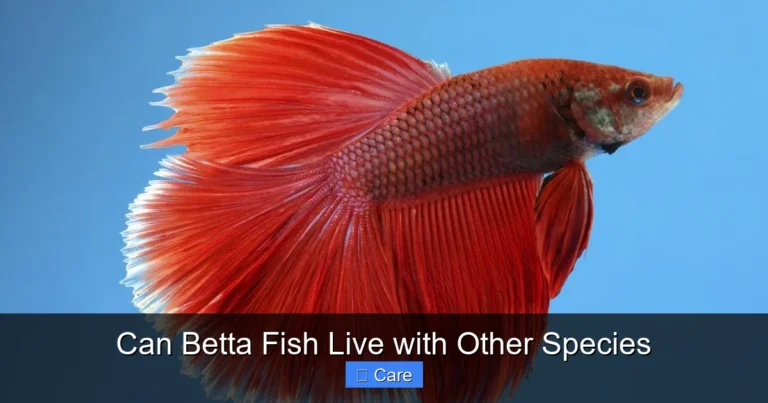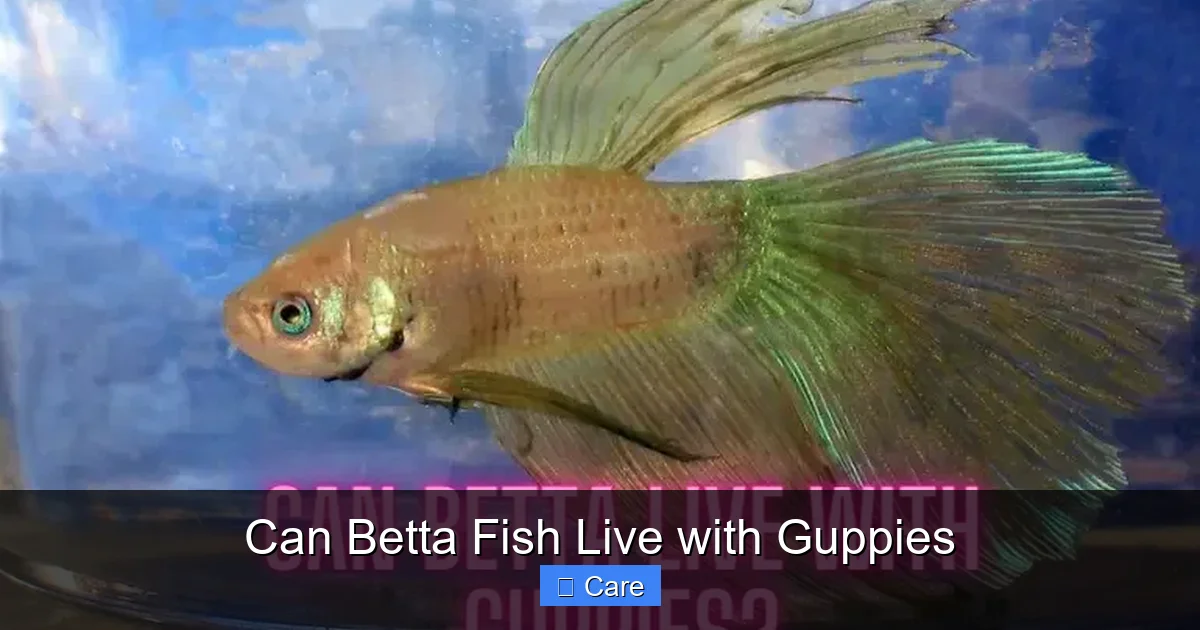
Can Betta Fish Live with Guppies
While it’s possible for betta fish and guppies to coexist, it’s generally considered a risky pairing due to the betta’s aggressive and territorial nature. Success depends almost entirely on the individual betta’s personality, the specific guppy varieties chosen (avoid long, flowing fins), and providing a spacious, well-decorated tank with ample hiding places. Constant supervision and a backup plan are essential, as a betta may suddenly see a colorful guppy as a threat or target.
So, you’ve got a stunning, solitary betta fish in a beautifully planted tank, and you’re dreaming of adding a splash of dynamic, schooling color with a group of guppies. It’s a tempting vision—the graceful, flowing fins of a halfmoon betta alongside the vibrant, darting energy of a guppy swarm. But before you net those guppies, we need to have a serious talk about one of the most debated topics in the aquarium hobby: can betta fish live with guppies? The short, honest answer is: sometimes. The long answer is a deep dive into betta psychology, guppy biology, tank dynamics, and a whole lot of careful planning. This isn’t a simple yes-or-no question; it’s a calculated risk that requires you to become a keen observer and a strategic tank designer. Let’s unpack everything you need to know to make an informed, safe decision for your aquatic pets.
Key Takeaways
- Betta aggression is the primary hurdle: Male bettas are famously territorial and may attack fish with bright colors or long fins, which often includes male guppies.
- Guppy fin type matters immensely: Choose guppies with short, simple fins (like the “Endler’s livebearer” type) to minimize triggering a betta’s instinct to nip or attack.
- Tank size is non-negotiable for peace: A minimum of 20 gallons is strongly recommended to provide enough space for territories and reduce constant visual contact.
- Aquascaping is your first line of defense: Dense planting, rock caves, driftwood, and other decorations create visual barriers and escape routes, breaking lines of sight.
- Introduce fish in the correct order: Always add the betta to the established community tank last, after the guppies have had time to claim their own spaces.
- Constant, vigilant monitoring is required: You must watch for signs of stress, chasing, or fin nipping for at least the first few weeks, and be prepared to separate them immediately.
- Have a separate “hospital” tank ready: Always have a cycled backup tank (5-10 gallons) on standby to quickly remove a betta or injured guppy if aggression occurs.
📑 Table of Contents
- Understanding the Betta: The Siamese Fighting Fish’s True Nature
- Guppy 101: More Than Just Colorful Swimmers
- Compatibility Analysis: The Risk vs. Reward Matrix
- Step-by-Step Guide to a (Potentially) Successful Setup
- When Things Go Wrong: Intervention and Alternatives
- Conclusion: A Calculated Risk for the Dedicated Hobbyist
Understanding the Betta: The Siamese Fighting Fish’s True Nature
To even begin considering tankmates for a betta, you must first understand the animal you’re dealing with. The betta splendens, or Siamese fighting fish, has been selectively bred for centuries for its aggression and beauty. This history shapes its behavior in our home aquariums.
The Myth of the “Lone Wolf”
Many people think bettas are simply grumpy loners. While they are indeed territorial, their aggression is often more nuanced. A betta’s instinct is to defend a perceived territory—a patch of plants, a corner behind a log, the water surface—from intruders it sees as rivals. This is why a lone betta in a small, bare tank might flare ( puff up its gills and spread its fins) at its own reflection. In a larger, complex environment, a confident betta may be less reactive because it feels secure in its domain. However, that instinct never fully disappears.
Triggers for Betta Aggression
What sets a betta off? The primary triggers are:
- Visual Intrusion: Another fish entering “its” space, especially from above (bettas are labyrinth fish and breathe air from the surface).
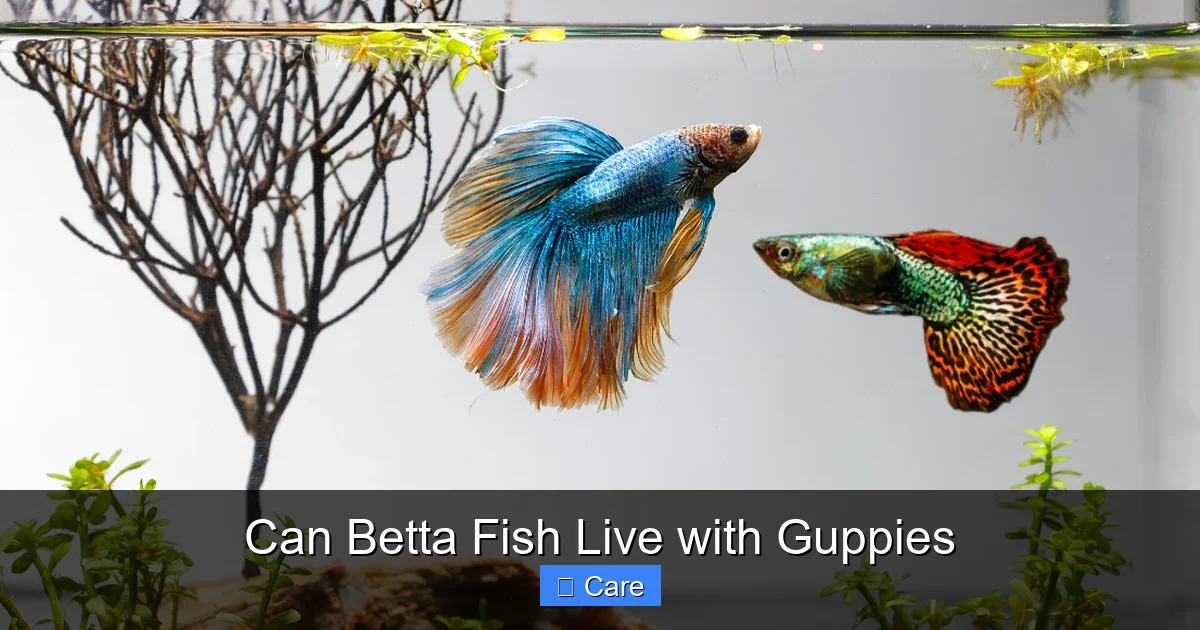
- Color and Fins: Brightly colored fish, particularly with large, flowing, or divided fins (like a male guppy’s ornate tail), can be mistaken for another male betta. The betta may see this as a challenge to be attacked or a rival to be eliminated.
- Movement: Fast, darting movements can trigger a chase response. Slow-moving, long-finned fish are often seen as less threatening by some bettas, but for others, the flowing fins are precisely the trigger.
- Personality: This is the biggest wild card. Some bettas are docile “lap dogs” who ignore other fish. Others are relentless “bulldogs” who will attack anything that moves. You cannot predict this until you see the individual in a community setting.
Guppy 101: More Than Just Colorful Swimmers
Guppies (Poecilia reticulata) are the classic beginner fish—hardy, prolific, and dazzlingly colorful. But not all guppies are created equal, and their specific traits are critical when considering a betta tankmate.
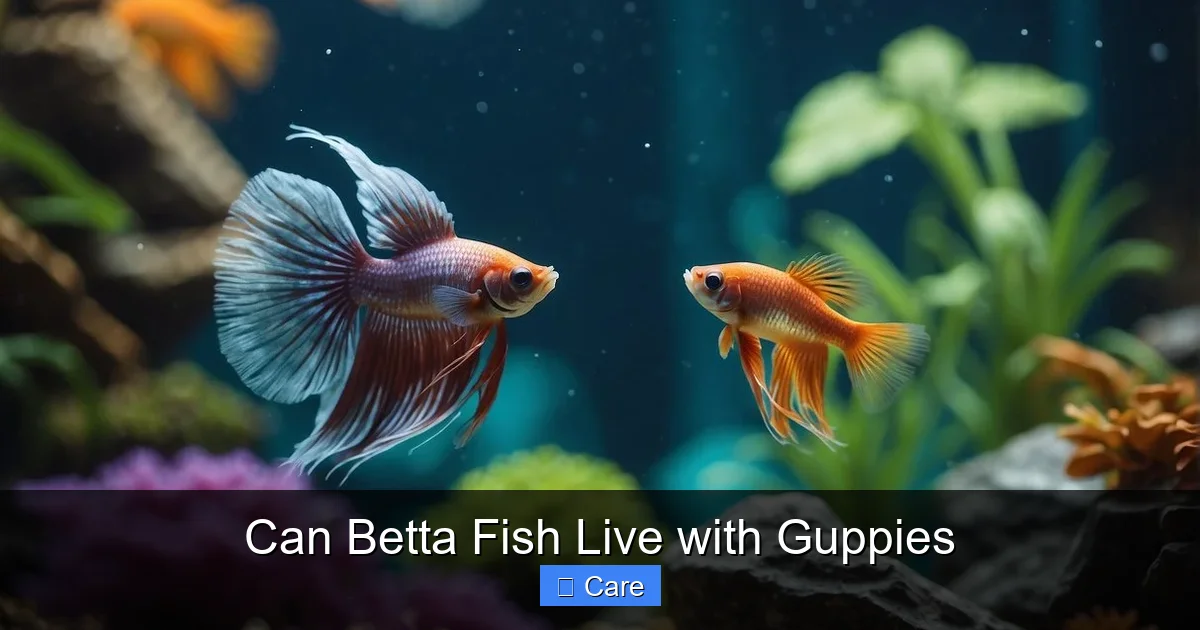
Visual guide about Can Betta Fish Live with Guppies
Image source: lh7-us.googleusercontent.com
The Fin Factor: Why Some Guppies Are a Target
The most important distinction among guppies is fin type. Through selective breeding, guppies now come in countless varieties, but the two main categories for our purposes are:
- Fancy Guppies: These are the show-stoppers with large, elaborate, often multi-colored tails and dorsal fins (e.g., the “Veiltail,” “Delta,” “Roundtail”). Their slow, graceful swimming and extravagant fins make them look exactly like a rival male betta to an aggressive betta. These are the highest-risk guppies to house with a betta.
- Wild-Type / Endler-Type Guppies: These guppies have smaller, simpler, more streamlined fins (often with a distinct “sword” extension in males). Their bodies are slimmer, and their swimming is faster and more erratic. They resemble their wild ancestors more closely. These are the safest bet if you must try guppies with a betta.
Temperament and Schooling Behavior
Guppies are peaceful, social fish that thrive in groups of 6 or more. They are constant swimmers, mostly occupying the middle and upper levels of the tank. Their high energy and tendency to be in constant motion can sometimes irritate a lazy, territorial betta who just wants to rest at the surface. Conversely, a curious betta might chase a lone, slow-moving guppy. Keeping them in a proper school (minimum 6, ideally 8-10) is crucial for the guppies’ stress levels; a lone guppy will be relentlessly picked on by any semi-aggressive tankmate, betta included.
Compatibility Analysis: The Risk vs. Reward Matrix
Now we get to the heart of the matter. Let’s break down the specific compatibility factors that will determine success or failure.
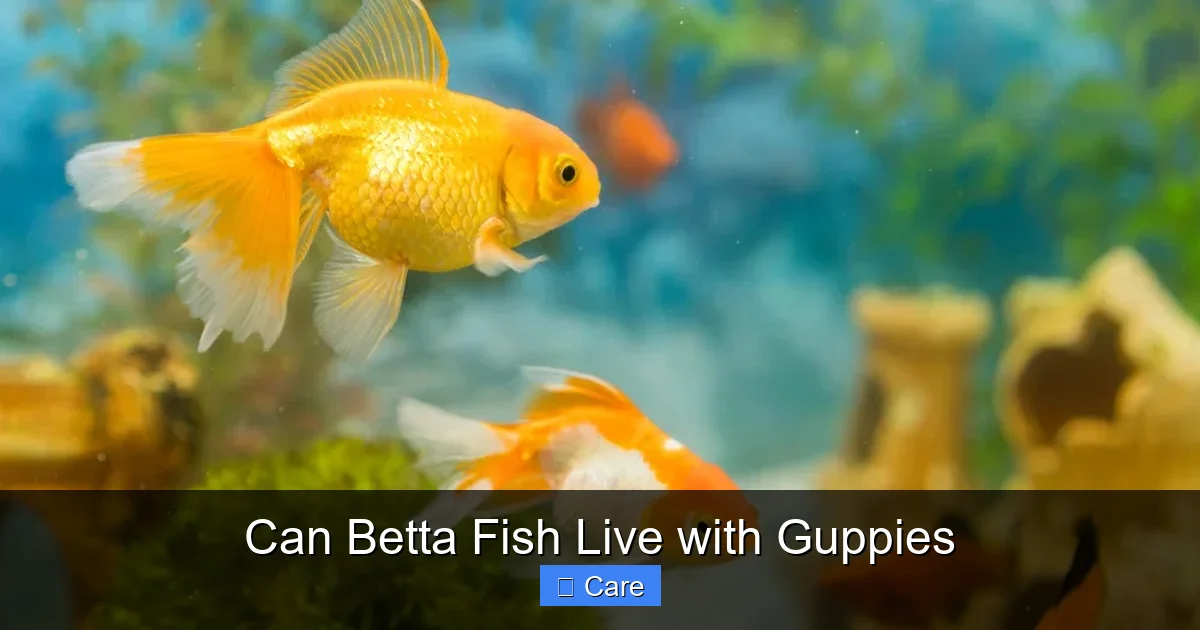
Visual guide about Can Betta Fish Live with Guppies
Image source: fishlab.com
Gender of the Betta
Male Betta: This is the standard and most aggressive scenario. Male bettas have the most prominent fins and the strongest territorial instincts. If you are attempting this mix, you must start with a proven, relatively calm male. Female bettas are also capable of aggression but are generally less intensely territorial and have shorter fins, making them slightly less likely to see a fancy guppy as a direct rival. However, a feisty female can still be a threat.
Gender of the Guppy
Male Guppies: They are the problem. Their vibrant colors and large, flowing fins are the perfect storm for triggering a betta’s aggression. They also have a tendency to “flirt” with other fish, displaying their fins, which a betta may interpret as a challenge.
Female Guppies: They are duller in color (usually grey or pale with some spots) and have much smaller, less showy fins. They are also plumper due to being livebearers. From a betta’s perspective, a female guppy is far less likely to be seen as a rival male betta. They are the much safer choice for a betta tank. A group of 6-8 plain-looking female guppies presents the lowest visual threat.
The Tank Environment: It’s All About Space and Structure
This is the single most important factor you can control. A betta in a 5-gallon tank with a single guppy is a recipe for disaster. There is no escape, no territory to claim beyond the entire tank. Now, scale that up.
- The 20-Gallon Minimum: A 20-gallon long tank provides a significant footprint. It allows you to create distinct zones. The betta can claim the surface and a specific corner, while the active guppies can use the middle and upper water columns in other areas. The extra water volume also dilutes any nipped fin debris and helps maintain stable water parameters, which reduces overall stress.
- The Power of Aquascaping: Your tank must look like a jungle, not a hotel lobby. Use live plants (like Anubias, Java fern, Cryptocoryne) or high-quality silk plants to create dense thickets. Add rock piles with caves, large pieces of driftwood (like Malaysian or Mopani), and ceramic hides. The goal is to break the line of sight. A betta should not be able to see a guppy from one end of the tank to the other without a plant or log in the way. This gives the guppies places to dash into and the betta less opportunity to constant surveillance of “intruders.”
Step-by-Step Guide to a (Potentially) Successful Setup
If you’ve weighed the risks and decided to proceed, follow this protocol to maximize your chances of harmony.
Visual guide about Can Betta Fish Live with Guppies
Image source: japanesefightingfish.org
Step 1: Tank Preparation (Before Any Fish)
Set up and fully cycle your 20+ gallon tank before you buy a single fish. A mature, stable nitrogen cycle is critical. Install a gentle filter (a sponge filter is ideal for bettas as it doesn’t create strong currents) and a heater set to 78-80°F. Then, aquascape aggressively. Create at least three distinct “rooms” using plants and hardscape. Ensure there are open swimming areas for the guppies but also plenty of mid-level and surface coverage.
Step 2: Introducing the Guppies First
This is a critical, often overlooked step. Add your school of 6-8 female or wild-type guppies to the fully cycled, decorated tank first. Let them live there alone for 2-4 weeks. This allows them to:
- Establish their own territories and schooling behavior.
- Become “the natives” of the tank. They will know all the hiding spots.
- Build up a mild bio-load, which can sometimes help a new betta feel less like it’s invading an empty territory.
Step 3: The Betta’s Grand Entrance
After the guppies are settled, it’s time to introduce the betta. But don’t just dump him in!
- Acclimate him properly to the tank water temperature and chemistry.
- Use a tank divider first if possible. A temporary acrylic divider or even a breeder box inside the main tank allows the betta and guppies to see each other without physical contact for 24-48 hours. Watch for extreme flaring, relentless tracking, or the betta trying to attack through the barrier. If this happens, the pairing is likely a no-go.
- If no divider, use a cup. Float the betta in a clear cup inside the tank for 30-45 minutes. Watch his reaction to the guppies. Does he flare constantly and try to ram the cup? Or does he mostly ignore them, maybe checking them out curiously? The latter is a positive, but not a guarantee.
- Release him near a hiding spot at the opposite end of the tank from the main guppy school, preferably at dusk when fish are less active.
Step 4: The Critical Observation Period
The first 72 hours are make-or-break. You should be watching the tank as much as possible.
- Chasing: A quick chase now and then, especially on day one, can be normal as boundaries are established. Sustained, relentless chasing where the betta corners a guppy is a major red flag.
- Flaring: The betta flaring its gills and fins is a threat display. Occasional flaring from a distance is okay. Constant, up-close flaring is not.
- Fin Nipping: Check the guppies’ fins every few hours. Look for torn, shredded, or missing fin edges. This is a sign of active aggression that will only escalate.
- Guppy Stress: Are the guppies constantly hiding? Not schooling together? Rubbing against objects (sign of parasites, but stress exacerbates)? Pale in color? These are signs the guppies are terrified and their health will decline.
When Things Go Wrong: Intervention and Alternatives
Despite your best efforts, sometimes the betta’s instincts take over. You must be prepared to act swiftly.
Signs It’s Time to Separate
Do not wait for a guppy to die or be severely injured. Separate immediately if you see:
- Any physical injury (torn fins, missing scales).
- The betta cornering and relentlessly pursuing a specific guppy.
- The betta attacking multiple guppies.
- The entire guppy school is in a constant state of panic and hiding, not coming out to eat.
How to Separate Quickly
This is why that backup “hospital” tank is essential. Have a 5-10 gallon tank set up, cycled, and ready with a filter and heater. At the first sign of serious aggression:
- Use a net to catch the injured guppy(s) or the betta, depending on who is the aggressor.
- Usually, the betta is the aggressor. You would net the betta and move him to the backup tank.
- If a guppy is badly injured, move it to the hospital tank for recovery.
- Do not return the betta to the community tank after a violent incident. The behavior is likely to repeat.
Better, Safer Tankmate Alternatives for Bettas
Given the high risk with guppies, consider these much more reliable, peaceful companions for a betta in a properly sized and decorated tank:
- Small, schooling rasboras: Harlequin rasboras or Chili rasboras are excellent. They are fast, stay in a tight school in the middle levels, and have minimal finnage.
- Certain tetras: Ember tetras or neon tetras (in a large enough school of 10+) can work. Avoid long-finned tetra varieties.
- Snails: Nerite snails or mystery snails are fantastic. They are completely ignored by most bettas, help clean the glass, and are fascinating to watch.
- Shrimp: Amano shrimp or larger bamboo shrimp can work, but there’s a risk the betta will see them as food. Cherry shrimp are often eaten.
- Kuhli loaches: These eel-like, nocturnal bottom-dwellers are perfect for a soft, sandy substrate tank. They are completely harmless and stay out of the betta’s way.
Conclusion: A Calculated Risk for the Dedicated Hobbyist
So, can betta fish live with guppies? The technically correct answer is: it is possible, but it is not recommended for beginners or casual fish keepers. It is a high-risk, high-maintenance pairing that demands a significant investment in tank size, aquascaping, and vigilant observation. The reward of a beautiful, active community is balanced by the very real risk of injury, stress, and death.
If you are an experienced aquarist who understands betta behavior, has a spacious and heavily planted tank, and is prepared to intervene at a moment’s notice, you can try keeping a calm betta with a school of female or wild-type guppies. For the vast majority of people, however, choosing a safer, more compatible tankmate is the kinder, simpler, and ultimately more successful path. Your betta’s wellbeing—and the lives of those beautiful guppies—depend on your honest assessment of your ability to provide the specific, controlled environment this tricky mix requires. When in doubt, choose peace over the gamble. Your fish will thank you for it.
Frequently Asked Questions
What is the absolute minimum tank size for a betta and guppies?
While some might suggest 10 gallons, a 20-gallon long tank is the absolute minimum recommended size. This provides enough horizontal space to create distinct territories and visual barriers, which is crucial for reducing stress and aggression. Anything smaller drastically increases the likelihood of conflict.
Can I keep a female betta with male guppies?
A female betta is generally less aggressive than a male, but she can still be territorial and may nip at the bright colors and long fins of male guppies. It is still a risky pairing. If attempted, use a female betta with a large school of female or plain male guppies in a heavily planted 20+ gallon tank. The risk is lower but not eliminated.
My betta is flaring at the guppies but not chasing them. Is this okay?
Constant flaring is a sign of high stress and perceived threat. Even if the betta isn’t chasing, the guppies are likely terrified by the constant display of aggression. This chronic stress weakens their immune systems and can lead to disease. Prolonged flaring without chasing is still a red flag and means the environment needs improvement or separation is necessary.
Are there any guppy colors that are “safe” for a betta tank?
Generally, the safer guppies are those that most closely resemble wild guppies: small, streamlined bodies with simple, short fins and more subdued colors like olive, grey, or with minimal orange/yellow splashes. Bright reds, blues, and iridescent scales on long, flowing tails are the biggest triggers. Female guppies, with their duller coloration, are always the safer color choice.
What should I do if my betta attacks a guppy?
Act immediately. Have a separate, cycled “hospital” or backup tank ready. Net the injured guppy(s) and move them to this separate tank for recovery and observation. Do not return the betta to the main tank with the other guppies, as he has now established that aggression is tolerated. The safest course is to permanently rehome either the betta or the remaining guppies.
How long should I wait before concluding the betta and guppies are compatible?
You need a minimum of 2-3 weeks of close, daily observation. The first week is the most critical, but some bettas may seem calm initially and then become aggressive once they fully claim the territory. Only after a full month of peaceful coexistence—with no chasing, flaring, or fin nipping—can you consider the pairing somewhat stable. Even then, always be prepared for a sudden change in behavior.