How to Clean a 5 Gallon Betta Fish Tank
Cleaning a 5-gallon betta tank requires a gentle, partial-water-change approach to preserve essential bacteria. Never use soap or clean all decorations at once. Consistent weekly maintenance with dechlorinated water at the correct temperature is non-negotiable for your betta’s long-term health and vibrancy.
Congratulations on choosing a betta! These intelligent, personality-filled fish are fantastic pets. That 5-gallon tank on your desk or shelf is now your betta’s entire world. Keeping that small world clean is the single most important thing you can do for its health and happiness. But here’s the secret most new owners miss: cleaning a betta tank isn’t about making it sparkle like a kitchen window. It’s about performing a precise, gentle maintenance routine that supports a delicate ecosystem. Think of it less like scrubbing a bathroom and more like tending a tiny, balanced garden. This guide will walk you through exactly how to clean a 5 gallon betta fish tank the right way, ensuring your vibrant friend lives a long, healthy life.
Key Takeaways
- Never use soap or chemicals: Even a trace of detergent is lethal to bettas and beneficial bacteria. Use only water and dedicated aquarium tools.
- Partial water changes are key: Replace only 25-30% of the water weekly. Over-cleaning disrupts the nitrogen cycle and stresses your fish.
- Match temperature and dechlorinate: New water must be within 1-2°F of tank water and treated with a water conditioner to remove chlorine/chloramines.
- Clean the substrate and glass: Use a gravel vacuum to remove debris from the substrate without disturbing the deep bed. Gently wipe algae from the glass.
- Don’t over-clean decorations: Rinse filter media and decorations in the old tank water you’ve removed, not tap water, to preserve beneficial bacteria.
- Test your water regularly: Use a liquid test kit to monitor ammonia, nitrite, nitrate, and pH. This is the true measure of tank health, not visual clarity.
- Observe your betta during and after: Your fish’s behavior is your best indicator. Lethargy or clamping fins post-cleaning signals a problem with the process.
📑 Table of Contents
- Why Cleaning Your Betta’s Tank Isn’t Optional
- Gathering Your Supplies: The Cleaning Toolkit
- The Step-by-Step Cleaning Process: A Gentle Touch
- Understanding the Nitrogen Cycle: The Science Behind the Scrub
- Common Cleaning Mistakes That Harm Your Betta
- Establishing a Sustainable Maintenance Routine
- Conclusion: Your Betta’s Health is in Your Hands
Why Cleaning Your Betta’s Tank Isn’t Optional
Let’s be brutally honest. A 5-gallon tank is a small space. In a larger aquarium, waste products dilute more easily. In your betta’s home, uneaten food, fish waste, and decaying plant matter accumulate quickly. This organic debris breaks down into toxic ammonia. In a well-established tank, beneficial bacteria (the good guys) convert ammonia to less harmful nitrite, and then to nitrate. Nitrate is still toxic at high levels but can be removed through water changes. Without this biological filter, ammonia will spike, poisoning your betta and leading to fin rot, lethargy, and death. Cleaning is how we manually remove nitrates and other debris while supporting the good bacteria populations. It’s not just about aesthetics; it’s about toxicology.
The Dangers of a “Dirty” Tank
Ammonia burns a fish’s gills, making it hard to breathe. You’ll see your betta gasping at the surface, its fins clamped tightly against its body. Nitrite locks oxygen in a fish’s blood, causing internal suffocation. High nitrate suppresses the immune system, making your betta susceptible to diseases like dropsy or velvet. Fin rot, those ragged, decaying edges on your betta’s beautiful fins, is almost always a direct result of poor water quality. A clean tank isn’t a “nice to have”—it’s a literal lifeline.
The Myth of the “Low-Maintenance” Betta
You’ve probably seen them: bettas in tiny cups or vases at the store. This cruel practice has perpetuated the myth that bettas can live in dirty, small spaces. They are survivors, not thrive-rs. A 5-gallon tank is the absolute minimum recommended size, but it requires diligent care precisely because of its small volume. There’s no room for error. Your betta’s health is in your hands, and a proper cleaning routine is your primary tool.
Gathering Your Supplies: The Cleaning Toolkit
Before you even think about touching the tank, you need the right tools. Using the wrong items can introduce toxins or harm your fish. Here is your essential checklist, all of which should be dedicated solely to this tank.
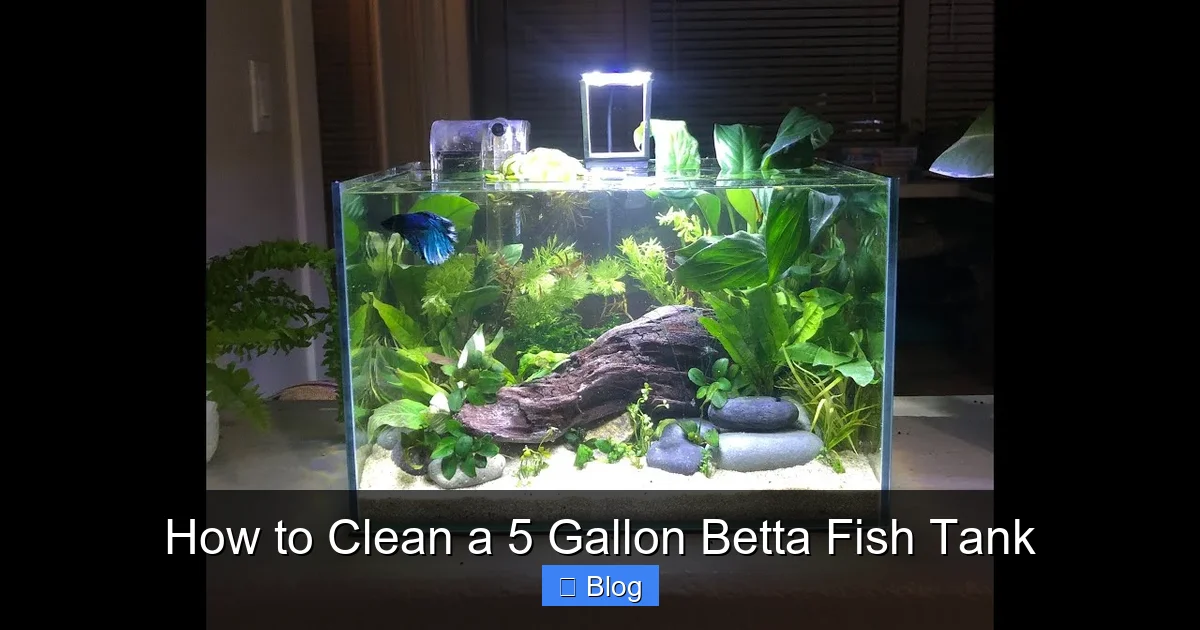
Visual guide about How to Clean a 5 Gallon Betta Fish Tank
Image source: i.pinimg.com
- Gravel Vacuum/Siphon: This is your most important tool. It’s a plastic tube with a wide mouth that you squeeze to start a siphon. It removes debris from the substrate without sucking up your gravel or, crucially, your betta. Get one sized for a 5-gallon tank; a large one can be too powerful.
- Two Clean Buckets: One is for the dirty water you siphon out (the “waste bucket”). The other is for the clean, treated water you will add back (the “clean water bucket”). Never, ever use a bucket that has had soap or cleaning chemicals in it.
- Water Conditioner/Dechlorinator: Non-negotiable. Tap water contains chlorine and chloramines which are fatal to fish and beneficial bacteria. You must treat every drop of new water. Seachem Prime is a popular, effective choice.
- Algae Scraper or Mag-Float: A plastic scraper for the glass. A magnetic cleaner (Mag-Float) is great because you can scrub the inside without putting your hand in the water, reducing stress for your betta.
- Old, Clean Cloth or Paper Towels: For wiping down the outside of the tank and any spills. Keep this separate from your kitchen towels.
- Thermometer: To ensure your new water temperature matches the tank perfectly.
- (Optional) Turkey Baster: Excellent for gently sucking out stubborn gunk from decorations or corners without a full vacuum.
What You Should NOT Use
Here is a list of forbidden items. Soap, detergent, vinegar, bleach, window cleaner, or any household cleaning product. Even a microscopic residue is deadly. Avoid abrasive scrubbers that can scratch the glass and create more places for algae to grip. Do not use a net to catch your betta during cleaning unless absolutely necessary—it’s highly stressful. The goal is to make the process as hands-off for your fish as possible.
The Step-by-Step Cleaning Process: A Gentle Touch
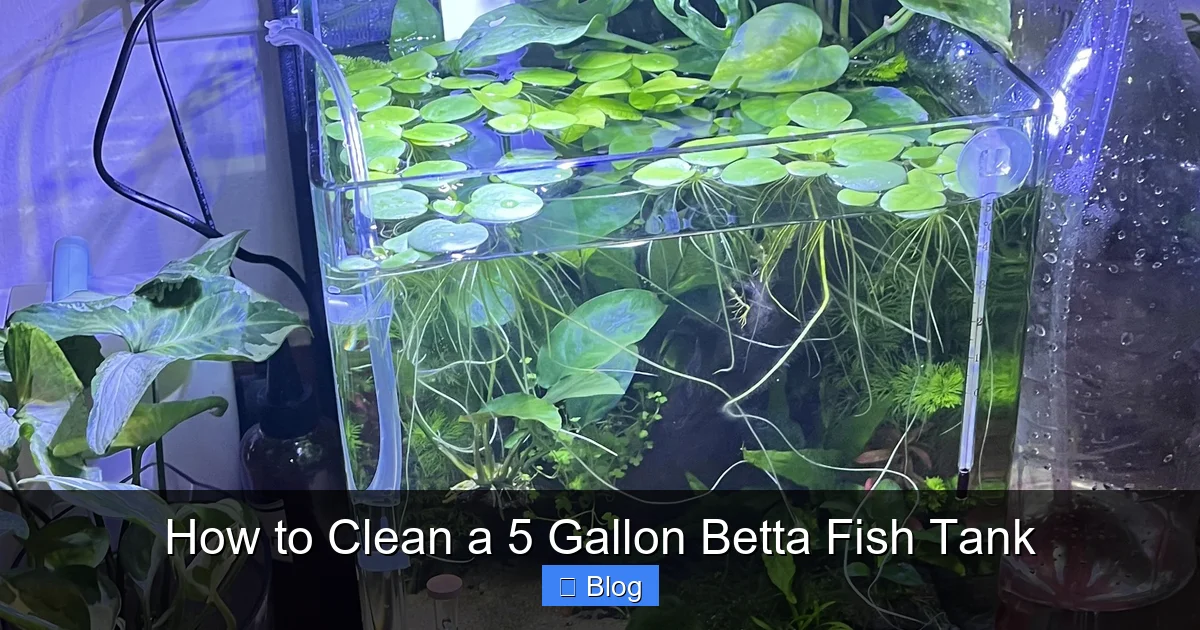
Now, the core procedure. This is a weekly ritual. Consistency is more important than perfection. Set a specific day and time each week. Your betta will learn the routine and be less stressed. Always start by unplugging any heaters or filters. Safety first!
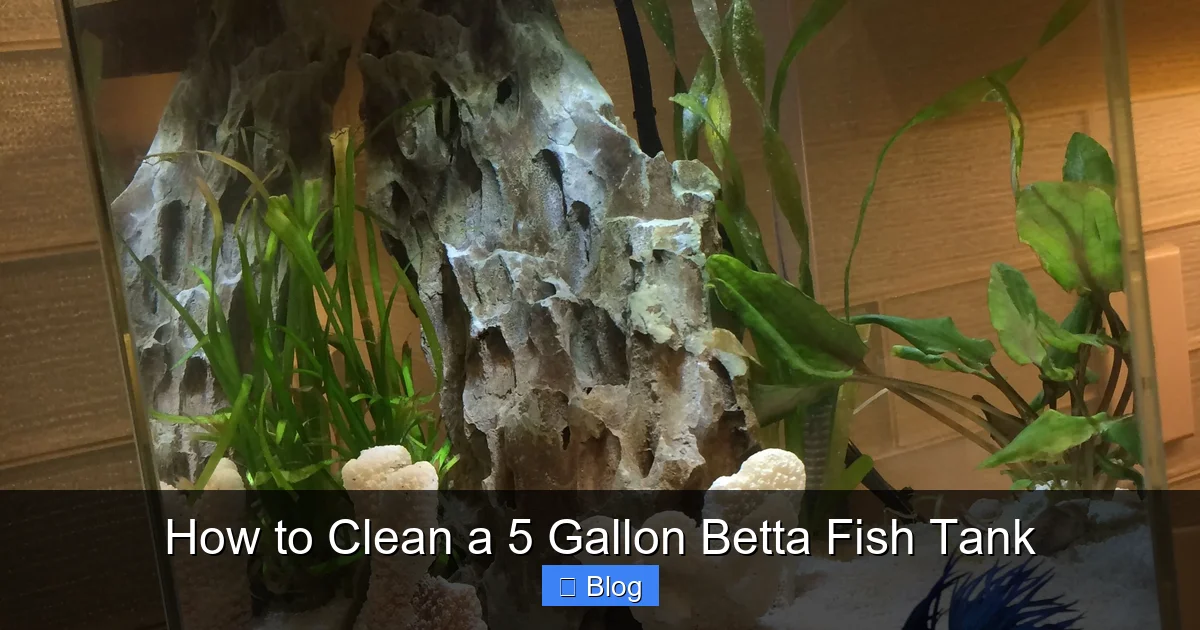
Visual guide about How to Clean a 5 Gallon Betta Fish Tank
Image source: i.redd.it
Step 1: Preparation – The Golden Rule
Before you disturb a drop of tank water, fill your clean water bucket with fresh tap water. Add the correct dose of water conditioner according to the bottle instructions. Stir well. Now, let this bucket sit. You want it to reach room temperature and, ideally, match your tank’s temperature exactly. This can take 30 minutes to an hour. You can use a thermometer to check. If your tank is heated (and it should be, bettas need 78-80°F), you may need to add a little warm water from the tap to the bucket to get it close. The goal is no more than a 1-2°F difference.
Step 2: The Gentle Water Change
Now, set up your gravel vacuum. Submerge the wide end in the tank and the narrow tube in your waste bucket. Squeeze the bulb on the vacuum several times to start the siphon. Once the water is flowing, gently push the vacuum’s mouth into the gravel. You’ll see debris and fish poop get sucked up. Move slowly across the substrate, lifting and lowering the vacuum to dislodge debris. Do not dig deep into the gravel bed. You only want to clean the top layer where waste collects. Disturbing the deep substrate can release harmful gases. Siphon out approximately 25-30% of the tank’s total water volume. For a 5-gallon tank, that’s about 1.25 to 1.5 gallons. Watch for your betta! Keep the vacuum far away from where it’s swimming. If it gets curious, gently guide it away with the vacuum tube without touching it.
Step 3: Decor & Filter Care
With the water level lowered, you have better access. Take any ornaments, rocks, or silk plants. Gently rinse them in the bucket of dirty tank water you just siphoned out. This dirty water contains beneficial bacteria. Scrub off any visible algae or slime with your fingers or a soft brush. Never use tap water here—it will sterilize these surfaces, killing the good bacteria. For your filter: this is critical. If you have a sponge filter, gently wring it out in the same bucket of old tank water. If you have a hang-on-back (HOB) or internal power filter, remove the cartridge or media. Rinse it very gently in the old tank water. You are not trying to make it white and pristine. You are simply removing large chunks of debris to restore water flow. The brown gunk on the media is where your beneficial bacteria live. Over-cleaning filter media is a top cause of “new tank syndrome” crashes.
Step 4: Glass & Final Prep
Use your algae scraper or Mag-Float to gently remove any algae from the inside glass. Work from the bottom up so dislodged algae floats down, not up into the water column. Wipe the outside glass with your dedicated cloth. Now, take a moment to inspect everything. Is the heater fully submerged? Is the filter intake clear? Are all decorations secure? This is your final check before refilling.
Step 5: Refilling – The Most Important Step
Slowly and gently pour the conditioned, temperature-matched clean water from your bucket back into the tank. Do not dump it directly onto your betta or the substrate. Aim the stream against the glass wall or pour it over a clean decoration to break the force. Fill the tank to the original water line. This slow addition prevents shocking your betta with sudden temperature or pressure changes. Once full, wipe up any spills on the outside, plug your heater and filter back in, and ensure they are functioning properly.
Step 6: The Observation Period
Do not walk away immediately. Sit and watch your betta for 5-10 minutes. It should be exploring, maybe flaring at its reflection, or resting peacefully. If it’s gasping, darting erratically, or clamping its fins, something went wrong. Double-check your water temperature and conditioner dose. If stress signs persist, perform another small 10% water change with perfectly matched water to dilute any potential issue. Your betta’s behavior is your report card.
Understanding the Nitrogen Cycle: The Science Behind the Scrub
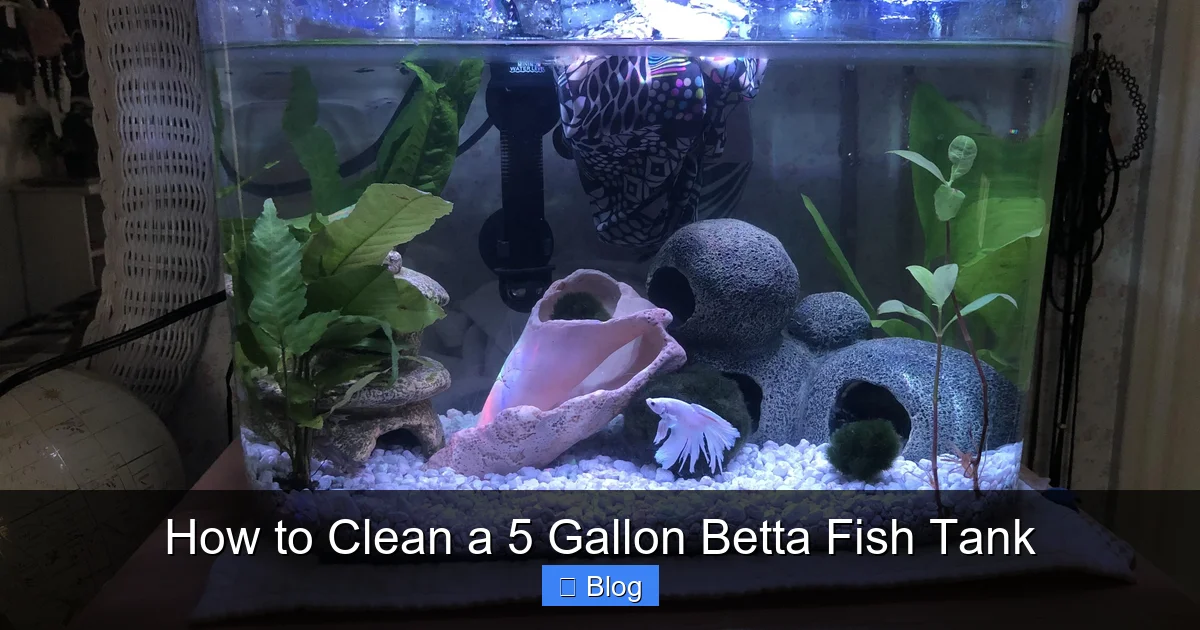
You can clean a tank by rote, but understanding *why* you do each step makes you a better caretaker. This knowledge prevents common, fatal mistakes. The nitrogen cycle is the process that makes life possible in your tank.
Visual guide about How to Clean a 5 Gallon Betta Fish Tank
Image source: i.redd.it
Ammonia (NH3/NH4+) – The Immediate Killer
Everything organic in the tank—fish waste, uneaten food, a dead plant leaf—decomposes into ammonia. Ammonia is extremely toxic. In a new tank, there are no bacteria to consume it, so levels spike. This is “new tank syndrome.” In a cycled tank (one that has been running for 4-6 weeks with a betta or a source of ammonia), bacteria called Nitrosomonas convert ammonia into nitrite.
Nitrite (NO2-) – The Silent Suffocator
Nitrite is also highly toxic. It binds to a fish’s hemoglobin, preventing it from carrying oxygen in its blood. A second type of bacteria, Nitrobacter, converts nitrite into nitrate.
Nitrate (NO3-) – The Accumulating Toxin
Nitrate is far less toxic than ammonia or nitrite, but it accumulates over time. High levels (above 20 ppm for bettas) cause stress and disease. This is where you come in. The only way to remove nitrate from the system is by physically removing water—the water change. This is why cleaning the tank is not about making it “clean” in a sterile sense, but about managing nitrate levels while preserving the bacterial colonies that process ammonia and nitrite.
Where the Bacteria Live
These beneficial bacteria colonize every surface in your tank: the gravel, the glass, the decorations, and most importantly, your filter media. The filter media has the highest surface area and water flow, making it the bacterial powerhouse. This is why you never wash filter media in tap water or replace all of it at once. You would be throwing away your cycle and starting over, poisoning your betta with ammonia.
Common Cleaning Mistakes That Harm Your Betta
Even with good intentions, it’s easy to make errors. Here are the most frequent pitfalls and how to avoid them.
Mistake 1: The Full Tank Scrub
New owners often want to empty the entire tank, scrub every surface with a sponge, and start fresh. This is the single worst thing you can do. You have just destroyed the entire biological filter. The tank will re-cycle, meaning ammonia will spike and likely kill your betta. Solution: Always do partial water changes. Never remove more than 30% of the water at once. Never clean all decorations in the same session; rotate which ones you rinse each week.
Mistake 2: Using Soap or Chemicals
The logic seems sound: “I need to get it really clean.” But fish are extremely sensitive to chemicals. Residue from dish soap, hand soap, or even window cleaner on your hands or tools can be fatal. Solution: Have a dedicated set of cleaning tools (siphon, bucket, cloth) that never touch any other household substance. Use only water and your elbow grease.
Mistake 3: Temperature Shock
Pouring cold tap water into a warm, heated betta tank is a classic error. This shock can cause severe stress, immune suppression, and even swim bladder issues. Solution: Always pre-mix your conditioner and let the new water sit until it matches the tank temperature exactly. Use a thermometer—relying on “room temperature” is inaccurate.
Mistake 4: Forgetting to Dechlorinate
Tapping your finger on the tap and thinking, “It’s just a little bit.” Chlorine and chloramines in tap water will kill your fish and bacteria on contact. There is no safe amount. Solution: Make adding water conditioner as automatic as turning on the tap. Dose the bucket before you even start siphoning.
Mistake 5: Overfeeding Before or After Cleaning
Feeding right before a water change means more waste to remove and more cloudy water. Feeding immediately after can stress digestion as your betta is already in a slightly disrupted environment. Solution: Feed your betta at least an hour before you begin the cleaning process, or wait an hour after you finish.
Establishing a Sustainable Maintenance Routine
Cleaning shouldn’t be a frantic, all-day event. With a 5-gallon betta tank, a quick, consistent weekly routine is all it takes. Here’s how to build the habit.
The Weekly 15-Minute Checklist
Designate 15-20 minutes once a week. Follow this order:
- Test Water: Use your liquid test kit on the tank water before you start. Note ammonia, nitrite, nitrate, and pH. This tells you if your routine is working.
- Condition New Water: Start your clean water bucket as the first physical task.
- Siphon Substrate & Change Water: Perform the 25-30% water change as described.
- Rinse Decor & Filter: Use the old tank water to gently clean.
- Scrape Glass & Wipe Outside: Quick pass with the magnet cleaner.
- Refill Slowly: With conditioned, temperature-matched water.
- Observe: Watch your betta. Check filter flow and heater function.
Monthly & Occasional Tasks
Some things don’t need weekly attention. Once a month, inspect your filter impeller and intake tube for gunk buildup and clean if needed (in old tank water). Every 3-6 months, you can do a very deep substrate vacuum in one quarter of the tank to avoid disturbing gas pockets. If algae becomes a persistent problem on decorations, you can soak them in a 1:10 vinegar:water solution for 15 minutes, then rinse thoroughly in conditioned tap water before returning them. This is a last resort, as it will kill bacteria on that item.
Signs Your Routine Needs Adjustment
Your test kit is your best friend. If nitrate is consistently rising above 20 ppm before your weekly change, you may need to change 40% instead of 25%, or reduce feeding. If you see algae blooming, you likely have excess nutrients from overfeeding or too much light. Cut back on food and ensure the tank isn’t in direct sunlight. If your betta is frequently hiding or clamping fins, test the water immediately—you likely have a hidden spike in ammonia or nitrite from a recent over-cleaning or a dead piece of food decomposing.
Conclusion: Your Betta’s Health is in Your Hands
Cleaning your 5-gallon betta fish tank is not a chore; it’s a vital act of care. It’s the practice of maintaining a stable, toxin-free environment for a creature that depends on you entirely. By following this gentle, science-backed method—using dechlorinated water at the right temperature, changing only a portion of the water, preserving beneficial bacteria, and observing your fish—you move from being just an owner to being a dedicated steward. You are managing a complex, microscopic ecosystem in a glass box. The reward is a vibrant, active, and long-lived betta that greets you with curiosity and displays its stunning fins in a tank that is not just clean, but healthy. Commit to the weekly rhythm. Your betta’s shimmering scales and curious bubbles will thank you for it.
Frequently Asked Questions
How often should I completely empty and refill my betta’s 5-gallon tank?
You should never completely empty and refill a cycled betta tank. Doing so destroys the beneficial bacteria that process fish waste. Stick to partial water changes of 25-30% weekly. A full drain and reset is only necessary in cases of severe, unmanageable disease or a catastrophic chemical spill.
Can I use bottled spring water or distilled water instead of tap water?
No. Spring water lacks essential minerals bettas need and can have unpredictable pH. Distilled water is completely mineral-free and will leach minerals from your fish’s body, causing osmotic shock. Always use treated tap water with a water conditioner. It’s consistent, safe, and contains the minerals your fish and beneficial bacteria require.
What if my betta jumps out during the cleaning process?
This is a common fear. Always keep a lid or mesh cover on the tank when not actively working inside. If your betta jumps, immediately and gently net it (wet the net first) and return it to the tank. Check for any injuries. Having a small, temporary “hospital” container with conditioned tank water ready can be a good safety net during major cleanings.
My tank water gets cloudy quickly after cleaning. Is that normal?
It can be. If you disturbed the gravel deeply, you’ve kicked up fine particulate matter (silt) that will settle in a few hours. If the cloudiness is a greenish or milky white haze that persists for days, it’s likely a bacterial bloom. This is often caused by over-cleaning (washing filter media in tap water) or a sudden change in water chemistry. Ensure you are rinsing media in old tank water only and that your water parameters are stable.
Do I need to clean the filter sponge/foam every week?
No. This is a critical mistake. The filter media is home to your most important bacteria. Rinsing it weekly in tap water will kill them. Only give your filter media a very gentle squeeze in the bucket of old tank water you removed during the water change, and only if the water flow has significantly decreased (e.g., it’s trickling). This is usually every 4-6 weeks, not weekly.
My betta seems stressed after a water change. What did I do wrong?
Stress is usually due to one of three things: 1) Temperature shock (new water was too cold or too hot). 2) Chemical shock (forgot water conditioner or used tap water to rinse decor). 3) Physical disturbance (siphon got too close, tank was jostled). Always double-check your new water temperature with a thermometer and your conditioner dosage. Next time, perform the change even more slowly and keep the vacuum far from your fish.