How Many Times Do You Change a Betta Fish’s Water
Changing your betta fish water the right number of times keeps your fish healthy, stress-free, and full of color. Most experts recommend doing a partial water change every one to two weeks, while a full water change happens less often. The exact frequency depends on tank size, filtration, feeding habits, and whether you keep your betta in a bowl or a larger aquarium.
Keeping a betta fish healthy starts with one simple but important task: changing the water. If you have ever wondered how many times do you change a betta fish’s water, you are not alone. This is one of the most common questions new betta owners ask, and for good reason. Clean water is the foundation of a happy, colorful, and long-lived betta fish.
The answer is not as simple as a single number. It depends on several factors like tank size, whether you use a filter, how often you feed your fish, and the type of setup you have. In this guide, we will walk through everything you need to know about betta fish water change frequency. You will learn the exact schedule, the step-by-step process, common mistakes to avoid, and expert tips that make the whole thing easier.
Key Takeaways
- Partial water changes every 1 to 2 weeks are the standard routine for most betta fish tanks.
- Full water changes should only happen in specific situations, such as when the tank is very dirty or during disease treatment.
- Tank size and filtration play a huge role in how often you need to change the water.
- Overfeeding and overcrowding will make your water dirty faster, requiring more frequent changes.
- Always use treated water free of chlorine and chloramine to protect your betta.
- Testing water parameters like ammonia and nitrate helps you decide when a change is needed.
- Consistency matters more than perfection — sticking to a regular schedule keeps your betta thriving.
📑 Table of Contents
- Why Changing Betta Fish Water Matters So Much
- How Often Should You Change Betta Fish Water
- Partial vs Full Water Changes for Betta Fish
- Step-by-Step: How to Change Betta Fish Water the Right Way
- Common Mistakes People Make When Changing Betta Water
- Expert Tips for Keeping Betta Water Clean Between Changes
- Key Takeaways
Why Changing Betta Fish Water Matters So Much
Betta fish may be hardy creatures, but they still need clean water to thrive. In the wild, bettas live in warm, slow-moving streams and rice paddies where fresh water flows constantly. Your aquarium does not have that natural flow, which means waste builds up fast. Here is why regular water changes are so important.
Waste Buildup Happens Fast
Every time your betta eats, it produces waste. Uneaten food decays on the bottom of the tank. Fish waste releases ammonia, which is toxic even in small amounts. Without regular water changes, ammonia and nitrite levels spike. This can cause serious health problems or even death.
Oxygen Levels Drop in Stale Water
Fresh water holds more dissolved oxygen than old water. When you skip water changes, the oxygen level drops. Your betta may start gasping at the surface or become lethargic. A simple water refresh brings oxygen back and keeps your fish active and alert.
Water Quality Affects Color and Behavior
Clean water brings out the vibrant colors of a betta fish. Dirty water can cause fading, stress, and loss of appetite. Many owners do not realize that dull color or hiding behavior is a direct sign of poor water quality. A consistent betta tank maintenance routine fixes this quickly.
How Often Should You Change Betta Fish Water
This is the big question. The short answer is that most betta setups need a partial water change every one to two weeks. But the full picture depends on your specific situation. Let us break it down by setup type.
For Bowls and Small Tanks (Under 5 Gallons)
Small tanks and bowls have very little water volume. That means toxins build up quickly. If your betta lives in a bowl or a tank under 5 gallons, you should do a partial water change once a week. Replace about 25 to 50 percent of the water each time. Since there is usually no filter in these setups, the water gets dirty faster and needs more attention.
For Medium Tanks (5 to 10 Gallons)
A 5 to 10 gallon tank with a filter gives you a bit more breathing room. You can do a partial water change every one to two weeks. Replace 20 to 30 percent of the water during each session. The filter helps remove some debris and houses beneficial bacteria that break down waste. Still, regular water changes are essential because filters do not remove all toxins.
For Larger Tanks (10 Gallons and Above)
Larger tanks are more stable because the water volume dilutes waste. You can stretch your water changes to every two weeks for tanks of 10 gallons or more. Some experienced keepers do a 20 to 25 percent change every two weeks and still maintain excellent water quality. The key is testing the water regularly to know for sure.
Quick Reference: Water Change Frequency by Tank Size
- Under 5 gallons (bowl or small tank): Partial change every week
- 5 to 10 gallons: Partial change every 1 to 2 weeks
- 10 gallons or more: Partial change every 2 weeks
If you are unsure about the exact schedule for your setup, learning how often to change a betta fish water in your specific situation can help you fine-tune the routine.
Partial vs Full Water Changes for Betta Fish
Not all water changes are the same. Understanding the difference between partial and full changes is crucial. Each type serves a different purpose and should be used at the right time.
What Is a Partial Water Change
A partial water change means removing a portion of the old water and replacing it with fresh, treated water. This is the standard routine for betta fish owners. Most people do a 20 to 30 percent partial change every one to two weeks. This method keeps water parameters stable while removing built-up waste and toxins.
Partial changes also preserve the beneficial bacteria living in your tank and filter media. These good bacteria are essential for breaking down ammonia and nitrite. Removing all the water at once would wipe them out and crash your tank cycle.
What Is a Full Water Change
A full water change means removing all the water from the tank, cleaning everything, and refilling with fresh water. This is a much more intense process and should not be done regularly. Full water changes are typically reserved for specific situations:
- The tank has dangerously high ammonia or nitrite levels
- You are treating your betta for a disease and need a clean environment
- The tank has no filter and has become very dirty
- You are setting up a new tank or doing a deep clean
If you need to know the proper steps for a thorough cleaning session, check out our guide on how to do a water change for betta fish for detailed instructions.
Which One Should You Do More Often
Partial water changes should be your go-to routine. They are safer, less stressful for your fish, and easier to maintain. Full water changes should only happen when truly necessary. Doing full changes too often can actually harm your betta by stripping away beneficial bacteria and causing major parameter swings.
Step-by-Step: How to Change Betta Fish Water the Right Way
Knowing how often to change the water is only half the battle. Doing it correctly matters just as much. Follow these steps every time you perform a water change to keep your betta safe and healthy.
Step 1: Gather Your Supplies
Before you start, make sure you have everything ready. You will need a clean bucket, a siphon or gravel vacuum, water conditioner (dechlorinator), and a thermometer. Having everything at hand makes the process smooth and quick.
Step 2: Prepare the New Water
Fill your bucket with fresh water and add the water conditioner according to the product instructions. The conditioner removes chlorine, chloramine, and heavy metals that are harmful to betta fish. Let the water sit for a few minutes so it reaches room temperature. Cold water can shock your betta.
Step 3: Remove the Old Water
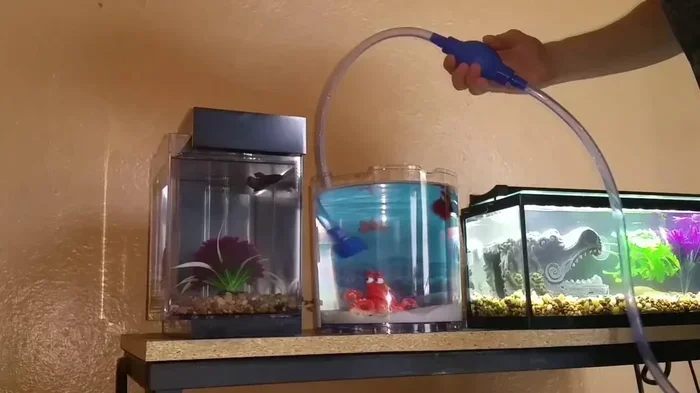
Use a siphon to remove the designated amount of water. For a partial change, this is usually 20 to 30 percent. While you siphon, vacuum the gravel gently to pull out debris and waste hiding in the substrate. Do not disturb your betta too much during this step.
Step 4: Add the Fresh Water
Slowly pour the treated water into the tank. Pour it over a plate or your hand to avoid disturbing the substrate and decorations. Check the temperature with your thermometer to make sure it matches the tank water. Even a few degrees difference can stress your fish.
Step 5: Check and Observe
After the water change, give your betta a few minutes to settle in. Check that the water level is correct and that nothing leaked. Observe your fish for any signs of stress like rapid breathing or hiding. Most bettas adjust within minutes and return to their normal behavior.
For a complete walkthrough of the entire process, you can read our detailed guide on how do you change betta fish water which covers every step in depth.
Common Mistakes People Make When Changing Betta Water
Even experienced fish keepers make mistakes. Knowing what to avoid saves you a lot of trouble and keeps your betta safe.
Using Tap Water Without Treatment
This is the number one mistake. Tap water contains chlorine and chloramine that are lethal to betta fish. Always use a water conditioner before adding tap water to your tank. Never skip this step, no matter how small the water change is.
Changing Too Much Water at Once
Some beginners think more is better and replace 80 or 90 percent of the water in one go. This is dangerous. Large water changes cause sudden shifts in temperature, pH, and mineral levels. Your betta can go into shock. Stick to 20 to 30 percent for partial changes.
Ignoring the Gravel and Decorations
Waste gets trapped in the gravel and around decorations. If you only change the water without cleaning the substrate, toxins keep building up. Use your siphon to vacuum the gravel during every partial change.
Changing Water at the Wrong Temperature
Betta fish are tropical and need warm water between 76 and 82 degrees Fahrenheit. Adding cold or hot water stresses them and can weaken their immune system. Always match the temperature of the new water to the tank water.
Not Testing the Water Afterward
After a water change, it is smart to test the parameters. A quick test with a liquid test kit tells you if ammonia, nitrite, and nitrate levels are where they should be. This gives you peace of mind and helps you catch problems early.
Expert Tips for Keeping Betta Water Clean Between Changes
Water changes are essential, but you can make the time between changes easier with a few smart habits. These tips help maintain cleaner water and reduce how often you need to do major maintenance.
Do Not Overfeed Your Betta
Overfeeding is one of the biggest causes of dirty water. Uneaten food sinks to the bottom and decays, spiking ammonia levels. Feed your betta small amounts twice a day and remove any leftover food after a few minutes. For more on feeding schedules, see how many times a day to feed a betta fish.
Use a Good Filter
A filter does wonders for water clarity and quality. It removes debris, provides mechanical and biological filtration, and supports beneficial bacteria. Choose a gentle filter for your betta since they do not like strong currents. Sponge filters are an excellent choice for betta tanks.
Add Live Plants
Live plants absorb nitrates and other waste products naturally. They also produce oxygen and create a more natural, stress-free environment for your betta. Easy plants like java fern, anubias, and live moss work great in betta tanks.
Do Regular Water Tests
Testing your water once a week takes only a few minutes. It tells you exactly what is happening beneath the surface. You can catch ammonia spikes before they become a crisis and adjust your maintenance routine accordingly.
Keep Up With a Schedule
Consistency is the secret to success. Set a reminder on your phone or mark your calendar for water change days. A regular schedule prevents neglect and keeps your tank in great shape. When you stay on top of things, your betta stays healthier and happier.
Remember that proper betta fish care goes beyond just water changes. Feeding, tank size, temperature control, and monitoring all play a role. To get a complete picture of keeping your betta healthy, explore our guide on how do you care for a betta fish.
Key Takeaways
- Partial water changes every 1 to 2 weeks are the standard for most betta setups.
- Small tanks and bowls need weekly changes because they have less water volume to dilute waste.
- Always treat new water with a conditioner to remove chlorine and chloramine.
- Never change more than 30 percent of the water during a partial change.
- Full water changes are rare and situational, not part of a regular routine.
- Test your water regularly to catch problems before they affect your fish.
- Consistency beats perfection — a steady schedule matters more than getting it exactly right every time.
Changing your betta fish water does not have to be complicated or stressful. With a simple routine and the right approach, you can keep your betta’s environment clean and safe. The key is to stay consistent, do partial changes regularly, and always treat your new water before adding it to the tank.
Your betta fish depends on you for a healthy home. Every water change is an act of care that directly impacts your fish’s health, color, and lifespan. Start building your routine today, and you will see the difference in how active, vibrant, and happy your betta becomes. Keep learning, keep caring, and your betta will thrive for years to come.
Frequently Asked Questions
How many times a week should I change my betta fish water?
For most setups, a partial water change once a week is ideal, especially for bowls and small tanks under 5 gallons. Larger tanks with filters can stretch to every one to two weeks. The key is consistency rather than frequency.
Can I change my betta fish water every day?
Daily water changes are not necessary and can actually be harmful. They strip away beneficial bacteria and cause stress due to constant parameter fluctuations. Stick to a weekly or biweekly partial change routine instead.
What kind of water should I use when changing my betta’s tank?
Always use tap water treated with a water conditioner or dechlorinator. You can also use purified or spring water if your tap water quality is poor. Never use distilled water without remineralizing it first, as it lacks essential minerals.
How much water should I change each time?
A 20 to 30 percent partial water change is the sweet spot for most betta tanks. This removes enough waste and toxins while preserving beneficial bacteria and keeping water parameters stable.
Do I need to remove my betta fish during a water change?
No, you do not need to remove your betta. Just be gentle when siphoning and pouring water. If your betta seems stressed, you can temporarily place it in a small container of tank water. Most bettas handle water changes just fine in the main tank.
What are the signs that my betta needs a water change sooner?
Cloudy water, a strong ammonia smell, your betta gasping at the surface, loss of appetite, or faded colors are all signs that a water change is overdue. Test your water with a liquid test kit to confirm high ammonia or nitrite levels.