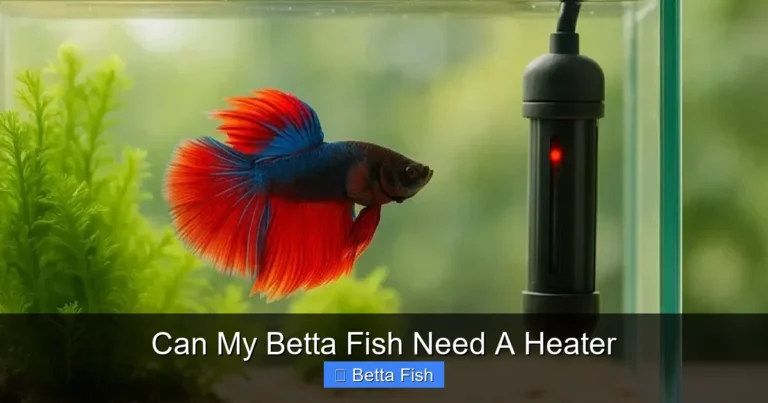
How Many Betta Fish Years Is One Human Year
One betta fish year is roughly equal to about 16 to 20 human years during the first year, but the aging process slows down significantly after that. A betta fish typically lives 3 to 5 years, which translates to roughly 48 to 100 human years when mapped against human aging patterns. Understanding betta fish years to human years helps you better care for your fish at every life stage.
Key Takeaways
- Betta fish age much faster in their first year: The first year of a betta’s life is equivalent to about 16 to 20 human years, making early care extremely important.
- A betta fish’s full lifespan is 3 to 5 years: This translates to roughly 48 to 100 human years depending on the aging model used.
- You can estimate your betta’s age by its color, fins, and behavior: Younger bettas are brighter and more active, while older fish show fading colors and slower movement.
- Proper tank setup and feeding habits extend betta lifespan: Clean water, a warm tank, and a balanced diet make a big difference.
- The betta fish age calculator concept helps owners understand development stages: From fry to senior, each stage has unique care needs.
- Health checks become more important as your betta ages: Watch for signs of aging like clamped fins, loss of appetite, and dull coloring.
📑 Table of Contents
- How Many Betta Fish Years Is One Human Year?
- How Do Betta Fish Age Compared to Humans?
- Betta Fish Life Stages and Human Age Equivalents
- Factors That Affect Betta Fish Lifespan
- How to Help Your Betta Fish Live a Long, Healthy Life
- Common Mistakes That Shorten Betta Fish Lifespan
- Quick Tips for Betta Fish Owners at Every Age
- Conclusion
How Many Betta Fish Years Is One Human Year?
If you have a betta fish, you might wonder how old your fish really is in human terms. The idea of converting betta fish years to human years is not as simple as multiplying by a fixed number. Betta fish grow and age very differently than humans do. Their first year is incredibly fast, but then things slow down.
Most betta fish live between 3 and 5 years with proper care. That might not sound like a lot, but when you map it against human aging, those few years pack a lot of living into a short time. Understanding how many betta fish years is one human year helps you give your fish the best care at every stage of life.
The concept of fish years to human years is similar to how people calculate dog years. But fish aging follows its own pattern. A one-year-old betta is not the same as a one-year-old human. In fact, a one-year-old betta is more like a teenager in human terms. By the time a betta reaches its second or third year, it is entering what we might call its “senior years.”
This guide breaks down the entire aging process for betta fish. You will learn how to estimate your fish’s age, what each life stage looks like, and how to keep your betta healthy for as long as possible. Let us dive in.
Why Does Betta Fish Aging Matter?
Knowing your betta’s age helps you make better care decisions. Young bettas need different food portions than older ones. Young fish need more protein to grow. Older bettas do better with easier-to-digest food. Water temperature preferences also shift slightly as a betta ages.
If you adopted a betta from a store and do not know its age, do not worry. There are several clues you can look for. Things like color intensity, fin condition, and activity level all tell you something about your fish’s age. We will cover those signs in detail later in this article.
How Do Betta Fish Age Compared to Humans?
The aging process for betta fish is not linear. This means you cannot simply say one fish year equals a certain number of human years across the board. The first year of a betta’s life is when the most rapid growth happens. During this time, a betta goes from a tiny fry to a fully grown fish.
After the first year, the aging process slows down a lot. A betta fish that is two years old is entering adulthood. By three years old, your betta is considered a mature adult. At four or five years, your fish is a senior. Each of these stages comes with different needs.
Here is a simple way to think about it: if a betta lives 4 years on average, and humans live about 75 years on average, then one betta year might equal roughly 18 to 19 human years during the first year. After that, each additional fish year might equal about 15 to 20 human years. But these numbers are estimates, not exact science.
The First Year: Rapid Growth
The first few months of a betta’s life are all about growth. A newborn fry is barely visible to the naked eye. Within a few weeks, it starts developing color and fins. By the time the betta reaches 3 to 4 months old, it looks like a miniature adult.
During this fast growth phase, nutrition is critical. Feeding high-quality betta pellets several times a day supports healthy development. You can learn more about proper feeding amounts in our guide on how many pellets to feed a betta fish.
Years Two Through Five: Slowing Down
Once your betta passes the one-year mark, the aging process decelerates. Your fish is now a young adult. Colors are fully developed, and fins are at their full length. During years two and three, your betta is at its peak in terms of health and vibrancy.
By year four, you might notice subtle changes. The colors may fade slightly. Your betta might become less active. These are normal signs of aging. Providing a stress-free environment becomes even more important during this stage.
Betta Fish Life Stages and Human Age Equivalents
Breaking down the life stages makes it easier to understand betta fish years compared to human years. Each stage has its own characteristics and care requirements.
| Betta Fish Age | Human Age Equivalent | Stage | Key Characteristics |
|---|---|---|---|
| 0 to 1 month | 0 to 1 year | Fry | Tiny, transparent, no color yet |
| 1 to 3 months | 2 to 6 years | Juvenile | Color developing, fins growing |
| 3 to 6 months | 6 to 12 years | Young Juvenile | Full color, active, growing fast |
| 6 months to 1 year | 12 to 20 years | Sub-Adult | Mature appearance, fins fully formed |
| 1 to 2 years | 20 to 40 years | Adult | Peak health, vibrant colors |
| 2 to 3 years | 40 to 60 years | Mature Adult | Stable, still active |
| 3 to 4 years | 60 to 80 years | Senior | Slower movement, color fading |
| 4 to 5 years | 80 to 100 years | Elder | Very slow, needs extra care |
Keep in mind that this table is an approximation. Not every betta ages at the same rate. Genetics, diet, and tank conditions all play a role. But this gives you a solid framework for understanding where your fish stands in its life journey.
How to Tell How Old Your Betta Fish Is
If you did not buy your betta as a fry, you might not know its exact age. Fortunately, there are several clues that can help you estimate. These signs are not perfect, but they give you a good starting point.
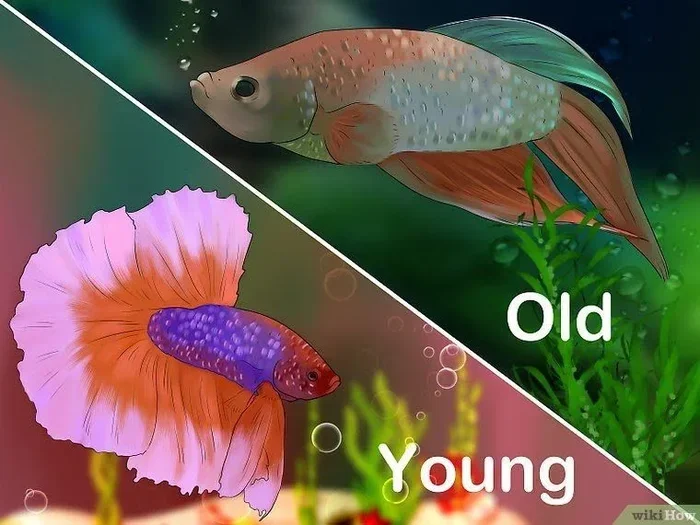
Color intensity is one of the easiest indicators. Young bettas usually have brighter, more vivid colors. As they age, the colors may become slightly duller. Fin condition is another clue. Older bettas might have slightly torn or shorter fins compared to younger fish. You can also look at your fish’s activity level. Younger bettas tend to be more curious and active, while older fish prefer to rest more.
If you want to learn more about recognizing age-related changes, check out our article on can you tell how old a betta fish is.
Signs Your Betta Is Still Young
- Bright, vivid colors across the body and fins
- Long, flowing fins that are still growing
- High energy and curiosity about the tank environment
- Healthy appetite and eagerness to eat
- Building bubble nests (a sign of mature but young adult males)
Signs Your Betta Is Entering Senior Years
- Fading or dulling of body colors
- Shorter response time to food
- More time spent resting near the bottom or on leaves
- Slightly ragged or shorter fins
- Less interest in building bubble nests
Factors That Affect Betta Fish Lifespan
Not all bettas live the same number of years. Several factors influence how long your betta will live. Some of these factors are within your control, and others are not.
Tank Size and Setup
A common mistake is keeping a betta in a tiny bowl. Bettas need at least 5 gallons of water to thrive. A larger tank with a filter and heater gives your fish a much better quality of life. You can read more about the right tank size in our guide on how many gallons for a betta fish.
Water Quality and Temperature
Betta fish are tropical fish. They need warm water, ideally between 78 and 80 degrees Fahrenheit. Clean water is equally important. Regular water changes prevent harmful toxins from building up. Dirty water leads to stress, which shortens your betta’s lifespan.
Diet and Nutrition
What you feed your betta directly affects its health and longevity. A diet of high-quality pellets supplemented with frozen or live foods like brine shrimp keeps your fish in top shape. Overfeeding is a common problem that can lead to health issues and a shorter life. Learn the right feeding frequency in our article on how many times a day to feed a betta fish.
Genetics
Some bettas are simply genetically stronger than others. Fish from reputable breeders tend to live longer than those from mass breeding facilities. If you want a healthier betta with a better chance of a longer life, always buy from a trusted source.
How to Help Your Betta Fish Live a Long, Healthy Life
While you cannot control genetics, you can control the environment and diet. These are the biggest factors you can influence when it comes to extending your betta’s life.
Start with a proper tank setup. A 5-gallon tank or larger with a gentle filter and a heater is the foundation of good health. Keep the water clean with regular maintenance. Test the water parameters often to make sure ammonia and nitrite levels stay at zero.
Feed your betta a balanced diet. High-quality pellets should be the staple. Add variety with frozen or live foods a few times a week. Do not overfeed. A good rule is to feed only what your betta can eat in two minutes, twice a day.
Watch for signs of illness. Early detection makes treatment much more effective. If you notice your betta acting differently, check for common symptoms right away. Our guide on how to tell if my betta fish is sick can help you spot problems early.
Keep your betta mentally stimulated. Bettas are curious fish that enjoy exploring their environment. Adding plants, caves, and open swimming space keeps them engaged and reduces stress. A happy betta is a healthier betta. You can learn more about keeping your fish content in our article on how to know if your betta fish is happy.
Common Mistakes That Shorten Betta Fish Lifespan
Many betta fish do not reach their full lifespan potential because of common owner mistakes. Avoiding these pitfalls can add months or even years to your fish’s life.
- Keeping your betta in a bowl smaller than 5 gallons: Small tanks accumulate toxins quickly and stress your fish out.
- Skipping regular water changes: Even with a filter, partial water changes every week are essential.
- Overfeeding your betta: Excess food rots in the water and causes digestive problems.
- Keeping the water too cold: Bettas need warm tropical temperatures to stay healthy.
- Housing your betta with aggressive tank mates: Stress from bullying weakens the immune system.
- Ignoring signs of illness: Waiting too long to treat diseases can be fatal.
Quick Tips for Betta Fish Owners at Every Age
Whether you have a young betta or a senior fish, these quick tips will help you provide the best care possible.
- Test your water parameters at least once a week.
- Perform 25 to 30 percent water changes weekly.
- Feed a varied diet with high-quality pellets as the base.
- Keep the tank temperature stable between 78 and 80 degrees Fahrenheit.
- Observe your betta daily for any changes in behavior or appearance.
- Quarantine new fish before adding them to your betta’s tank.
- Provide enrichment with plants, decorations, and open swimming space.
Conclusion
Understanding how many betta fish years is one human year gives you a better perspective on your fish’s life journey. A betta fish’s first year is like about 16 to 20 human years, and each year after that adds roughly 15 to 20 more human years to the equivalent. Your betta’s entire lifespan of 3 to 5 years translates to a meaningful span when you think of it in human terms.
The most important thing you can do is provide excellent care from day one. A clean tank, proper diet, warm water, and regular observation give your betta the best chance at a full, healthy life. No matter how old your fish is right now, it is never too late to improve its living conditions. Your betta depends on you for everything, and the effort you put in truly shows in the years you get together.
Take what you have learned here and put it into action. Your betta fish will thank you with vibrant colors, active behavior, and many happy months by your side. Understanding betta fish years to human years is not just a fun fact. It is a tool that helps you be a better, more informed fish owner.
Frequently Asked Questions
How old is my betta fish in human years?
If your betta is one year old, it is roughly equivalent to a 16 to 20-year-old human. After the first year, each additional betta year is approximately 15 to 20 human years. So a 3-year-old betta would be around 50 to 80 in human years, depending on the calculation method used.
Can betta fish live longer than 5 years?
Most bettas live between 3 and 5 years, but some well-cared-for fish have been known to reach 6 or even 7 years. Exceptional care, a great diet, and a clean, warm tank are the keys to pushing past the average lifespan.
How can I tell if my betta fish is aging?
Signs of aging in bettas include fading colors, slower movement, reduced appetite, and slightly ragged fins. Older bettas also sleep more and may show less interest in exploring their tank. Regular observation helps you catch these changes early.
Does tank size really affect betta fish lifespan?
Yes, tank size matters a lot. A tank that is at least 5 gallons with proper filtration and heating gives your betta a much healthier environment. Smaller bowls lead to poor water quality, which causes stress and shortens your fish’s life significantly.
What is the best diet for a senior betta fish?
Senior bettas do better with softer, easier-to-digest foods. High-quality pellets soaked in tank water, along with small amounts of frozen bloodworms or brine shrimp, work well. Feed smaller portions more frequently to avoid overfeeding.
Is it normal for a betta fish to stop eating as it gets older?
A slight decrease in appetite is normal with aging bettas. However, if your fish stops eating completely for more than two days, that is a red flag. Check water parameters and look for signs of illness. A sudden loss of appetite in an older betta could indicate a health problem that needs attention.