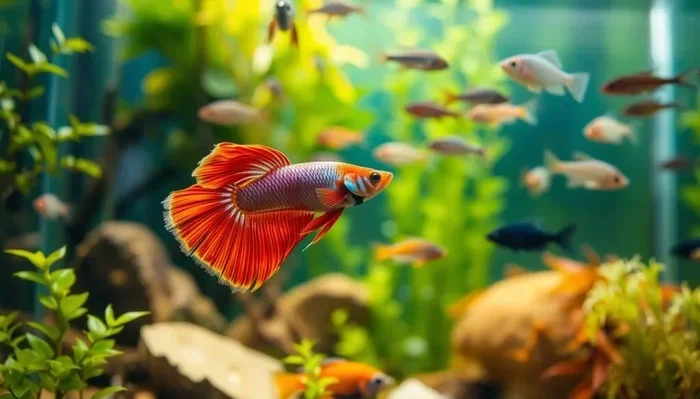
How Many Betta Fish Can Live Together
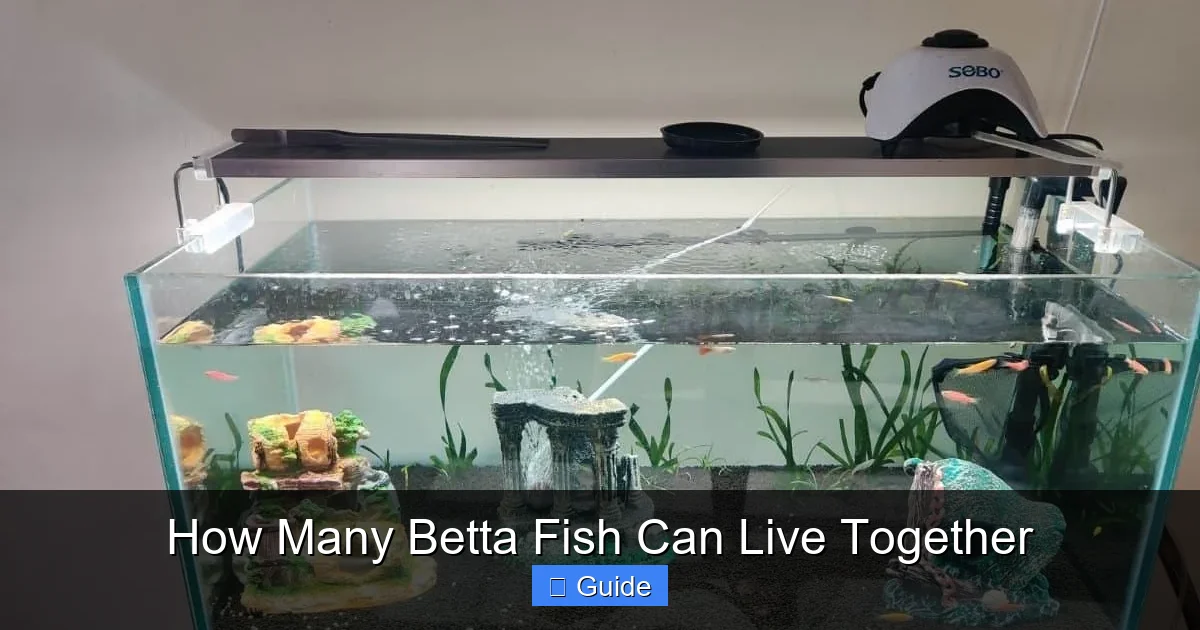
Betta fish, especially males, are famously solitary and aggressive. Keeping multiple bettas together is generally not recommended and requires extreme caution, specific conditions, and expert-level knowledge. Male bettas should almost always live alone. Female-only sororities are possible but high-risk. Community tanks can work with meticulous species selection and a heavily planted, spacious tank. Success depends on understanding their territorial nature, providing ample space, and closely monitoring for signs of stress or conflict.
Key Takeaways
- Male Betta Fish Are Best Alone: Due to their intense territorial aggression, male bettas (Siamese fighting fish) should virtually always be housed as the sole betta in a tank.
- Female Sororities Are High-Risk: Housing multiple female bettas together (“sororities”) is possible in very large, heavily planted tanks but carries a significant risk of injury or death from infighting.
- Tank Size Is Non-Negotiable: For any multi-betta or community setup, a minimum of 20-30 gallons is essential to provide enough territory and dilute aggression.
- Compatible Tank Mates Are Specific: Only certain, non-aggressive, fast-swimming, and non-finned fish (like some rasboras or Kuhli loaches) are considered relatively safe companions for a betta.
- Aggression Is Individual: Some bettas are more tolerant than others; you must observe your specific fish’s personality before attempting any cohabitation.
- Proper Aquascaping Is Critical: Dense planting, wood, rocks, and other decor are mandatory to break line-of-sight and create defined territories in any shared tank.
- Always Have a Backup Plan: Be prepared with a separate, cycled tank (a “hospital” or “quarantine” tank) to instantly remove any fish showing persistent aggression or stress.
📑 Table of Contents
- Introduction: The Lone Warrior of the Aquarium
- The Solitary Nature of the Male Betta: Why One is the Only Rule
- Female Betta Sororities: A Controlled, But Dangerous, Experiment
- Community Tanks: Can a Betta Live with Other Fish?
- The Foundation: Tank Setup for Success (Or Failure Prevention)
- Common Mistakes & How to Avoid Them
- Conclusion: Respect the Instinct, Prioritize the Fish
Introduction: The Lone Warrior of the Aquarium
If you’ve ever wondered, “how many betta fish can live together?” you’re asking one of the most critical questions in fishkeeping. The short, stark answer is: almost never, and certainly not without extensive planning and risk. The betta fish, with its spectacular flowing fins and vibrant colors, carries a reputation as the “Siamese fighting fish” for a profound reason. Centuries of selective breeding for combat have hardwired a strong territorial instinct, particularly in males. This makes the dream of a peaceful betta community tank a complex, high-stakes endeavor that often ends in tragedy for the unprepared.
This guide will dismantle the myths and provide the unvarnished truth about betta fish cohabitation. We’ll explore the biology behind their aggression, the rare and risky exceptions to the rule, and the absolute prerequisites for even considering a shared tank. Whether you’re a beginner captivated by a single betta or an enthusiast dreaming of a vibrant community, understanding these principles is the difference between a thriving aquarium and a stressful, violent disaster.
The Solitary Nature of the Male Betta: Why One is the Only Rule
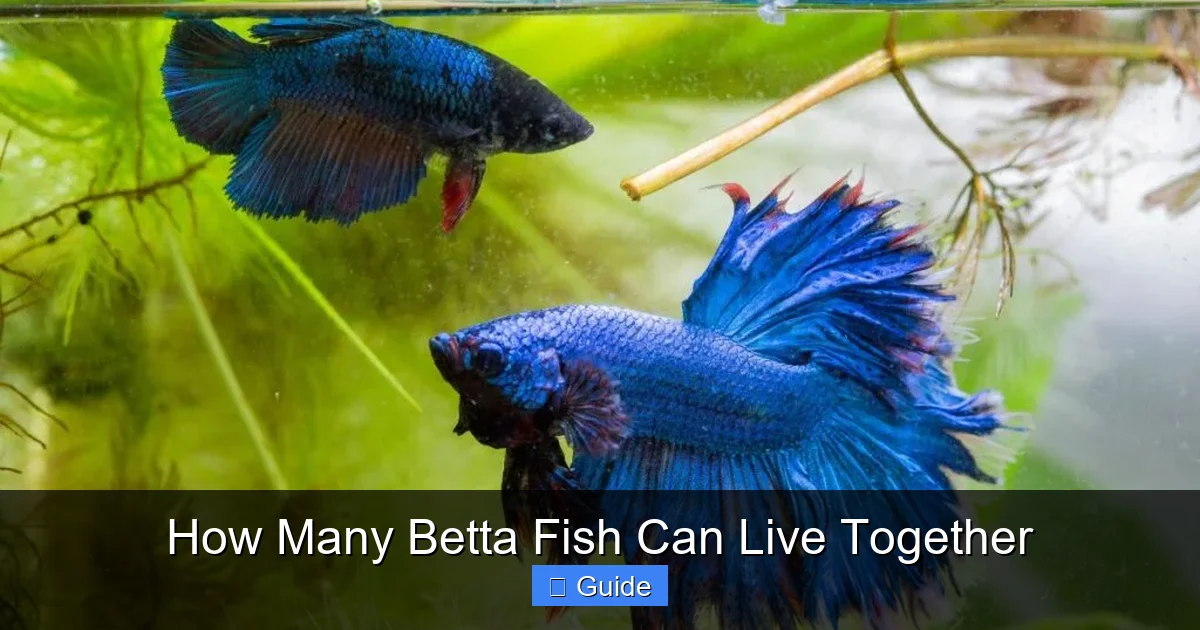
When people picture a betta, they often picture a male. These are the showstoppers with the enormous, silk-like fins. Their aggression is not just a personality quirk; it’s a fundamental aspect of their biology. In the wild, male bettas defend small, resource-rich patches of water—a leaf cluster, a root system—from all rivals. This instinct is magnified in captivity.
Visual guide about How Many Betta Fish Can Live Together
Image source: housedpet.com
The Science of Aggression: Flaring and Territory
A male betta’s first response to another male is to flare—expanding its gills, puffing up its body, and displaying its fins to appear larger and more intimidating. This is a clear warning. If the intruder does not retreat, a violent, often fatal fight ensues. Bettas have been known to bite fins, tear scales, and ram heads. They do not “work out” their differences; they aim to eliminate the competition. This behavior is triggered by sight alone; even a reflection in a tank glass can cause chronic stress.
The Myth of “Compatible” Males
You may hear anecdotes about two male bettas living together peacefully. These are the rare, exceptional lottery winners of the betta world, not a reliable outcome. Such pairings require an enormous tank (50+ gallons), perfect aquascaping from day one, and a meticulously matched, docile pair—usually brothers raised together. For 99.9% of hobbyists, attempting this is an act of cruelty that will result in injury or death. The ethical and safe standard is unequivocal: one male betta per tank, full stop.
Female Betta Sororities: A Controlled, But Dangerous, Experiment
If not males, what about females? Female bettas are less vividly colored and have shorter fins, but they still possess the same aggressive lineage. A group of females is called a sorority. This is the only commonly attempted multi-betta setup, but it must be treated as the high-risk experiment it is.
Visual guide about How Many Betta Fish Can Live Together
Image source: housedpet.com
The “Sorority Tank” Requirements: No Shortcuts
Success is entirely dependent on three non-negotiable factors: Space, Sight-Lines, and Numbers.
- Space: The absolute minimum is a 20-gallon long tank, but 30+ gallons is strongly recommended. This provides enough volume to dilute territorial disputes.
- Sight-Lines: The tank must be a jungle. Use dense plants (live plants like Java fern, Anubias, and Cryptocoryne are ideal), wood, rocks, and decor to create a labyrinth. There should never be a long, unobstructed view from one end to the other. This breaks line-of-sight and prevents a single dominant female from patrolling and bullying the entire tank.
- Numbers: A group of 5-6 females is ideal. With fewer, one will often become a singular target for bullying. With more, aggression is distributed. All females should be introduced simultaneously to a fresh, empty tank to prevent any from establishing prior ownership.
The Inevitable Pecking Order & Constant Vigilance
Even in a perfect setup, a strict pecking order will establish in the first few days. You will see chasing, flaring, and minor nipping. The key is that this must settle within 48-72 hours into a stable, albeit tense, coexistence. Any fish that is persistently chased, hides 24/7, has torn fins, or stops eating must be removed immediately. Sororities require daily observation. They are not “set and forget” tanks. Many experienced keepers will tell you that even in successful sororities, one or two fish may eventually succumb to stress or injury. This is a calculated risk, not a guarantee of harmony.
Community Tanks: Can a Betta Live with Other Fish?
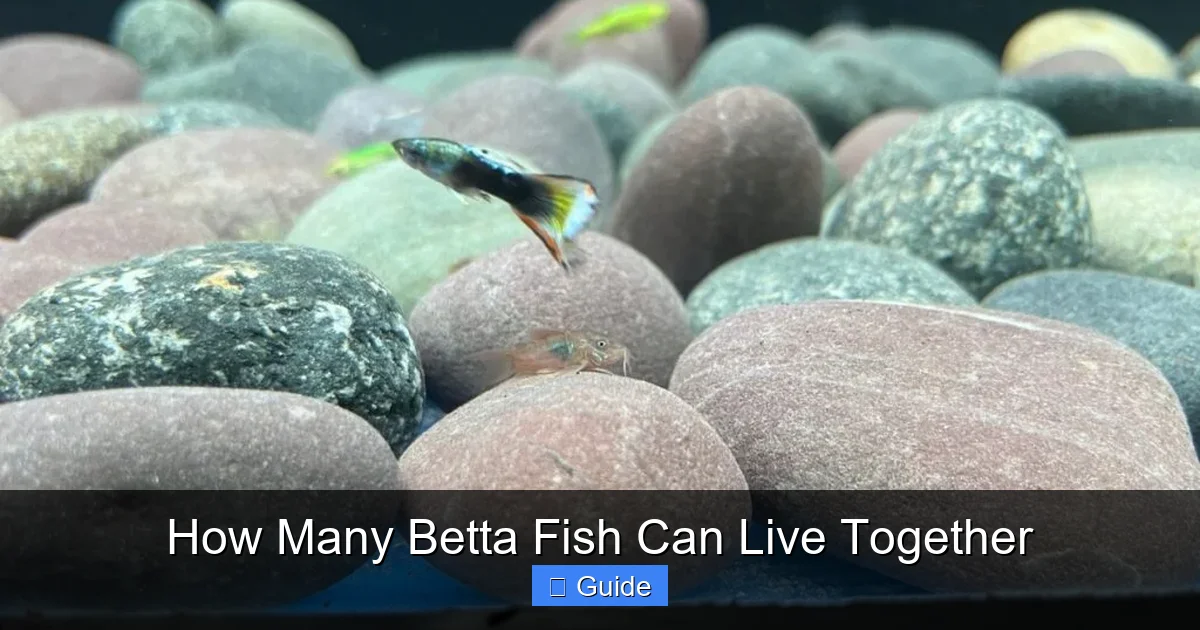
This is the most common hope: a betta as the “centerpiece” of a community tank. It is possible, but the selection process is as much about what you cannot put in the tank as what you can. The rule of thumb is: no fish that is long-finned, slow-moving, brightly colored, or resembles a betta.
Visual guide about How Many Betta Fish Can Live Together
Image source: housedpet.com
The Ideal Betta Tank Mate Checklist
Look for fish that are:
- Non-Aggressive & Fast: They must be able to evade a curious or aggressive betta. Speed is their primary defense.
- Dull in Color: Bright reds, blues, or oranges can trigger a betta’s instinct to attack a rival.
- Lacking Long, Flowing Fins: Guppies, fancy mollies, and angelfish are prime targets because their fins look like a rival betta’s.
- Bottom-Dwellers or Schooling Fish: Fish that occupy different strata of the tank (like Corydoras catfish or Kuhli loaches) or that school tightly (like some rasboras) are less likely to encroach on a betta’s mid-level territory.
Potentially Safe Species (With Caveats)
Some species are frequently cited as good candidates, but individual betta temperament varies wildly:
- Harlequin Rasboras (Trigonostigma heteromorpha): A top recommendation. They are fast, schooling, and have a peaceful, dull orange/black color. Need to be kept in groups of 6+.
- Ember Tetras: Their tiny size and fiery orange color can be a gamble. Some bettas ignore them; others see them as moving snacks. Must be a large school (10+).
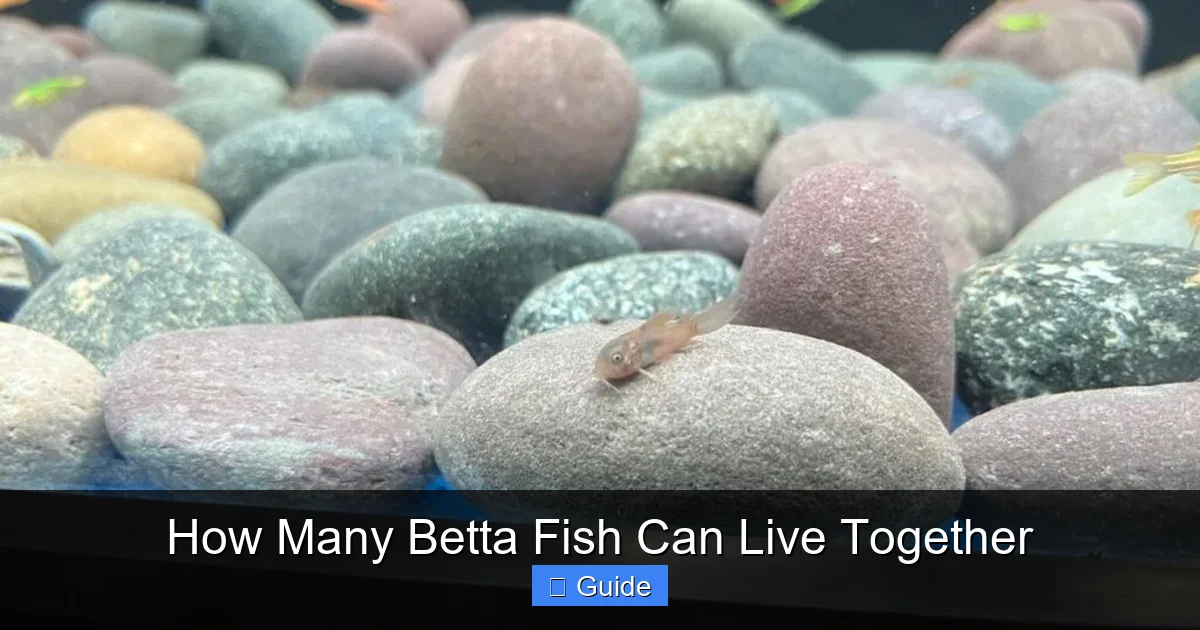
- Pygmy Corydoras: Excellent bottom-dwellers. They are cute, active, and stay on the substrate, largely ignoring the betta above.
- Kuhli Loaches: Eel-like, nocturnal, and worm-like. They are fascinating, peaceful bottom-feeders that rarely interact with bettas.
- Snails (Nerite, Mystery): Generally safe. Snails are not fish and are usually ignored. They are great for algae cleanup. Avoid apple snails, as some bettas may peck at their antennae.
Warning: Even with these species, you must have a backup plan. Introduce the betta last to a well-established community. Observe for 30 minutes after introduction. If the betta chases relentlessly, it’s time to separate.
The Foundation: Tank Setup for Success (Or Failure Prevention)
No matter the scenario—a single betta, a sorority, or a community—the tank setup is your primary tool for managing aggression and stress. A poorly decorated tank is a recipe for disaster.
The “Minimum” is a Myth: Start with 10 Gallons, Aim for 20+
For a single male betta, a 5-gallon tank is the absolute, bare-minimum standard from major animal welfare organizations. However, for any hope of cohabitation, you must think much larger. A 10-gallon is a starting point for a carefully selected community, but 20 gallons is the practical minimum for sororities or any community with a betta. More water volume means more stable parameters and more space to establish territories.
Aquascaping for Territory: It’s All About Obstacles
Your goal is to make it impossible for the betta to see the entire tank as its domain. Use a combination of:
- Floating Plants: Indian almond leaves, water lettuce, or frogbit are perfect. They diffuse light, provide security, and block the surface line-of-sight, which is a betta’s primary vantage point.
- Tall, Stalked Plants: Java fern, Anubias, and Vallisneria create vertical walls.
- Hardscape: Driftwood, large river stones, and clay pots create caves and barriers.
- Dense Midground: Cryptocoryne and Amazon swords fill space.
The ideal is a “jungle” where a fish can’t see more than a few inches in any direction. This reduces stress for all inhabitants and minimizes confrontations.
Common Mistakes & How to Avoid Them
Even with the best intentions, aquarists make critical errors that doom their betta cohabitation attempts from the start.
Mistake 1: Underestimating Tank Size
Putting a male betta with a few neon tetras in a 10-gallon hex tank is a classic failure. The tetras are too slow, the tank is too small, and there’s no escape. Always err on the side of a larger tank. A 20-gallon long offers vastly more horizontal swimming space than a 20-gallon tall, which is better for community fish.
Mistake 2: Poor Introduction Protocol
Never just drop a new fish into an established tank, especially with a betta. Use a divider in the tank for a few weeks to allow them to see but not touch each other (the “see-but-not-touch” method). Alternatively, move all fish to a clean, rearranged tank simultaneously (for sororities) or use a quarantine tank for the new arrival. Rearranging decor before introducing a new betta to a community can help, as it disrupts established territories.
Mistake 3: Ignoring the Betta’s Personality
Some bettas are “zen masters.” Others are miniature tyrants. You must observe your specific betta in its own tank first. Does it flare at your finger? At its reflection? Does it chase a plastic plant? A highly reactive betta is a poor candidate for any tank mates. A calmer individual might be more tolerant. This is not a guarantee, but a prerequisite for even trying.
Mistake 4: No Emergency Plan
Before you add a single other fish, you must have a cycled, filtered, heated hospital tank ready. This is non-negotiable. The moment you see persistent fin-nipping, a fish hiding in a corner with clamped fins, or a betta relentlessly cornering another, you must act. Separating them hours later is often too late to prevent fatal infection from a torn fin.
Conclusion: Respect the Instinct, Prioritize the Fish
The answer to “how many betta fish can live together?” is ultimately a lesson in humility and respect for animal instincts. The default, safest, and most ethical answer for the vast majority of aquarists is one betta per tank. This singular focus allows you to provide the pristine water conditions, warm, stable environment, and enriching decor that these magnificent fish deserve without the constant threat of conflict. The allure of a community is understandable, but it should only be pursued by those who accept the significant risks, commit to the massive tank requirements, and possess the vigilance to intervene at a moment’s notice. A healthy, flaring betta in a well-planted 10-gallon tank is a stunning success. A stressed, injured, or dead betta in a “community” tank is a preventable failure. Choose the path of the dedicated, patient keeper. Your betta will thrive as the solitary king or queen it is meant to be.
Frequently Asked Questions
Can two male betta fish live together?
No. Two male bettas will almost certainly fight to the death. Their extreme territorial aggression makes cohabitation exceptionally dangerous and is strongly advised against for all but the most expert keepers with massive, custom-built tanks.
Can I keep a male betta with a female betta?
Only temporarily for breeding under strict, controlled conditions. A male will see a female as an intruder or a mate and will either attack or harass her relentlessly. Long-term cohabitation is not safe.
What fish are the best tank mates for a betta?
The safest choices are fast, schooling, non-aggressive fish with dull colors, like Harlequin Rasboras or Pygmy Corydoras. They should be kept in proper groups and introduced to a heavily planted tank of 20+ gallons. Always observe closely after introduction.
How do I know if my betta is stressed from tank mates?
Signs include constant hiding, clamped fins, loss of appetite, faded colors, rapid gill movement, and frantic swimming. If your betta is flaring at or constantly chasing another fish, that is a clear sign of unacceptable stress and the fish must be separated.
Can I keep a betta with shrimp or snails?
Shrimp are a mixed bag. Larger shrimp like Amano shrimp are often safe, but small shrimp like Cherry shrimp may be eaten. Nerite and Mystery snails are generally excellent, safe additions as they are not seen as fish competitors.
Is a betta sorority (multiple females) easier than a male community?
No, it is not easier. While females are slightly less aggressive than males, establishing a stable sorority requires a very large, expertly planted tank (30+ gallons), a group of 5-6 females introduced simultaneously, and constant, expert monitoring for bullying. It is a high-risk, high-maintenance setup.