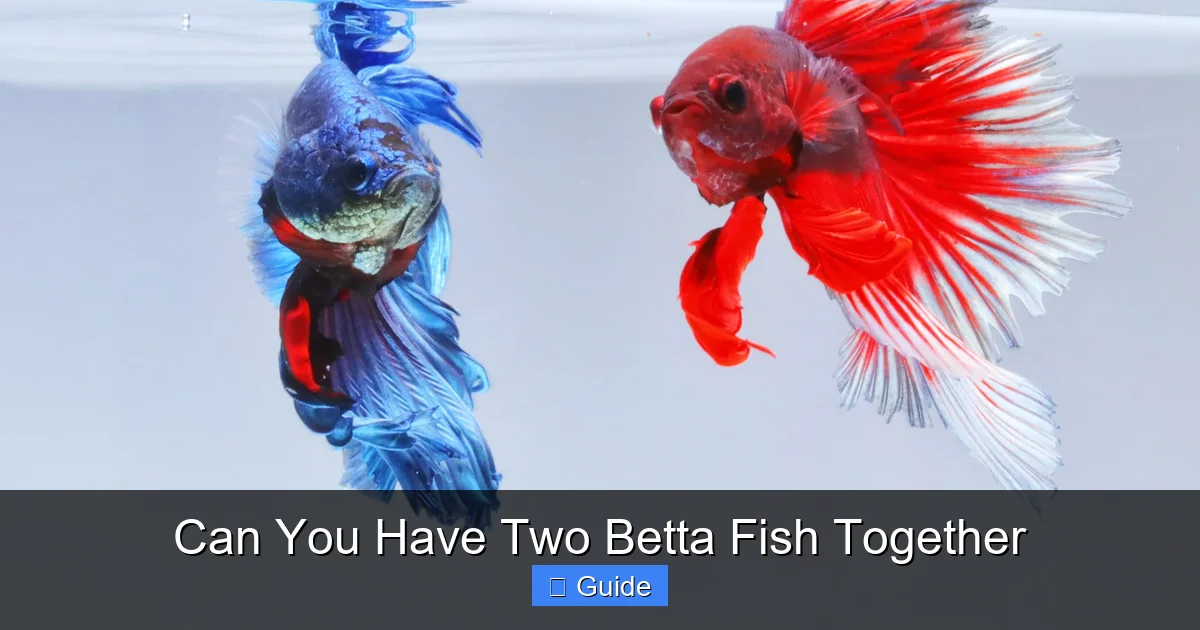
Can You Have Two Betta Fish Together

Betta fish, known for their beauty and feisty reputation, are generally solitary creatures. While it is possible to house two bettas together, it requires meticulous planning, a spacious and well-decorated tank, and careful species selection—usually only females or a sorority. Attempting to keep two male bettas together without these conditions will almost certainly lead to injury or death. Success depends on understanding their behavior and providing an environment that minimizes territorial disputes.
Key Takeaways
- Bettas are territorial: Their aggression is primarily driven by a need to defend space, not just a hatred for other bettas.
- Tank size is non-negotiable: A minimum of 20 gallons is essential for a betta sorority or a community tank with a male betta.
- Female bettas can sometimes cohabit: A carefully planned sorority of 4-6 females in a large, heavily planted tank is the most viable option for multiple bettas.
- Male bettas are usually solitary: A male betta should almost always be kept alone or with very specific, non-aggressive tank mates in a large community.
- Tank setup is critical: Visual barriers, abundant hiding spots, and proper water parameters are essential to reduce stress and aggression.
- Introduction is a careful process: Quarantining new fish and using dividers or a “new fish” tank for observation are key safety steps.
- Constant monitoring is required: Even in ideal setups, you must watch for signs of bullying, stress, or injury daily.
📑 Table of Contents
- Understanding the Betta: More Than Just a Pretty Face
- Tank Setup: The Foundation for Peace (or a Recipe for Disaster)
- Compatible Tank Mates: Choosing the Right Roommates
- The Sorority: Housing Multiple Female Bettas
- Step-by-Step: Introducing Any Betta to a New Tank
- Common Mistakes and When to Call It Quits
- Conclusion: Is It Worth the Risk?
Understanding the Betta: More Than Just a Pretty Face
So, you’ve got that stunning betta fish with its flowing fins and vibrant colors, and you can’t help but think, “Wouldn’t it be amazing to have two?” It’s a common and understandable question. The short, honest answer is: it’s complicated. The long answer is a journey into the fascinating, and sometimes fierce, world of betta behavior. To even begin considering keeping two betta fish together, you must first understand what makes them tick. Bettas, scientifically known as Betta splendens, are native to the shallow, slow-moving waters of rice paddies and floodplains in Southeast Asia. In these environments, space is at a premium, and resources are scarce. This evolutionary history has hardwired them with a strong territorial instinct. A male betta’s infamous “flaring” – where they puff out their gills and fins to look larger – is a defensive display meant to intimidate rivals and protect what little they have.
The Myth of the “Fighting Fish”
The nickname “Siamese fighting fish” does them a disservice, painting them as inherently bloodthirsty. In reality, their aggression is primarily a resource-guarding behavior. In the wild, a fight is costly; it risks injury and death. They prefer to avoid conflict through displays. However, when confined to a small aquarium with no escape routes, those displays can escalate into lethal combat very quickly. It’s not personal malice; it’s instinctual survival programming. This is the first and most crucial pillar of knowledge: you are working against millennia of instinct.
Male vs. Female: A World of Difference
When discussing housing bettas together, gender is the single most important factor. The vast majority of pet store bettas are males, selected for their brilliant colors and long, flowing fins. Male bettas are almost universally incompatible with other male bettas. Two males in the same tank will fight until one is severely injured or dead. There is no “sorority” equivalent for males; they are solitary by nature. Females, while still capable of aggression, are less intensely territorial. Their wild behavior involves living in loose groups where a dominant female may establish a hierarchy. This is why a “betta sorority” – a group of females – is the only somewhat reliable way to keep multiple bettas of the same species together. Even then, it’s a high-maintenance endeavor that demands specific conditions.
Tank Setup: The Foundation for Peace (or a Recipe for Disaster)
Imagine being locked in a small studio apartment with a stranger you don’t like. Now imagine that apartment has no walls, no doors, and no place to hide. That’s what a small, barren tank is for a betta. The physical environment is your single greatest tool for managing aggression. If you’re even contemplating housing two bettas together, the tank must be substantial from the very beginning. There are no upgrades that can fix a tank that’s too small from the start; the damage to the fish’s stress levels and the established territory is already done.

Visual guide about Can You Have Two Betta Fish Together
Image source: aquariumpub.com
The Absolute Minimum: Tank Size
For a single betta, a 5-gallon tank is the widely accepted absolute minimum for a healthy life. For two bettas? That number skyrockets. The general consensus among experienced aquarists is a minimum of 20 gallons for a betta sorority (all females) or a community tank housing a single male betta with other species. Why so big? Volume dilutes aggression. In a larger body of water, a betta’s “territory” can be a section, not the entire tank. It provides more space for fish to avoid each other, more stable water parameters (which reduces stress), and room for the essential decorations we’ll discuss next. A 10-gallon tank is a gamble that usually ends poorly for the bettas. Invest in the largest tank you can responsibly manage.
Creating a Complex Landscape: Visual Barriers and Hiding Spots
The goal is to break up the line of sight. If a betta can see another betta (or any fish) constantly, it will perceive it as an intruder in its territory. You must create a “jungle” where fish can disappear from view. Use a combination of:
- Live or Silk Plants: Tall, leafy plants like Amazon swords, Anubias, and Java fern are perfect. They create dense vertical forests. Avoid plastic plants with sharp edges that can tear delicate betta fins.
- Driftwood and Rock Caves: Provide multiple, distinct hiding places. Each betta should have at least one “home base” it can claim and retreat to.
- Dividers (Physical or Plant-Based): In a sorority tank, tall, bushy plants placed strategically can act as natural dividers. For a male betta in a community, you might even consider a solid, non-porous divider (like acrylic) that allows water flow but blocks sight, though this is more complex.
The tank should look lush and perhaps a little overgrown to human eyes. That’s the point. Every bit of visual obstruction is a tool for peace.
Water Parameters: The Non-Negotiable Basics
Stable, clean water is paramount for all fish, but especially for stressed bettas who are more susceptible to disease. A larger tank helps with stability, but you still need a heater (bettas are tropical fish needing 78-80°F / 25.5-26.5°C) and a gentle filter. Strong filter currents can stress bettas, as they are not strong swimmers. Use a filter with an adjustable flow or add a pre-filter sponge to diffuse the current. Perform regular water changes (25-50% weekly in a cycled tank) and test for ammonia, nitrite, nitrate, and pH. A stressed, sick betta is an aggressive betta.
Compatible Tank Mates: Choosing the Right Roommates
If you’re not attempting a sorority, your other option is to keep a single male (or sometimes a female) betta with other, carefully chosen species. The rules for these “community” tank mates are strict. They must be:

Visual guide about Can You Have Two Betta Fish Together
Image source: fishkeepingwisdom.com
- Peaceful and non-aggressive: No other fish with bright colors or long, flowing fins that might be mistaken for another betta. Avoid other anabantoids (like gouramis) who look similar.
- Fast and nimble: They need to be able to evade a suddenly curious or aggressive betta.
- Not fin-nippers: Bettas have beautiful, delicate fins that are a prime target for species like tiger barbs or some tetras.
- Prefer different water layers: Choose fish that occupy the top, middle, or bottom of the tank so they don’t constantly cross paths.
Excellent Candidates for a Betta Community
These species have a proven track record of success in properly set-up tanks (20+ gallons):
- Neon Tetras / Cardinal Tetras: Small, schooling fish that stay in the middle column. Keep them in groups of 6+.
- Harlequin Rasboras: Similar to tetras, active and peaceful schooling fish.
- Corydoras Catfish: The perfect bottom-dweller. These gentle, social “cory cats” sift the sand for food and are a fantastic cleanup crew. Keep in groups of 4+.
- Kuhli Loaches: Eel-like, incredibly peaceful bottom-feeders that are mostly hidden.
- Cherry Barbs (females): While males can be nippy, a school of female cherry barbs is usually peaceful.
- Snails (Nerite, Ramshorn, Mystery): Invertebrates are often excellent additions. They clean algae and are generally ignored. Shrimp (like Amano or Ghost shrimp) can work, but there’s a risk the betta may see them as food.
Who to Absolutely Avoid
This is a short but critical list. Never house a betta with:
- Other male bettas.
- Gouramis (Dwarf, Pearl, Kissing gouramis).
- Fish with long, flowing fins (Fancy Guppies, some Angelfish).
- Aggressive or territorial fish (Tiger Barbs, some Cichlids, Betta imbellis).
- Fin-nipping fish (most Danios, some Rasboras).
The Sorority: Housing Multiple Female Bettas
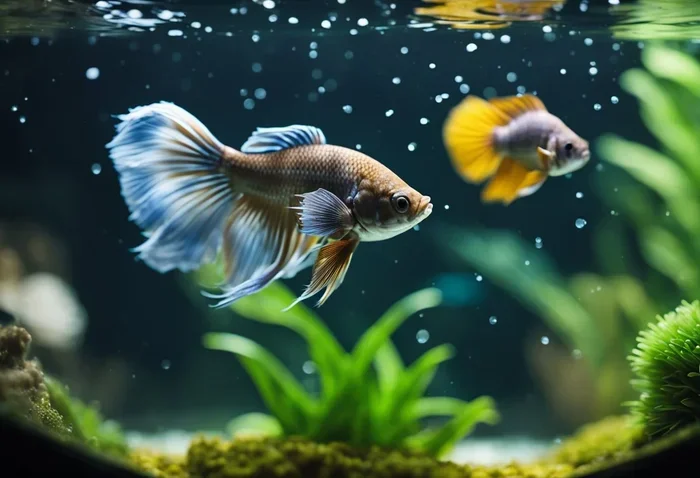
This is the most direct answer to “can you have two betta fish together?” Yes, but specifically with females, and with extreme caution. A sorority is not for beginners. It requires a large, heavily planted tank (29 gallons+ is ideal, 20 gallons absolute minimum) and a specific introduction process. The goal is to establish a loose hierarchy where one female may be slightly dominant but no one is being relentlessly bullied or injured.
Visual guide about Can You Have Two Betta Fish Together
Image source: petmedaily.com
Tank Requirements for a Sorority
The rules are even stricter here than for a community tank. The tank must be:
- Very Large: Start with at least 20 gallons, but 29-40 gallons is much safer for 4-6 females.
- Extremely Well-Planted: Use a mix of tall background plants, mid-ground plants, and foreground carpets. The more hiding places and visual barriers, the better. Floating plants like water lettuce or frogbit are invaluable for creating a shaded, secure upper layer.
- Stocked Properly: Begin with 4-6 young, similarly-sized females. Never introduce a new female into an established sorority unless you have a backup hospital tank. Odd numbers (5, 7) can sometimes help with hierarchy stability.
The Introduction Process: Slow and Methodical
You do not just dump all the females in together. The standard method is the “divide and introduce” or “new fish” tank method:
- Quarantine: All new bettas must be quarantined for at least 2-4 weeks in a separate tank to ensure they are disease-free.
- The “New Fish” Tank: Set up a small, bare hospital tank (5-10 gallons) with a heater and filter. Place the new, quarantined female in this tank inside the main sorority tank. This allows the established females to see and get used to the new arrival without physical contact for 24-48 hours.
- Simultaneous Release: After the observation period, use a net to gently transfer the new female into the main tank. Some aquarists also do this during feeding time to distract the residents. Watch closely for the first few hours. Minor chasing and flaring is normal as a hierarchy is established. Serious biting, torn fins, or one fish being constantly cornered are signs of failure.
- Have a Backup Plan: Always have a separate, cycled tank ready to house any female that is being severely bullied or is bullying others. A sorority is a dynamic system; you must be prepared to remove individuals.
Step-by-Step: Introducing Any Betta to a New Tank
Whether you’re adding a female to a sorority or a peaceful community mate to a male’s domain, the introduction is everything. Rushing this process is the fastest way to disaster. The acclimation process has two parts: physical water parameter acclimation and visual/territorial acclimation.
Part 1: The Float & Drip
This is standard procedure for any new fish. Never just pour the bag water into your tank. Float the sealed bag in your aquarium for 15-20 minutes to equalize temperature. Then, open the bag and perform a slow drip acclimation using airline tubing and a control valve (or a makeshift siphon). Add your tank water to the bag drop by drop over 30-60 minutes. This slowly adjusts the fish to your tank’s specific pH, hardness, and temperature. After acclimating, use a net to gently transfer the fish, never pouring bag water into your display tank.
Part 2: The “New Fish” Tank / Divider Method
This is the crucial, betta-specific step. For the next 24-72 hours, the new fish should be in a separate container inside the main tank (a “new fish” tank) or separated by a solid divider. This allows all fish to see each other, establish initial visual boundaries, and get used to each other’s presence without the ability to fight. You can feed all fish on opposite sides of the divider. After this observation period, you can attempt the final release as described in the sorority section.
Initial Release and Monitoring
During the first few days after final introduction, be prepared to intervene. Have a large net and a backup “time-out” tank ready. If you see one fish relentlessly chasing another, with the other hiding and refusing to come out for food, you may need to separate them. Minor flaring and brief chases are often just posturing. The key is to watch for physical damage (torn fins, missing scales) and for one fish to be completely denied access to food or the upper water column.
Common Mistakes and When to Call It Quits
Even with the best intentions, things can go wrong. Recognizing failure early is an act of kindness, not defeat. The most common mistakes are rooted in impatience and underestimation.
Mistake 1: Starting with a Tank That’s Too Small
This is the #1 reason for failure. A 10-gallon “community” with a male betta and a few neon tetras is a recipe for a stressed betta that may nip at the fast-moving tetras, and tetras that will nip back at his long fins. You cannot retrofit a small tank for success. Start with the right size from day one.
Mistake 2: Poor Tank Mates
Choosing fish based solely on their looks or popularity, not their temperament and water layer needs, leads to conflict. That fancy guppy with the big tail is a target. Those active, nippy zebra danios will drive a betta to distraction.
Mistake 3: Skipping the Quarantine and Slow Introduction
Dumping a new fish into an established betta’s home is like walking into a stranger’s house unannounced and eating their food. The resident will see you as an invader. The slow visual introduction is a critical buffer that allows curiosity to replace immediate aggression.
Knowing When to Separate
If, after a proper introduction period (1-2 weeks), you observe:
- Consistent fin nipping or tearing.
- One fish hiding 24/7 and not eating.
- One fish being chased to the point of exhaustion, gasping at the surface.
- Visible injuries or significant stress symptoms (pale color, lethargy, clamped fins).
It is time to separate them. Do not wait for one to die. Have a backup tank ready. The goal is the health and well-being of all your fish. Sometimes, no matter how perfect the setup, two individuals simply cannot coexist. That’s okay. A single, beautifully cared-for betta in a species-appropriate tank is a far greater success than a tragic loss in a failed community.
Conclusion: Is It Worth the Risk?
So, can you have two betta fish together? The technically accurate answer is: you can sometimes house multiple female bettas together in a large, heavily planted sorority tank, or you can house a single male or female betta with specific, peaceful tank mates in a spacious community tank. You cannot house two male bettas together. Full stop.
This is not a casual project. It’s a commitment to significant expense (a large tank, filter, heater, plants, decor), meticulous planning, and daily observation. The risks of stress, injury, and death are very real. For most hobbyists, especially beginners, the answer should be a firm “no.” The safest, most rewarding path is to provide one betta with a beautifully decorated, appropriately sized single-species tank and enjoy its full personality without the constant threat of conflict.
But if you are an experienced aquarist with the space, budget, and willingness to intervene at a moment’s notice, a well-executed betta sorority or community can be a stunning and dynamic display. It turns the betta from a solitary jewel into a participant in a complex aquatic society. The key is to always prioritize the fish’s natural instincts over our desire for a cute tank. By respecting their territorial nature and providing an environment that mitigates it, you give them the best chance at a peaceful, healthy life—whether that life is lived solo or with carefully chosen companions.
Frequently Asked Questions
Can two male betta fish live together?
No. Two male bettas will almost certainly fight to the death. Their intense territorial aggression makes cohabitation impossible and extremely dangerous. Male bettas should always be housed alone or with very specific, non-threatening tank mates in a large community tank.
What is the minimum tank size for a betta sorority (female bettas)?
The absolute minimum is 20 gallons, but a 29-gallon or larger tank is strongly recommended for 4-6 females. The large volume is essential to dilute aggression and provide enough space and visual barriers for each fish to establish its own territory.
What are the best tank mates for a male betta?
Ideal tank mates are peaceful, fast, and occupy different water layers. Excellent choices include schools of neon tetras or harlequin rasboras (middle), groups of corydoras catfish or kuhli loaches (bottom), and nerite snails. Always avoid fish with bright colors, long fins, or aggressive tendencies.
How do I know if my bettas are fighting or just flaring?
Flaring (puffing up) is a display and usually brief. Fighting involves chasing, biting, and physical contact that results in torn fins, missing scales, or injuries. If one fish is constantly hiding, not eating, or has visible damage, they are fighting and must be separated immediately.
Can I keep a male and female betta together?
Not permanently. A male will see a female as an intruder or potential mate and will harass her, often leading to her death from stress. The only exception is for controlled breeding in a separate, divided tank, which requires expert knowledge and immediate separation after spawning.
My sorority was fine for a month, but now one female is being bullied. What do I do?
Hierarchies in sororities can shift. If one fish is being relentlessly targeted, injured, or is starving because it’s afraid to come out, you must remove the victim (or the bully) to a separate hospital tank. Do not wait for the situation to resolve itself; prolonged severe bullying is fatal.