Can You Put Two Betta Fish Together Safely at Home

Can you put two betta fish together safely at home? Yes, but it requires careful planning, the right tank size, and understanding betta behavior. Betta fish are territorial but can coexist with proper setup. This guide covers gender combinations, tank setup, warning signs, and common mistakes to avoid.
Many fish owners wonder if they can put two betta fish together safely at home. These colorful creatures look stunning, but they have a reputation for fighting. The truth is that betta fish can live together, but only under the right conditions. You need to understand their behavior before you try it.
Betta fish originate from Southeast Asia. They are also called fighting fish for a reason. Male bettas especially can be very aggressive toward each other. However, with proper setup, some combinations work well. Let us explore what you need to know.
Key Takeaways
- Tank size matters: You need at least 20 gallons for two bettas to reduce aggression.
- Gender combinations count: Male and female pairs work better than two males.
- Watch for warning signs: Flaring, chasing, and fin nipping mean trouble.
- Decor is essential: Plants and caves provide hiding spots that reduce stress.
- Water quality is key: Clean water prevents illness and reduces territorial behavior.
- Patience is vital: Introductions take time. Do not rush the process.
📑 Table of Contents
Understanding Betta Fish Behavior
Betta fish have unique personalities. Some are calm while others are very aggressive. This varies by individual fish. You cannot judge temperament by looks alone. Watch your fish for a few days before adding another.
Each betta has its own character. Some are shy and hide often. Others are bold and swim openly. This personality affects how they interact with tank mates. Observe your current betta first. Note how it reacts to movement outside the tank.
In the wild, bettas live in shallow rice paddies and slow streams. They do not have huge territories. But they defend their space fiercely. Captive bettas retain this instinct. Understanding their wild nature helps you manage their behavior.
Why Are Betta Fish Aggressive?
Betta fish are territorial by nature. In the wild, they claim small spaces. When another fish enters their area, they defend it. This instinct is strong in male bettas. They flare their gills and spread their fins to look bigger.
Aggression serves two purposes. First, it protects their space. Second, it attracts mates. Both males and females can show this behavior. But males are much more likely to fight. Their long fins make them look impressive during displays.
Stress triggers aggression too. Poor water quality makes fish irritable. Overcrowding causes tension. Even bright lights can stress bettas. Keep conditions stable and calm.
Male vs Female Personalities
Male bettas have long, flowing fins. They display bright colors to attract mates. They also fight to protect their territory. Two males will almost always battle. This is why pet stores keep them in separate cups.
Female bettas have shorter fins. They are less colorful but still beautiful. A group of females can work if you have enough space. Five or more females is the usual recommendation. This spreads out aggression and prevents targeting.
Female bettas form hierarchies too. One may become the dominant fish. Others will submit and avoid conflict. This works if there are enough fish to dilute the aggression. Watch for bullying even in female groups.
Setting Up the Right Tank
The tank setup makes or breaks success. You cannot just drop two bettas in a small bowl. They need room to establish separate territories. Proper decor helps too. Every detail matters when keeping multiple bettas.
Minimum Tank Size Requirements
A 10-gallon tank is the bare minimum. But 20 gallons is much better. More water means more space. This reduces the chance of fights. Each betta needs its own hiding spot.
Water volume dilutes aggression chemicals. When fish feel stressed, they release hormones. More water means these hormones spread out. This calms everyone down. Small tanks concentrate stress signals.
Here are the basic tank size guidelines:
- One betta: 5 gallons minimum
- Two bettas: 20 gallons minimum
- Female sorority: 30 gallons or more
Essential Decor and Hiding Spots
Add plenty of plants and caves. Live plants work best. They create natural barriers. Bettas feel safer with hiding spots. This reduces stress and aggression.
Use silk plants, not sharp plastic. Sharp edges can tear fins. Add rocks and driftwood too. Break up line of sight between territories. This helps each fish feel secure in its own space.
Good decor includes:
- Java moss and java fern
- Caves and tunnels
- Driftwood pieces
- Floating plants for shade
Filtration and Heating
Use a gentle filter. Bettas hate strong currents. Sponge filters work well. They provide filtration without harsh flow.
Keep temperature between 78 and 80 degrees Fahrenheit. Use a reliable heater with a thermostat. Fluctuations stress fish. Stable warmth keeps bettas healthy and calm.
Which Betta Combinations Work?
Not all combinations are equal. Some pairings have better chances than others. You must choose carefully based on gender and temperament. Research each option before deciding.
| Combination | Success Rate | Tank Size Needed | Difficulty Level |
|---|---|---|---|
| Male and Female | Moderate | 20 gallons | Medium |
| Female Sorority (5+) | Good | 30 gallons | Medium |
| Two Males | Very Low | Not recommended | Very Hard |
Male and Female Together
A male and female pair can work. But only under specific conditions. Many experts recommend a divider first. Let them see each other without contact. Watch for signs of stress. Learn more about male and female betta combinations before trying this setup.
If you try without a divider, add lots of decor. The female needs many escape routes. Remove the male if he chases constantly. Breeding pairs need special care too. Separate them after spawning to protect the female.
Female Sorority Tanks
Female bettas can live together. But you need at least five females. More is better in larger tanks. Add them all at the same time. Never add a new female to an established group. This is different from keeping two bettas in one tank with males.
Watch for bullying. One female may dominate the others. Remove the bully if needed. Provide multiple hiding spots. Feed in different areas to spread attention. This prevents one fish from getting all the food.
Two Males – The Risks
Two male bettas should not share a tank. They will fight to the death. This is not an exaggeration. Even with dividers, they stress each other out. The constant flaring wears them down.
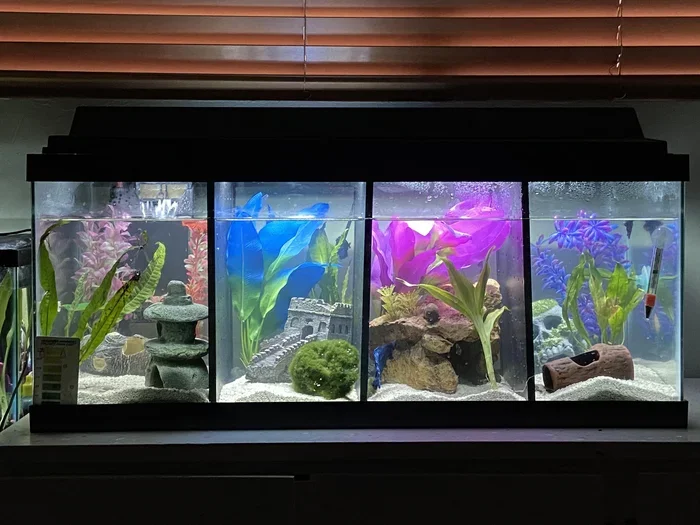
If you want two males, use separate tanks. Place them side by side. They can see each other but not touch. This satisfies their curiosity without danger. Never put two males in visible contact.
Signs Your Bettas Are Not Getting Along
Watch your fish daily after introduction. Early detection prevents serious injury. Some signs are subtle at first. Learn to read betta body language.
Warning Behaviors to Watch
Look for these red flags:
- Flaring: Gills spread wide, fins extended
- Chasing: One fish stalks the other constantly
- Fin nipping: Biting at fins or tails
- Hiding: One fish refuses to come out
- Loss of color: Dulling of bright scales
Occasional flaring is normal. Constant chasing is not. Fin damage means serious trouble. Act fast if you see these signs.
What to Do During Fights
Separate fish immediately if they fight. Use a net or cup. Check for torn fins or wounds. Treat injuries with aquarium salt if needed.
Do not try to force them to reconcile. Bettas do not make up after fights. Permanent separation is often the only solution. Keep them in divided tanks or separate rooms. Try again later with more decor.
Common Mistakes to Avoid
Many beginners make the same errors. Learning from others saves time and fish lives. Avoid these pitfalls. Most problems come from poor planning.
Overcrowding the Tank
Too many fish cause stress. Even with enough space, crowding triggers aggression. Stick to the two-betta rule in a 20-gallon tank. Do not add other fish unless they are compatible.
Good tank mates include:
- Corydoras catfish
- Neon tetras
- Amano shrimp
- Mystery snails
Avoid fish with long fins. Bettas may mistake them for rivals. Also avoid aggressive species. Research every new addition carefully.
Ignoring Water Quality
Dirty water makes fish irritable. Test ammonia, nitrite, and nitrate weekly. Change 25 percent of water each week. Use a water conditioner to remove chlorine.
Keep temperature between 78 and 80 degrees Fahrenheit. Bettas are tropical fish. Cold water weakens their immune system. Hot water increases aggression. Stable conditions prevent stress.
Overfeeding Problems
Too much food fouls the water. Uneaten food rots and raises ammonia. Feed small amounts twice daily. Remove leftovers after five minutes.
Overweight fish become lazy. They swim less and hide more. This invites bullying from tank mates. Keep feeding portions small and consistent.
Alternative Tank Mates for Bettas
If two bettas do not work, try other companions. Many fish species coexist peacefully with bettas. Choose carefully based on temperament. Not every fish suits a betta tank.
Safe Fish Companions
Peaceful fish make good partners. Avoid fin-nippers like tiger barbs. Choose slow-moving species that do not bother bettas. Good options include harlequin rasboras and ember tetras.
Always quarantine new fish first. This prevents disease spread. Observe newcomers for two weeks. Then introduce them slowly. Watch the betta reaction closely.
Snails and Shrimp Options
Invertebrates are excellent tank mates. They do not bother bettas. Snails clean algae from glass. Shrimp add color and activity.
Apple snails and mystery snails work well. They are too large for bettas to bother. Ghost shrimp are cheap and easy to keep. Watch for occasional nipping though. Provide hiding spots for shrimp too.
Learn about other fish with female bettas for more companion ideas. Every tank is different. What works for one owner may not work for you.
Conclusion
So can you put two betta fish together safely at home? Yes, but it takes work. You need the right tank size, proper decor, and daily monitoring. Choose compatible combinations like male-female pairs or female sororities. Avoid two males at all costs.
Watch for warning signs every day. Separate fish at the first sign of fighting. Maintain clean water and proper temperature. With patience and attention, two bettas can coexist peacefully.
Start small and learn your fish. Each betta has its own personality. Some will never accept a tank mate. That is okay. Give your fish the best life possible, whether alone or with a companion.
Frequently Asked Questions
Can two male betta fish live together?
No, two male bettas should never share a tank. They will fight aggressively and may kill each other. Keep males in separate tanks placed side by side if you want them to see each other.
How many female bettas can live together?
Five or more females is the recommended number. This spreads out aggression and prevents one fish from being targeted. Always use a tank of 30 gallons or larger for a female group.
What tank size do I need for two bettas?
A 20-gallon tank is the minimum for two bettas. More space reduces territorial behavior and stress. Never try to keep two bettas in a bowl or tank smaller than 10 gallons.
How do I introduce two bettas to the same tank?
Add plenty of plants and caves first. Use a divider initially and let them see each other for a few days. Remove the divider only if both fish seem calm. Watch closely for the first week.
What signs mean my bettas are stressed?
Look for hiding, loss of color, rapid breathing, or clamped fins. Stress often leads to aggression. Check water quality and add more hiding spots if you see these signs.
Can I put other fish with my bettas?
Yes, but choose peaceful species like tetras or corydoras. Avoid aggressive or fin-nipping fish. Always research compatibility before adding new tank mates to your aquarium.
=== CONCLUSION ===
Keeping two betta fish together is possible but challenging. Success depends on tank size, gender choice, and daily monitoring. Remember that betta fish are individuals with unique personalities. What works for one pair may fail for another.
Start with the right setup and be ready to separate if needed. Your fish welfare always comes first. With patience and proper care, you can create a peaceful home for multiple bettas.