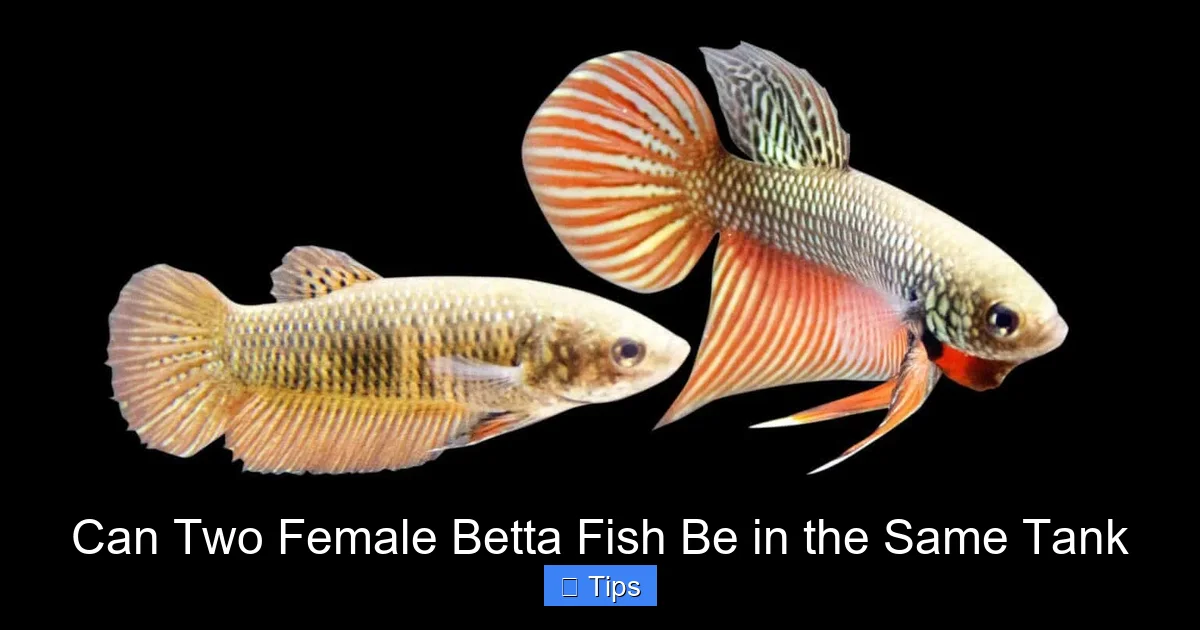
Can Two Female Betta Fish Be in the Same Tank
Yes, two female betta fish can sometimes share a tank, but it’s a complex and risky endeavor known as a “sorority.” It requires a very large, heavily planted tank (minimum 20+ gallons), careful selection of similarly sized females, and constant monitoring for aggression. For most aquarists, especially beginners, keeping a single female betta or a well-researched community tank with non-threatening species is a far safer and more rewarding choice. Success is never guaranteed, and severe injury or death is a common outcome.
So, you’ve fallen in love with the flowing fins and vibrant colors of betta fish. You’ve seen those stunning photos online of multiple bettas—sometimes even females—swimming together in a lush, planted paradise. It’s a beautiful dream, but is it reality? The question “Can two female betta fish be in the same tank?” is one of the most common and misunderstood in the aquarium hobby. The short, honest answer is: sometimes, but it’s a high-stakes gamble that requires expert-level planning and a willingness to accept failure. This article will pull back the curtain on female betta sororities, separating myth from reality, and providing you with the unvarnished truth to help you make the safest, most ethical choice for your aquatic pets.
First, let’s clear up a major misconception. While male bettas are famously territorial and must almost always be kept alone, female bettas are often wrongly labeled as “community fish” who get along fine. This is a dangerous oversimplification. Female bettas, or “plakats” when their fins are shorter, still possess the same aggressive, territorial Betta splendens DNA as their male counterparts. They will flare, chase, and fight to establish dominance. The key difference is that in a properly sized and decorated environment, females *can* sometimes form a stable, albeit fragile, hierarchy. This group is called a sorority. But achieving this stability is less about their gender and more about providing an environment that mitigates their natural instincts. For every successful sorority story, there are dozens of tragic endings involving torn fins, stress-induced illness, or death. Your priority must always be the welfare of the fish, not the aesthetic of a community tank.
Key Takeaways
- Sororities are advanced setups: A female betta sorority is not a beginner project; it requires significant experience, a massive tank, and acceptance of potential loss.
- Tank size is non-negotiable: The absolute minimum is a 20-gallon long tank, but larger (30+ gallons) dramatically increases success rates by providing space to establish territories.
- Aggression is inherent and must be managed: Female bettas are still bettas. A strict hierarchy will form, and bullying or lethal fights can occur, requiring immediate intervention.
- Heavy planting and hiding spots are critical: Dense vegetation, driftwood, and caves break lines of sight, providing essential escape routes and reducing constant visual stress.
- Not all females are suitable: Only select females with calm, non-flaring temperaments from reputable sources. Aggressive or “queen” personalities must be removed immediately.
- Community tanks are a better alternative: A single female betta in a peaceful community with small, fast, non-colorful fish (like neon tetras or harlequin rasboras) is a much more stable option.
- Constant observation is required: The first few weeks are the most dangerous. You must watch for fin nipping, chasing, and hiding daily, ready to separate fish at a moment’s notice.
📑 Table of Contents
The Myth of the “Peaceful” Female Betta
Why do so many people believe female bettas are peaceful? It stems from a few observations. Females are often less flamboyantly finned than the elaborate halfmoon or crowntail males, which can make them seem less intimidating. In a large, well-planted tank with many individuals, the aggression is diffused among several fish rather than focused on one rival. Additionally, pet stores and big-box retailers frequently house multiple female bettas together in small, poorly filtered containers, creating the illusion that they are fine in groups. This is a practice of convenience, not animal welfare, and results in high stress and injury rates. Those “community” tanks at the store are not models for home aquariums; they are holding facilities where fish are meant to be sold quickly.
Understanding Betta Temperament
Betta temperament exists on a wide spectrum. Some females are outright bullies, constantly flaring and chasing any fish that moves. Others are shy and reclusive. A small percentage have a genuinely calm disposition that makes them candidates for a sorority. You cannot determine this by looking at a fish in a cup. It requires observation in a controlled setting. When sourcing females for a potential sorority, you must choose fish from a reputable breeder or a trusted local fish store (LFS) who can vouch for their temperament. Avoid any female that flares excessively at your hand or at other fish in the store display. The goal is to select individuals who are alert but not aggressively reactive.
Another critical factor is size disparity. Introducing a large, dominant female into a group of smaller ones is a recipe for disaster. She will instantly claim the best spots and relentlessly bully the smaller, weaker fish. All females in a sorority should be within a quarter of an inch of each other in body length when first introduced. This size parity gives each fish a fighting chance to hold its own and prevents one from becoming an immediate, overpowering target. Always acclimate new arrivals separately in a quarantine tank for at least 2-4 weeks to observe for hidden illnesses before even considering adding them to the sorority.
Tank Setup: The Non-Negotiable Foundation
If you are seriously considering a female betta sorority, you must first accept this truth: the tank is the single most important factor in determining success or failure. Skimping on tank size or decoration is the fastest route to a bloody, stressful disaster. The goal of the tank setup is to maximize available space and minimize constant visual contact between the bettas.
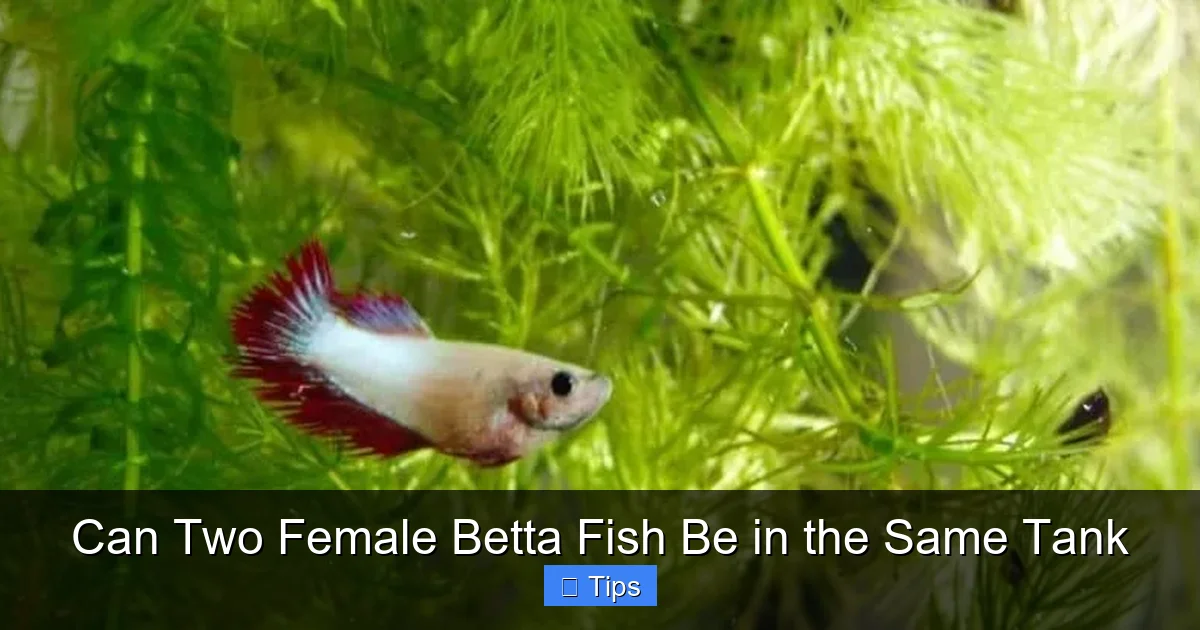
Visual guide about Can Two Female Betta Fish Be in the Same Tank
Image source: memfish.net
The Absolute Minimum: 20 Gallons, But Bigger is Better
Let’s be unequivocal: a 10-gallon tank is never suitable for a betta sorority, regardless of how many plants you add. The absolute bare minimum is a 20-gallon long tank. The “long” designation (more horizontal swimming space) is crucial. A 20-gallon tall tank provides far less usable territory. However, even a 20-gallon is a high-risk starting point. A 30-gallon or larger tank is the gold standard for a beginner sorority attempt. The extra water volume dilutes aggression-spiking hormones and waste products, provides more distinct territories, and gives injured or bullied fish more room to escape. Think of it this way: in a 20-gallon tank, two aggressive females might constantly cross each other’s paths. In a 40-gallon tank, they might each claim a separate end and only interact at a neutral midpoint.
Creating a Jungle: The Role of Plants and Hardscape
Open water is your enemy. Your tank must look like a dense, underwater jungle. The goal is to break the line of sight at every angle. Use a combination of:
- Floating Plants: Duckweed, Salvinia, or Frogbit. These are invaluable. They create a canopy at the water’s surface, a natural territory divider, and a feeling of security. Betta fish often build bubble nests under them and feel more dominant in these upper regions.
- Stem Plants: Rotala, Ludwigia, Cabomba. Plant these in dense clusters to create vertical walls of greenery.
- Midground Bushes: Java Fern, Anubias, Cryptocoryne. Attach these to driftwood or rocks. Their broad leaves provide perfect resting spots and visual barriers.
- Carpeting Plants: Dwarf Hairgrass, Monte Carlo. A thick carpet at the substrate level offers foraging grounds and further breaks up the tank floor.
- Hardscape: Driftwood, large lava rocks, and ceramic caves are essential. They provide unchangeable territory markers and hiding places that plants alone cannot. A betta will claim a specific cave or driftwood tunnel as its own.
There is no such thing as too many plants or hiding spots in a sorority tank. The decor should be so dense that you can barely see from one side of the tank to the other.
Sorority vs. Community Tank: Which Path is Right?
Before you commit to the high-wire act of a sorority, you must understand the fundamental difference between a sorority and a community tank with a single female betta. This distinction is everything.
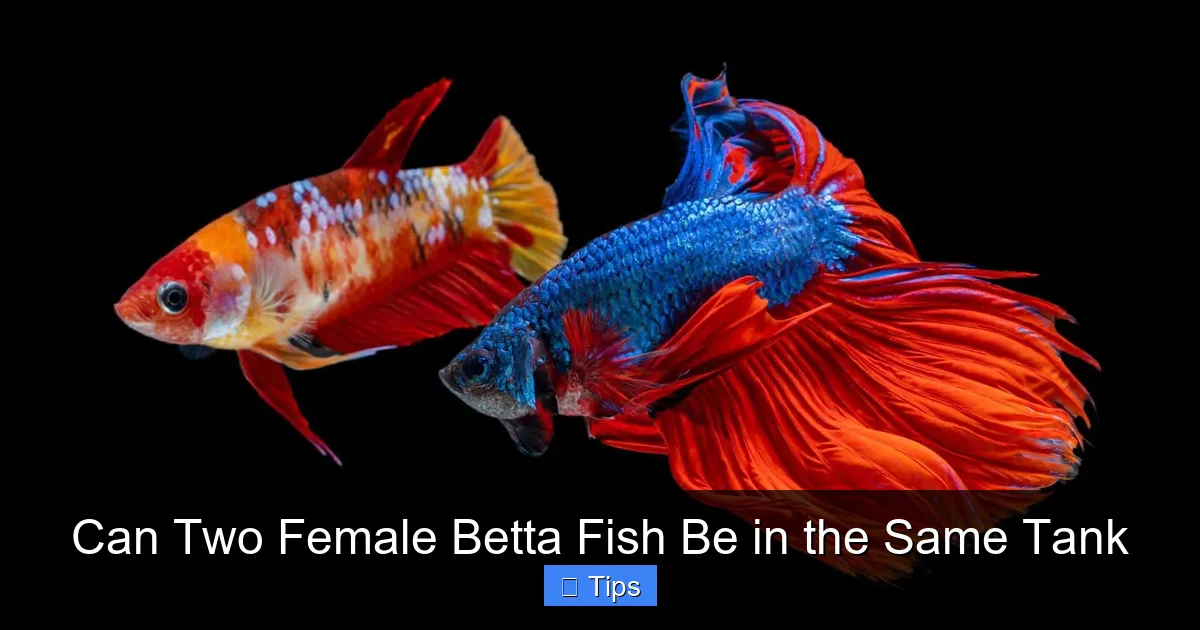
Visual guide about Can Two Female Betta Fish Be in the Same Tank
Image source: bettasource.com
The Female Betta Sorority: A Delicate Hierarchy
A true sorority consists of only female betta fish, typically 4-6 individuals in a large, planted tank. The theory is that with enough space and barriers, the females will establish a pecking order through initial displays and minor skirmishes, then settle into a stable, mostly peaceful coexistence. They will each have their own preferred spots—one near a certain driftwood log, another under a specific floating plant cluster. They may flare at each other across a clear patch of water, but they will not chase relentlessly. This is the ideal, but it’s a fragile equilibrium. The hierarchy can be disrupted by the introduction of a new fish, a change in water parameters, a sudden scare, or simply by one female deciding to challenge the alpha. It is a constant, low-grade state of tension that you, as the keeper, must be vigilant to manage.
The Single Female in a Peaceful Community
This is, without question, the recommended and far more reliable setup for the vast majority of hobbyists. You place a single female betta in a well-established community tank with other peaceful species that meet specific criteria: they should be fast-moving, schooling, non-colorful, and non-fin-nipping. The betta is then the focal point, not a competitor. Ideal tankmates include:
- Small Rasboras: Harlequin rasboras, chili rasboras. They are fast, peaceful, and their subdued colors don’t trigger the betta’s territorial instincts.
- Small Tetras: Neon tetras, ember tetras, rummy-nose tetras. Again, fast schooling fish that occupy the mid to upper levels and are generally ignored.
- Otocinclus Catfish: These tiny, algae-eating catfish are serene, nocturnal, and completely ignore bettas.
- Snails: Nerite snails, mystery snails. They are completely incompatible as food sources and add interesting activity.
- Shrimp: Some bettas will hunt shrimp, but larger, fast-breeding species like cherry shrimp in a heavily planted tank can sometimes coexist. Never guarantee this.
In this setup, your female betta is likely to be the most dominant fish, but she has no other bettas to challenge her. The community fish mind their own business, providing movement and activity without posing a threat. The risk of serious injury is minimal compared to a sorority.
Recognizing and Managing Aggression: The Daily Duty
If you proceed with a sorority, your life becomes one of constant surveillance. The first 72 hours after all fish are introduced are the most critical. You should be prepared to sit by the tank for extended periods, watching interactions.
Visual guide about Can Two Female Betta Fish Be in the Same Tank
Image source: bettasource.com
Normal Hierarchy Establishment vs. Dangerous Fighting
Normal/Acceptable Behavior: Brief flaring (gills and fins puffed out), parallel displays where two fish swim alongside each other showing off, short chases that end when the pursued fish finds a hiding spot, and posturing from established territories. Minor nips on the very tips of fins may occur as the order is set.
Dangerous/Unacceptable Behavior: relentless, non-stop chasing that doesn’t stop until the victim is exhausted or trapped; biting and tearing chunks of fin or flesh; a fish hiding constantly and not coming out to eat; one fish claiming the entire top half of the tank and preventing others from accessing the surface to breathe (betta are labyrinth fish and must reach the air).
The Intervention Protocol
You must have a “hospital tank” or separate containers ready at all times. The moment you see relentless bullying or physical damage beyond a few fin tips, you must remove the victim immediately. Do not think “they’ll work it out.” They won’t. The bullied fish is being systematically stressed to death, which opens the door to diseases like dropsy or fin rot. Also, be prepared to remove the bully. Sometimes, a single, hyper-aggressive female will terrorize an entire sorority. Removing that individual can save the rest of the group. Have a plan for rehoming a removed fish—through a local fish store, a club, or a dedicated single-specimen tank. A sorority is a commitment to having backup housing.
When Co-habitation Fails: Safer, Humane Alternatives
Given the risks, why would anyone attempt a sorority? Often, it’s a desire to keep more than one betta in a display tank. But there are safer, more ethical ways to enjoy multiple bettas without forcing them into a hostile living situation.
The Partitioned Tank
Use a large tank (40+ gallons) and divide it into separate, opaque compartments using commercial tank dividers or sealed acrylic panels with silicone. Each division must have its own filter media, heater, and decorated section. This allows you to keep multiple bettas in one physical tank unit while giving each its own guaranteed, stress-free territory. You get the aesthetic of a single large tank, but with zero risk of fish fighting. This is an excellent solution for breeders or collectors.
Dedicated Single-Specimen Tanks
There is a profound beauty in a single, happy betta in a perfectly tailored 5- or 10-gallon nano tank. You can create a stunning, species-specific biotope for it—a dark, tannin-stained blackwater tank with Indian almond leaves and a school of ember tetras below, or a bright, planted “jewel box” tank. A solitary betta will often be more interactive with its owner, flare at its reflection (a harmless pastime), and build impressive bubble nests. Its colors will be more vibrant without the stress of competition. Don’t underestimate the joy and lower maintenance of a single-specimen setup.
Betta “Focal Point” in a Large Community
As mentioned, a 29-gallon or larger community tank with a single female betta as the star is a spectacular and stable setup. The betta becomes the queen of a bustling city of other fish, not a gladiator in an arena. The activity of the other fish provides enrichment for the betta without threat. This setup allows for incredible aquascaping and a dynamic, peaceful ecosystem.
The Verdict: Is It Worth the Risk?
After all this, we return to the core question. Can two female betta fish be in the same tank? Yes, it is biologically possible under a very narrow set of strict, expert conditions. But “can” does not mean “should.” For the overwhelming majority of hobbyists—especially those new to fishkeeping—the answer is a resounding no.
The risk of serious harm to your fish is high. The emotional toll of watching a beautiful betta you’ve chosen get bullied, injured, or killed is significant. The constant monitoring required is a burden. The potential for sudden, unpredictable violence means you must always be on high alert. The reward, a stable sorority, is fragile and can collapse without warning.
Your goal as a responsible aquarist is to minimize suffering and maximize welfare. A single betta in a properly sized, enriched tank, or a single betta in a compatible community, will live a longer, healthier, and less stressful life. You will have more time to enjoy its beauty rather than policing its interactions. The dream of a betta sorority is a siren song that has led many well-meaning aquarists to heartbreak. Heed this warning: choose the path of compassion and stability. Your future, thriving betta will thank you for it.
Frequently Asked Questions
What is the absolute minimum tank size for a female betta sorority?
The absolute minimum is a 20-gallon long tank for 4-5 females, but a 30-gallon or larger is strongly recommended to provide enough territory and reduce aggression. Never attempt a sorority in a tank smaller than 20 gallons.
How can I tell if my female bettas are fighting or just establishing a hierarchy?
Hierarchy involves brief flaring, parallel swimming, and short chases that end with the chased fish finding a hiding spot. Fighting is relentless chasing, biting that removes fin chunks, a fish being constantly barred from the surface, or one fish hiding 24/7 and not eating. Any fighting requires immediate separation of the victim or bully.
How many female bettas should be in a sorority?
The safest number is between 4 and 6. With fewer than 4 (e.g., just 2), one will almost always bully the other relentlessly, as there are no other fish to diffuse the aggression. With more than 6, even in a large tank, the hierarchy becomes unstable and harder to manage.
Can I add other fish to a female betta sorority tank?
It is not recommended. Adding any other fish—especially other fast-moving or colorful species—adds another layer of stress and competition for space. The bettas may target the new fish, or the new fish may stress the bettas. A sorority should contain only female bettas.
Is a single female betta happy alone?
Absolutely. A single female betta in a properly sized, decorated tank (5+ gallons) with appropriate enrichment (plants, logs, varied diet) is the ideal scenario for its welfare. They are not schooling fish and do not get “lonely” in the way humans do. They are solitary and territorial by nature.
What is the biggest mistake people make when trying a female betta sorority?
Using a tank that is too small and under-decorated. This is the root cause of almost all sorority failures. People see a photo of a sorority in a 20-gallon and think it’s easy, not realizing that photo was likely taken moments after a careful introduction in a meticulously scaped tank, and that the fish may have been fighting for days prior. Always over-equip your tank.