No, two male betta fish should almost never share a tank. Their aggressive nature, inherited from fighting fish ancestry, leads to fatal fights. Female bettas can sometimes be kept in carefully managed groups (“sororities”), but this requires immense expertise, a large heavily planted tank, and constant monitoring. For 99% of hobbyists, keeping bettas solitary is the only safe and ethical choice for their wellbeing.
You’ve seen it online—a stunning community tank with multiple colorful betta fish swimming peacefully together. It looks beautiful, almost magical. Then you look at your own beautiful, solitary betta in his 5-gallon tank and wonder: can two betta fish live in one tank? Could my fish have a friend? The answer is one of the most important and misunderstood topics in fishkeeping, and it’s not a simple yes or no. It’s a firm, qualified “almost never” for males, and a “possibly, but with extreme caution and expertise” for females. Let’s dive deep into the real facts, separating aquarium myth from the biological reality of these fascinating, fierce fish.
Key Takeaways
- Male Bettas Are Lethally Solitary: Two males in one tank will almost certainly fight to the death due to extreme territorial aggression.
- Female Sororities Are High-Risk: While possible, all-female groups require a minimum 40+ gallon, densely planted tank and expert-level management to prevent bullying and injury.
- Tank Size Is Non-Negotiable: For any multi-betta attempt, the tank must be at least 40 gallons (150+ liters) to provide enough territory and escape routes.
- Planted Tanks Are Essential: Thick, tall plants and decorations are critical to break lines of sight and establish visual barriers, reducing stress and aggression.
- Separate Equipment is Mandatory: Each betta needs its own filter intake sponge, heater (if shared), and feeding area to minimize resource competition.
- Quarantine and Observation Are Crucial: All new bettas must be quarantined and introduced slowly with dividers, with constant observation for signs of aggression for the first 72 hours.
- Solitary is the Standard: For the vast majority of keepers, a single betta in a properly sized, enriched 5+ gallon tank is the only responsible recommendation.
📑 Table of Contents
- Understanding the Betta: From Fighting Fish to Fancy Pet
- The Male Betta Reality: A Solo King in His Kingdom
- The Female Sorority Tank: A High-Stakes Gamble
- Tank Setup Secrets for Any Multi-Betta Attempt
- Safer Alternatives: The Community Tank Approach
- Common Mistakes and Red Flags
- Conclusion: The Ethical and Happy Betta
Understanding the Betta: From Fighting Fish to Fancy Pet
To understand why can two betta fish live in one tank is such a dangerous question, we must first understand the betta’s history. The betta splendens we keep as pets is a direct descendant of the wild Siamese fighting fish. For over 600 years, they were bred in Thailand (formerly Siam) specifically for aggression. Males were pitted against each other in matches that, while rarely fatal to the victor, were brutal displays of dominance. This genetic legacy of intense territoriality and aggression towards other males is hardwired into their DNA.
The Biology of Aggression
When a male betta sees another male, his body undergoes a dramatic change. He flares his gills, extends his fins to appear larger, and his colors often intensify. This isn’t just a show; it’s a prelude to combat. They will bite fins, tear scales, and lock jaws in fights that can last until one retreats or is severely injured. In the confined space of an aquarium, there is no retreat. There is no “tie.” There is only a winner and a loser, and the loser often dies from stress, infection, or physical trauma. Females also have a pecking order and can be fiercely territorial, though their aggression is typically less explosive than a male’s.
Misreading Behavior
A common mistake new owners make is seeing their betta flare at his reflection and thinking, “He just wants a friend!” This is incorrect. Flaring at a reflection is a territorial response to a perceived intruder *in his space*. It’s a sign of aggression, not sociability. A betta that is calm and does not flare at a new fish introduced in a separate container might seem promising, but this is often just initial curiosity or stress-induced immobility. The true test comes over days and weeks as territory is established.
The Male Betta Reality: A Solo King in His Kingdom
Let’s be unequivocally clear: two male betta fish should never be housed together. The idea of a “community tank” with a male betta is a myth perpetuated by social media. While some exceptionally mellow males might ignore other fish species (this is called a “community tank” and has its own strict rules), they will always see another male betta as an existential threat.
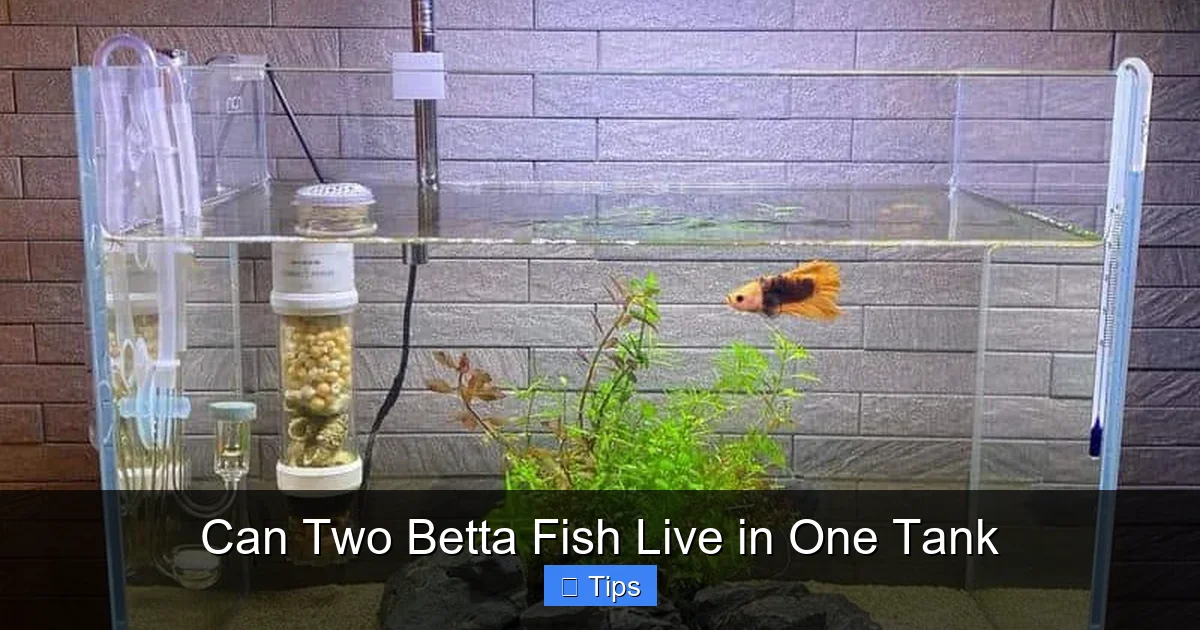
Visual guide about Can Two Betta Fish Live in One Tank
Image source: acaquarium.com
The “Divided Tank” Fallacy
You might see tanks with a solid divider separating two male bettas. This is not them living together. This is two separate tanks sharing a filtration system. The divider must be completely opaque, sealed from top to bottom, and the bettas must never see each other. Even a glimpse can trigger constant, stressful flaring. If the divider fails or leaks, a fight will commence within minutes. This setup is for experienced keepers who need to save space, not for providing companionship.
What About a Harem? One Male, Multiple Females?
This is another dangerous myth. In the wild, a male betta’s territory contains the nests he builds and a harem of females he courts. But in captivity, the confined space eliminates the female’s ability to escape his persistent attention. The male will chase, nip, and harass the females relentlessly to spawn, causing extreme stress, physical injury, and suppressed immune systems. The females will also compete with each other for the male’s attention or territory, leading to infighting. This setup is a recipe for disaster and is considered inhumane by ethical aquarists.
The Female Sorority Tank: A High-Stakes Gamble
If can two betta fish live in one tank is a hard “no” for males, what about females? Female bettas, while still territorial, do not have the same centuries of selective breeding for lethal aggression. This has led to the concept of the “betta sorority”—a group of females living together. However, this is not a beginner setup. It is an advanced, high-maintenance endeavor with a high failure rate.
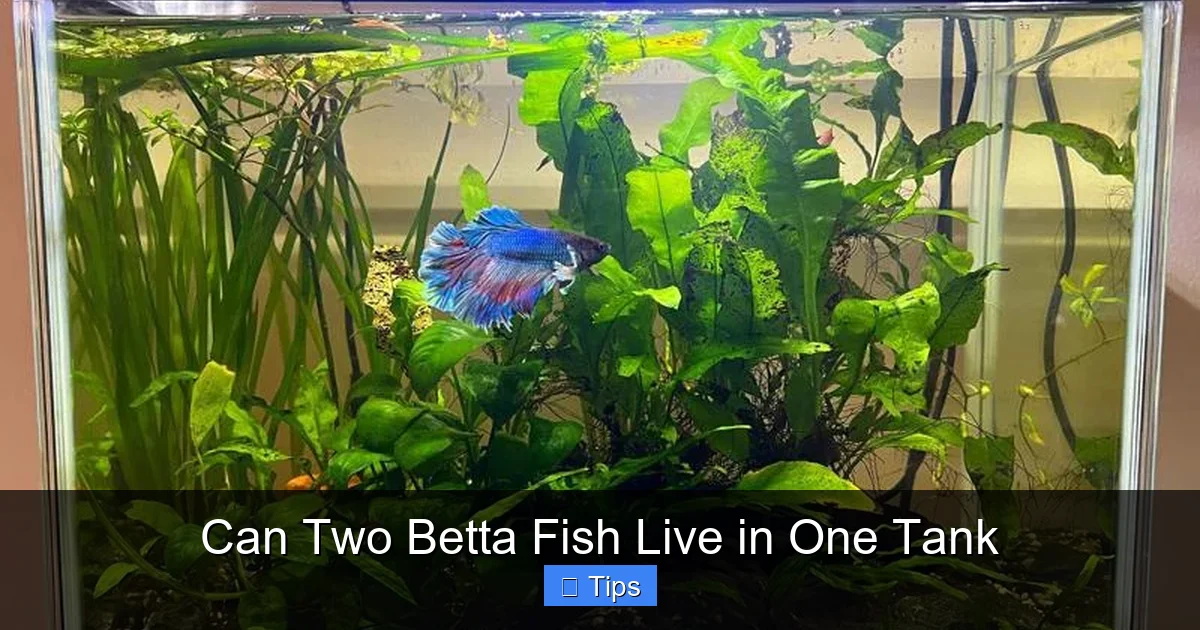
Visual guide about Can Two Betta Fish Live in One Tank
Image source: acaquarium.com
The Absolute Minimum Requirements
For a sorority to have any chance of success, the tank must be enormous. The absolute minimum is a 40-gallon long tank (48+ inches in length). This provides enough horizontal space for distinct territories to form. A 20-gallon tank is a death sentence for a sorority; it’s simply too small for the fish to establish personal space. The tank must be heavily, densely planted with live plants like Anubias, Java fern, Cryptocoryne, and floating plants like frogbit or water lettuce. The goal is to create a visual maze where fish cannot see the entire tank at once. Driftwood, rock piles, and ceramic pots provide additional hiding spots and territorial boundaries.
The Introduction Protocol
Introducing females is a delicate, multi-step process. All fish must be healthy and of similar size/age. They should be added to the fully cycled, decorated tank all at once (a “simultaneous introduction”). Adding one at a time allows the first fish to claim the entire territory before newcomers arrive, guaranteeing persecution. Upon introduction, you must watch for 72 hours straight for signs of bullying: one fish hiding constantly, damaged fins, being chased to the point of exhaustion. You must be prepared to separate any aggressor immediately using a breeding box or a separate hospital tank. Even in a perfect setup, sororities can implode months later due to shifting hierarchies.
Tank Setup Secrets for Any Multi-Betta Attempt
If, after understanding the risks, you are an experienced aquarist considering a sorority, your tank setup is the single most important factor for success or failure. Every element must be chosen to minimize conflict.
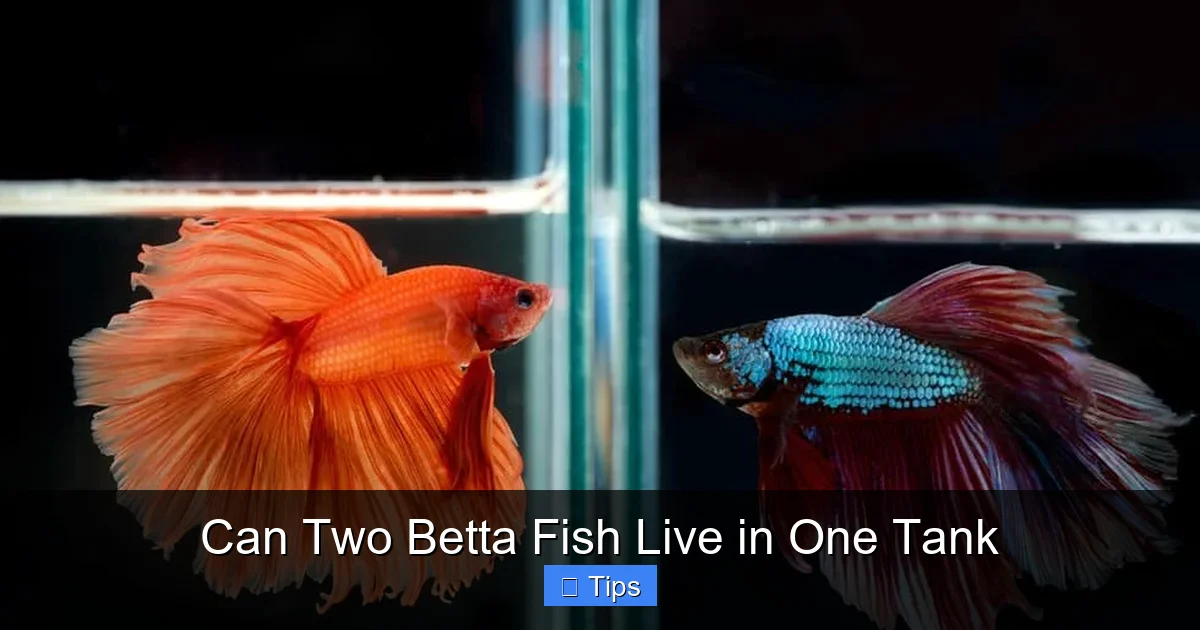
Visual guide about Can Two Betta Fish Live in One Tank
Image source: fishtankmaster.com
Aquascaping for Peace
The philosophy is “break the line of sight.” Use tall, thick plants like Vallisneria or Amazon swords to create vertical walls. Place bushy mid-ground plants like Ludwigia or Rotala in clusters. Floating plants are invaluable; they create a canopy of shadow and cover, making fish feel secure from above. Arrange decorations so there are multiple pathways and dead ends. The goal is that a fish in one corner cannot see a fish in the opposite corner. This reduces the feeling that the entire tank is one shared territory, instead framing it as a series of overlapping personal spaces.
Filtration and Heating
Use a filter with a gentle flow, as strong currents stress bettas. Crucially, all filter intakes must be covered with a sponge pre-filter. Bettas, especially with their large fins, are notorious for getting their fins sucked into intakes, causing severe injury. For heating, a single, properly sized heater (e.g., 100W for a 40-gallon) is usually fine, but ensure it’s placed near a water movement area for even heat distribution. Monitor temperature closely with a separate thermometer.
Feeding Strategies
In a group, dominant fish will eat all the food. You must feed in multiple locations simultaneously. Use a feeding ring or drop food at opposite ends of the tank. Observe to ensure every fish gets its share. Underfeeding a subordinate fish leads to weakness and further bullying. High-quality, varied food (pellets, frozen daphnia, brine shrimp) supports overall health and resilience.
Safer Alternatives: The Community Tank Approach
The question can two betta fish live in one tank often stems from a desire to create a vibrant community. The safe, ethical way to do this is with one single betta as the centerpiece of a community tank. A single, peaceful male or female betta can coexist with certain other species, provided the tank is 20+ gallons and heavily planted.
Ideal Tank Mates for a Single Betta
Choose small, schooling, non-nippy fish that occupy different swimming levels. Good candidates include:
- Mid-level schooling fish: Harlequin rasboras, Chili rasboras, Neon tetras (in a large enough school of 10+).
- Bottom dwellers: Kuhli loaches, small Corydoras catfish (like Pygmy or Habrosus), Bristlenose plecos (only one, as they can be territorial).
- Shrimp & Snails: Amano shrimp, Ghost shrimp, Nerite snails, Ramshorn snails. (Note: A large, aggressive betta may still eat small shrimp).
Always introduce the community tank mates first and let them establish their school for a few weeks before adding the betta. This gives the other fish a cohesive unit, making it harder for the betta to single one out.
Dangerous Tank Mates to Avoid
- Other long-finned, slow-moving fish (Guppies, Fancy Guppies, some Goldfish)—bettas will nip their flowing fins.
- Fish with bright colors or long fins that resemble another betta (some male swordtails, fancy guppies).
- Aggressive or fin-nipping fish (Tiger barbs, some cichlids, some loaches).
- Any fish that occupies the same top-level water column as the betta.
Common Mistakes and Red Flags
Even with the best intentions, many aquarists make fatal errors when attempting multi-betta setups. Recognizing these mistakes is key to preventing fish loss.
“He Was Fine Yesterday” Syndrome
Aggression can be delayed. A betta might be curious or indifferent for the first 24-48 hours as it assesses a new tank. The aggression often flares once the new fish starts to explore and claim a spot. Never assume peace after one day. The critical observation period is a full 72 hours of non-stop, close watching.
Ignoring Subtle Bullying
Not all aggression is a full-blown fight. Constant chasing, fin-nipping at the edges, and one fish being barred from feeding or certain tank areas are signs of a failed hierarchy. The bullied fish will become stressed, pale, and prone to disease. If you see one fish consistently hiding and another consistently patrolling, the setup is already failing.
The Small Tank Trap
The number one reason sororities fail is a tank that is simply too small. A 10-gallon tank is not a “small sorority tank.” It is a torture chamber where escape is impossible. There is a direct correlation between tank volume and aggression levels. More space = less conflict. If you cannot provide a 40+ gallon long tank, do not attempt a sorority.
Conclusion: The Ethical and Happy Betta
So, can two betta fish live in one tank? The honest, responsible answer for the overwhelming majority of hobbyists is a resounding no. Their biology, forged over centuries, makes them solitary creatures. A single male betta, in a properly sized (5+ gallon), heated, filtered, and enriched tank with live plants and hiding spots, will be a vibrant, interactive, and healthy pet for 3-5 years. This is the gold standard of betta care.
For the expert aquarist with a 40+ gallon heavily planted tank, the time to dedicate to weeks of meticulous observation, and a separate hospital tank on standby, a carefully managed female sorority can be a fascinating project. But it is a project of risk management, not guaranteed harmony. The most beautiful betta tank is one where your fish is safe, stress-free, and displaying its natural colors and behaviors without fear. That beauty is almost always found in solitude. Choose the safe path. Give your betta the kingdom he deserves, all to himself.
Frequently Asked Questions
Can I put two male betta fish together if the tank is huge?
No. Even in a massive tank, two males will perceive each other as direct competitors for territory and will fight. The size of the tank only determines how long they might avoid each other before a confrontation, not if it will happen. Their aggression is innate and inescapable.
How many female bettas can I keep together?
In an ideal 40+ gallon long, heavily planted sorority tank, a group of 4-6 females of similar size and age is the typical starting point. Never start with just 2 or 3, as this can lead to relentless bullying of the single target. Larger groups (6-8) in a 55+ gallon tank can sometimes distribute aggression more evenly, but all-female groups are inherently unstable and can fail at any time.
What is the first sign that my betta sorority is failing?
The first red flag is one or more fish being actively chased to the point of exhaustion, unable to rest or feed without harassment. Look for torn or frayed fins, pale or blotchy coloration from stress, and fish that are permanently hidden in the back corners of the tank. Once bullying becomes chronic, it’s usually irreversible and the victim will succumb to stress or infection.
Can a male betta live with any other fish at all?
Yes, a single male betta can often live with careful tank mate selection. Focus on small, fast-swimming, non-aggressive schooling fish like harlequin rasboras or chili rasboras (minimum school of 8-10), and peaceful bottom dwellers like kuhli loaches or pygmy corydoras. Always add the community fish first and observe the betta’s reaction for at least 48 hours before deeming it safe.
My betta flares at his reflection. Should I get him a friend?
No. Flaring at a reflection is a sign of territorial aggression, not loneliness. He is reacting to a perceived intruder. Getting another betta would be interpreted as a real threat and trigger a deadly fight. Flaring is a natural behavior; providing plants and visual barriers can reduce stress from seeing his own reflection.
What’s the absolute safest way to have more than one betta?
The only truly safe way is to house them in completely separate, cycled tanks with their own equipment (filter, heater). You can place these tanks next to each other, but ensure there is no way for the fish to see each other directly, as this will cause chronic stress. Each betta gets its own 5+ gallon kingdom. This is the standard and most ethical practice for most betta keepers.