Can Rainbow Fish Live with Betta
Mixing a betta with rainbow fish is a high-risk, high-reward endeavor. Bettas are famously territorial and aggressive, while rainbow fish are active, schooling shoalers that stress easily. Success is possible but demands a massive, heavily planted tank, careful species selection, and meticulous introduction protocols. For most hobbyists, especially beginners, keeping them separately is the safer, more humane choice. If you attempt it, be prepared to separate them immediately at the first sign of trouble.
Key Takeaways
- Tank Size is Non-Negotiable: A minimum of 55 gallons (208 liters) is essential to provide enough space for territories and shoaling, reducing direct confrontations.
- Rainbow Fish Species Matter: Choose larger, hardier species like Boeseman’s or Melanotaenia fluviatilis over smaller, more delicate varieties to better withstand a betta’s curiosity.
- The Betta’s Personality is Key: A laid-back, older betta from a community tank has a far better chance than a young, aggressive “fighter” betta.
- Dense Aquascaping is Crucial: Use tall plants, driftwood, and rockwork to create visual barriers and break lines of sight, preventing the betta from fixating on the rainbows.
- Introduce Rainbows First: Establish the rainbow fish school (6-8 minimum) in the tank for several weeks *before* adding the betta, allowing them to claim the space as their own.
- Constant Vigilance is Required: Even in a perfect setup, you must monitor for flaring, fin-nipping, or hiding daily. Have a backup plan (a divider or second tank) ready.
- Stress is the Biggest Killer: Both species are prone to stress-induced illness. If either fish is not eating, hiding constantly, or showing faded colors, the arrangement has failed.
📑 Table of Contents
- The Allure and the Anxiety: Why This Question is So Common
- Deep Dive: Understanding Your Betta’s Temperament
- Deep Dive: The Needs of Rainbow Fish in a Community
- The Perfect Stage: Engineering a Compatible Tank
- The Critical Protocol: How to Introduce Them
- When It Fails: Recognizing the Inevitable and Making the Call
- The Verdict and The Alternatives: Is It Worth the Risk?
- Conclusion: Knowledge Over Ambition
The Allure and the Anxiety: Why This Question is So Common
So, you’ve got a stunning, flowing betta in a solo tank, maybe a 10-gallon beauty with a labyrinth of plants. And you’ve seen those videos—the breathtaking schools of rainbow fish, shimmering with every color under the sun as they move as one. The idea of combining these two icons of the freshwater hobby is powerfully attractive. It’s like wanting to pair a fiery, territorial dragon with a peaceful, glittering flock of songbirds. The potential for a breathtaking community is huge, but the risks are equally significant. This isn’t a simple “yes” or “no” question. The real answer is a complex “it depends,” and that “depends” rests on a foundation of species knowledge, tank engineering, and behavioral observation. This guide will walk you through every single factor that determines if your specific betta and your specific rainbow fish can share a home, or if the dream needs to stay a dream.
The Heart of the Conflict: Instinct vs. Instinct
To understand the challenge, we must first look at the natural behaviors of both fish. They aren’t being “mean”; they are acting on millennia of evolutionary programming. The betta, or Siamese fighting fish, was bred for aggression in Thailand’s shallow, stagnant rice paddies. Space is limited, resources are scarce. A male betta’s primary drive is to defend a small territory from rival males and to pursue females. In a tank, that translates to flaring at any fish that enters “his” space, especially those with long, flowing fins (which he may see as a rival male) or bright colors (which can trigger aggression or mating attempts).
Rainbow fish, from the family Melanotaeniidae, are open-water, mid-to-upper-level swimmers from the streams and rivers of Australia and New Guinea. Their survival depends on the “safety in numbers” principle of the shoal. A single rainbow fish is a stressed, timid, and vulnerable target. In a group of six or more, they gain confidence, display their best colors, and swim actively. Their very nature is to be a cohesive unit, darting and weaving together. This constant, shimmering movement can be perceived as a challenge or as prey by a betta, setting the stage for conflict.
Deep Dive: Understanding Your Betta’s Temperament
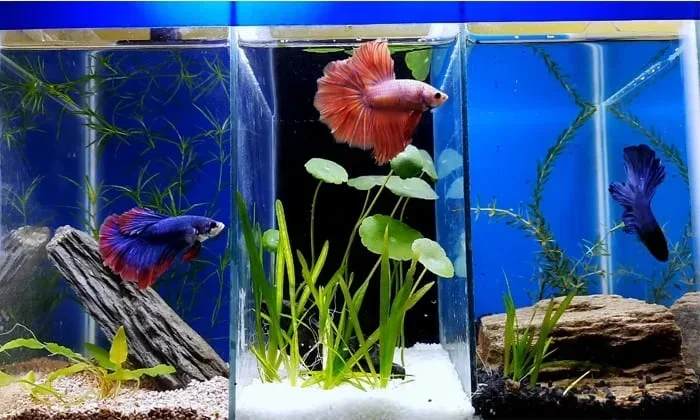
Not all bettas are created equal. The stereotype of the constantly flaring, fin-biting monster is just that—a stereotype. Your betta’s individual personality is the single most important variable in this equation.
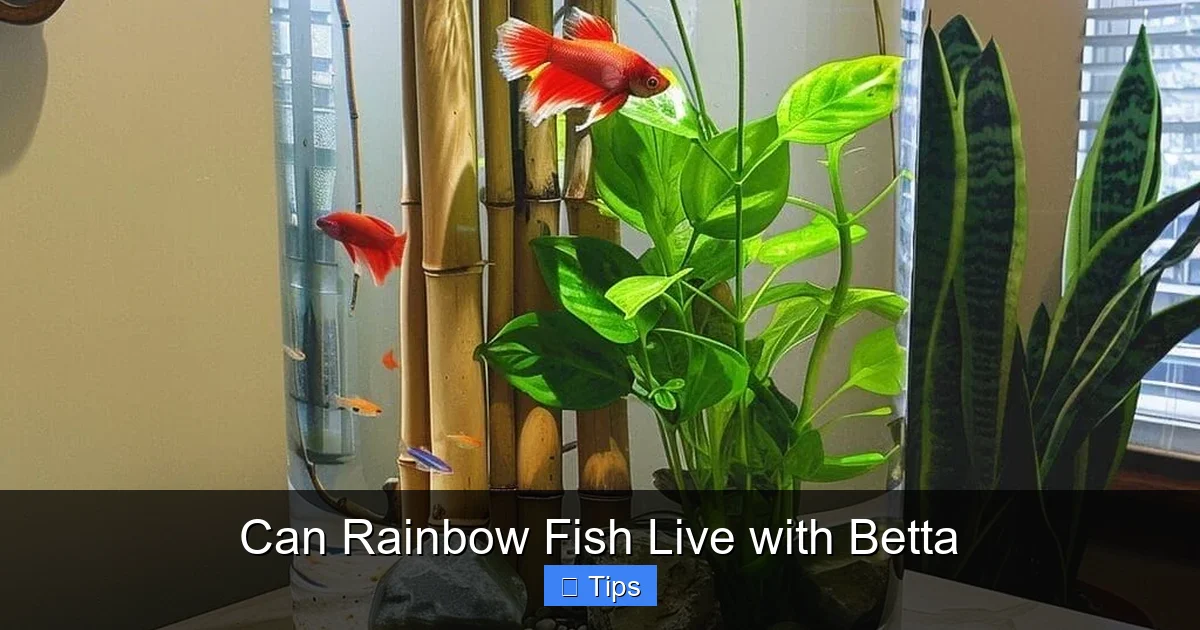
Visual guide about Can Rainbow Fish Live with Betta
Image source: i.pinimg.com
Assessing the Individual: Beyond the Pretty Face
When you get a betta from a store, you often see them in tiny cups. This isolation can make any fish more irritable. If possible, observe the betta in a community tank at the store. Is it calmly hovering, or is it constantly flaring at its neighbors? Does it have a history of fin-nipping? Older bettas, especially those raised in peaceful community tanks from a young age, are often more tolerant. Females are generally less aggressive than males, though they can still be territorial. Some “plakat” (short-finned) bettas are bred for less aggression and more active swimming, which might make them less likely to see a passing rainbow as an immediate rival. Choose a betta known for a calmer disposition. Ask the store staff about its behavior.
Signs of a Stressed or Aggressive Betta
Even a “calm” betta can have its limits. You must become an expert in betta body language. Key warning signs include:
- Flaring: The classic gill cover expansion. Occasional flaring at a new fish is normal; constant, frantic flaring is not.
- Fin-nipping: If you see your betta dart at and nip the fins of a rainbow fish, the arrangement is over. This causes injury, stress, and secondary infection.
- Stalking: The betta crouches low, focusing intently on a specific rainbow fish, following its every move. This is predatory behavior.
- Lethargy or Hiding: If your usually active betta becomes a permanent cave-dweller, the presence of the rainbows is causing it severe stress.
Conversely, a betta that occasionally flares but then goes back to exploring its plants is showing manageable, not pathological, territorial behavior.
Deep Dive: The Needs of Rainbow Fish in a Community
Rainbow fish are not passive, delicate ornaments. They are active, social, and relatively sturdy when their core needs are met. Ignoring these needs in a mixed tank guarantees failure.
Visual guide about Can Rainbow Fish Live with Betta
Image source: creativefabrica.com
The Non-Negotiable School Size
This is the absolute rule. You must keep a minimum of six rainbow fish of the same species. Eight to ten is even better. Why? With fewer than six, the fish will not form a proper shoal. They will be nervous, stressed, and may even turn on each other. A stressed rainbow fish is a weak rainbow fish—more susceptible to disease, less likely to eat well, and more likely to be targeted by a betta. A strong, confident school will hold its own, swimming as a unit and often ignoring the betta once they establish their own “safe zones” in the tank. The visual effect of a shimmering, moving wall of fish can also confuse a betta, making it harder to single out an individual target.
Choosing the Right Rainbow Species
Some rainbow fish are hardier and larger than others, making them better candidates for a betta tank. The most commonly available and suitable include:
- Boeseman’s Rainbowfish (Melanotaenia boesemani): A favorite. They are relatively hardy, reach about 4 inches (10 cm), and have beautiful orange/red and blue coloration. Their size and robustness give them an edge.
- Murray River Rainbowfish (Melanotaenia fluviatilis): Very hardy, active, and slightly smaller (3 inches/7.5 cm). Their silvery-blue color is less likely to trigger a betta’s aggression than fiery reds or oranges.
- Celebes Rainbowfish (Marosatherina ladigesi): Smaller (3 inches) and more slender, but incredibly active. They are a bit more delicate, so only attempt with a proven, calm betta in a pristine tank.
- Avoid: Neon Rainbows and other very small, delicate species. Also, avoid extremely colorful species like the Red Rainbowfish (Glossolepis incisus) if your betta is male, as the bright red can be a major trigger.
The Perfect Stage: Engineering a Compatible Tank
This is where you earn your stripes as an aquascaper. The goal is to build a tank so complex and spacious that the betta and the rainbow school can coexist without frequent, stressful interaction. Think of it as urban planning for fish—creating distinct neighborhoods with plenty of “green space.”
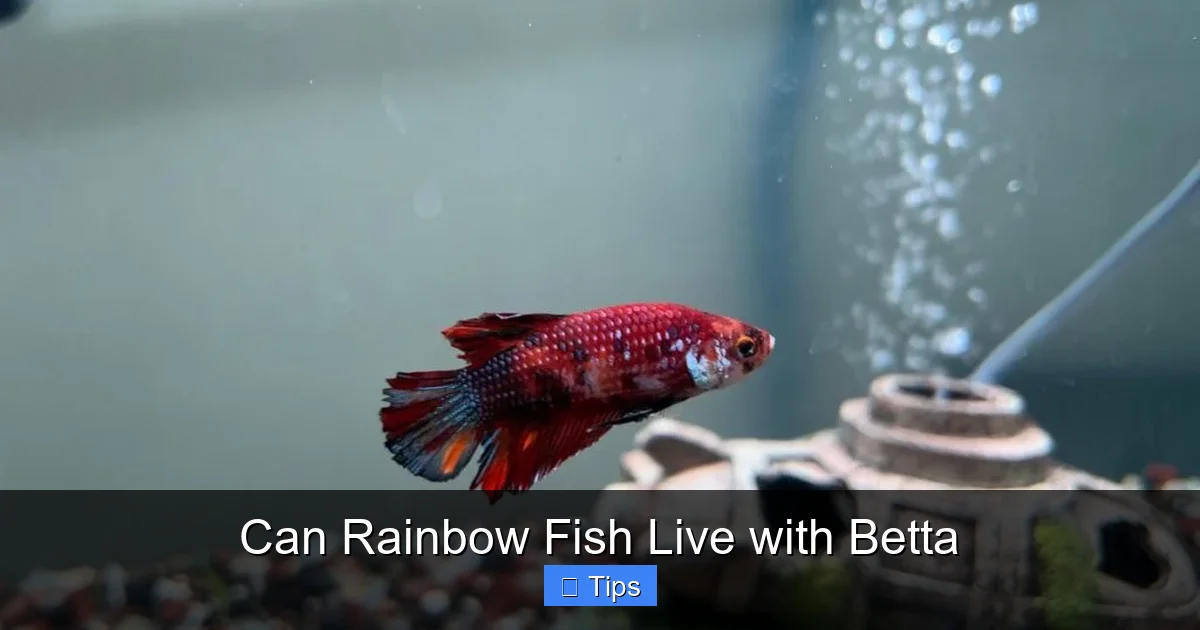
Visual guide about Can Rainbow Fish Live with Betta
Image source: housedpet.com
Tank Dimensions: Bigger is Not Just Better, It’s Mandatory
Let’s be brutally clear: a 10-gallon or even a 20-gallon tank is a guaranteed failure zone. The betta will claim the entire thing as its personal fiefdom. The absolute minimum is a 55-gallon (208-liter) tank, and 75 gallons (284 liters) is a much safer starting point. Why such a large size? You need horizontal swimming space for the rainbow school and vertical space for the betta to claim a top-layer territory. A long tank (e.g., 48 inches x 12 inches) is better than a tall, narrow one. This gives the rainbows a long corridor to school in, away from the betta’s chosen corner.
Aquascaping for Peace: Creating Visual Barriers
The single most important design element is breaking the line of sight. If the betta can see the rainbows constantly, it will fixate. Your aquascape must create “rooms.”
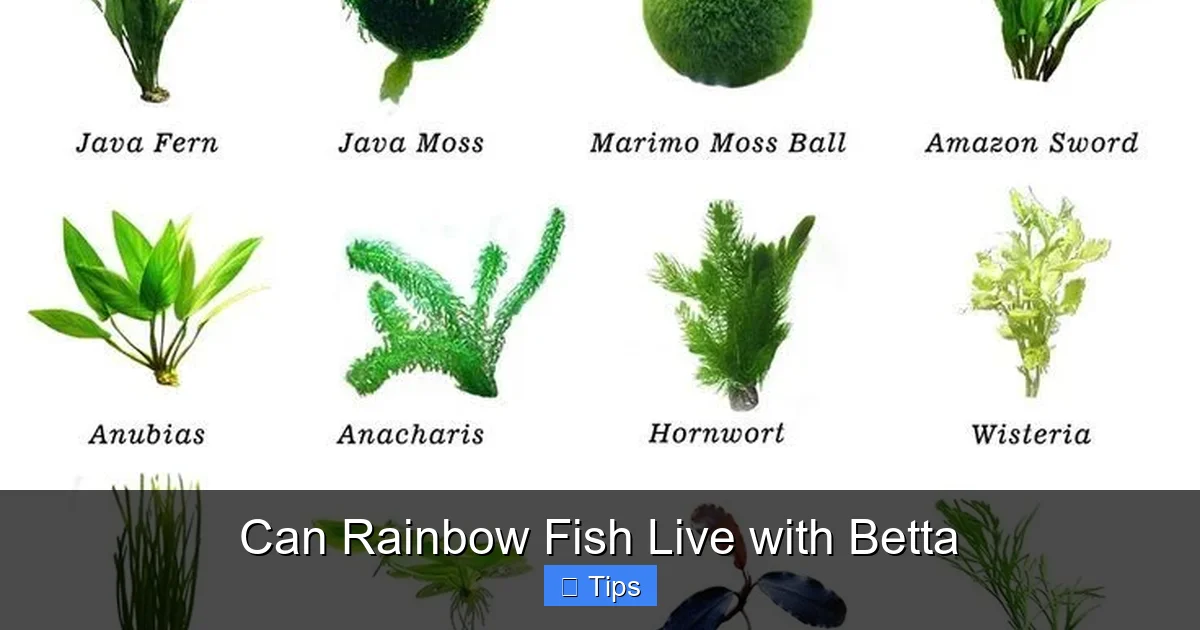
- Dense Planting: Use tall, fast-growing stem plants like Hornwort, Water Wisteria, or Rotala to create a thick, wavy forest in the mid to back of the tank. Floating plants like Frogbit or Dwarf Water Lettuce are golden—they create a shaded ceiling that bettas love and block a top-down view of the rainbows below.
- Hardscape as Walls: Arrange driftwood (manzanita, mopani) and large river stones to form partitions. A stack of rocks or a bent piece of wood can create a solid barrier where the betta can claim one side and the rainbows the other.
- Open Swimming Areas: Leave one or two open channels of water for the rainbows to cruise. They need this to exhibit natural behavior. The betta will often patrol the perimeter of these open areas but won’t chase into the dense plant thickets where the rainbows can dart and hide.
Filtration, Flow, and Water Parameters
Rainbow fish prefer a moderate to strong water flow, simulating their native streams. Bettas, with their labyrinth organ, prefer calm surfaces. This is another potential conflict. Use a filter with an adjustable flow rate, and direct the outflow towards the glass or into plants to diffuse it. Aim for a gentle current in most of the tank. Both species need pristine water. Ammonia and nitrite must be at zero. Perform regular 25-30% water changes. Temperature-wise, they overlap well: 75-80°F (24-27°C).
The Critical Protocol: How to Introduce Them
Do not just dump both fish into the tank at the same time. The sequence and method of introduction are everything. The goal is to make the rainbow school the “established residents” so the betta sees them as part of the permanent furniture, not invaders.
Step 1: The Rainbow Fish Get Settled (Weeks 1-4)
Set up your fully cycled, mature, and heavily planted 55+ gallon tank. Introduce your school of 6-8 rainbow fish. Let them live in this tank alone for at least three, preferably four weeks. During this time, they will establish their own pecking order, claim their favorite plants and open spaces, and become completely comfortable and confident in their environment. They will be displaying their best colors and swimming actively. This is crucial. When the betta is introduced later, the rainbows will not act like startled newcomers; they will be established homeowners who know the layout.
Step 2: The Betta’s Arrival – The Floating Bag Method
After the rainbows are settled, prepare to add the betta. Do not use a net. Use the floating bag/drip acclimation method to equalize water parameters slowly. Once acclimated, do not release the betta directly into the open water. Instead:
- Use a divider: If you have a solid, tank-safe divider (like a piece of acrylic), place it in the tank first. Put the betta on one side and the rainbow school on the other for 24-48 hours. They can see each other but cannot interact. This lets them get used to each other’s presence without physical danger.
- The cup method: If you don’t have a divider, float the betta’s cup (from the store) in the tank for 15-20 minutes to adjust temperature. Then, gently lower the cup into a densely planted corner and let the betta swim out on its own, immediately having plant cover.
The betta’s initial reaction will be telling. Watch from a distance. It may flare at the distant rainbows, investigate plants, or hide. The key is that the rainbows should largely ignore the new, strange fish in their corner and continue their normal activities.
Step 3: The First 72 Hours of Observation
This is the most critical monitoring period. Do not feed the betta for the first day to reduce its territorial drive (a hungry betta is more aggressive). Observe constantly for the first few hours, then at least every 30 minutes. Look for the warning signs listed earlier. A few initial flares are okay. Persistent chasing, fin-nipping, or the betta cornering a rainbow fish means immediate separation is needed. The rainbows should be swimming normally in their school, not hiding in the deepest plants all day.
When It Fails: Recognizing the Inevitable and Making the Call
Let’s be realistic. In many cases, despite best efforts, the pairing simply will not work. The betta’s instinct is too strong, or the rainbow’s stress response too severe. This is not a failure of your skills; it is an acknowledgment of animal behavior. Knowing when to quit is a sign of a responsible aquarist.
The Unmistakable Signs of Failure
- Physical Injury: Any torn, shredded, or missing fins on a rainbow fish. This is an emergency.
- Chronic Hiding: The rainbow fish spend 90% of the day in the very back of the plant thicket, only darting out for food.
- Loss of Appetite: Either the betta or the rainbows stop eating. This is a major red flag for stress.
- Faded Colors: Rainbow fish are known for their vibrancy. If they become dull and gray, they are severely stressed.
- Constant, Relentless Chasing: The betta patrols the entire tank, chasing any rainbow that moves, giving them no rest.
Your Backup Plan: Separation Strategies
You must have a plan before you even start. Do not attempt this without a plan B.
- Tank Divider: The easiest solution. Install a permanent, sealed divider in your 75+ gallon tank. The betta gets one half (with heater, filter, plants), the rainbow school gets the other. This allows visual contact without physical harm.
- Dedicated Hospital/”Get-Alone” Tank: Have a cycled 10-gallon tank ready. If aggression starts, you can remove the betta and house it solo there. The rainbows keep the big tank. This is often the best outcome for the betta, which is happier alone anyway.
- Rehoming: Have a local fish store or experienced hobbyist contact ready to take one of the parties back if it becomes clear they cannot coexist.
The Verdict and The Alternatives: Is It Worth the Risk?
So, can rainbow fish live with a betta? The honest, experienced answer is: It is one of the more difficult and high-risk community tank pairings you can attempt. It requires the largest, best-planned tank, the right individual betta, the hardiest rainbow species, a perfectly established school, and constant, vigilant oversight. For a beginner or even an intermediate aquarist, the odds are stacked against a peaceful, permanent outcome. The stress and potential for injury to both animals is high.
Better, Safer Tank Mate Options for Each
If your goal is a beautiful community tank, you are almost always better off choosing different companions for each species.
- For Your Betta (in a 20+ gallon tank): Peaceful, fast-moving, non-finned fish that occupy different water layers. Excellent choices include: Harlequin Rasboras, Chili Rasboras, Ember Tetras, Kuhli Loaches, Celestial Pearl Danios, and Otocinclus Catfish. Always use a school of 6+ for the tetras/rasboras.
- For Your Rainbow Fish School (in a 55+ gallon tank): They are fantastic community fish when kept with other active, peaceful, mid-level swimmers. Perfect tank mates include: other rainbowfish species (different colors), larger rasboras (like harlequins), some tetra species (neons, cardinals), smaller catfish (Corydoras, Otos), and peaceful barbs (like cherry barbs—avoid tiger barbs).
These combinations are far more likely to succeed with less specialized setup and lower stress for all involved.
The Fulfillment of a Successful Merge
If you have the space, the knowledge, and the patience, and you get the right combination of personalities, a betta/rainbow community can be one of the most stunning tanks in the hobby. You’ll see your betta patrolling its top-layer domain, flaring occasionally at the passing school below, while a shimmering, cohesive ribbon of rainbows darts through the mid-water, occasionally venturing near the plants the betta guards. It’s a dynamic, living piece of art. But achieving this is the exception, not the rule. Your primary responsibility is to the health and stress-free life of your fish. If at any point that is compromised, you must act. Sometimes, the most beautiful community is the one where each species thrives in its own perfect, separate world.
Conclusion: Knowledge Over Ambition
The question “Can rainbow fish live with betta?” ultimately tests an aquarist’s philosophy. It’s a question driven by the desire for beauty, but it must be answered with the science of behavior and the ethics of animal welfare. The technical requirements—tank size, aquascape, species selection—are just the entry fee. The real challenge is the daily, subtle management of stress and territory. For every story of a successful, years-long coexistence, there are dozens of stories of torn fins, hidden fish, and premature deaths. Before you even fill the tank, ask yourself: is this for my enjoyment, or for the fish’s well-being? If the answer leans toward the former, choose safer tank mates. If you have the resources, the space, and the willingness to prioritize the fish’s needs above your own aesthetic dream, you can try. But go in with your eyes wide open, your backup plan ready, and the humility to separate them the moment it’s clear it’s not working. The health of your fish is the only metric that truly matters.
Frequently Asked Questions
What is the absolute minimum tank size for a betta and rainbow fish?
The absolute minimum is a 55-gallon (208-liter) long tank, but a 75-gallon (284 liters) is strongly recommended. Anything smaller creates insurmountable space constraints, leading to inevitable stress and aggression.
Can a female betta live with rainbow fish more easily than a male?
Generally, yes. Female bettas are less aggressive and territorial than males, and they lack the dramatic fins that can trigger aggression. However, a feisty female can still harass slower fish, so all the same rules about tank size, school size, and aquascaping apply.
What should I do the moment my betta starts chasing a rainbow fish?
You must intervene immediately. Use a net to carefully remove the betta and place it in a separate, cycled hospital tank or a tank with a divider. Do not wait to “see if it stops.” Chasing causes extreme stress and can lead to physical injury or death for the rainbow fish.
Are there any rainbow fish species that are definitely safe with bettas?
No rainbow fish species is “definitely safe.” However, the hardier, larger species like Boeseman’s or Murray River rainbows have the best chance due to their size, robustness, and slightly less flashy coloration compared to some other species.
My betta ignores the rainbows. Is it safe to leave them together?
If the betta truly ignores them—meaning it goes about its business and only gives a casual, occasional flare—and the rainbows are active, schooling, and eating well, this is a positive sign. Continue to monitor daily for the rest of their lives, as a betta’s temperament can change with age or mood.
What are the top 3 better tank mates for a betta in a community tank?
For a 20+ gallon community with a betta, the safest and most successful choices are: 1) Harlequin Rasboras (a school of 8+), 2) Kuhli Loaches (a group of 3-5), and 3) Celestial Pearl Danios (a school of 6+). These fish are fast, occupy different tank levels, and have calm dispositions.