Can Two Betta Fish Be in One Tank
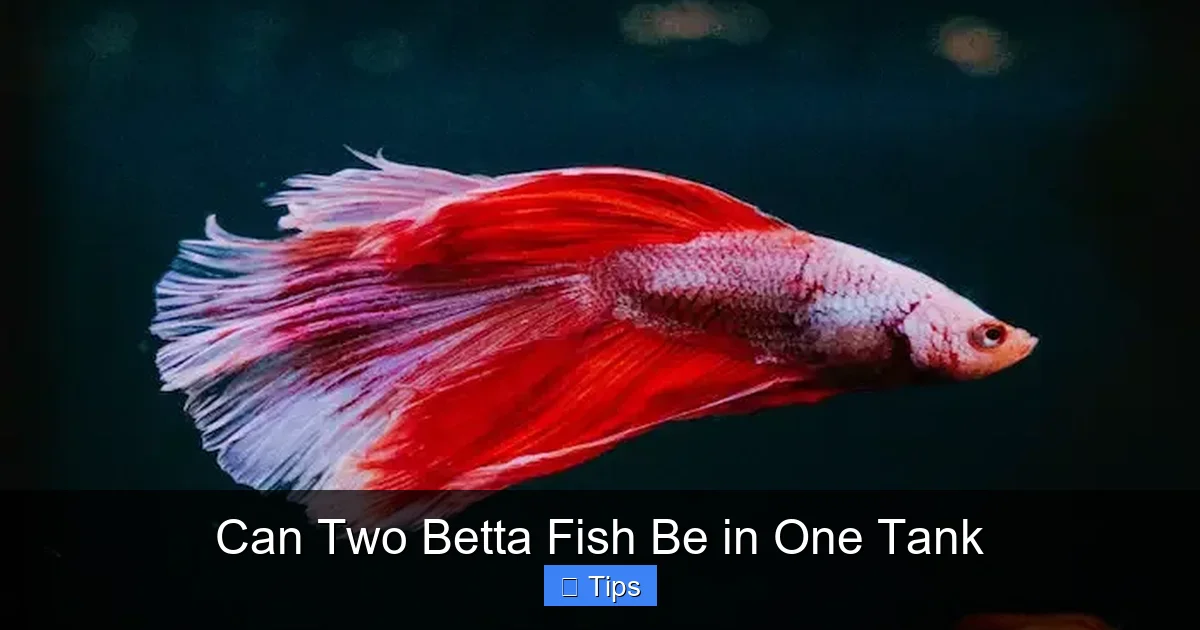
Can two betta fish be in one tank? Generally, no. Male bettas are famously aggressive and will fight to the death. Female bettas (sororities) are possible but risky, requiring a large, heavily planted tank (20+ gallons) and expert monitoring. The safest and most humane approach for 99% of keepers is one betta per tank. Always prioritize the fish’s well-being over aesthetic desires.
Key Takeaways
- Male Bettas Are Lone Warriors: Two male bettas in one tank is a guaranteed fight, often fatal. Their territorial instinct is non-negotiable.
- Tank Size Is Paramount: If attempting a female sorority, a minimum of 20 gallons is essential to provide enough space and hiding spots to diffuse aggression.
- Female Sororities Are Advanced: They are not beginner-friendly. Constant monitoring for bullying and stress is required, and fatalities can still occur.
- Divider ≠ Community: A tank divider separates fish physically but does not create a community; it’s a management tool for aggression, not a solution for cohabitation.
- Signs of Stress Are Critical: Learn to identify flaring, chasing, fin nipping, and hiding. Immediate separation is necessary if these appear.
- Better Tankmate Alternatives Exist: A single male betta can often peacefully coexist with specific, small, non-aggressive community fish like harlequin rasboras or corydoras in a properly sized tank.
- Water Quality Must Be Impeccable: Any multi-fish setup dramatically increases bioload. A powerful filter and diligent water changes (25-50% weekly) are non-optional.
📑 Table of Contents
Understanding the Betta: The Fierce, Solo Performer
Let’s start with the heart of the matter. The betta fish, or Siamese fighting fish, earned its common name for a very good reason. For centuries, they were bred in Thailand (formerly Siam) specifically for sparring matches. This history is not just a fun fact; it’s the blueprint for their behavior. Bettas, especially males, possess an intensely strong territorial instinct. In the wild, they claim a small patch of water—a puddle, a leaf-littered backwater—and defend it from rival males with everything they have. That instinct is hardwired. When you put two males together, you are essentially forcing two generals with the same battlefield into a duel. There is no compromise, no sharing. The fight is not about food; it’s about space and dominance. One will almost always attempt to kill the other, and the injuries can be severe, leading to death from stress or infection. It’s a brutal, natural outcome that responsible keepers must avoid.
But what about females? This is where the conversation gets more nuanced, and often more misunderstood. Female bettas are less vibrantly colored and have shorter fins, which can lead people to believe they are docile. They are not. While they don’t have the same legendary aggression as males, they still establish a pecking order. In a confined space, a dominant female will harass and bully weaker ones, leading to constant stress, loss of appetite, torn fins, and death. A “sorority” tank, as a group of females is called, is not a peaceful commune; it’s a high-stakes social experiment that requires immense space, perfect conditions, and a vigilant keeper. It is an advanced setup, not a beginner’s project.
The Myth of the “Companion” Betta
A common misconception is that bettas get lonely and need a friend. This is an anthropomorphism—applying human emotions to animal behavior. Bettas are solitary by nature. In their world, a neighbor is an enemy, not a buddy. Their “loneliness” is a projection of what we think they should feel. A well-cared-for betta in a suitably sized, enriched tank with clean water and a proper diet is not lonely; it is secure in its territory. Adding another betta doesn’t provide companionship; it introduces a lethal threat. The stress of constant conflict is far worse for their welfare than being alone.
The Critical Role of Tank Size and Setup
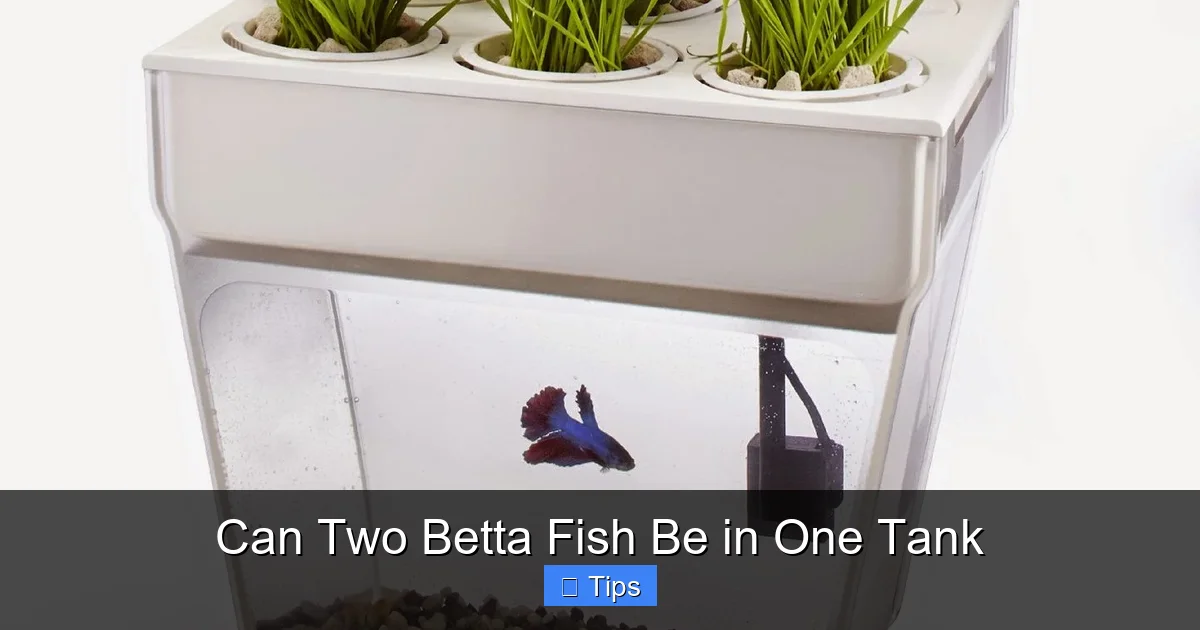
If you’ve ever searched online, you’ve seen stunning photos of “betta community tanks” with multiple males separated by dividers or, more rarely, sorority tanks. These setups are the exception, not the rule, and they succeed or fail based almost entirely on one factor: space. The infamous “betta in a vase” or “one-gallon bowl” is animal cruelty. But even the more common 2.5 or 5-gallon “betta tank” is only suitable for a single fish. To even begin contemplating two bettas (females only), you must start with a tank no smaller than 20 gallons, and many experienced sorority keepers insist on 29 gallons or more. Why? Because space equals options.
Visual guide about Can Two Betta Fish Be in One Tank
Image source: 2.bp.blogspot.com
In a large tank, a bullied fish can swim away and find a hiding spot. It can establish its own micro-territory. In a small tank, there is nowhere to run, no escape from the aggressor’s constant patrol. The layout is equally important. You need a dense forest of live or silk plants (avoid sharp plastic ones that can tear fins), multiple hides (caves, PVC pipes, terracotta pots), and visual barriers. The goal is to break up lines of sight. If a betta can’t see its rival constantly, its aggression is less likely to be triggered. Driftwood, rock formations, and tall plant clusters create these essential sight breaks. The substrate should be soft (sand or fine gravel) to prevent injury if a fish darts away in panic.
Filtration and Water Parameters: The Non-Negotiables
Doubling the fish doubles the waste. A betta is a relatively low-biomoad fish, but two is a different equation. You need a filter rated for at least twice your tank’s volume. A gentle flow is key—bettas are labyrinth fish and prefer calm waters, but the filter must be powerful enough to handle the ammonia spike from two fish. A sponge filter is an excellent, gentle choice for a sorority or community tank. Water parameters must be pristine: ammonia and nitrite at 0 ppm, nitrate below 20 ppm. This requires a robust cycling process before adding any fish and diligent maintenance. Weekly water changes of 25-50% are not optional; they are a lifeline. Poor water quality exacerbates stress and lowers immune systems, making fish more susceptible to disease from fighting or bullying.
Gender Divide: Male vs. Female Cohabitation
Let’s separate the two scenarios clearly.
Visual guide about Can Two Betta Fish Be in One Tank
Image source: i.ytimg.com
The Unyielding Rule: No Two Males
This is the simplest and most absolute rule in the hobby. Two male bettas cannot live together. Not with a divider (that’s not living together, that’s separating), not in a “huge” tank, not if they are “raised together.” The moment they mature and establish territory, they will fight. Some keepers try introducing siblings from the same spawn, but as they age (often by just a few months), hormones kick in and the instinct to dominate takes over. The result is predictable and tragic. Do not attempt this. The only exception is in a professional breeding setup, where temporary pairing occurs under strict supervision for a few hours, and even then, the male is often removed immediately after spawning to prevent him from eating the eggs or attacking the female. For the home aquarium, the rule is one male, one tank.
The High-Risk Gamble: Female Sororities
All-female groups are the only potential “two bettas in one tank” scenario, but they come with a massive asterisk. A sorority is not a stable, permanent social club. It’s a dynamic hierarchy that can shift and collapse. The process typically involves introducing 4-6 young females (from the same spawn, if possible, to reduce initial aggression) into a fully cycled, heavily planted 20+ gallon tank simultaneously. The first few days are critical. You will see flaring, chasing, and minor fin nipping as they establish dominance. This should subside within a week into a stable pecking order. However, the dominant hen may continue to bully the lowest-ranked one, which can lead to that fish’s decline. Always have a hospital/quarantine tank ready to remove any fish that is being relentlessly picked on or is showing signs of severe stress (clamped fins, extreme hiding, loss of color). Even in perfect conditions, a sorority can fall apart overnight if one fish’s health falters, making it an ongoing commitment to observation and potential intervention.
Compatible Tankmates: The Safer Path to a Community
If your dream is a vibrant, active community tank, you can absolutely achieve it—just not with two bettas. The far safer and more successful route is to keep one betta (male or female) with a carefully selected school of other peaceful fish. This satisfies the betta’s territorial needs (it rules its own space) while providing you with the lively community you want. The key is choosing tankmates that are: 1) Not brightly colored (to avoid triggering the betta’s aggression, which it directs at other flashy fish it perceives as rivals), 2) Not long-finned or slow-moving (like fancy guppies, which look like betta rivals and are easy targets), 3) Peaceful and occupy different swimming levels (so they don’t invade the betta’s mid-to-top water column).
Visual guide about Can Two Betta Fish Be in One Tank
Image source: forfishlovers.com
Top Recommended Tankmates for a Single Betta
- Small Rasboras & Tetras: Harlequin rasboras, ember tetras, and neon tetras (in a school of 6+) are excellent. They are fast, peaceful, and stay mostly in the middle levels.
- Corydoras Catfish: These adorable, armored bottom-feeders are the perfect cleanup crew. They are social, so keep a group of 5+ (pygmy corys for smaller tanks). They occupy the bottom, completely out of the betta’s way.
- Kuhli Loaches: Eel-like and nocturnal, they are fascinating bottom dwellers that mind their own business.
- Snails: Nerite snails, mystery snails, and ramshorn snails are great algae eaters and are completely ignored by bettas. Their hard shells protect them from any curious nipping.
- Shrimp: Ghost shrimp or amano shrimp can work, but there’s a risk. Some bettas see shrimp as food, especially bright red cherry shrimp. Amanos are larger and less likely to be eaten. Always have plenty of plants for shrimp to hide in.
The rule of thumb is to add the betta to a established community tank (or add tankmates to a betta that has been alone for a while) after a period of observation in a separate container (like using a breeding box inside the main tank for a few days). Never introduce a new, flashy fish to a betta’s established territory—it will be seen as an intruder.
A Step-by-Step Guide: If You Insist on a Female Sorority
For the advanced keeper who understands the risks and has the resources, here is a framework. This is not a recommendation, but a protocol for those who proceed with eyes wide open.
- Tank: Start with a 20-gallon long (30” x 12” footprint is ideal) or larger. More surface area is better than a tall, narrow tank.
- Cycle: Fully cycle the tank for 4-6 weeks. Test water until it shows 0 ammonia, 0 nitrite, and low nitrate.
- Plant Heavily: Use a mix of tall background plants (e.g., jungle val, Amazon swords), mid-ground plants (e.g., Anubias, Java fern on driftwood), and foreground carpeting plants (e.g., dwarf sagittaria, cryptocoryne). Add floating plants like frogbit or water lettuce for shade and security.
- Add Hides: Provide at least 3-4 distinct caves or hiding spots, placed in different areas of the tank.
- Source Fish: Acquire 4-6 young females, preferably from the same spawn/litter to reduce initial aggression. They should be healthy and active.
- Introduce Simultaneously: Acclimate all fish to the tank water at the same time. Drop them in together. This prevents any one fish from claiming the entire tank as its own before others arrive.
- Observe Relentlessly: Watch for the first 72 hours. Flaring (gills flared), chasing, and nipping are normal initially. However, if one fish is being cornered, constantly chased, or has significant fin damage, be prepared to remove her to a separate hospital tank.
- Feed Abundantly: Scatter high-quality food (pellets, frozen daphnia, bloodworms) throughout the tank to distract fish and reduce competition at a single feeding spot.
- Be Ready to Rehome: Have a plan. If the hierarchy becomes violently unstable, you must separate the aggressors or the victims. This means having a spare tank, divider, or a network of local hobbyists to take a fish.
Conclusion: The Best Tank is a Peaceful Tank
So, can two betta fish be in one tank? The honest, ethical answer for the vast majority of aquarists is a resounding no. The risks of severe injury, chronic stress, and death are overwhelmingly high, especially for males. Female sororities are a complex, high-maintenance gamble that often ends in failure and heartbreak. The beauty of the betta is in its individual splendor—its flowing fins, its curious personality, its interactive nature with its keeper. You can give it a wonderful, enriched life in a properly sized, planted tank all its own. If you crave a community, choose one betta as the majestic centerpiece for a carefully selected group of peaceful tankmates. This approach honors the betta’s true nature, prioritizes animal welfare, and will lead to a more beautiful, harmonious, and stress-free aquarium for everyone involved. Always choose compassion over curiosity when it comes to these fierce, solitary fish.
Frequently Asked Questions
Can two male betta fish live together?
No. Male bettas are highly territorial and will fight aggressively, often to the death. Their instinct to defend space is non-negotiable and cannot be overridden by tank size or “friendship.”
What about a tank divider? Can that house two bettas?
A divider is not cohabitation; it’s separation. It allows two bettas to be in the same room but prevents physical contact. While useful for space-saving, it does not fulfill any social need for the fish and requires careful management to ensure neither can see the other constantly, which can still cause stress.
Is a female betta sorority a good idea for beginners?
No. Sororities are considered an advanced setup. They require a large, heavily planted tank (20+ gallons), constant monitoring for bullying, and the readiness to separate fish at a moment’s notice. Fatalities are common even in ideal conditions.
What is the absolute minimum tank size for two bettas?
There is no safe minimum tank size for two male bettas. For a female sorority, the widely accepted minimum is 20 gallons, but many experienced keepers recommend 29 gallons or more to provide adequate space and reduce aggression.
What are the clear signs of betta aggression or stress?
Look for flaring (gills extended), chasing another fish relentlessly, nipping at fins (causing ragged or torn edges), a fish hiding constantly and not coming out for food, loss of vibrant color, and clamped fins (held tightly against the body). Immediate action is required if these are observed.
What is the best way to have multiple fish with a betta?
Keep a single betta (male or female) as the centerpiece in a community tank with 6-8 small, peaceful, non-flashy schooling fish like harlequin rasboras or ember tetras, and a group of corydoras catfish on the bottom. This provides activity without threatening the betta’s territory.