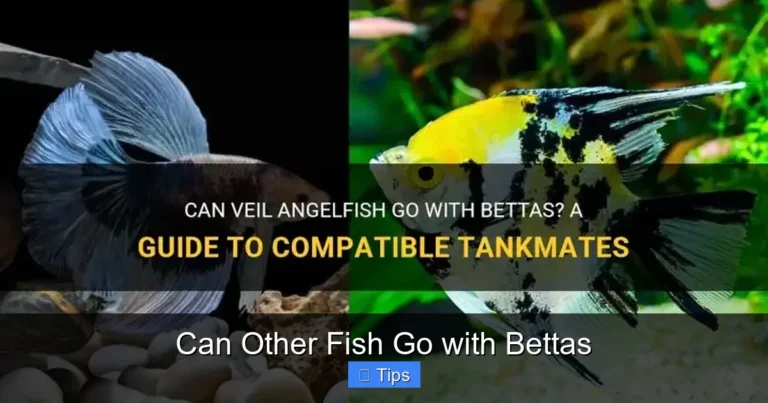
Can Two Betta Fish Live in the Same Tank
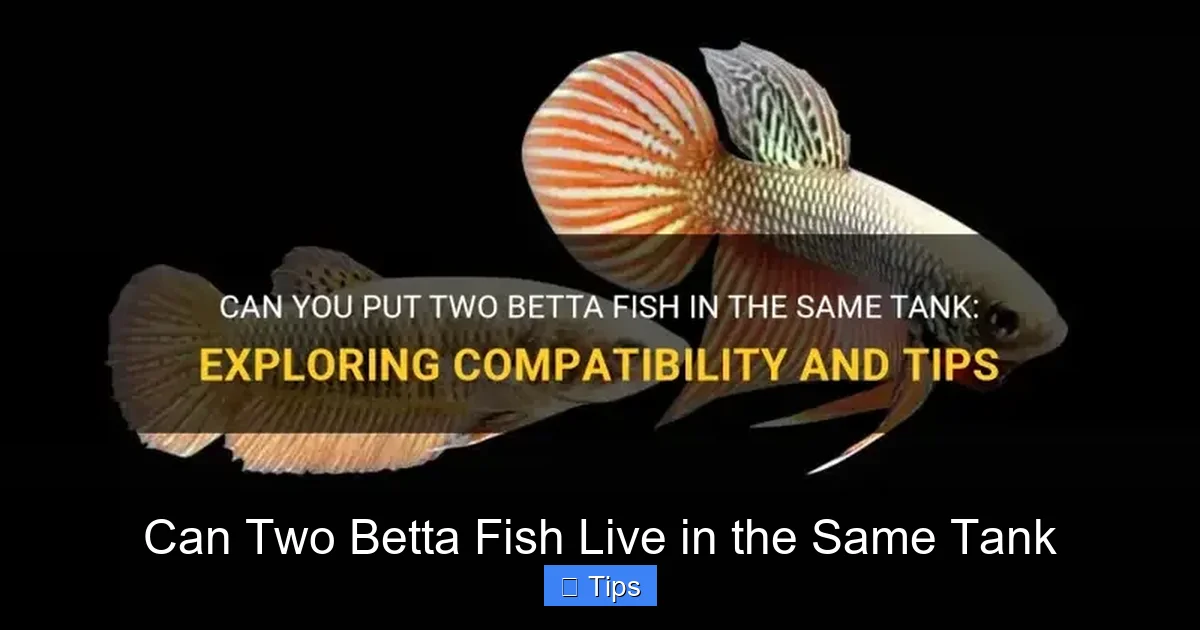
No, two male betta fish should almost never live together due to their extreme aggression. Female bettas *might* coexist in carefully managed sorority tanks, but this carries significant risk. For most aquarists, keeping a betta as a solitary pet is the safest and most responsible choice. Success with any cohabitation depends entirely on a massive, heavily planted tank and constant monitoring.
Key Takeaways
- Male bettas are fiercely territorial: They will almost always fight to the death if housed together, regardless of tank size.
- Female betta sororities are high-risk: While possible in very large, densely planted tanks, aggression and fatalities are common and require expert intervention.
- Tank size is non-negotiable: A “community” tank for a betta must be a minimum of 20 gallons, with 29+ gallons strongly recommended for any tank mates.
- Visual barriers are essential: Plants, decorations, and driftwood must break the line of sight to prevent constant territorial challenges.
- Never introduce two bettas to a small tank: A 5 or 10-gallon tank is exclusively for a single betta; cohabitation attempts in these sizes are guaranteed to fail.
- Betta aggression is species-specific: They are often aggressive toward fish with long, flowing fins (like guppies) or bright colors, but may tolerate certain bottom-dwellers or fast-moving schooling fish.
- Observation is a permanent responsibility: If you attempt a mixed tank, you must watch for signs of stress and aggression daily and be ready to separate fish immediately.
📑 Table of Contents
- The Fierce Reputation of the Betta Fish
- Gender Matters: The Critical Difference Between Males and Females
- Tank Setup: The Non-Negotiable Foundation for ANY Cohabitation
- The Compatibility Checklist: What (Maybe) Works With a Betta
- Recognizing the Signs of Trouble: Stress and Aggression
- The Ethical and Practical Verdict: Should You Try It?
- Conclusion
The Fierce Reputation of the Betta Fish
If you’ve ever walked past a pet store and seen a tiny cup with a single, brilliantly colored fish floating amidst a haze of murky water, you’ve met a betta fish. Known as Siamese fighting fish, their very name carries a legacy of aggression. This reputation isn’t just folklore; it’s etched into their biology. The question “Can two betta fish live in the same tank?” is one of the most common in the aquarium hobby, and the answer is almost always a firm, warning-filled “no, you shouldn’t.” But like many rules in fish-keeping, there are complex, high-risk exceptions that require a deep understanding of betta behavior and pristine tank management. Before you even consider putting two bettas together, you must understand the “why” behind their aggression.
Betta splendens evolved in the shallow, slow-moving rice paddies and stagnant ponds of Southeast Asia. These environments are resource-poor and crowded. To survive, males developed extreme territorialism. They guard a small patch of debris or plant matter, defending it from rival males to secure mating rights and food resources. This instinct hasn’t faded in captivity; in fact, selective breeding for vibrant colors and long fins has sometimes intensified their nervous and aggressive tendencies. Their gills are designed to flare dramatically, making them look larger to intimidate opponents. This is not a bluff; they are prepared to fight to the death. Their labyrinth organ allows them to survive in oxygen-poor water, meaning a fight doesn’t end because one fish tires and wants to leave—it ends when one fish is dead or severely injured.
Gender Matters: The Critical Difference Between Males and Females
The Unyielding Rule: Male Bettas
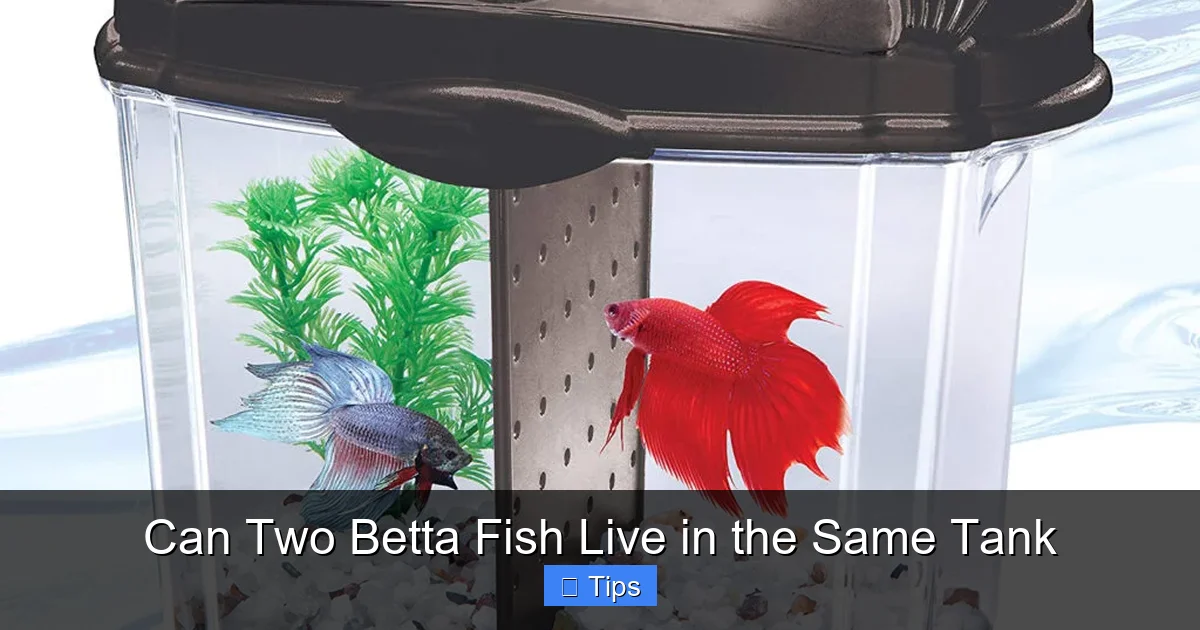
Let’s be unequivocal: two male betta fish should never, under any circumstances, be housed together in the same tank. This rule is absolute for beginners and even for many experienced keepers. A common myth is that a larger tank will allow two males to “work out their own hierarchy.” This is dangerously false. In a confined space, there is no escape. The dominant male will relentlessly pursue and attack the subordinate, nipping fins and tearing tissue until the victim succumbs to stress, infection, or outright physical trauma. This process can take hours or days, but it is inevitable. The aggression is not a temporary fit; it is a constant, life-threatening state. Even brothers raised together from fry will turn on each other as they mature, typically around 3-6 months of age when their hormones kick in. Their territory is not just a patch of water; it is the entire water column. They will patrol every inch, seeing the other male as an invader to be expelled.
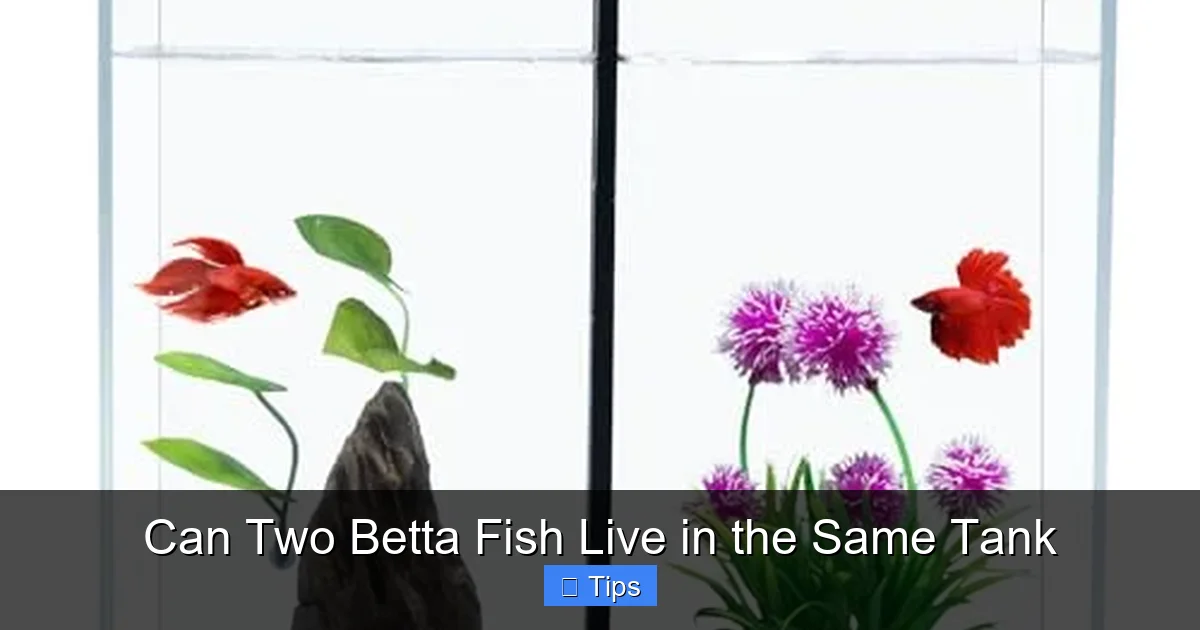
Visual guide about Can Two Betta Fish Live in the Same Tank
Image source: m.media-amazon.com
The Risky Exception: Female Bettas (Sorority Tanks)
Female bettas, while still capable of aggression, are generally less intensely territorial than males. This has led to the concept of a “betta sorority”—a community tank housing multiple female bettas. This is where the “it depends” becomes crucial. A sorority is not a casual setup; it is a high-maintenance, high-risk project that requires meticulous planning and a significant investment in tank size and decoration.
The minimum recommended tank size for a betta sorority is 20 gallons, with 29 gallons or more being the true safe starting point. Why so big? You need space to create distinct territories. In a small tank, a dominant female can chase a submissive one into a corner with no respite, leading to fatal stress. In a large tank, the chased fish can flee to the opposite end, finding temporary sanctuary. The tank must be “densely planted.” We’re not talking about a few silk plants. You need a lush jungle of live plants (like java fern, anubias, cryptocorynes) and soft, tall artificial plants. The goal is to eliminate 80% of open water. Every nook, cranny, and vertical column should have something to break the line of sight. This visual barrier is the single most important factor in preventing constant challenges.
Even with perfect setup, introductions are a delicate dance. You must add all females simultaneously to an already fully decorated, cycled tank. Introducing a new female to an established sorority is a recipe for disaster, as the residents will gang up on the newcomer. You must also choose your females carefully. Avoid obviously aggressive or dominant-looking individuals (those with especially large, flared gills). Choose fish of similar size and temperament. Even then, you must be prepared for a “pecking order” to be established over the first few days, which may involve some chasing and minor fin nipping. You must watch constantly for severe injuries, prolonged hiding, or loss of appetite in any individual. Be ready with a separate hospital tank to remove any fish being relentlessly bullied. A sorority is a commitment to daily observation and potential intervention.
Tank Setup: The Non-Negotiable Foundation for ANY Cohabitation
If you are considering *any* other fish as tank mates for a single betta (which is the far safer and more common path), the tank setup is everything. The betta’s territory must be respected. This starts with size. A 5-gallon tank is the absolute minimum for a *single* betta. If you want tank mates, you must immediately jump to a minimum of 20 gallons. This provides enough horizontal space for the betta to claim a general area while other fish occupy different zones.
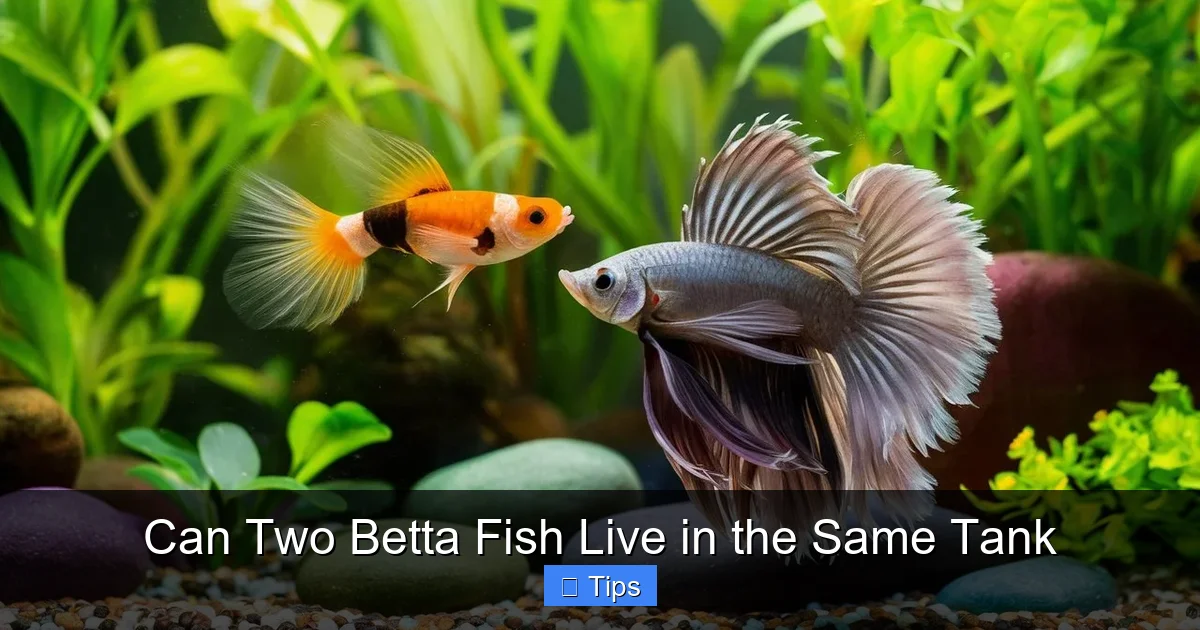
Visual guide about Can Two Betta Fish Live in the Same Tank
Image source: guppyfishtank.com
Creating a “Broken” Landscape
The tank must not be an open arena. It must be a complex maze. Use a combination of:
- Dense Planting: Live plants are ideal (they improve water quality). Use tall background plants (vallisneria, cabomba), mid-ground plants, and a carpet of dwarf hairgrass or java moss. This creates vertical and horizontal layers.
- Hardscape & Driftwood: Large pieces of driftwood, rock formations, and ceramic caves create solid barriers. Position them to create “rooms” and alcoves.
- Abundant Vertical Structure: Tall, leafy plants and floating plants (like frogbit or duckweed, with caution) are critical. Betas often patrol the upper water column. Floating plants give shy fish a ceiling to hide under and break the visual connection from top to bottom.
The goal is that the betta should not be able to see from one end of the tank to the other in a straight line. This reduces its perception of a “rival” in its space and lowers overall stress.
Water Parameters and Filtration
Bettas are tropical fish requiring stable, warm water (78-80°F / 25.5-26.5°C). A reliable heater is mandatory. They are also sensitive to poor water quality, which exacerbates stress and aggression. A gentle filter (like a sponge filter) is essential to cycle the tank and keep ammonia and nitrites at zero. A strong filter current can stress a betta, as their long fins make them poor swimmers. Adjust the flow to be minimal.
The Compatibility Checklist: What (Maybe) Works With a Betta
Assuming you have a properly sized, heavily planted tank for a *single* male or female betta, what other fish can you add? The goal is to choose peaceful, fast-moving, non-flashy fish that occupy different parts of the tank. Never add fish with long, flowing fins (like fancy guppies, male swordtails, or angelfish)—the betta will see them as a rival male and attack. Avoid brightly colored fish that might trigger its territorial response.
Visual guide about Can Two Betta Fish Live in the Same Tank
Image source: pickedbyfish.com
Top Candidates for Betta Tank Mates
- Small Schooling Fish (Upper/Mid-Tank): Neon tetras, ember tetras, harlequin rasboras, and chili rasboras are excellent choices. They are fast, stay in schools (which makes them less likely to be singled out), and occupy the upper levels. Always keep them in groups of 6+.
- Bottom-Dwellers (Lower Tank): This is often the safest zone. Corydoras catfish (pygmy corys are great for smaller tanks), Kuhli loaches, and bumblebee gobies are peaceful, active on the substrate, and have completely different body shapes and behaviors that don’t register as a threat to the betta.
- Otocinclus Catfish: These tiny algae eaters are excellent, peaceful cleanup crew that cling to glass and plants, largely ignoring and being ignored by bettas.
- Snails & Shrimp: Nerite snails, mystery snails, and shrimp like ghost shrimp or amano shrimp can be good additions. However, some bettas will see shrimp as food, especially smaller cherry shrimp. Amano shrimp are large and fast, making them better candidates. Always have a backup plan.
Red Flags: What to Absolutely Avoid
- Other anabantoids (gouramis, paradise fish) – they are closely related and will fight.
- Fin-nippers like tiger barbs or serpae tetras – they will bite the betta’s flowing fins.
- Aggressive cichlids or large, territorial fish.
- Any fish that is slow-moving or has long, flowing fins.
The Introduction Process: Even with compatible species, introductions must be done carefully. Add the new fish to the already cycled, decorated tank first. Let them settle for 24-48 hours. Then, use a divider or a clear acrylic box to float the betta inside the tank for several days. This allows them to see each other without physical contact. Watch for extreme flaring, charging, or posturing from the betta. If it’s obsessed and constantly attacking the divider, the tank mate may not be safe. If the betta largely ignores the other fish after a day or two, you can cautiously remove the divider. Always have a backup tank ready to remove either party if aggression erupts later.
Recognizing the Signs of Trouble: Stress and Aggression
Even in a seemingly perfect setup, you must be a constant detective. Your betta’s behavior is the ultimate report card on tank harmony. Learn to read the warning signs.
Signs of a Stressed or Aggressive Betta
- Constant Flaring: Gills and beard (the membrane under the gills) are constantly extended, even when no other fish are nearby. This indicates a high-stress, hyper-vigilant state.
- Chasing: The betta relentlessly pursues one or more tank mates, cornering them, bumping them, or nipping at fins.
- Fin Nipping: Look for torn, shredded, or missing fin edges on either the betta or its tank mates. This is a direct sign of violence.
- Hiding: If your normally active betta is permanently tucked behind a filter or in a cave, it is being bullied and is terrified.
- Lethargy & Loss of Appetite: Stress suppresses the immune system. A betta that sits listlessly at the bottom or ignores food is a sick betta.
Signs of a Bullied Tank Mate
- Hiding constantly and only venturing out when the betta is not in sight.
- Faded colors or torn fins.
- Skipping meals.
- Excessive breathing (gasping at the surface), which can indicate stress-induced poor water quality from the betta’s aggression causing the bullied fish to avoid its usual areas.
Immediate Action: The moment you see sustained chasing, fin nipping, or one fish being denied access to food or the open tank, you must intervene. Have a hospital tank or a cycled, filtered spare tank ready. Use a net to carefully remove the aggressor (usually the betta) or the victim. Sometimes, a time-out in a separate tank for a few days can reset dynamics, but often, the only safe solution is permanent separation. Do not hope it will get better; it will get worse.
The Ethical and Practical Verdict: Should You Try It?
After all this discussion, we return to the core question. For the vast, overwhelming majority of hobbyists, the answer is no. The risks far, far outweigh any perceived benefits. A single betta in a properly decorated 5- or 10-gallon tank is a stunning, interactive, and low-stress pet. You can enjoy its personality without the specter of violence hanging over your tank. Attempting to house two males is an act of guaranteed cruelty that will result in the death or maiming of one or both fish. Attempting a sorority or a community tank with other species is a complex, advanced endeavor that demands significant resources, space, and constant vigilance.
The desire to see your betta “have friends” is understandable, but it projects a human social need onto a fish whose biology is wired for solitary existence. The kindest thing you can do for your betta is to provide it with a spacious, clean, beautifully planted tank that it can call its own, with perhaps the gentle company of a few fast, peaceful schooling fish or a cleaning crew of shrimp and snails—provided you meet the stringent tank size and decoration requirements. Your betta will not be lonely; it will be secure, stress-free, and will display its best colors and most fascinating behaviors, like building bubble nests or proudly patrolling its domain. That is the reward of responsible betta keeping.
Conclusion
So, can two betta fish live in the same tank? The short, safe answer for 99% of situations is a resounding no. Male bettas are solitary warriors whose instinct is to fight to the death over territory. Female bettas can sometimes be kept in groups, but only in tanks of 20+ gallons with an overwhelming abundance of plants and hiding places, and even then, the risk of aggression and death remains high. For anyone seeking a community tank, the far better path is to house a single betta with carefully selected, peaceful tank mates in a spacious, heavily decorated environment of 20 gallons or more. The key to success is always to respect the betta’s innate nature, prioritize space and visual barriers, and be prepared to act as a constant referee. Your betta’s health and safety depend on you making the solitary choice.
Frequently Asked Questions
Can two female betta fish live together peacefully?
Sometimes, but not reliably. Female bettas can be kept in a “sorority” tank, but it requires a minimum of 20 gallons (29+ is better), extremely dense planting to break lines of sight, and careful selection of similarly sized, non-aggressive females. Aggression and fatalities are common, making this a high-risk setup unsuitable for beginners.
What is the smallest tank I can use for a betta with other fish?
If you want tank mates, you must start with a 20-gallon long tank. A 5- or 10-gallon tank is only suitable for a single betta. The extra space is non-negotiable for creating separate territories and reducing stress.
My betta is flaring at its reflection in the glass. Is that a sign of aggression I should worry about?
Flaring at a reflection is common and usually not a sign of underlying aggression toward real tank mates. It’s often just a fish reacting to what it perceives as a rival. However, if the betta becomes obsessively fixated and spends all its time flaring and charging the glass, it can cause stress. You can temporarily cover the sides with a towel or paper to break the reflection.
Can a betta live with a goldfish?
No, they are incompatible in every way. Goldfish are cold-water fish that prefer temperatures around 68°F, while bettas are tropical fish needing 78-80°F. Goldfish also produce massive amounts of waste, which can quickly foul the warm, still water a betta prefers, leading to poor water quality and disease.
What should I do if my betta starts attacking my other fish?
You must separate them immediately. Have a backup cycled tank or a hospital tank ready. Use a net to carefully remove the betta (the usual aggressor) or the victim if it’s severely injured. Permanent separation is often the only solution. Do not hope the situation will improve on its own.
Are there any fish that are 100% safe with a betta?
There are no guarantees in fish-keeping, as individual bettas have unique personalities. However, some of the most consistently compatible choices are fast-moving, schooling fish like ember tetras or harlequin rasboras (in a 20+ gallon tank), and peaceful bottom-dwellers like pygmy corydoras or kuhli loaches. Always introduce them slowly and monitor behavior closely.