Can Tetra Fish Live with Bettas
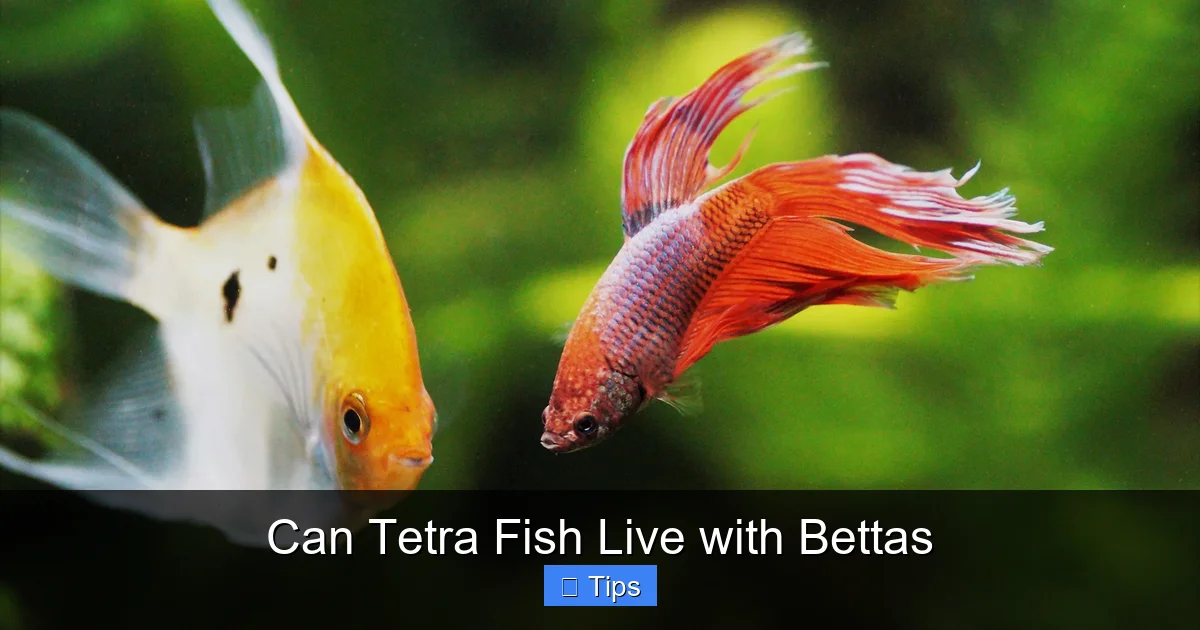
Yes, tetra fish can sometimes live with bettas, but it’s not a guaranteed pairing and depends heavily on the individual betta’s temperament, the specific tetra species chosen, and a meticulously prepared tank environment. Success requires careful planning, a spacious and well-decorated aquarium, and a slow, monitored introduction process with a backup plan always in place. It’s a high-risk community setup best suited for experienced aquarists willing to prioritize observation and have contingency plans.
So, you’ve got a beautiful, flowing betta with its magnificent fins, and you’re dreaming of a lively, colorful community tank. The idea of adding a shimmering school of tetras is incredibly appealing. It’s a classic aquarium image: the regal, solitary betta alongside the synchronized, peaceful swarm of small, active fish. But before you pour that tetra bag into your betta’s home, you need to ask the critical question: can tetra fish live with bettas? The honest, and perhaps frustrating, answer is: it depends. It depends on your betta’s personality, the exact species of tetra, your tank setup, and your willingness to be a patient, observant aquarist. This isn’t a beginner-friendly pairing; it’s a calculated risk with a high potential for failure if not handled with extreme care. This guide will walk you through every single factor, from betta psychology to the perfect plant布局, to help you make an informed decision and, if you choose to proceed, maximize your chances of creating a peaceful underwater world.
Key Takeaways
- Betta temperament is the #1 factor: Every betta has a unique personality; some are peaceful, many are aggressive, and their mood can change. Your betta’s disposition dictates the entire experiment’s success or failure.
- Not all tetras are equal: Some tetra species, like Ember Tetras or Cardinal Tetras, are generally calmer and less likely to trigger a betta’s aggression. Others, like Serpae or Black Skirt Tetras, are known fin-nippers and are poor choices.
- Tank size and setup are non-negotiable: A minimum of 20 gallons is essential, but bigger is always better. The tank must be heavily planted with live or silk plants, have ample hiding spots, and visual barriers to break lines of sight and reduce stress.
- Introduce in the correct order: Always add the tetra school to the fully cycled and decorated tank first and let them acclimate for a week or two before introducing the betta. This allows the tetras to establish their territory and school confidently.
- Constant, vigilant monitoring is required: You must watch for signs of chasing, flaring, hiding, or torn fins for several weeks after introduction. Be prepared to separate them immediately if problems arise.
- Always have a backup plan: Before you even start, you need a fully cyclated “hospital” or spare tank ready to house either the betta or the tetras if cohabitation fails. Never attempt this without an exit strategy.
- A school of 6+ tetras is mandatory: Tetras are schooling fish that feel secure and behave more naturally in groups. A proper school helps them avoid being singled out by a betta and reduces their overall stress, which can make them less erratic.
📑 Table of Contents
- The Betta-Tetra Dynamic: Why It’s So Tricky
- Betta Temperament 101: Not All Bettas Are the Same
- Tetra Species: Your Best (and Worst) Bets
- Tank Setup: The Foundation for Peace
- The Introduction Process: A Step-by-Step Guide
- When Co-habitation Fails: Alternatives and Backup Plans
- Conclusion: Is the Risk Worth the Reward?
The Betta-Tetra Dynamic: Why It’s So Tricky
At first glance, the betta and tetra seem like opposites that could attract. The betta (Betta splendens), a labyrinth fish from the shallow, slow-moving rice paddies and streams of Southeast Asia, is a solitary, territorial fish. Males, in particular, are famous for their aggression toward other males and anything they perceive as a rival—which often includes any fish with long, flowing fins or bright colors. They are “sit-and-wait” predators, not built for high-speed chases.
Tetras, from the diverse family Characidae, hail from the fast-flowing, clear blackwater streams and tributaries of South America, like the Amazon basin. They are active, mid-level schooling fish that rely on the safety of the group. Their instinct is to swim continuously, often in tight, coordinated schools. This fundamental mismatch in natural behavior and habitat is the root of the compatibility issue. A betta sees a slow-moving, brightly colored fish (like a male guppy) as a direct territorial or mating rival. A tetra, by its very nature, is a fast-moving, active fish that can inadvertently trigger a betta’s chase instinct simply by swimming too close or too frantically. The key question can tetra fish live with bettas really becomes: can we design an environment that overrides these deep-seated instincts?
The Flare and the Chase: Decoding Betta Aggression
Understanding betta body language is your most important tool. A flared betta is not always an aggressive one; flaring is a display, often triggered by its own reflection, a sudden movement, or the sight of another fish. It’s puffing up to look bigger and more intimidating. The real danger is the chase. If your betta persistently stalks, corners, or nipping at a tetra, that’s a red flag. Bettas also exhibit “gill flaring” (quick opening and closing of the gill covers) as a warning sign. The goal is to have a tank where the betta acknowledges the tetras’ presence but doesn’t feel compelled to constantly patrol or attack them.
Betta Temperament 101: Not All Bettas Are the Same
This is the single most important point. Labeling all bettas as “aggressive” is a dangerous oversimplification. Just like people, bettas have distinct personalities. Some are docile “lap dogs” that will ignore almost any tank mate. Others are outright “psychopaths” that will attack anything that moves, including their own reflection. Many fall somewhere in the vast middle ground. Your success with tank mates hinges on accurately assessing your specific betta.
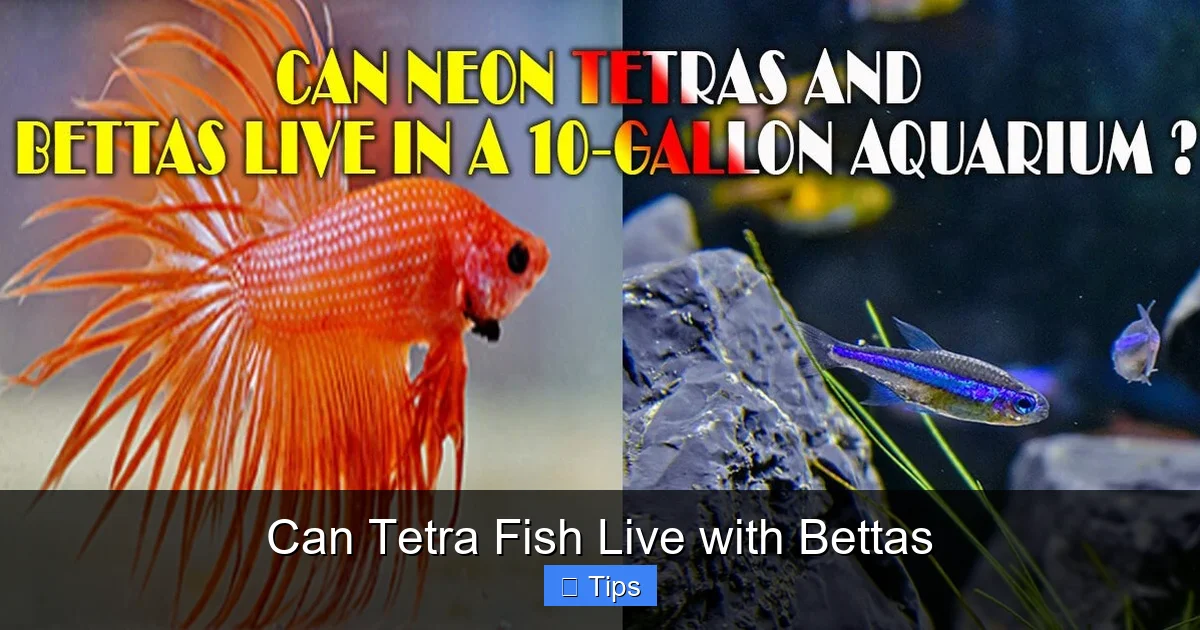
Visual guide about Can Tetra Fish Live with Bettas
Image source: tetra-fish-care.com
How to “Test” Your Betta’s Personality
Before you even think about adding tetras, you need to observe your betta in its current setup. Keep it alone in its tank for at least a few weeks. Does it flare constantly at you when you walk by? Does it spend all day patrolling the same patch of plants, gill flaring at shadows? Or does it mostly lounge, occasionally exploring, and only flares briefly at sudden movements? A betta that is hyper-vigilant and constantly displaying is a poor candidate for a community tank. A more relaxed, curious betta is a better, though still not guaranteed, prospect. Age can also play a role; very young or very old bettas are often less aggressive.
Male vs. Female Bettas
The common wisdom is that female bettas are less aggressive than males, and this is generally true. Females lack the extreme breeding aggression and long, flowing fins that often trigger territorial behavior in males. A female betta in a community tank has a higher probability of success with a proper tetra school. However, female bettas can still be feisty and territorial, especially during feeding or if the tank is too small. Never assume a female is automatically safe.
Tetra Species: Your Best (and Worst) Bets
This is where research is critical. The term “tetra” encompasses dozens of species with vastly different sizes, activity levels, and temperaments. Your choice will make or break this setup.
Visual guide about Can Tetra Fish Live with Bettas
Image source: fishlaboratory.com
Top Contenders: The Generally Peaceful Tetras
- Ember Tetras (Hyphessobrycon amandae): Often considered the best tetra for betta companions. They are tiny (under 1 inch), have a warm, orange color (not the bright red that might trigger a betta), and are relatively slow-moving for a tetra. Their small size means they are less likely to be seen as a threat, and they prefer to school in the mid-to-upper water column, often staying out of the betta’s way.
- Cardinal Tetras (Paracheirodon axelrodi): Similar to their cousin the Neon Tetra but larger (up to 2 inches) and with a more striking red-blue stripe. They are active but not overly boisterous. Their brilliant colors are a double-edged sword; they might attract a betta’s attention, but their speed and strong schooling instinct in a large group often help them evade trouble.
- Rummy Nose Tetras (Hemigrammus rhodostomus): Recognizable by their bright red heads. They are peaceful, mid-level swimmers that school tightly. They prefer slightly warmer water (78-84°F), which aligns perfectly with a betta’s ideal temperature (76-80°F). Their activity is more “purposeful” than frantic, which can be less provocative.
- Lemon Tetras (Hyphessobrycon citrinus): A bright, solid yellow color. Their coloration is different from a betta’s, potentially reducing rivalry triggers. They are active but not known as fin-nippers and do well in peaceful communities.
High-Risk Tetras: Avoid These with Bettas
- Serpae Tetras (Hyphessobrycon eques): The classic example of a bad match. They are famously nippy and will relentlessly harass the long, flowing fins of a betta. They are also known to be mildly aggressive toward each other in small numbers.
- Black Skirt Tetras (Gymnocorymbus ternetzi): Larger (up to 2.5 inches) and can be boisterous. They have a tendency to nip fins, especially when not kept in a proper school. Their “skirt” of long anal fin rays might be mistaken for a rival betta.
- Congos (Phenacogrammus interruptus): While beautiful and active, they are larger, more assertive tetras that can be bold and may harass a more docile betta.
- Any Fin-Nipping Species: As a rule, avoid any tetra known for fin-nipping behavior in community tanks. The betta’s fins are an irresistible target.
Remember: Regardless of species, you must keep a minimum school of 6-8 individuals. A lone or pair of tetras will be stressed, erratic, and far more likely to be targeted by a betta. A proper school moves as one unit, confusing predators and providing safety in numbers.
Tank Setup: The Foundation for Peace
You can have the calmest betta and the most peaceful tetras, but in a bare, small tank, it will fail. The physical environment is your most powerful tool to manage behavior. The goal is to create a space with no single dominant territory and constant visual barriers.

Visual guide about Can Tetra Fish Live with Bettas
Image source: petshun.com
Tank Size: Bigger is Not Just Better, It’s Essential
The absolute minimum for a betta-tetra attempt is a 20-gallon long tank. This provides a footprint (length) that is more important than height. A 20-gallon gives you enough horizontal space to create distinct zones. A 29-gallon or larger is significantly better and highly recommended. In a 10-gallon, a betta will see a tetra as an intruder in its entire world. In a 20+ gallon, the tetras have room to establish their own school territory away from the betta’s preferred resting spot.
Aquascaping for Anxiety Reduction
This is where you earn your stripes as a designer. Your tank must be “jungle-like” or “heavily planted.” The objective is to break the line of sight so that the betta and tetras cannot see each other from one end of the tank to the other. This prevents constant territorial patrolling.
- Live Plants (Strongly Preferred): Plants like Java Fern, Anubias, Cryptocorynes, Amazon Swords, and floating plants (Duckweed, Frogbit, Red Root Floater) are fantastic. They provide dense cover, diffuse light, and improve water quality. Use them to create walls and caves.
- Driftwood and Rockwork: Large pieces of driftwood (Mopani, Manzanita) create complex structures with nooks and crannies. Stack rocks to form caves and ledges. These are permanent visual barriers.
- Silk or Live Plants Only: Avoid plastic plants with sharp edges that can tear a betta’s delicate fins. Silk plants are a decent substitute if you can’t keep live ones.
- Open Swimming Space: Despite the heavy planting, leave a clear, open area in the center or top third of the tank. This is where your tetra school will perform their mesmerizing displays. It also gives the betta a clear view to see them coming, reducing the chance of a sudden, surprising chase.
Water Parameters and Filtration
Bettas and most tetras share similar water parameter needs, which is one reason they are considered. Aim for:
- Temperature: 76-80°F (24-27°C). This is warm enough for active tetras and ideal for a betta.
- pH: 6.5-7.5 (slightly acidic to neutral).
- Hardness: Soft to moderately soft.
A good, gentle filter is crucial. A strong current will stress both fish, but especially the betta, whose long fins make swimming difficult. Use a sponge filter (excellent for bettas and fry), or a hang-on-back (HOB) filter with a spray bar or baffle to diffuse the flow. The filter should process the tank’s volume 4-5 times per hour without creating a torrent.
The Introduction Process: A Step-by-Step Guide
How you introduce these fish is as important as the tank itself. Rushing this process is the most common cause of failure. Patience is your greatest ally.
Step 1: The Tetra School Establishes First
This is the golden rule. Fully cycle your 20+ gallon tank with the plants, driftwood, and hiding spots in place. Then, add your school of 6-8 (or more) tetras. Let them live in this tank alone for a minimum of two weeks, preferably a month. This allows them to:
- Establish their territory and school confidently.
- Learn the tank’s layout and where all the hiding spots are.
- Become comfortable and less skittish, which reduces erratic, stress-induced swimming that can trigger a betta.
During this time, you can observe the tetras’ behavior. A tight, cohesive school is a good sign.
Step 2: Introducing the Betta
After the tetras are settled, it’s time for the betta.
- Quarantine: Ensure your new betta has been quarantined for at least 2-4 weeks in a separate tank to prevent introducing disease to your established tetra school.
- The Drip Acclimation: Float the betta’s bag or cup in the aquarium for 15-20 minutes to equalize temperature. Then, perform a very slow drip acclimation (using airline tubing) over 1-2 hours to slowly introduce the new tank’s water chemistry to the betta. This is less stressful than dumping bag water into the tank.
- Release Without the Bag Water: Use a net to transfer the betta from its acclimation container into the main tank. Do not pour any bag water in.
Step 3: The Critical Observation Period
The first 72 hours are the most critical.
- First Few Hours: The betta will explore. The tetras will likely scatter and hide. This is normal. Do not panic if the betta flares a few times at the tetras as it investigates.
- Day 1-3: Watch for sustained, aggressive chasing. The betta should gradually lose interest. The tetras should begin to venture out and school, even if they stay on “their” side of the tank. If the betta is relentlessly pursuing tetras to the point of exhaustion or if tetras are constantly hiding in the very back corners, the pairing is failing.
- Week 1-2: Monitor feeding times. Aggressive bettas will try to eat all the food before the tetras get any. Use a betta-specific pellet or a feeding ring to ensure tetras get their share. Continue watching for any signs of stress: torn fins on the betta (from tetras nipping back, rarely), clamped fins on tetras, or tetras that isolate themselves from the school.
Have your backup tank (a simple 10-gallon with a filter and heater) running and cycled and ready to receive either the betta or the tetras at a moment’s notice.
When Co-habitation Fails: Alternatives and Backup Plans
Let’s be realistic: for many, the can tetra fish live with bettas experiment will not work. And that’s okay. It does not mean you are a bad fish keeper. It means you are a responsible one who recognizes stress and conflict. Have a plan B before you start.
Plan A: The Single-Species Tank (The Safest Route)
- The Betta Solo Tank: A beautifully planted 5-gallon or larger tank with a heater, filter, and plenty of plants and hiding spots (caves, PVC tubes) is a perfect, stress-free home for a betta. You can even add a few peaceful invertebrates like a Nerite snail or a small group of Amano shrimp as cleanup crew and visual interest without risk.
- The Tetra School Tank: A 20-gallon tank dedicated to a school of 8-12 tetras of one species (or a compatible multi-species school) is a stunning, active display. You can add other peaceful tank mates like Corydoras catfish, Harlequin Rasboras, or a small Bristlenose Pleco.
Plan B: Alternative Community Mates for Bettas
If your heart is set on a community tank with a betta, there are other, often more reliable, options than tetras. These fish are generally slower, less flashy, and occupy different tank levels.
- Bottom Dwellers: Corydoras catfish (Peppered, Pygmy, Panda) are excellent. They are armored, peaceful, and stay on the bottom, cleaning up leftover food. Kuhli loaches are another great, eel-like option.
- Mid/Top-Level Swimmers: Harlequin Rasboras are a top recommendation. They are calm, beautiful, and their orange/red coloration is different enough from a betta’s to not always trigger rivalry. White Cloud Mountain Minnows are another cold-water tolerant option (but prefer cooler temps than bettas).
- Invertebrates: As mentioned, snails (Nerite, Mystery, Ramshorn) and shrimp (Amano, Ghost, Cherry) can work. Caution: Some bettas will hunt shrimp, especially smaller, colorful ones like Cherry shrimp. Amano shrimp are large and fast and have a better chance.
Even with these alternatives, the same rules apply: a 20+ gallon tank, heavy planting, and a careful introduction.
Conclusion: Is the Risk Worth the Reward?
So, can tetra fish live with bettas? The answer is a cautious, qualified “yes, but.” It is a high-risk, high-reward endeavor. The reward is a truly breathtaking aquarium: the betta’s slow, regal grace contrasting with the electric, synchronized movement of a tetra school. It’s the dream tank many aquarists strive for. However, the risk is real: chronic stress for both fish, injury, and the frequent need for emergency separation, which means you must be prepared to maintain two separate, fully cycled tanks.
If you are a beginner, the answer is a firm no. Start with a single betta in a planted 5-gallon, or a tetra school in a 20-gallon. Gain experience in reading fish behavior and maintaining stable water parameters. If you are an intermediate or experienced aquarist with the space, time, and resources for a proper 20+ gallon heavily planted tank and a ready backup system, you can attempt it. Choose your tetra species wisely (Ember or Cardinal are your best starts), introduce the tetras first, and observe with zen-like patience for weeks. Be prepared to say, “it’s not working,” and separate them without guilt. The welfare of the fish is the only goal. The most beautiful community tank is a peaceful one, whether it’s a betta alone with a snail, or a tetra school with a Corydoras. Start with what you know you can succeed at, and build your skills from there.
Frequently Asked Questions
Can Neon Tetras live with Bettas?
Neon Tetras are a common but risky choice. Their bright blue and red stripes can mimic a male betta’s colors and trigger aggression. While some bettas ignore them, others will chase them relentlessly. They are also a bit more active and can be stressed by a betta’s presence. If you attempt it, a very large, heavily planted tank (20+ gallons) with a school of 10+ Neons is essential. Cardinal Tetras are a slightly larger, often calmer alternative.
What is the minimum tank size for a Betta and Tetra community?
The absolute minimum is a 20-gallon long tank (30″ x 12″ footprint). A standard 20-gallon “high” tank is not ideal as it lacks horizontal space. A 29-gallon or larger is strongly recommended to provide enough territory and swimming space for both the betta and a proper school of 6-8+ tetras, allowing them to avoid each other.
How do I know if my Betta is aggressive enough to try tank mates?
Observe your betta alone for several weeks. A good candidate is a betta that is generally calm, flares only briefly at sudden movements, and spends time exploring rather than constantly patrolling and flaring at its reflection or shadows. A betta that constantly flares, charges at everything, and seems perpetually stressed is a poor candidate and should live alone.
What are the first signs that the Betta and Tetras are not getting along?
The first sign is persistent chasing. If the betta relentlessly stalks and chases individual tetras for more than a few days, that’s a major red flag. Other signs include tetras that are constantly hiding in the back corners and never coming out to school, torn fins on the betta (from tetras nipping back in defense), clamped fins (stress indicator) on the tetras, and the betta guarding a specific area aggressively, preventing tetras from accessing food or the front of the tank.
Can a female Betta live with Tetras more easily than a male?
Generally, yes. Female bettas are less intensely territorial and lack the long, flowing fins that often trigger aggression in males. They are also less likely to be seen as a “rival” by a male betta’s standards. However, individual female bettas can still be assertive, especially during feeding. A female betta has a higher probability of success with a peaceful tetra school in a properly set up tank, but the same rules of tank size, species selection, and introduction apply.
If it doesn’t work out, can I keep the Betta and Tetras separately in the same tank system?
Only if you have a permanent, fully cycled divider tank or a separate backup tank. You cannot simply remove one fish and expect the other to be happy in the now-empty tank if they were stressed. If cohabitation fails, you must immediately relocate one species to a completely separate, permanent setup. A tank divider is an option, but it must be secure, allow for separate filtration/flow if needed, and prevent any visual contact or fin-nipping through the mesh. For most, having two separate tanks is the simpler, safer, and more humane solution.