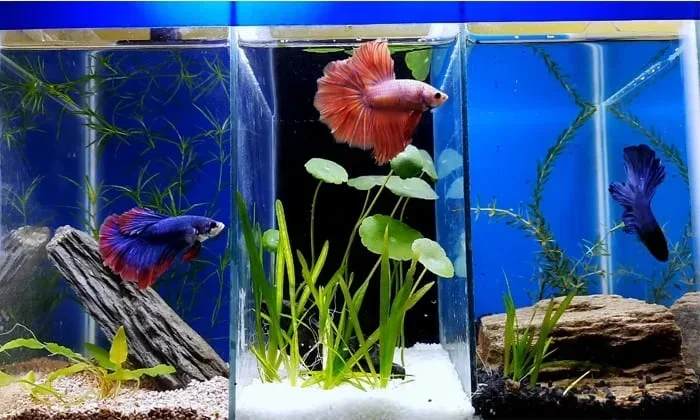
Can Male and Female Betta Fish Be Kept Together
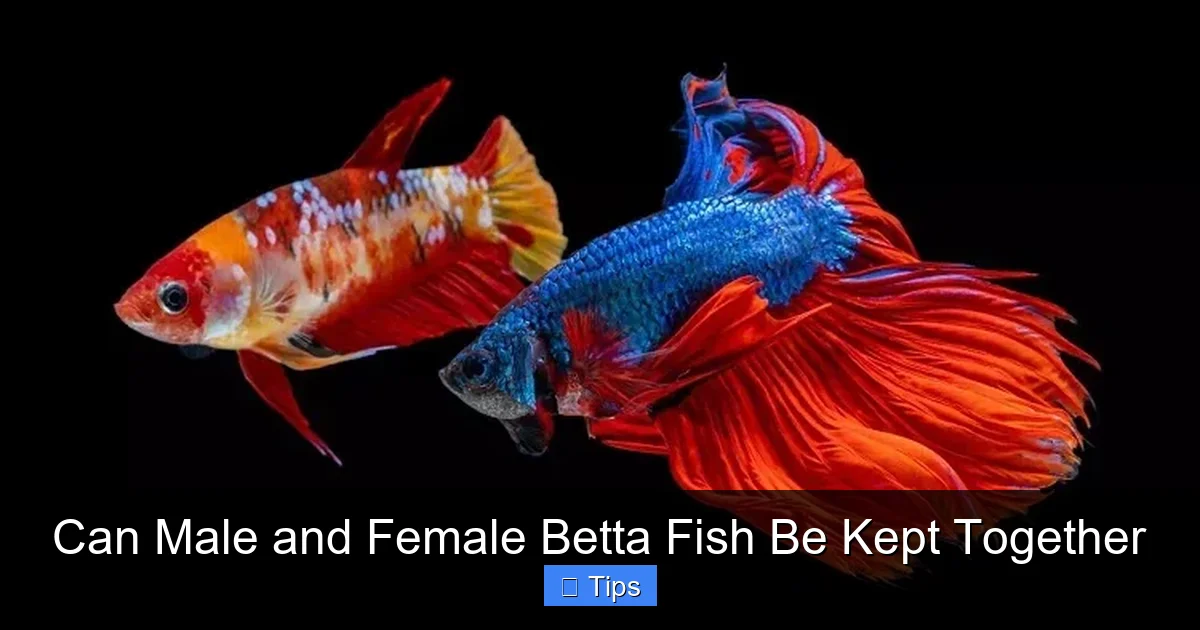
No, male and female betta fish should not be kept together as permanent tankmates. Their aggressive, territorial nature, especially in males, makes cohabitation extremely risky and often fatal. While temporary pairing for breeding is possible under strict supervision, a long-term community tank is not advisable. Success requires immense expertise, a very large and complex tank setup, and constant monitoring, which is unsuitable for beginners. The only reliably safe way to keep multiple bettas is in a carefully designed betta sorority (female-only group) or a species-only tank for a single male.
So, you’ve got a beautiful, solitary male betta fish—a Siamese fighting fish—gliding regally in his own tank. You love his personality, his flowing fins, his vibrant colors. Maybe you’ve seen stunning photos online of a betta “sorority” with multiple females, or perhaps you have a female betta and dream of introducing a male to create a breeding pair or a colorful community. The question inevitably arises: Can male and female betta fish be kept together? It’s one of the most common and tempting questions in the aquarium hobby, but the answer is fraught with complexity and, frankly, danger.
The short, direct answer for 99% of hobbyists is a resounding no. You cannot safely house a male and female betta fish together as permanent tankmates. Their genetics, bred over centuries for aggression, make it an almost certain recipe for disaster. However, the longer answer explores the narrow, expert-only exceptions and the crucial science behind betta behavior. This guide will dive deep into the why, the when (it’s almost never), and the how (if you are an expert considering a risky endeavor). We will separate myth from reality, focusing on fish welfare and tank stability above all else.
Key Takeaways
- Permanent cohabitation is strongly discouraged: Male bettas are hyper-territorial and will almost always fight a female to the death if kept together long-term.
- Breeding is a temporary, supervised process: Pairing for spawning requires a dedicated breeding tank, careful introduction, and immediate removal of the male after eggs are laid to prevent him from eating the fry or attacking the female.
- Betta sororities are for advanced hobbyists only: Groups of 4-6 females can sometimes coexist in a massive, heavily planted tank (minimum 40 gallons), but this requires meticulous planning and backup plans for aggression.
- Tank size and complexity are non-negotiable: Any attempt at group housing demands a tank of 20+ gallons for a pair and 40+ gallons for a sorority, with dense vertical and horizontal hiding places to break lines of sight.
- There are no guaranteed peaceful tankmates: While some small, fast, non-colorful fish like certain rasboras or Corydoras catfish can work with a *single* male betta, adding a female to this mix drastically increases aggression and stress.
- Individual personality always overrides general rules: Some bettas are more docile, and some females are more aggressive, but you must always assume the worst-case scenario and prioritize safety.
- Signs of stress and aggression must be acted upon immediately: Flared gills, fin nipping, chasing, and hiding are clear indicators that separation is necessary to prevent injury or death.
📑 Table of Contents
- Understanding Betta Behavior: The Roots of Aggression
- The Reality of Male-Female Cohabitation: Why It Almost Always Fails
- The “Breeding Tank” Exception: A Temporary, High-Skill Pairing
- Betta Sororities: The Female-Only Alternative
- Community Tanks with a Single Betta: The Safer Approach
- What About “Divided Tanks”?
- Conclusion: The Ethical and Practical Verdict
Understanding Betta Behavior: The Roots of Aggression
To grasp why cohabitation is so problematic, we must first understand the betta fish (Betta splendens). Their common name, “Siamese fighting fish,” isn’t a cute moniker; it’s a direct reflection of their biology. For hundreds of years, bettas were selectively bred in Thailand (formerly Siam) for aggression, with males pitted against each other in matches not to the death, but until one retreated. This created a species with an incredibly strong territorial instinct and a low tolerance for conspecifics (fish of the same species).
The Male Betta’s Domain
A male betta’s entire existence is centered on his territory. In the wild, a male claims a small patch of dense vegetation—a rice paddy, a slow-moving stream margin—where he builds his bubble nest and awaits a female. Any other male entering this space is seen as a direct threat to his mating rights and his territory, triggering an instant, fierce display. This instinct is hardwired. In captivity, his tank *is* his territory. He patrols it, flares his gills at his reflection, and becomes stressed by any other fish that resembles him, especially a female who will eventually challenge his dominance or compete for resources.
The Female Betta’s Role
While historically less targeted for aggression breeding, female bettas are not peaceful. In the wild, a female enters a male’s territory, chooses her mate based on the quality of his bubble nest and his display, and spawns. Afterward, she leaves. She does not remain in his territory. In captivity, a female placed in a male’s space is an intruder. She may be submissive initially, but she has her own hierarchy needs and will eventually establish her own space, leading to conflict. Females can also be surprisingly territorial and will establish a pecking order in a group (a sorority), which involves nipping and chasing until a stable hierarchy forms—a process that can be fatal for the weakest individuals.
This fundamental behavioral blueprint is why the idea of a harmonious male-female betta community is, for practical purposes, a fantasy. Their natural interactions are brief and transactional (spawning), not social.
The Reality of Male-Female Cohabitation: Why It Almost Always Fails
Let’s be brutally honest about what happens when you put a male and female betta together in a standard community tank.
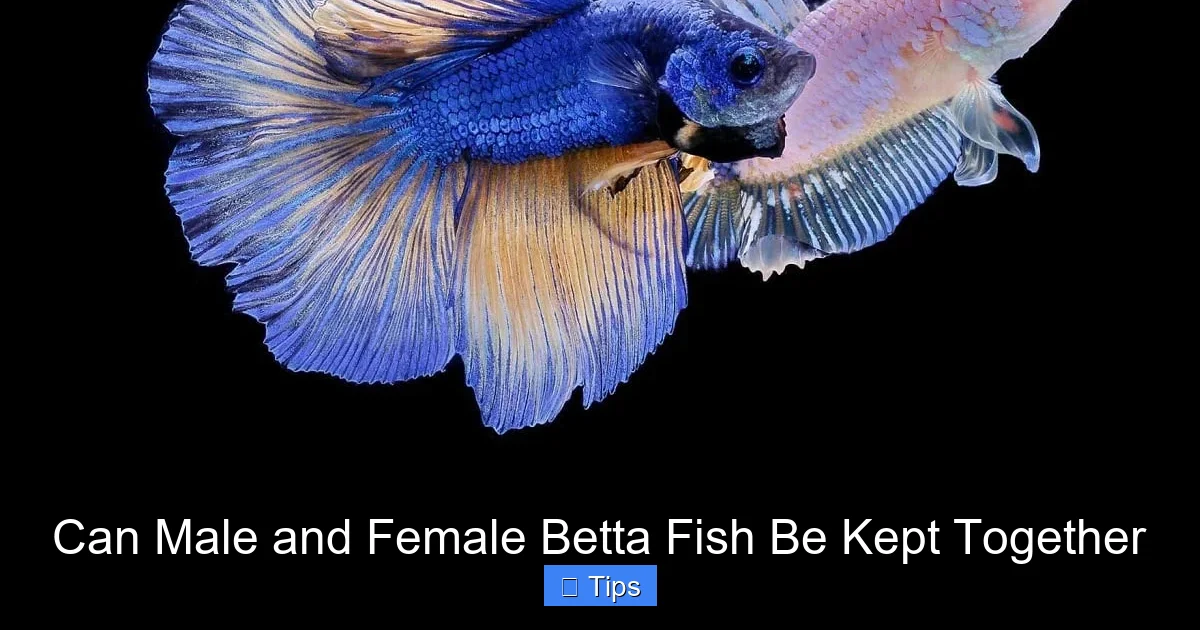
Visual guide about Can Male and Female Betta Fish Be Kept Together
Image source: fishlab.com
Immediate Stress and Conflict
The moment the female is introduced, the male’s stress hormones spike. He will flare, chase, and nip at the barrier (if using a divider) or directly at the female if she is in his water. The female, sensing this extreme hostility, will either cower in a corner (leading to stress-induced illness like fin rot or dropsy) or stand her ground and flare back. This is not courtship; it is warfare. Even if the male appears to “accept” her after a few days, it is often a tense, unstable truce. The moment she displays submissive behavior he doesn’t like, or she gets too close to his favorite leaf or his bubble nest (if he builds one), the attack resumes.
The Illusion of Peace is Dangerous
Some aquarists report periods of calm between a male and female betta. This is not friendship. It is a state of suppressed tension, a fragile hierarchy where one fish is constantly stressed and on edge. The submissive fish (often the female) will have its growth stunted, its colors fade, and its immune system compromised. It will live in a state of chronic fear, hiding most of the time. This is not a humane or ethical way to keep a pet. The “calm” can shatter in an instant over a piece of food, a change in water parameters, or simply because the dominant fish’s mood changes.
Fatal Outcomes Are Common
The most likely outcomes are severe injury or death. Betta fights involve targeting the fins. A betta with shredded, torn fins is susceptible to rapid-onset fin rot, a bacterial infection that can be fatal if not treated immediately and aggressively. Injuries can also lead to systemic infections. It is not uncommon for a betta to be killed outright in a sudden, violent burst of aggression after weeks of apparent peace. For the female, who is often the smaller and less aggressive of the two, the risk is exceptionally high.
The “Breeding Tank” Exception: A Temporary, High-Skill Pairing
The *only* scenario where a male and female betta are intentionally housed together is for the purpose of breeding. This is not a permanent arrangement. It is a short-term, intensive intervention that requires experience, a dedicated setup, and constant supervision.

Visual guide about Can Male and Female Betta Fish Be Kept Together
Image source: i.ytimg.com
The Dedicated Breeding Setup
A breeding tank is typically a small, bare tank (5-10 gallons) with a tight-fitting lid (betta fish are jumpers). It contains:
- An almond leaf or other tannin source: This lowers pH slightly and provides a familiar, calming surface for the male to build his bubble nest.
- A heater and sponge filter: Stable temperature (78-80°F / 25.5-26.5°C) and gentle water flow are critical. A sponge filter prevents eggs from being sucked in.
- No substrate or bare substrate: Makes it easy to see eggs and prevents the female from getting trapped.
- Plenty of floating plants or spawning mops: Gives the female places to rest and hide from the male’s constant attention before spawning.
The Courtship and Spawning Process
The female is added to the male’s tank only when he has built a substantial bubble nest and is displaying vibrant colors and active flaring. She is often placed in a transparent breeding box or divider within the same water for a few hours so they can see each other without contact. If the male flares aggressively at the divider, the attempt is aborted. If he flares but doesn’t attack the barrier, and the female displays vertical breeding bars (dark stripes), the divider is removed.
The courtship involves the male leading the female under his bubble nest, a “dance” where they wrap their bodies, and the male fertilizing the eggs as the female releases them. He then retrieves the sinking eggs and places them in his bubble nest. This process can take hours. Critical Point: The male is now fiercely protective of his nest and the eggs inside it. The female’s job is done. She is now an intruder in his breeding territory.
Immediate Removal is Mandatory
The moment spawning is complete and the male is tending the nest, the female must be removed immediately. If left, he will chase her away, and if she doesn’t leave quickly enough, he will attack and likely kill her. She is returned to her own recovery tank. The male will guard the nest fanatically for 2-3 days until the fry (baby bettas) hatch and become free-swimming. At that point, he may also begin to eat the fry, as his parental duties end. The fry must be removed to a rearing tank. This entire process is a high-stress event for both fish and is only undertaken by those prepared for the responsibility of raising hundreds of tiny, predatory fry.
Betta Sororities: The Female-Only Alternative
If your goal is to have multiple bettas in one tank, the only remotely viable option is a betta sorority—a group of females only. This is still considered an advanced setup with significant risks and is not recommended for beginners.
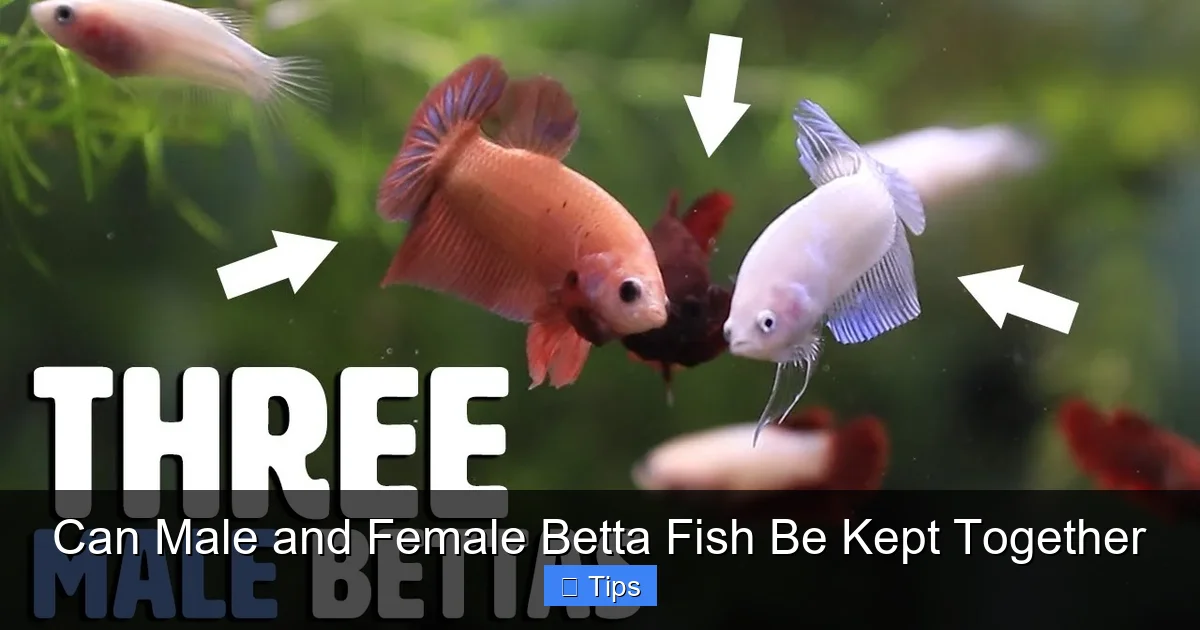
Visual guide about Can Male and Female Betta Fish Be Kept Together
Image source: i.ytimg.com
Why Females Can Sometimes Coexist
In the wild, female bettas have overlapping territories and are not as violently territorial as males. A sorority attempts to mimic a loose social structure where a hierarchy is established. The key is that the tank must be so large and complex that subordinate females can easily escape the attention of the alpha. The aggression is spread out over multiple individuals, reducing the focus on any one fish.
Non-Negotiable Requirements for a Sorority
Failure to meet these conditions will almost certainly result in injuries and deaths.
- Tank Size: The absolute minimum is a 40-gallon long tank (48+ inches in length). A 55-gallon or larger is strongly preferred. More horizontal swimming space is more important than depth.
- Heavy Planting and Hiding: The tank must be densely planted with a mix of tall background plants (like Amazon swords, Vallisneria), mid-ground plants, and floating plants (like water lettuce or frogbit) to break all lines of sight. You should not be able to see from one end of the tank to the other without a plant in the way. Include driftwood, rock caves, and PVC pipes for additional hiding.
- Group Size: Start with at least 5-6 females. A larger group (6-8) in a huge tank can actually be more stable than a smaller group (3-4), as aggression is dispersed. Never introduce just two females; they will fight to establish dominance, and the weaker one will have no escape.
- Simultaneous Introduction: All females should be added to the empty, fully cycled, and decorated tank at the same time. Introducing a new betta to an established sorority is a guaranteed death sentence for the newcomer.
- Intense Monitoring: You must watch for signs of bullying: a fish constantly hiding in one corner, torn fins, loss of color, lethargy. Have a separate “hospital” tank ready to remove any fish that is being relentlessly picked on or is doing the bullying.
Even with perfect setup, sororities can collapse unexpectedly due to a change in water parameters, the death of a dominant fish causing a reshuffling of hierarchy, or simply a fish having a bad day. This is a serious commitment to constant observation.
Community Tanks with a Single Betta: The Safer Approach
If you want a community aquarium, the only safe betta configuration is one betta—almost always a male, as they are more commonly kept—with other, carefully selected species. The betta must be the last fish added to the tank after it is fully cycled and populated with other fish. This allows the established community to claim its own territories first, reducing the betta’s perception that the entire tank is his to dominate.
Ideal Tankmate Criteria
Successful tankmates for a male betta share these characteristics:
- Small, but not tiny: They should be small enough that the betta doesn’t see them as food (avoid guppies with long, flowing fins that trigger aggression), but not so small that they look like prey (avoid neon tetras in a small tank).
- Fast and active: Fish that are constantly on the move and can quickly evade a sudden lunge from the betta are better than slow, deliberate swimmers.
- Non-colorful and non-flashy: Avoid fish with bright colors or long, flowing fins (like fancy guppies or male swordtails) as they may trigger the betta’s aggression as a rival.
- Bottom-dwellers are excellent: Species that occupy a different ecological niche, like Corydoras catfish, Kuhli loaches, or Bristlenose plecos, are often great choices. They clean the substrate and stay out of the betta’s mid-water domain.
- Schooling fish: A school of 6+ small, fast fish like harlequin rasboras, ember tetras, or celestial pearl danios can work. The school moves as one, making it harder for the betta to single one out.
Tank Setup for a Male Betta Community
Even with perfect tankmates, the betta needs his own space.
- Tank Size: Minimum 20 gallons, with 29+ gallons being much safer. More space dilutes aggression.
- Planted and Structured: Use live or silk plants to create visual barriers. A betta will be less likely to chase a fish he can’t constantly see. Provide a cave or dense thicket specifically for the betta to claim as his own.
- Lighting and Flow: Moderate lighting and gentle water flow (from a sponge filter or adjusted hang-on-back filter) are preferred. Strong currents stress bettas.
- Feeding: Ensure the betta gets his share of food. He may be a slow eater, so target feed him with sinking pellets or a baster before adding food for the community.
This setup explicitly does not include a female betta. Adding a female to this established community introduces a conspecific rival, which will override any acceptance of other species. The male will see the female as a threat to his territory within the tank, and the female will either be terrorized or will challenge him. It will fail.
What About “Divided Tanks”?
A common idea is to use a tank divider to separate a male and female betta in the same water system. This allows them to see each other without physical contact. This is not a solution for long-term cohabitation and is generally not recommended.
The Problem with Dividers
Even with a solid, opaque divider, bettas can sense each other through the water via pheromones and vibrations. The constant visual stimulus of seeing another betta through a clear or even mesh divider is a source of immense, chronic stress for both fish. The male will spend all his time flaring at the barrier, neglecting food and normal activity. The female will be equally stressed. This leads to a weakened immune system, faded colors, and a poor quality of life. It is a form of psychological torture to keep two bettas in constant view of each other without the ability to establish a clear, separate territory.
The Only Acceptable Use
The only time a divider might be used is during the initial courtship phase in a breeding setup, as mentioned earlier, for a period of a few hours. It is a tool for assessment, not for permanent housing. A divided tank for a male and female in a display context is unfair to the fish and demonstrates a misunderstanding of their needs.
Conclusion: The Ethical and Practical Verdict
The dream of a paired betta fish swimming peacefully together is a powerful one, but it is rooted in human sentiment, not fish biology. The evidence from both their evolutionary history and countless aquarist experiences is overwhelming: male and female betta fish cannot be kept together safely as permanent tankmates. Their aggressive, territorial instincts are too strong, the risk of injury or death too high, and the stress imposed on both fish is profoundly unethical.
If you want the beauty of multiple bettas, you have two paths. The first is the high-risk, high-skill path of a large, expertly planted female sorority, undertaken only by those who understand the immense commitment to observation and have the proper equipment. The second, and by far the better path for most, is to provide a magnificent, enriched single life for a male betta, or to house a female alone. You can then create a stunning community tank around that single betta with carefully chosen, compatible tankmates.
Remember, our role as aquarists is to simulate a natural, stress-free environment for our pets, not to force them into social structures that contradict their genetics. A happy, healthy, solitary betta displaying his full colors and personality in a well-maintained tank is a far greater success than a tank full of injured, stressed, or dead fish resulting from an ill-advised attempt at cohabitation. Choose the path of welfare over the path of a pretty but dangerous idea.
Note: Always follow local regulations and expert guidelines for fishkeeping. For more detailed terms on responsible pet ownership and the use of our resources, please review our terms and conditions.
Frequently Asked Questions
Can I keep a male and female betta together if I have a very large tank?
No. Tank size alone does not override their genetic aggression. Even in a 100-gallon tank, a male will view a female as an intruder in his territory and will likely attack her. The risk remains unacceptably high regardless of volume.
What about a breeding pair? Can they live together after spawning?
Absolutely not. The female must be removed immediately after spawning. The male becomes fiercely protective of his bubble nest and eggs and will attack the female, often fatally, if she remains. They do not form pair bonds.
Is it ever okay to have a male and female betta in the same tank with a solid divider?
It is not recommended. The constant visual contact causes chronic stress for both fish, leading to poor health, faded colors, and a reduced quality of life. Divider use should be temporary (hours) during breeding courtship assessment only.
Can two female bettas be kept together safely?
Female bettas can sometimes be housed in a group (a sorority) of 5-6 or more in a very large (40+ gallon), heavily planted tank with many hiding spots. This is for advanced hobbyists only and carries risks of aggression. Two females alone will almost certainly fight to the death.
What are the signs that my bettas are fighting or stressed?
Look for flared gills, extended fins, intense chasing, fin nipping, torn or shredded fins, one fish constantly hiding, loss of vibrant color, lethargy, and loss of appetite. Any of these signs indicate immediate separation is necessary.
What is the safest way to have more than one betta?
The safest option is to keep each betta in its own separate, properly sized and decorated tank. If you want multiple bettas in one display, a large, expertly planned female sorority (40+ gallons, 6+ females) is the only group-housing method with a chance of success, but it is not without significant risk and requires expert-level care.