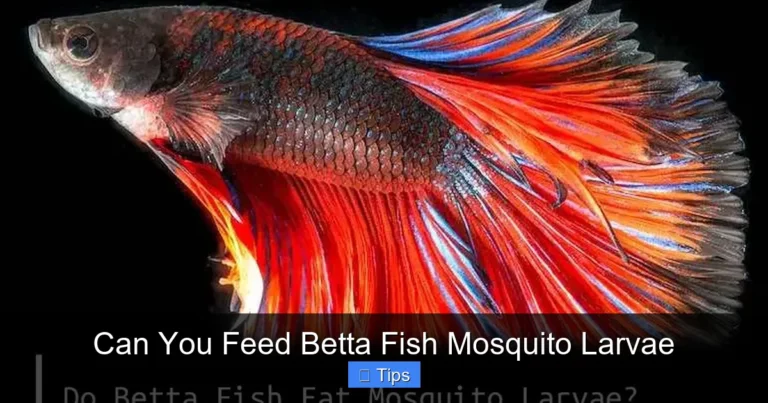
Can Koi Fish Live with Betta Fish
No, koi fish and betta fish cannot live together safely or healthily. Their fundamental needs are in direct conflict: koi are large, cold-water pond fish requiring massive, filtered outdoor spaces, while bettas are small, tropical, solitary fish needing warm, quiet, small indoor aquariums. Attempting to house them together would lead to severe stress, injury, or death for one or both animals due to incompatible water conditions, drastic size differences, and aggressive betta behavior. The only safe way to keep both species is in completely separate, species-appropriate environments.
Key Takeaways
- Environmental Incompatibility: Koi are cold-water fish (65-75°F) needing vast, heavily filtered outdoor ponds, while bettas are tropical fish (78-82°F) requiring small, warm, still indoor aquariums. Their water parameter needs cannot be reconciled.
- Extreme Size Disparity: Koi routinely grow 2-3 feet long, while bettas max out at 3 inches. A koi would view a betta as food or accidentally consume it, and a betta would be terrified and stressed by the koi’s massive presence.
- Temperamental Clash: Bettas are famously territorial and aggressive, especially towards fish with flowing fins. Koi are active, schooling fish that would constantly invade a betta’s space, triggering relentless stress and fin-nipping from the betta.
- Waste Load & Filtration: A single adult koi produces a colossal amount of waste, requiring industrial-grade pond filtration. This level of ammonia/nitrite would be instantly lethal to a sensitive betta in a confined tank.
- Social Structure Conflict: Koi are peaceful community fish that thrive in groups. Bettas are solitary by nature (especially males) and prefer to be alone. Their social needs are opposites.
- No Safe Compromise: There is no tank size, filtration system, or water temperature that can safely bridge the gap between these two species’ requirements. The risks always far outweigh any hypothetical benefit.
- Separate Homes Are Mandatory: The only ethical and safe way to own both a koi and a betta is to provide each with its own dedicated, properly set-up habitat—a filtered pond for koi and a heated, decorated aquarium for the betta.
📑 Table of Contents
- The Short, Unfortunate Answer: Why They Cannot Cohabitate
- Environmental Mismatch: The Unbridgeable Water Divide
- Temperamental Clash: The Aggressive Soloist vs. the Peaceful Schooler
- Size Disparity: The Predator/Prey Dynamic
- Suitable Tank Mates for Each Fish (The Right Way to Mix)
- The “What If” Scenarios: Why Even Creative Solutions Fail
- Conclusion: Cherish Them in Their Perfect Worlds
The Short, Unfortunate Answer: Why They Cannot Cohabitate
If you’re a fish enthusiast with a dream of a stunning aquatic menagerie, the idea of mixing species is a natural one. Perhaps you have a beautiful, serene koi pond in your garden and a vibrant betta fish with flowing fins gracing your living room. The thought of combining these two iconic, beautiful fish into one spectacular display is understandable. However, the hard, factual answer to the question can koi fish live with betta fish is a definitive and resounding no.
This isn’t a matter of opinion or preference; it’s a conclusion dictated by fundamental biology, environmental science, and ethology (the study of animal behavior). Koi and bettas exist at opposite ends of the aquarium and pond-keeping spectrum. Their requirements for water chemistry, temperature, space, social structure, and even their very biology are so profoundly different that attempting to house them together would be an act of cruelty, guaranteeing suffering and likely death for one or both creatures. Let’s break down, in detail, every single reason why this combination is one of the worst possible pairings in the hobby.
Environmental Mismatch: The Unbridgeable Water Divide
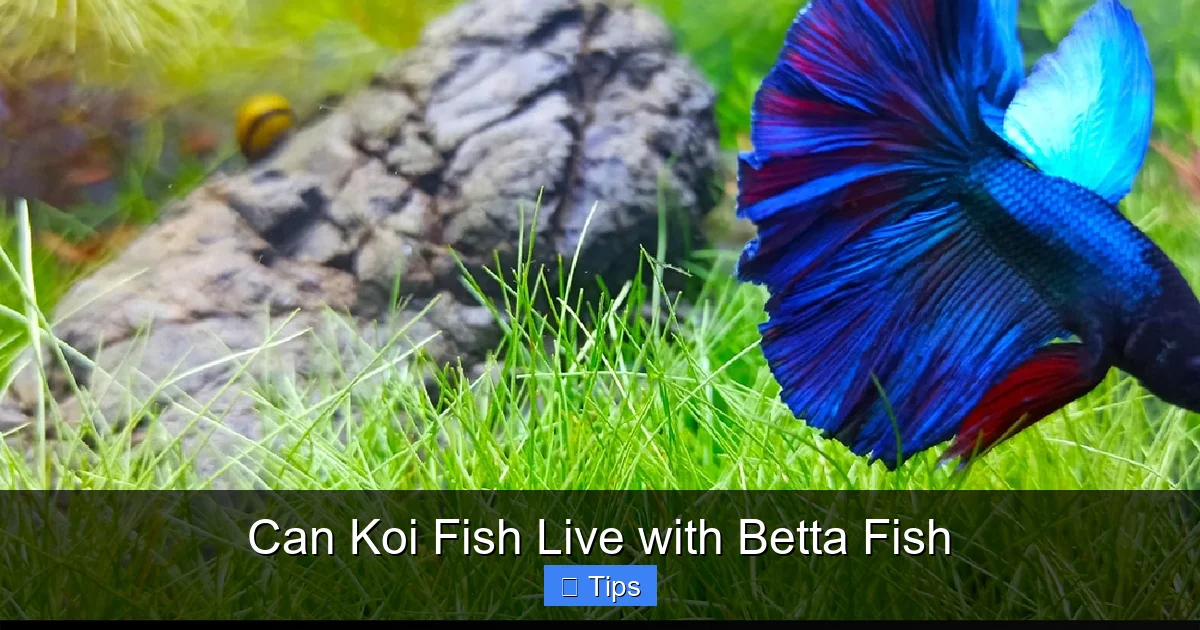
The most immediate and insurmountable barrier between koi and bettas is their required aquatic environment. It’s not just a minor difference; it’s a chasm that no filtration system or heater can bridge.
Visual guide about Can Koi Fish Live with Betta Fish
Image source: fishkeepingacademy.com
Water Temperature: Cold vs. Tropical
Koi are cold-water fish. They originate from the chilly rivers and ponds of Japan and China. Their ideal, healthy temperature range is a brisk 65°F to 75°F (18°C to 24°C). They can even survive under ice in winter if the pond is deep enough and properly oxygenated. Their metabolism slows in cold water, and they thrive in these conditions.
Betta fish are tropical fish. Hailing from the warm, shallow rice paddies and slow-moving streams of Southeast Asia (Thailand, Cambodia, Vietnam), bettas require consistently warm water. Their optimal temperature is a steamy 78°F to 82°F (25.5°C to 28°C). They are extremely sensitive to cold; prolonged exposure to temperatures below 75°F can suppress their immune system, make them lethargic, and lead to diseases like dropsy or fin rot.
The Conflict: There is no overlap. A temperature safe and healthy for a koi (say, 70°F) is dangerously cold for a betta. A temperature perfect for a betta (80°F) is dangerously warm and stressful for a koi, accelerating its metabolism and increasing its toxic waste output to unsustainable levels. You cannot heat a koi pond to 80°F—it would be like putting a human in a hot tub for months. You cannot keep a betta tank at 70°F—it’s like asking a person from the tropics to live in an unheated garage in winter. The water temperature alone makes cohabitation impossible.
Water Chemistry & Volume: Massive Dilution vs. Precise Stability
The sheer volume of water a koi needs is staggering. A single adult koi, which can easily reach 24-30 inches and 10-15 pounds, requires a minimum of 250-500 gallons of pond water to itself, with 1000+ gallons being ideal for a small group. This massive volume is necessary to dilute the enormous amount of waste (ammonia) a koi produces. Koi are, essentially, aquatic vacuum cleaners with huge appetites, and they excrete proportionally huge amounts of toxic waste. Their ponds require powerful, industrial-grade biological and mechanical filtration systems (often involving large bio-filters, waterfall filters, and UV clarifiers) to process this load and keep the water clear and chemically stable.
A betta, in stark contrast, is often kept in tanks as small as 5 gallons (though 10+ is strongly recommended). In this small volume, water parameters must be meticulously monitored and maintained through weekly water changes and a gentle, efficient filter (like a sponge filter). Bettas are extremely sensitive to ammonia and nitrite spikes. The toxic waste from one koi, if somehow placed in a body of water small enough to also house a betta, would create an ammonia spike so high it would kill the betta within hours, if not minutes.
The Conflict: The filtration needed for a koi is designed for massive water volume and high flow. That same flow would create a strong current, which bettas hate (they prefer still or very slow-moving water). The waste load from a koi in any tank sized for a betta would be instantly catastrophic. Conversely, the delicate, low-flow filtration suitable for a betta would be completely inadequate and useless for a koi, leading to toxic, cloudy water for the koi in a matter of days. Their water chemistry needs are mutually exclusive.
Temperamental Clash: The Aggressive Soloist vs. the Peaceful Schooler
Beyond the physical environment, the behavioral and psychological needs of these fish are diametrically opposed.
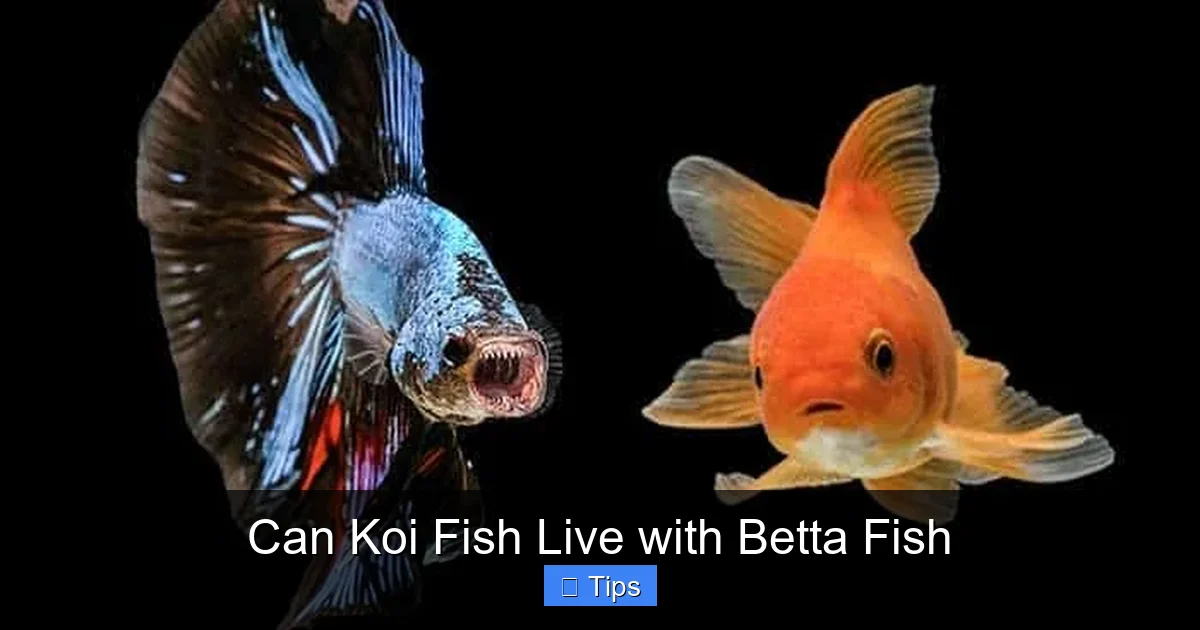
Visual guide about Can Koi Fish Live with Betta Fish
Image source: fishtrivia.com
The Betta’s Fierce Territoriality
The Siamese fighting fish, or betta, is named for its historical use in violent gambling matches. While modern breeding has produced many beautiful varieties (Halfmoon, Plakat, Crowntail), the core aggressive, territorial instinct, especially in males, remains strong. A male betta will flare its gills, extend its fins, and attack any fish it perceives as a rival. This includes:
- Fish with long, flowing fins (like fancy guppies or other bettas—they think they’re rivals).
- Fish that enter its defined territory (often the entire tank).
- Any fish that is brightly colored or has similar body shapes.
- Even passive tank mates can be harassed relentlessly.
Bettas are best kept alone. If a community is attempted, it must be with very specific, short-finned, fast-moving, non-aggressive species (like certain tetras or corydoras) in a large, heavily planted tank (minimum 20 gallons) with clear lines of sight broken by plants and decor. Even then, the betta’s personality is the ultimate variable.
The Koi’s Active, Social Grazing Nature
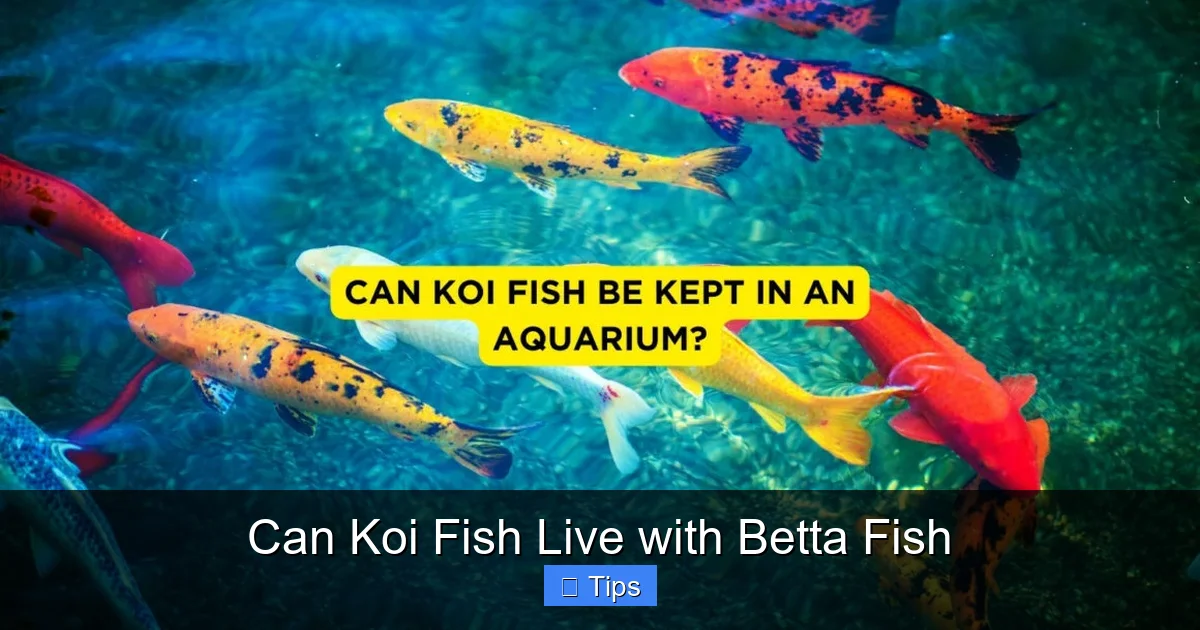
Koi are the opposite. They are gregarious, active, and social schooling fish. They are constantly on the move, rooting around the bottom substrate for food, investigating everything, and swimming in loose groups. They are not aggressive towards other fish (with rare exceptions during spawning), but they are large, clumsy, and utterly unaware of personal space. Their movements are powerful and create significant water disturbance.
The Predictable Disaster
Imagine the scenario: A betta, in its small, warm, still territory (a corner of a hypothetical shared tank), is peacefully floating. A 30-inch koi, in its constant quest for food, swims by. To the betta, this is a massive, invading predator. The betta will flare, chase, and bite at the koi’s fins. The koi, being a peaceful fish, would likely be confused and annoyed, but its massive tail movements could easily injure the tiny betta. The betta, in its relentless aggression, would be in a constant state of high stress—hiding, flaring, burning energy—which suppresses its immune system. The koi, in water too warm and with incompatible filtration, would be stressed by the poor water quality and the betta’s constant harassment. The betta would either be killed by the koi’s accidental movements, die from stress, or be driven to hide and starve. The koi would suffer from poor water conditions. It is a no-win situation.
Size Disparity: The Predator/Prey Dynamic
This is the most visually obvious and dangerous incompatibility. We’re talking about a size difference measured in feet versus inches.
Visual guide about Can Koi Fish Live with Betta Fish
Image source: fishtrivia.com
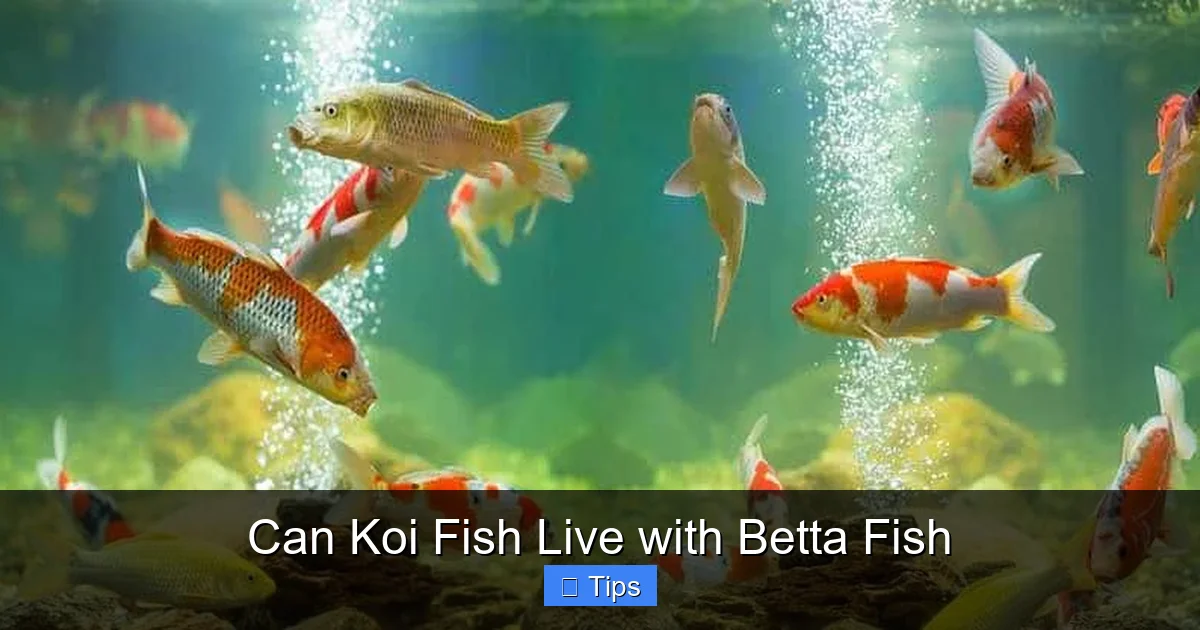
- Adult Koi Size: 24-36 inches (2-3 feet) long, weighing 10-35+ pounds.
- Adult Betta Size: 2.5-3 inches long, weighing a few grams.
To a koi, a betta is, at best, a tiny, annoying insect. At worst, it’s a potential snack. Koi are opportunistic feeders and will investigate and potentially mouth anything that fits in their surprisingly large mouths. A betta could easily be swallowed whole by even a juvenile koi. There is no scenario where a koi would recognize a betta as a tank mate to be left alone; it would be viewed as food or a curiosity to be investigated with fatal consequences.
From the betta’s perspective, the koi is a living mountain. The sheer size and movement would trigger a permanent, debilitating fear response. Bettas in the presence of large, fast-moving creatures will hide constantly, refuse to eat, and exhibit chronic stress. This is not a peaceful coexistence; it is a small animal living in terror of a creature that could end its life with one careless turn.
Suitable Tank Mates for Each Fish (The Right Way to Mix)
Understanding what not to do is crucial. So, what should you do if you want a community tank for either species? Here are the safe, ethical guidelines.
For Your Betta: Building a Peaceful Community
If you have a betta and want to add other fish, you must start with a minimum 20-gallon long tank (more space is always better). The tank must be heavily planted (live or silk plants) to break lines of sight and provide hiding spots. Introduce the betta last, after establishing a “school” of other fish, so it doesn’t claim the entire tank as its territory.
Ideal Betta Tank Mates (Research Each Species First):
- Peaceful, Fast-Moving Schoolers: Harlequin Rasboras, Chili Rasboras, Neon Tetras (in a large school of 10+), Black Neon Tetras. Their speed helps them evade any occasional betta flare.
- Bottom-Dwellers: Kuhli Loaches, Bristlenose Plecos (small species), Amano Shrimp (large enough not to be eaten). These fish occupy a different “layer” of the tank.
- Other: Snails (Nerite, Mystery), African Dwarf Frogs (complex, needs research).
Absolute NOs for Bettas: Other male bettas, fancy guppies, goldfish, any fish with long, flowing fins, any aggressive or semi-aggressive fish (like some barbs or gouramis).
For Your Koi: The Pond Community
Koi are the community for a pond. They are social and do best in groups of 3 or more. Their “tank mates” are other koi and perhaps some carefully selected, robust pond fish that share the same environmental needs.
Potential Koi Pond Mates (All Must Share Cold-Water, Massive Space Needs):
- Other Koi: The best and only necessary companions. Keep them in appropriate groups.
- Goldfish: Common, Comet, and Shubunkin goldfish can share a koi pond. They have similar temperature and quality needs. Fancy goldfish (Orandas, Ranchus) are slower and may struggle with competition for food from fast koi, so it’s not ideal but can work with careful feeding.
- Pond-Safe Sturgeon/Paddlefish: For very large, expert-level ponds only.
- Cold-Water Minnows: Like Fathead Minnows, but they may become food.
Absolute NOs for Koi Ponds: Any tropical fish (including bettas, guppies, mollies), any small fish that could be eaten, any fish requiring different water chemistry (like African cichlids).
The “What If” Scenarios: Why Even Creative Solutions Fail
You might be thinking, “But what if I had a gigantic, custom-built indoor tank?” or “Could I use a tank divider?” Let’s address these hypotheticals.
The Mega-Tank Fantasy
Let’s say you build a 5,000-gallon indoor tank, with a temperature gradient (a warm zone for the betta and a cool zone for the koi), and a filtration system powerful enough for a small lake. Even in this unrealistic, astronomically expensive scenario, the problems persist:
- Temperature Gradient: Water seeks equilibrium. You cannot have one corner at 80°F and another at 70°F in the same body of water. The water will mix, creating a uniform, stressful temperature for both.
- Waste Load: The koi’s waste would still poison the entire water column. No filter could handle the bioload in a tank small enough for a betta to feel secure, while also maintaining the crystal-clear, stable conditions koi need.
- Behavior: The betta would still be terrified of the koi’s constant, large movements. The koi would still be stressed by the poor (for it) water temperature and quality. The betta would have no safe, warm, quiet refuge from a creature that occupies 90% of the visual space.
The Tank Divider Idea
Using a solid, sealed divider to create two separate systems in one tank seems logical. However:
- Filtration & Heating: You now need two completely independent filtration and heating systems, each correctly sized for the fish on its side. The koi side needs massive flow and cold water; the betta side needs gentle flow and warm water. Installing this is complex and expensive.
- Space: The “betta side” of the divider would still be a long, narrow tank against a glass wall with a giant koi on the other side. The betta would be able to see the koi constantly, which would cause chronic stress and flaring. Bettas need a sense of security and territory, which a glass divider with a monster on the other side does not provide.
- Purpose Defeated: If you’re building two separate, correctly sized systems behind a wall, you have simply built two separate tanks. There is no benefit to the fish, and you’ve added the risk of divider failure or leaks. It’s an unnecessary complication.
The conclusion is clear: there is no safe, ethical, or practical scenario where these two species can share a body of water.
Conclusion: Cherish Them in Their Perfect Worlds
The question can koi fish live with betta fish leads us to a fundamental principle of responsible animal stewardship: you must provide an animal with an environment that mimics its natural needs, not force it to adapt to our whims. Koi and bettas are not just “fish”; they are species with millions of years of evolutionary history dictating their needs.
Your koi deserves a sprawling, sun-dappled pond with cool, oxygen-rich water, room to swim, and the company of its own kind. Your betta deserves a warm, planted, serene aquarium where it can flare at its own reflection, build a bubble nest, and live free from the terror of giants. The beauty of keeping both is not in forcing them together in a dangerous mismatch, but in creating two perfect, thriving habitats. You can enjoy the majestic, serene glide of a koi in your garden and the vibrant, personality-filled antics of a betta on your desk, each fulfilling its own natural destiny in a home designed specifically for it. That is the true mark of a dedicated and ethical aquarist or pond-keeper.
Frequently Asked Questions
Can I keep a betta with a koi in a very large indoor pond?
No. Even a large indoor pond would still have a uniform water temperature and chemistry. The koi would require cool water, which would be lethal to the tropical betta over time. The koi’s massive waste output would also pollute the water to deadly levels for the sensitive betta.
What about using a tank divider in a large aquarium?
This is not recommended. The betta would still see the large, moving koi through the divider, causing constant stress and fear. You would also need two completely separate, correctly sized filtration and heating systems, making it complex and expensive without providing a true benefit to the betta’s psychological well-being.
Could a baby koi and a baby betta live together until they grow?
Absolutely not. A baby koi (fry) grows at an explosive rate and will immediately outpace a betta in size and waste production. The water parameters would become toxic for the betta within days. Furthermore, the koi’s natural foraging behavior would disturb and harass the betta from the start.
Are there any fish that can live with both koi and bettas separately?
No single species can share a tank with both. The only animals that can live with koi are other cold-water, large-pond species like certain goldfish. The only animals that can live with bettas are specific, small, tropical, fast-moving fish that occupy different tank levels. The two ecosystems are completely separate.
My koi pond has a small, warm indoor section. Could I put a betta there?
No. That small section would still be connected to the main pond water, meaning the temperature would not be stable or warm enough for the betta, and the ammonia from the koi would be present. Bettas require a dedicated, filtered, heated aquarium with no connection to other fish systems.
What is the biggest mistake people make when considering this pairing?
The biggest mistake is thinking only about the adult size of the koi and not its current waste production and temperature needs. Even a small juvenile koi produces far more ammonia than a betta can tolerate and requires cooler water. The incompatibility exists from day one, not just when the koi gets large.