Can you put a frog with a betta fish in One Tank Today

Most experts advise against keeping a frog with a betta fish because their care needs and temperaments can clash. Can you put a frog with a betta fish? Only a few fully aquatic species may work in a large, planted tank, but stress, injury, and water quality can still cause trouble. Learn how to choose safer tank mates and spot warning signs early.
SEO Title: Can You Put a Frog With a Betta Fish Today?
Meta Title: Can You Put a Frog With a Betta Fish? Safety Guide
URL Slug: can-you-put-frog-with-betta-fish
Can you put a frog with a betta fish in One Tank Today
Many betta owners dream of a calm, lively tank. A tiny frog may look like a sweet extra. Yet frogs are not just small fish. They have different skin, food, space, and stress needs.
Before you ask, can you put a frog with a betta fish? the honest answer is limited, not simple. A betta may share water with a peaceful, fully aquatic African dwarf frog in the right tank. A tree frog, toad, axolotl, or wild-caught frog is a poor fit.
This guide shows when the idea can work, which species to avoid, and how to build a safer setup. You will also learn how to add the frog, what to feed, and when to separate them fast. For a broader look at this pairing, read our guide to whether a betta fish can live with a frog.
Key Takeaways
- Most frogs are not ideal betta tank mates: Their care needs, movement, and stress levels may not match.
- African dwarf frogs are the closest match: Even they may clash with a betta, so success is never guaranteed.
- Water quality is critical: Frogs absorb chemicals through their skin, making ammonia and harsh meds dangerous.
- Use a large, planted, cycled tank: Give both animals room, cover, and easy access to the water surface.
- Watch for aggression: Chasing, biting, hiding, or refusal to eat means you should separate the animals.
- Separate tanks are often safest: A calm home for each species beats a crowded tank with constant stress.
📑 Table of Contents
Can You Put a Frog With a Betta Fish? The Direct Answer
The short answer is yes, but only in limited cases. It is not a safe choice for every tank. A betta and frog may share water when both are peaceful and their care needs closely match.
An African dwarf frog is the best-known candidate. It stays in the water and may thrive near the same warm temperature as a betta. Still, one animal can stress or injure the other. A suitable tank does not erase that risk.
- The frog must be fully aquatic, not a tree frog or toad.
- Both animals need similar temperature and water parameters.
- Your betta must show no history of chasing or biting.
- The tank must be large, cycled, and well planted.
- You must be ready to separate them at the first warning sign.
Never add a frog to a small bowl or bare tank. Tank size alone cannot fix a poor match. If any key need does not match, choose a different setup.
Why a Frog and Betta Can Clash
Their bodies need different care
A betta is a fish, while a frog is an amphibian. Frogs drink and absorb materials through their skin. Ammonia, chlorine, copper, and some medicines can cause burns or death. They also need stable water, so even a small water-quality drop can affect them more than expected.
Their temperature needs may differ
Most bettas do well at about 76 to 80°F. African dwarf frogs often accept a similar range. Other frogs may need cooler water, more humidity, or more dry land. A shared tank works only when one setting meets every animal’s needs.
A slow frog can trigger a betta’s hunting drive
Bettas are curious predators. A slow-moving frog may look like prey, especially in a bare or tight tank. The frog cannot dart away like a fast fish. This can lead to chasing, fin nipping, or a long bout of stress.
Food can cause conflict
Bettas often eat pellets and frozen foods near the surface. Many frogs prefer small sinking foods. If you feed one meal for both, one animal may guard the food. Feed them at separate times and watch each one eat.
Signs that need action at once
- The betta pins its fins, chases, or bites.
- The frog stays on the bottom or floats at an odd angle.
- Either animal stops eating for more than a day or two.
- The frog rubs itself or the betta flashes its fins.
- Ammonia or nitrite rises above zero in the tank.
Expert insight: Think about the whole tank
The best keeper looks beyond the species name. A gentle betta in a mature, planted tank has a better chance than an active betta in a bare tank. Filter strength, feeding, hiding spots, and water tests matter just as much. A quiet tank gives both animals less reason to defend space.
Which Frogs Fit Best With a Betta?
Not every animal called a frog needs the same home. Some stay in water all day. Others spend most of their time on land. This makes the species choice far more important than the frog’s size alone.
| Frog or look-alike | Home type | Fit with a betta | Verdict |
|---|---|---|---|
| African dwarf frog | Fully aquatic | Often has a similar warm range | Possible, but never guaranteed |
| African pygmy frog | Fully aquatic | Needs precise care | Uncertain; not a beginner choice |
| Red-eyed tree frog | Arboreal | Needs land and high humidity | No |
| Fire-bellied toad | Semi-aquatic | Needs dry space and a different diet | No |
| Axolotl | Salamander, not a frog | Needs cooler, calm, high-oxygen water | No |
| Wild pond frog | Unknown | May carry disease or parasites | No |
The African dwarf frog is the closest match, but being aquatic is not enough. Check its adult size, water range, diet, and source. Never use a frog caught outdoors. It may bring parasites into your tank, and it often does poorly in captivity.
A dense planted tank can cut sight lines and give both animals a sense of cover. Live plants also help absorb waste, although they do not replace water tests or filter care. Read more about keeping a live plant with a betta fish before choosing your decor.
Set Up the Tank for the Highest Chance of Success
If you still choose to try this pairing, prepare the tank before you bring the frog home. Do not make changes while both animals are already stressed.
- Use enough space. A 20-gallon long tank is a sensible starting point for one betta and one small aquatic frog. It gives each animal more room to avoid the other.
- Cycle the aquarium first. A cycled tank turns toxic ammonia into less harmful nitrate. Keep ammonia and nitrite at zero before adding either new animal.
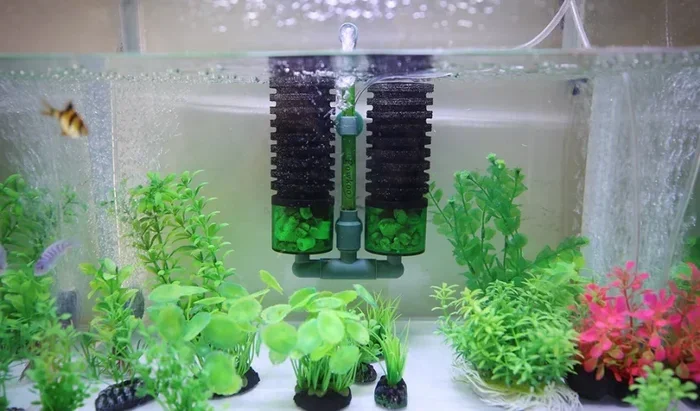
- Add gentle filtration. Use a sponge filter or another soft flow setup. Strong current can wear out a small frog and make a betta work too hard.
- Match the water, not just the heat. Test pH, hardness, ammonia, nitrite, and nitrate. Set the heater only within the safe range for both species.
- Create a calm habitat. Add smooth rocks, caves, floating cover, and plants. Leave open swimming space, and keep a lid in place because frogs can jump.
- Plan feeding and care. Offer small meals to each animal. Do a regular partial water change with dechlorinated water, and never mix medicines without expert advice.
Quick Tips for a Safer Community Tank
- Test the water before adding anything new.
- Avoid sharp plants, rocks, and plastic decor.
- Keep ammonia and nitrite at zero at all times.
- Add only one new animal at a time.
- Give the frog easy access to the surface for air.
A practical example
Imagine a 20-gallon long tank with a peaceful betta, a cycled sponge filter, dense plants, and a smooth rest area. You add one captive-bred African dwarf frog after a short quarantine. You keep the water stable, feed them apart, and check both animals daily. This is a cautious plan, not a promise. If either animal shows stress, end the experiment.
Add the Frog Slowly and Watch Closely
Quarantine the frog first
Keep a new frog in a separate tank for two to four weeks. Watch its skin, posture, appetite, and waste. This period can reveal illness before it reaches your betta. Do not keep a frog in a plain cup for long, and never use a chemical dip unless an aquatic animal specialist tells you to.
Introduce it without a rush
- Place the sealed container in the main tank for about 15 minutes.
- Let the store water dilute in a separate container. Never pour that water into your display tank.
- Turn off the lights to lower stress.
- Net the frog into the tank. Never net or chase the betta for this step.
- Release the frog near cover, then watch for 10 minutes.
If your betta is already settled, add the frog to the betta’s tank. If the frog is already settled, place the betta back in its original tank instead of forcing a new home. A male betta may be more territorial, so review keeping other fish with a male betta for extra context.
What to monitor
Check the pairing closely during the first 48 hours. Then watch twice a day for at least two weeks. Look for normal resting, steady eating, clear water, and relaxed movement.
- Separate them if the betta chases or bites.
- Separate them if the frog rubs, flips, or stays on the bottom.
- Fix the water at once if ammonia or nitrite is not zero.
- Do not treat constant hiding as harmless without checking behavior.
What to do if a problem appears
Move the frog to a prepared quarantine tank if the betta attacks. If the water is the cause, correct it and stabilize the tank before trying anything again. Never tell yourself to “let them work it out.” One bite or days of stress can cause lasting harm.
Common mistakes to avoid
- Adding the frog without quarantine.
- Putting a frog, fish, and shrimp into a small tank.
- Using a bare tank with no cover.
- Changing too much water at once.
- Assuming every African dwarf frog is gentle.
Safer Tank Mates and Final Verdict
Choices worth researching
If your betta dislikes frogs, consider a low-risk tank mate with similar water needs. Always match the choice to your betta’s personality.
- Nerite snail: It eats algae and stays mostly out of the betta’s way. Read our guide to keeping a snail with a betta fish.
- Cherry shrimp: They are small and easy to care for, but many bettas treat them as snacks.
- Pygmy corydoras: A group may work in a large, soft-bottomed tank with a peaceful betta.
- Robust schooling fish: They need room and enough cover. Small or slow species may be nipped, so review schooling fish with a betta first.
- Ghost shrimp: They help clean leftovers, but a curious betta may attack them.
Animals to avoid
- Small tetras and guppies that can be nipped.
- Goldfish that need cooler water and create heavy waste.
- Plecos or sucker fish that may contact the betta.
- Another betta, since males should never share a tank.
- Any frog or toad with needs that do not match your betta.
Final verdict
Can you put a frog with a betta fish? Yes, but only with one careful, fully aquatic match and a tank built for both animals. In most homes, the safer answer is no. Give each pet its own warm, clean, well-filtered home. A calm tank is far better than a crowded one.
Frequently Asked Questions
Can an African dwarf frog live with a betta fish?
It can in a large, planted, cycled tank when both animals are peaceful. Success is not guaranteed, so separate them at the first sign of chasing, stress, or injury.
Can a red-eyed tree frog live with a betta fish?
No. A red-eyed tree frog needs a humid terrarium with dry land and space to climb. It should not live submerged in a standard betta tank.
How big should the tank be?
A 20-gallon long tank gives one betta and one small aquatic frog more room to avoid each other. Always follow the exact water and space needs of the frog species.
Will a betta fish attack a frog?
Yes. A curious or aggressive betta may chase, nip, or stress the frog. Keep a close watch during the first few days and be ready to separate them.
Can a frog hurt a betta fish?
A healthy frog usually does not injure a betta directly. However, it can affect water quality, spread disease, or be harmed by betta medicine, so quarantine is essential.
What is the safest setup for a betta and frog?
The safest setup is usually two separate tanks with the correct heat, filtration, food, and cover for each species. If you try one tank, use a suitable aquatic frog and separate the animals at the first warning sign.