Can You Put Betta Fish With Other Betta Fish Together
Can you put betta fish with other betta fish together? Usually, no. Keep males apart and use a male-female pair only for brief, planned breeding. The safest choice is one betta per tank, with a warm, cycled aquarium and calm, proven tank mates.
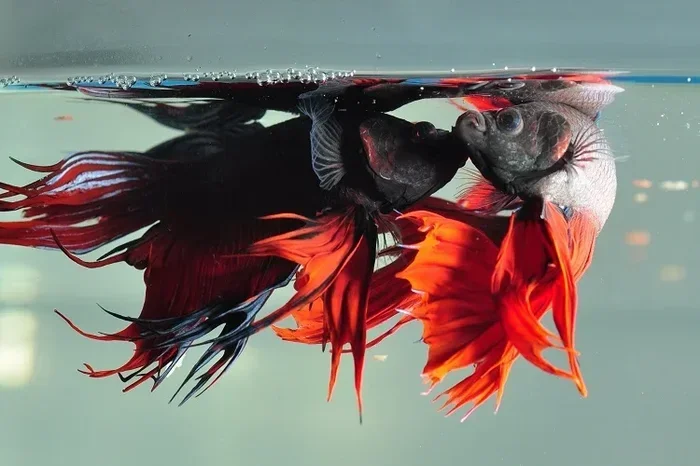
Although a betta may sit calmly beside another betta, calm is not proof of peace. Bettas are lone fish in the wild and often treat a similar fish as a rival. A sudden clash can cause torn fins, stress, or serious injury.
This guide explains betta fish with other betta fish, the one breeding exception, and safer ways to stock a tank. You will also learn what to do if two bettas are already sharing space.
Key Takeaways
- Two males should never share a tank: A male betta may attack until the other fish is injured or dead.
- Male-female housing is only for breeding: Separate the pair after spawning or within 24 hours at the latest.
- Female bettas are not a safe school: Females may still fight, so separate housing is the best general rule.
- Betta aggression can start slowly: Chasing, flaring, hiding, and refused food can be early stress signals.
- One betta per tank is safest: Give each fish its own warm, filtered, and well-planted home.
- Any shared tank needs close care: Use a cycled aquarium, enough space, and a clear escape route.
📑 Table of Contents
Can You Put Betta Fish With Other Betta Fish Together?
Short answer: usually, no. A betta should not live with another betta as a normal tank mate. Their betta compatibility cannot be trusted, even if both fish look healthy.
- Male plus male: Never place them in the same tank.
- Male plus female: Use them together only for planned breeding.
- Female plus female: Do not choose this as a simple community setup.
- One adult betta: This is the safest and most humane plan.
Why Sex and Age Matter
Male bettas are the most likely to launch a fatal attack. Females are not a built-in school. Some females may tolerate one another in a large, mature, heavily planted tank, but this needs expert care. Age, size, and past housing can also change behavior.
Do not judge a fish by its sex alone. A calm male may still attack, while a gentle female may defend one corner of the tank. Every betta has its own nature.
One Betta Per Tank Is the Safest Rule
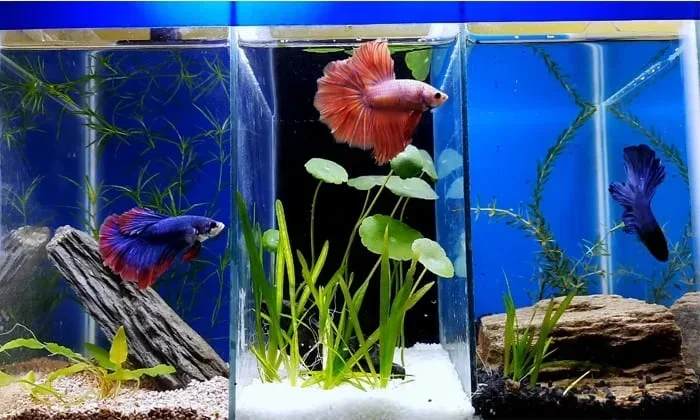
Separate tanks are not cruel. They give each betta its own territory and reduce daily stress. You can still keep several bettas by using separate, well-maintained aquariums. This also makes feeding, treatment, and water care far easier.
Why Bettas Fight in the Same Tank
Bettas are known for bright colors, wide fins, and strong personalities. In nature, males defend small areas that hold food and shelter. A second betta can look like a rival because it has a similar shape, color, and fin style. This is a key form of territorial behavior.
Early Signs of Betta Aggression
Watch the tank often. These signs may appear before a full attack:
- Wide gill covers and a flared fin
- Repeated chasing from one end of the tank to the other
- One fish being trapped in a corner
- Pinned fins or a tightly clamped tail
- Constant hiding or sudden refusal to eat
- Rapid breathing that does not settle down
- Biting at fins, lips, or tail edges
A brief calm period does not mean the pair is safe. Bettas may rest after a hard fight or wait until the other fish is tired. Keep watching for betta aggression signs for several days.
What a Fight Can Do
A fight can cause torn fins, damaged tissue, infection, and severe stress. Even if one fish survives, it may stay afraid for a long time. A smaller or slower fish may also struggle to reach food.
Fin nipping is another concern. A small wound can grow worse in dirty water. This is why a short calm spell should never be treated as proof that two bettas can live together.
Quick Tips: Read Stress Signals Early
- Check the tank twice a day during any new setup.
- Keep a net and a ready hospital tank nearby.
- Do not tap the glass or scare the fish to “test” them.
- Separate the fish at the first strong chase or bite.
The Only Safe Exception: Planned Breeding
A breeding pair is the only reason to place a male and female betta in the same tank. Even then, it should be a short, planned visit—not permanent housing. New pet owners should not attempt this without help from an experienced breeder.
How Controlled Breeding Works
- Prepare a mature tank: Use a clean, cycled aquarium with stable heat and gentle flow.
- Let the male settle in: He may build a bubble nest and show courtship behavior.
- Add the female with a barrier: A breeding box or divider lets both fish see each other while giving the female a safe place.
- Watch closely: Stop the process if the male attacks without courtship or the female shows severe stress.
- Separate after spawning: Remove the female at once. Remove the male after the eggs are guarded or hatched, as advised by an experienced breeder.
When to Stop the Breeding Attempt
Stop at once if you see a hard chase, pinned fins, biting, or a female hiding without any chance to rest. A healthy breeding visit should not leave either fish injured. A bubble nest alone does not prove that the female is ready.
Common Mistakes Breeders Make
- Using a tank that is not fully cycled
- Choosing a female that is too small or not ready
- Leaving the pair together out of curiosity
- Failing to separate the female after spawning
- Keeping fry without a proper feeding plan
Why This Is Not Cohabitation
Breeding is a short task with a clear end. Sharing a tank is a daily living plan. A male may kill a female after the breeding cycle ends, and the female may suffer constant stress. This is why a male and female betta tank should never be treated as a normal community setup.
Best Betta Tank Setup for One Fish
A good betta tank setup lowers stress and makes daily care simpler. A bare tank can work, but enrichment gives the fish places to rest and explore. The aim is a steady home, not a crowded one.
Size, Heat, and Water
- Use at least a 5-gallon tank for one adult betta. A 10-gallon tank offers more stability.
- Keep the water warm, near 78 to 80 degrees Fahrenheit.
- Use a gentle filter, such as a sponge filter.
- Fit a lid, since bettas can jump.
- Keep the tank fully cycled before adding the fish.
- Keep pH steady near 6.5 to 7.5. Stability matters more than chasing one perfect number.
Safe hiding spots and aquatic plants in a betta tank can help the fish feel secure. Choose broad leaves and soft plants, and remove any item with sharp edges.
Build a Calm Daily Routine
Feed a small amount once or twice a day. Use quality pellets as the base, with occasional frozen or live foods. Remove uneaten food. Test the water, and make regular partial water changes. A steady routine helps you spot changes in color, appetite, and behavior.
Expert Insight: Stability Beats Decoration
More plants do not always mean a better tank. Dense cover can block your view and trap waste. Use enough hiding spots to reduce stress, but keep open swimming space. Clean filters, stable heat, and correct water values matter more than bright plastic decor.
Side-by-Side Tank Setup Comparison
| Setup | Main Risk | Best Use |
|---|---|---|
| One adult betta | Low, with proper care | Best choice for most owners |
| Two male bettas | Very high | Never use this setup |
| Male and female together | High | Short breeding visits only |
| Two female bettas | Medium to high | Not recommended for most homes |
| One betta and peaceful tank mates | Varies by fish | Works in a mature, well-matched tank |
How to Choose Safer Betta Tank Mates
Keeping one betta per tank does not mean keeping a bare tank. You may add other fish after careful research. Start with a fully cycled tank and choose a proven, peaceful betta tank mate. Size, fins, water needs, and temperament all matter.
Possible Community Tank Choices
Some keepers use small, hardy fish that stay away from the betta. Choices may include ember tetras, harlequin rasboras, kuhli loaches, corydoras, and certain snails. A betta fish with gouramis setup needs extra research because gouramis can also be bold and fin-focused.
An African dwarf frog and betta fish setup may work in some tanks, but both fish still need space and separate feeding areas. Add safe plants and hides so no fish is forced into close contact.
Fish and Pets to Avoid
- Another male betta
- Long-finned guppies or other betta-like fish
- Fry or very small fish that can be seen as food
- Crayfish or other fish that may nip fins
- Fast, high-energy species that may bother a slow betta
- Shrimp if your betta has a strong hunting drive
Never add several new animals at once. A crowded tank makes it hard to see the first sign of a problem. If one fish shows fin and tissue damage, remove it at once.
How to Add a New Tank Mate
- Wait until the betta tank has been stable for several weeks.
- Quarantine new fish for two to four weeks when possible.
- Match the water temperature before transfer.
- Add the new fish during low light.
- Provide a divider or escape route.
- Watch closely for several days and then continue regular checks.
Common Mistakes to Avoid
- Buying a tank mate before choosing a safe home
- Using a tank that is too small
- Adding a fish with different heat or flow needs
- Ignoring mild chasing because the fish “seems fine”
- Expecting a betta to adjust after a hard fight
Can You Put Betta Fish With Other Betta Fish Together? Final Verdict
Can you put betta fish with other betta fish together as roommates? No. The safest answer is one betta per tank. A male-female pairing has only one narrow purpose: controlled breeding.
If Your Bettas Are Already Sharing a Tank
- Do not shake the tank or splash the water.
- Use a net to move one fish into a prepared hospital tank.
- Keep the injured fish separate until its fins and skin heal.
- Improve water quality and seek expert advice for serious wounds.
- Do not return two fighting bettas to the same tank.
Best Plan for Every Betta
- Give each betta its own warm and filtered tank.
- Add smooth hides, open swim space, and soft plants.
- Feed each fish on its own.
- Choose any other tank mates with care.
- Separate fish at the first strong sign of stress or attack.
Conclusion
Bettas may look peaceful side by side, but that calm can vanish without warning. Two males should never share a home, and a breeding pair must be separated afterward. For a healthy, stress-free pet, choose one betta per tank. Give each fish a clean, warm, well-planned aquarium, and you will have the best chance of a long and happy life.
Frequently Asked Questions
Can two male bettas live in the same tank?
No. Two male bettas should never share a tank. A fight can cause severe fin damage, infection, or death.
Can a male and female betta share a tank?
Not as normal tank mates. Keep them together only for a planned breeding visit, and separate them after spawning or within 24 hours.
Can two female bettas live together?
It is not a safe choice for most owners. Females may tolerate one another in rare expert setups, but they can also fight. One female per tank is the better rule.
How do you introduce two bettas?
Do not introduce them to create a shared home. The only brief introduction is part of controlled breeding, and it should be guided by an experienced breeder.
Will a large tank stop bettas from fighting?
No. A larger tank may give a fish more room, but it does not remove strong territorial behavior. Two bettas can still fight in a large tank.
What should I do if my bettas fight?
Separate them at once using a net and a prepared hospital tank. Check both fish for torn fins and stress, improve the water, and never place them together again.