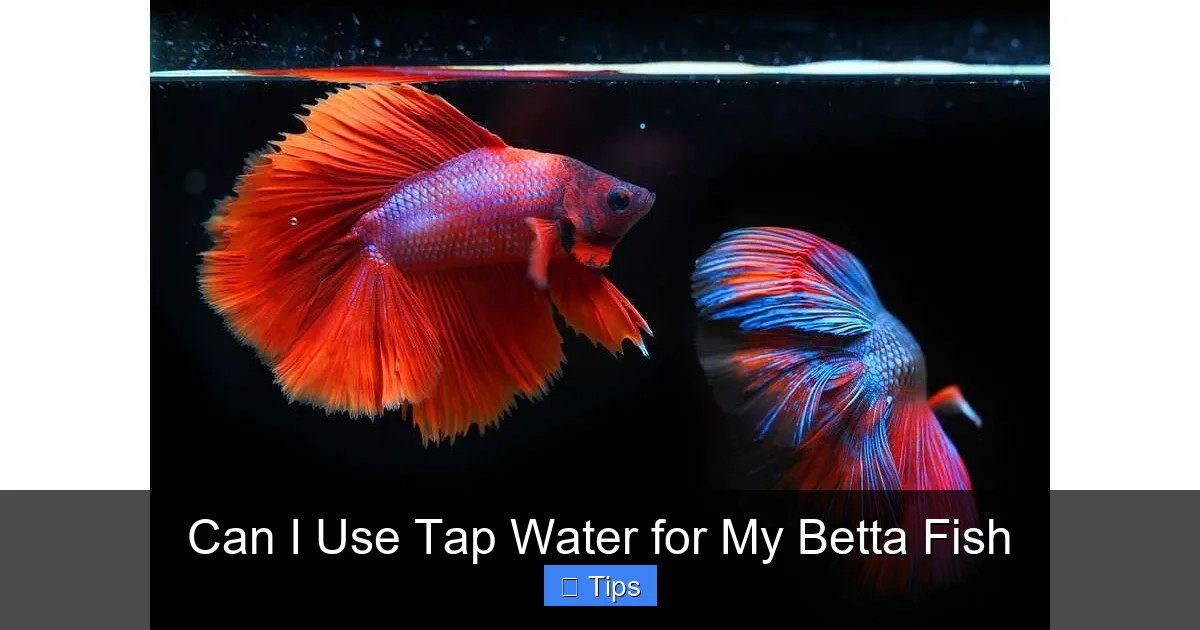
Can I Use Tap Water for My Betta Fish
Yes, you can use tap water for your betta fish, but you cannot use it straight from the faucet. Untreated tap water contains chlorine, chloramines, and heavy metals that are lethal to bettas. You must treat it with a reliable water conditioner to neutralize these toxins. Furthermore, the water parameters (pH, hardness, temperature) must be stable and within the betta’s preferred range. Properly conditioning and testing your tap water is the single most important daily task for your betta’s long-term health and vibrancy.
You’ve just brought home a stunning betta fish, with its flowing fins and vibrant colors. You’ve picked out a beautiful tank, some decor, and a bag of premium food. Then, a simple, terrifying question pops into your head: “Can I use tap water for my betta fish?” It’s the most fundamental question a new betta owner can ask, and the answer is a classic “yes, but…” that holds the key to your pet’s entire world. The tap water flowing from your kitchen sink is a toxic soup for a fish, but with the right knowledge and tools, it can be transformed into a pristine, life-sustaining paradise. This guide will walk you through every single step, from turning on the faucet to pouring the water into the tank, ensuring your betta not only survives but thrives.
Think of your betta’s tank as a closed, miniature ecosystem. Unlike a river or lake, there’s no natural flow to dilute waste or refresh the water. Everything you put in—the tap water, the food, the fish’s own waste—stays in that system until you actively remove it. Tap water is the foundation of this ecosystem. If that foundation is flawed, everything built upon it is at risk. Our goal here is to demystify tap water, understand what’s in it, and learn the simple, repeatable process to make it perfectly safe. It’s less about finding a magical alternative and more about mastering the treatment of what you already have.
Key Takeaways
- Never use untreated tap water: Chlorine and chloramines in municipal water are deadly and must be neutralized with a water conditioner before it touches your betta.
- Test your water parameters: Use an aquarium test kit to check pH (ideal 6.5-7.5), ammonia (must be 0), nitrite (0), and nitrate (below 20 ppm).
- Match the temperature: Betta are tropical fish requiring a stable water temperature between 76°F and 82°F (24°C–28°C). Use an adjustable heater.
- Conditioner is non-negotiable: A quality water conditioner (like Seachem Prime) is essential for every water change to detoxify tap water instantly.
- Understand your local water: Your tap water’s natural pH and hardness (GH/KH) vary by location. Test your source water to know what you’re working with.
- Cycling is crucial: A fully cycled tank with beneficial bacteria is necessary to process fish waste and prevent toxic ammonia spikes, even with perfect tap water.
📑 Table of Contents
- Why Your Straight-from-the-Faucet Tap Water is a Silent Killer
- Decoding Your Tap Water: The Essential Parameters
- The Holy Grail: Water Conditioners Demystified
- The Step-by-Step: Your Weekly Water Change Routine
- Common Tap Water Mistakes That Will Harm Your Betta
- Special Cases: Well Water, Soft Water, and Extremely Hard Water
- The Ultimate Betta Tap Water Checklist
Why Your Straight-from-the-Faucet Tap Water is a Silent Killer
To understand why we must treat tap water, we need to meet the invisible villains. Municipal water treatment facilities add chemicals to protect human health, but these same chemicals are poison to fish. The two primary offenders are chlorine and chloramines.
The Dual Threat: Chlorine vs. Chloramines
Chlorine has been used for over a century to disinfect drinking water. It’s highly effective at killing bacteria and viruses that could make us sick. However, it’s also a potent irritant and oxidizer that will burn a fish’s gills, damage its slime coat (its primary immune defense), and lead to respiratory distress and death. The good news? Chlorine is volatile and will naturally evaporate from water if left to sit and bubble for 24-48 hours. This is the “old-school” method many still reference.
Chloramines, however, are the modern, more stable replacement. To provide longer-lasting disinfection as water travels through miles of pipes, many cities now use a combination of chlorine and ammonia called chloramine. This is the critical reason why simply letting tap water sit is no longer safe. Chloramine does not evaporate. It remains potent in the water until it is chemically broken down. A water conditioner that specifically states it removes chloramines is an absolute requirement for modern betta keepers.
The Hidden Dangers: Heavy Metals and Other Contaminants
Beyond disinfectants, tap water can contain trace amounts of heavy metals like copper, lead, or zinc from old pipes and plumbing. These metals are toxic to fish even at very low concentrations, affecting their nervous systems and gill function. High-quality water conditioners also contain chelating agents that bind to these metals, rendering them harmless. Furthermore, your tap water’s pH and mineral content (hardness) might be wildly outside the comfortable range for a betta, which we will address shortly.
Decoding Your Tap Water: The Essential Parameters
Before you even buy a conditioner, you need to know what you’re conditioning. Your tap water isn’t the same as your neighbor’s. It has a unique chemical signature based on your local water source and treatment process. The only way to know this signature is to test it. A basic liquid test kit (like the API Freshwater Master Test Kit) is one of the most important investments you’ll make.
Visual guide about Can I Use Tap Water for My Betta Fish
Image source: bettasource.com
pH: The Acidity/Alkalinity Scale
pH measures how acidic or alkaline water is on a scale of 0-14, with 7 being neutral. Bettas are native to the shallow, warm rice paddies and slow-moving streams of Southeast Asia, where the water is typically soft and slightly acidic to neutral. They thrive in a pH range of 6.5 to 7.5. Your tap water could be a hard, alkaline 8.2 (common in many US municipalities) or a softer, more acidic 6.0. Drastic swings in pH are more dangerous than a slightly “off” but stable pH. The goal is to establish a stable, betta-appropriate pH in the tank and avoid sudden changes during water changes.
Hardness: GH and KH Explained
This is where many beginners get confused. General Hardness (GH) measures the concentration of dissolved calcium and magnesium ions. This directly affects your betta’s osmoregulation (its ability to manage water and salts in its body). Bettas prefer soft to moderately soft water (GH 3-10 dGH, or ~50-170 ppm). Carbonate Hardness (KH), or “buffering capacity,” measures dissolved carbonates and bicarbonates. KH stabilizes your pH, preventing rapid swings. A KH of 3-6 dKH (~50-100 ppm) is ideal. Your local water report (available from your water utility) will list these figures. If your tap water is very hard (high GH/KH), you may need to use reverse osmosis (RO) water mixed with a remineralizer for long-term health, but for most, properly conditioned tap water is sufficient.
The Nitrogen Cycle: The Invisible Guardian
This is not a parameter of your tap water, but it is the most critical process in your tank. The nitrogen cycle is the establishment of a colony of beneficial bacteria that consume toxic fish waste (ammonia) and convert it first to nitrite (also toxic) and then to nitrate (much less toxic). A fully cycled tank is non-negotiable for betta health. You cannot have a healthy betta in an uncycled tank, no matter how perfect your tap water is. Cycling takes 4-6 weeks and must be completed *before* adding your fish. You will use your tap water for water changes during this process, treating it with conditioner each time.
The Holy Grail: Water Conditioners Demystified
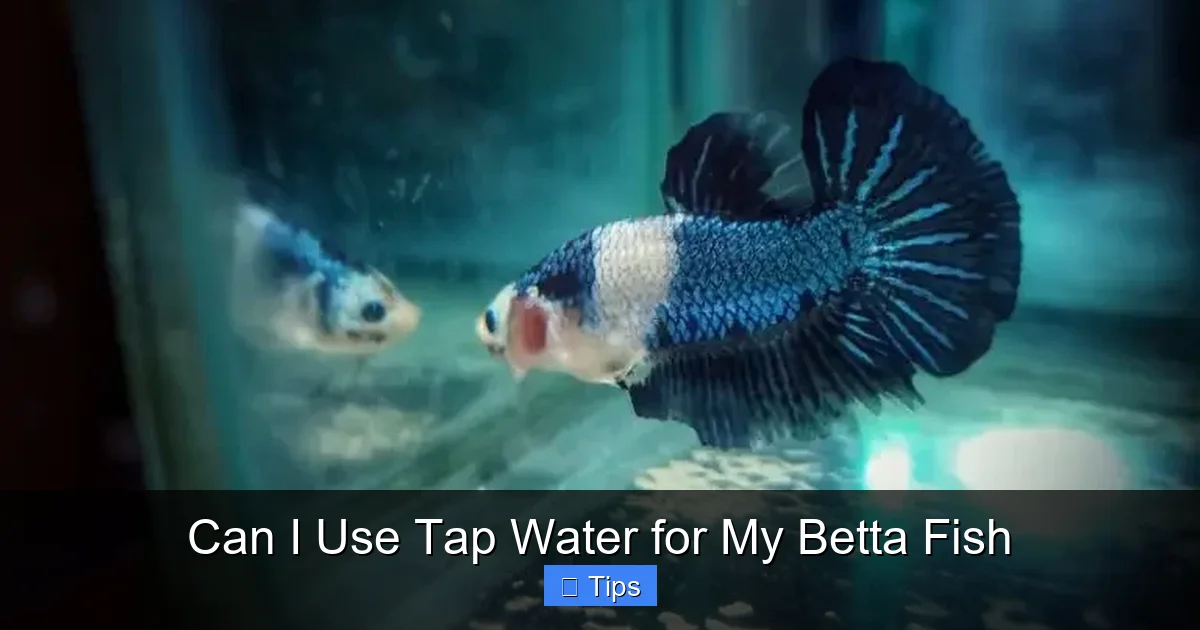
If untreated tap water is poison, a water conditioner is the antidote. It’s the one product you will use for every single water change, for the entire life of your betta. But not all conditioners are created equal.
Visual guide about Can I Use Tap Water for My Betta Fish
Image source: aquariumpub.com
What to Look For on the Label
When buying a conditioner, read the bottle carefully. You need a product that explicitly states it:
- Neutralizes Chlorine AND Chloramines. This is the baseline requirement.
- Detoxifies Ammonia, Nitrite, and Nitrate. Advanced conditioners (like Seachem Prime) can temporarily bind these nitrogen compounds, making them less toxic for 24-48 hours. This is a lifesaver during an emergency or if your cycle crashes.
- Removes Heavy Metals (or lists “chelates” them).
- Promotes a Healthy Slime Coat. Some include additives like aloe vera or polymers to help repair and protect your betta’s delicate skin.
How to Use It: The Simple, Correct Method
Never, ever add conditioner directly to the tank with your fish in it if you can avoid it. The process is simple:
- Fill your clean bucket or container with the amount of new tap water you need for your water change (typically 25-50% of the tank volume).
- Add the conditioner. Follow the dosage instructions on the bottle meticulously. More is not better; it can disrupt the slime coat.
- Stir gently. Let it sit for 1-2 minutes. The chemical reaction is instant, but this ensures full distribution.
- Check the temperature. The new water must match the temperature of the water already in the tank within 1-2 degrees Fahrenheit. Use a thermometer. A drastic temperature change is a severe shock.
- Slowly add the conditioned water to your tank. Pour it over a decor item or use a cup to diffuse the flow, avoiding disturbing the substrate and stressing your betta.
The Step-by-Step: Your Weekly Water Change Routine
Now let’s put it all together. A proper water change is the core maintenance ritual that keeps your betta’s home clean and its water chemistry stable. Here is your definitive protocol.
Visual guide about Can I Use Tap Water for My Betta Fish
Image source: bettafishworld.com
Gather Your Tools
You will need: a clean bucket (dedicated solely to aquarium use), your water conditioner, a gravel vacuum/siphon, an aquarium-safe algae scrubber (optional), and a thermometer.
The Process: Slow and Steady Wins the Race
Step 1: Prepare the New Water. Fill your clean bucket with tap water. Add the correct dose of conditioner and stir. Set it aside. Use your thermometer to adjust this new water’s temperature to match your tank’s current temperature. You may need to add a little warm water from the tap (in a separate container) to raise the temperature.
Step 2: Remove the Old Water & Gunk. With your gravel vacuum, start siphoning water from the tank into a separate sink. As you do this, push the vacuum into the gravel to suck out trapped fish waste, uneaten food, and debris. This is the most important cleaning step. Remove 25-30% of the tank’s water. If you have an algae problem, now is the time to gently scrub the glass with your algae pad.
Step 3: Add the New Water. Slowly, gently, pour the conditioned, temperature-matched water from your bucket into the tank. I like to pour it over a large plant or a clean decoration to break the force of the water. Continue until the water level is back to where it was.
Step 4: Observe. Watch your betta for a few minutes. It should swim normally, not gasp at the surface, or clamp its fins. If it shows stress, double-check your water temperature match and conditioner dosage.
Common Tap Water Mistakes That Will Harm Your Betta
Even with the best intentions, easy mistakes can turn a water change into a disaster. Let’s identify and avoid them.
Mistake 1: Using Bottled Water or Distilled Water
This seems logical—no chlorine, right? But it’s usually a bad idea. Bottled water is often lacking in essential minerals and buffers (KH), leading to dangerous pH crashes. It’s also inconsistent from brand to brand and bottle to bottle. Distilled or reverse osmosis (RO) water is pure H2O with nothing in it. It will leach minerals from your betta’s body and cause osmotic shock. If you must use RO (e.g., for extremely hard tap water), you must use a commercial aquarium remineralizer to add back essential salts and minerals in the correct ratios.
Mistake 2: Forgetting to Dechlorinate
It’s the most common error, especially for beginners in a hurry. One drop of untreated tap water in a 5-gallon tank isn’t catastrophic, but adding several cups is. Always, always, always use conditioner. Keep a spare bottle next to your tank so you never run out.
Mistake 3: Drastic Temperature Shocks
Pouring cold tap water into a warm tank is like throwing an ice bucket on your betta. It causes severe stress, suppresses the immune system, and can lead to shock and disease like Ich. Always pre-match temperatures. A small, inexpensive aquarium thermometer is worth its weight in gold.
Mistake 4: Over-Cleaning or Too Frequent Changes
Cleaning 100% of the tank water and scrubbing every surface with soap or harsh cleaners destroys the beneficial bacteria colony you’ve worked hard to build. Never wash filter media in tap water; rinse it in a bucket of old tank water you’ve removed. Stick to 25-30% weekly changes. This dilutes pollutants without crashing the cycle.
Special Cases: Well Water, Soft Water, and Extremely Hard Water
Not all tap water is created equal. Let’s address some specific scenarios.
Using Well Water
Well water is not treated with chlorine or chloramines, which is a plus. However, it can have other issues: high iron content, sulfur (rotten egg smell), nitrates from fertilizer runoff, or inconsistent pH. It may also have zero buffering capacity (low KH), making pH very unstable. You must test well water thoroughly for all parameters before using it. A conditioner is still recommended to bind any heavy metals and protect the slime coat. A strong, reliable test kit is your best friend here.
If Your Tap Water is Very Soft (Low GH/KH)
If your water report shows very low GH and KH (<3 dGH/dKH), your betta might actually be fine, as this mimics its natural habitat. The main risk is pH instability. You must monitor pH closely. Using a conditioner that promotes slime coat health is beneficial. Some keepers in soft water areas add a tiny amount of Seachem Equilibrium or a crushed coral substrate in a filter media bag to gently raise and stabilize KH/GH without harming the fish.
If Your Tap Water is Very Hard (High GH/KH)
Hard, alkaline water (pH 8.0+) can be stressful for bettas long-term, potentially leading to issues like fin rot or poor breeding success. For most keepers, a stable, conditioned hard water is better than an unstable attempt to soften it. However, if your water is extremely hard (GH > 15 dGH), consider blending in some reverse osmosis (RO) water. Start with a 50/50 mix of conditioned tap water and RO water, and test your tank’s parameters. You will then need to use a remineralizer (like Seachem Equilibrium) for the RO portion to add back essential minerals. This is an intermediate-level step for keepers with challenging source water.
The Ultimate Betta Tap Water Checklist
Let’s condense everything into a simple, actionable checklist you can print and post near your tank.
- TEST FIRST: Know your tap water’s pH, GH, KH, and that it’s free of ammonia/nitrite.
- CYCLE THE TANK: Complete the nitrogen cycle fully before adding your betta.
- BUY A QUALITY CONDITIONER: Get one that removes chlorine, chloramines, and heavy metals (Seachem Prime is the gold standard).
- GET A THERMOMETER: And a reliable, adjustable aquarium heater (2-5 watts per gallon).
- GET A TEST KIT: The API Freshwater Master Kit is essential for monitoring tank parameters (ammonia, nitrite, nitrate, pH).
- MATCH TEMPERATURES: Always pre-match new water to tank temperature.
- CHANGE REGULARLY: Perform 25-30% water changes weekly with conditioned water.
- NEVER OVER-CLEAN: Never wash filter media in tap water; rinse in old tank water.
- OBSERVE YOUR BETTA: After every water change, watch for signs of stress (clamped fins, gasping, lethargy).
Your tap water, once understood and properly treated, is a perfectly suitable and excellent base for a stunning betta habitat. The process is straightforward: Test, Condition, Temperature-Match, Change. By mastering these four steps, you take control of the single most important factor in your betta’s health. You move from being a worried beginner to a confident caretaker, providing the clean, stable, and chemical-free water that allows your betta’s true colors to shine, its fins to flow gracefully, and its personality to sparkle. That vibrant, curious fish swimming happily in its pristine home? That’s the direct result of you, turning a simple faucet into a fountain of life.
Frequently Asked Questions
Can I let tap water sit out for 24 hours instead of using a conditioner?
This only works for removing chlorine, which evaporates. It does nothing for chloramines, which are now common in municipal water and do not evaporate. Using untreated, “dechlorinated” by sitting water is unsafe and risks exposing your betta to lethal chloramines. Always use a conditioner that specifically removes both.
Is bottled spring water or distilled water better than tap water?
Generally, no. Bottled water lacks consistent minerals and buffers, risking dangerous pH crashes. Distilled water is pure H2O and will leach minerals from your fish. Both are inconsistent and more expensive. Properly conditioned tap water is almost always the better, more stable, and more cost-effective choice.
How often should I test my tap water and my tank water?
Test your source tap water (before adding conditioner) once a month or if you notice a change in taste/smell. Test your tank water weekly, before or after your water change, as part of your maintenance routine. Also test immediately if your betta shows signs of illness or stress.
My tap water pH is 8.2. Is that too high for my betta?
A stable pH of 8.2 is on the high end but can be acceptable if it is stable and your betta shows no signs of stress (like faded colors or frayed fins). The danger is trying to aggressively lower it with pH-altering chemicals, which causes violent swings. Focus on maintaining excellent water quality (0 ammonia/nitrite) and a stable temperature. If you want to gently lower pH over time, consider adding natural botanicals like Indian Almond Leaves or a substrate like peat moss (used carefully in a filter bag).
Can I use tap water if I have a heavily planted tank?
Yes, but the same rules apply. Plants will help absorb some nitrates and can slightly stabilize pH, but they do not remove chlorine, chloramines, or heavy metals. You must still condition the tap water before adding it to the tank. The plants do not change the fundamental requirement for safe water.
What are the signs that my tap water treatment is failing or wrong?
Signs of poor water quality or chemical stress in your betta include: gasping for air at the surface, clamped fins (held tightly against the body), lethargy and hiding, loss of vibrant color, frayed or rotting fins (fin rot), frequent rubbing against objects (flashing, indicating itchy gills/skin), and sudden death. If you see these, immediately test your tank water for ammonia, nitrite, and nitrate, and double-check your conditioner dosage and water temperature match.